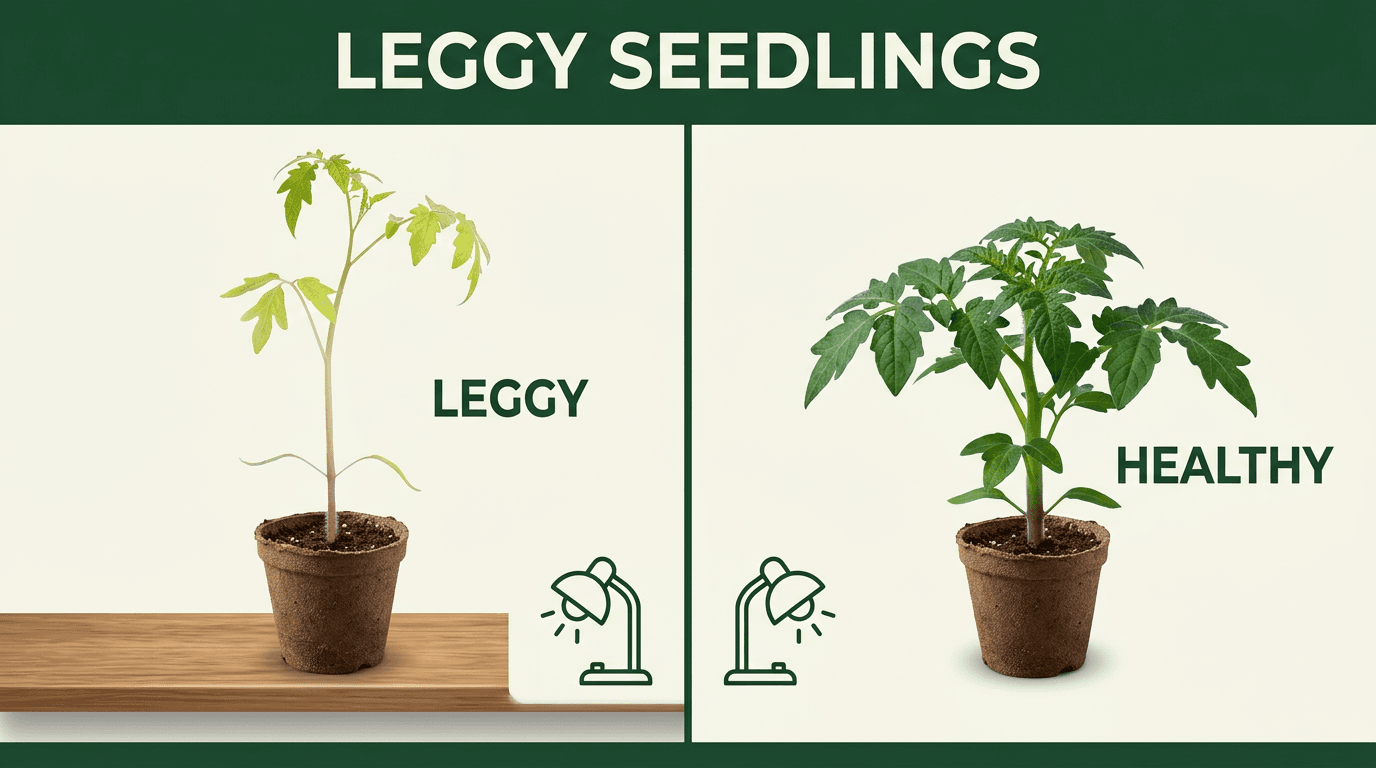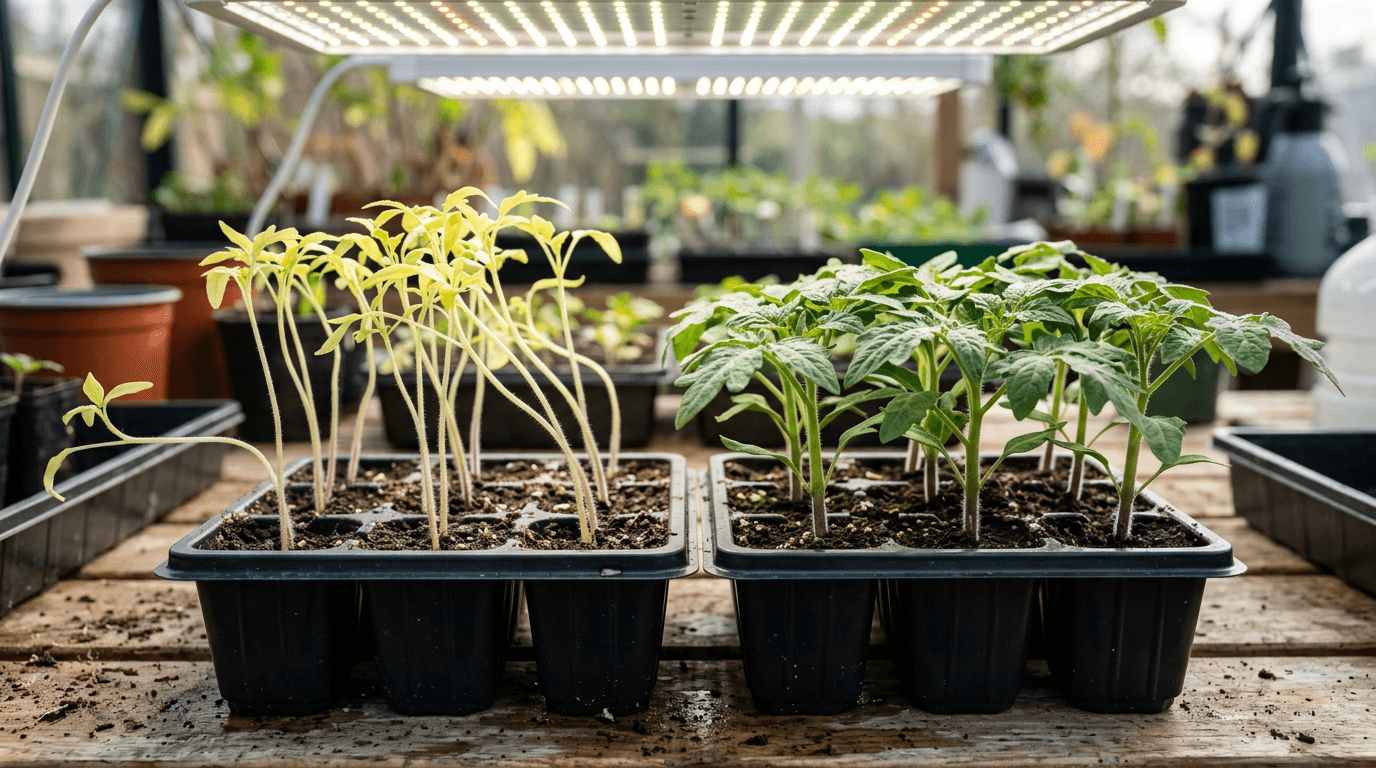
You start your seeds indoors with care — good soil, regular watering, the right temperature — and then the seedlings appear. But instead of short, stocky plants, you get tall, thin, floppy stems that can barely hold themselves up. This is called “leggy” growth, and it’s one of the most common problems home gardeners face when starting seeds indoors.
The good news: leggy seedlings have one cause almost every time, and there’s a straightforward fix.
What Causes Leggy Seedlings?
Leggy seedlings are caused by insufficient light. When a seedling doesn’t get enough light, it stretches upward — rapidly elongating its stem — in an attempt to reach a brighter source. This survival strategy works for a seedling trying to grow through leaf litter in a forest, but in your seed tray, it just produces weak, overstretched plants.
A few related factors make the problem worse:
- Seeds started too early: The longer seedlings stay indoors, the more stretched they become. Starting seeds 8+ weeks before transplant date for crops that only need 4 weeks is a recipe for leggy plants.
- Grow lights too far away: Even with grow lights, seedlings become leggy if the light source is more than 2–4 inches above the plants.
- Not enough hours of light: Seedlings need 14–16 hours of light per day. A window, even a south-facing one, rarely provides that in early spring.
- Overcrowding: When seedlings compete for light, they all stretch toward it and shade each other out.
How to Fix Leggy Seedlings
If your seedlings are already leggy, you have options depending on how stretched they are.
Bury the stem when transplanting. Most vegetables — especially tomatoes — can be planted deep, with the leggy stem buried in soil. New roots form all along the buried stem, and the plant becomes sturdier. Tomatoes are the classic example: you can bury a seedling all the way up to its top leaves and it will recover completely.
Move them to more light immediately. If outdoor conditions allow (above 45°F during the day), start hardening off your seedlings now. Even a few hours of real outdoor light each day will slow further stretching and begin to toughen the stems.
Add a fan. A gentle breeze from a small fan — even just 15–20 minutes twice a day — causes seedlings to develop stronger, thicker stems through a process called thigmomorphogenesis. It’s the same strengthening that wind provides outdoors.
Lower your lights. If using grow lights, position them just 2–3 inches above the tops of the seedlings and raise the lights as the plants grow. Don’t let the lights touch the foliage, but get them as close as practical.

How to Prevent Leggy Seedlings Next Time
Use a grow light, not a window. South-facing windows in early spring provide 4–6 hours of direct light on good days — far less than the 14–16 hours seedlings need. A simple two-bulb T5 fluorescent or LED grow light on a timer solves this completely.
Start seeds at the right time. Check seed packets for “weeks to transplant” and count back from your planned outdoor planting date. Starting too early is the second most common cause of leggy seedlings, because extra weeks indoors equals extra stretching.
Thin seedlings properly. Overcrowded seedlings compete for light and become leggy. Thin to one plant per cell after germination — it feels wasteful, but it’s necessary.
Keep lights on a timer. Seedlings need consistent day length. A timer set for 16 hours on and 8 hours off takes the guesswork out of it and prevents the irregular light patterns that encourage stretching.
Which Seedlings Are Most Prone to Getting Leggy?
Tomatoes, peppers, and eggplant are the most commonly affected because they’re started indoors the earliest — often 8–10 weeks before last frost. Herbs like basil also stretch quickly in low light. Lettuce and other greens are less prone because they’re often direct-seeded or started later.
Tomatoes are actually the most forgiving when legginess does occur — their ability to root all along a buried stem makes them very recoverable. Peppers and eggplant are more sensitive and don’t bury as well; prevention is more important for those crops.