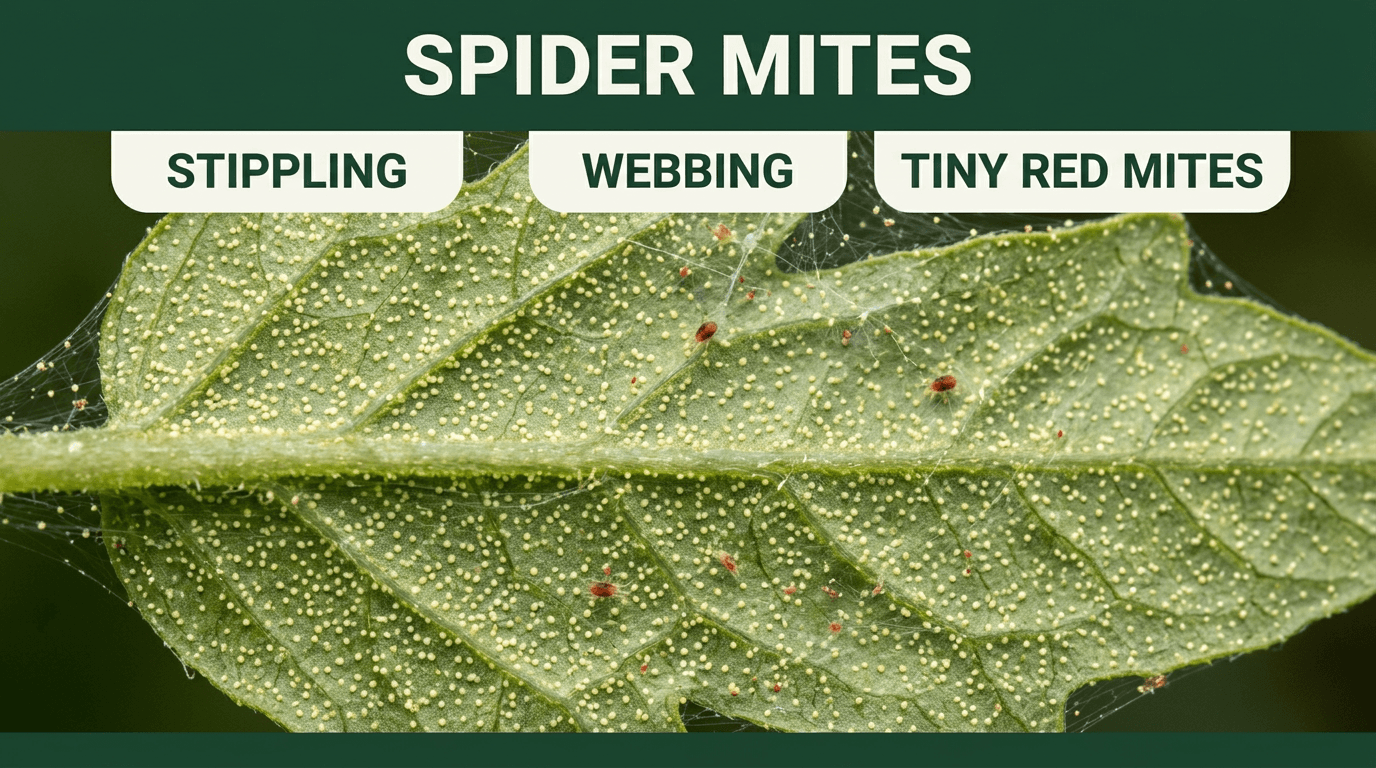
Spider mites are tiny — almost invisibly small — but they can devastate a vegetable garden in a matter of days under the right conditions. You might notice the damage before you ever see the mites themselves: leaves that look dusty, silvery, or covered in pale yellow stippling. Flip a leaf over and look closely. If you see extremely fine webbing and tiny moving specks, you have spider mites.
Here’s how to identify them, deal with an active infestation, and prevent them from returning.
What Are Spider Mites?
Spider mites are arachnids — closer relatives of spiders and ticks than they are to insects. The most common species in the vegetable garden is the two-spotted spider mite (Tetranychus urticae), which affects a wide range of vegetables including tomatoes, cucumbers, squash, beans, strawberries, and eggplant.
They’re tiny — about 1/50th of an inch — and range from yellow-green to reddish-orange depending on the species and season. Despite their small size, each mite feeds by piercing plant cells and sucking out the contents. A large colony of thousands of mites feeding simultaneously causes rapid, visible damage.
Spider mites thrive in hot, dry conditions. Their populations can double every few days when temperatures exceed 80°F and humidity is low. This is why they tend to explode in midsummer, often reaching damaging levels before gardeners notice them.
How to Identify Spider Mite Damage
- Stippling on leaves: Tiny pale yellow or white dots on the upper surface of leaves, caused by individual feeding punctures. Looks like the leaf was dusted with fine salt.
- Bronzing or silvering: As stippling becomes severe, leaves take on a bronze, silver, or dusty appearance. They may eventually turn yellow and drop.
- Fine webbing: Delicate silk webbing on the undersides of leaves and between leaf stems, especially in heavy infestations. This webbing protects the mites and their eggs.
- Tiny moving specks: With a magnifying glass, you can see the mites themselves moving on the undersides of leaves.

Which Vegetables Are Most Vulnerable?
Tomatoes and cucumbers are the most commonly affected in home gardens. Squash, melons, beans, peas, eggplant, and peppers are also frequent targets. Strawberries can suffer severe damage from spider mites during hot dry spells. Almost any plant can host them, but the worst infestations tend to be on plants under some stress — from drought, heat, or nutrient imbalance.
Treating an Active Spider Mite Infestation
Start with water. The simplest and most immediate treatment is a strong stream of water directed at the undersides of leaves. This physically dislodges and drowns mites. Do this in the morning so plants dry before evening, and repeat every 3–4 days for 2–3 weeks. On its own, regular hosing can control mild infestations.
Insecticidal soap spray. Mix 2 tablespoons of pure castile soap (not dish soap with degreasers) per gallon of water, or use a ready-made insecticidal soap product. Spray thoroughly on the undersides of all leaves. The soap must contact the mites to kill them — it has no residual effect. Repeat every 3–5 days for 2–3 weeks.
Neem oil. Diluted neem oil (follow label directions) disrupts mite feeding, reproduction, and molting. It’s effective against all life stages including eggs, which insecticidal soap doesn’t kill. Apply in the early morning or evening — neem can burn foliage in hot sun. Repeat every 7 days.
Remove heavily infested leaves. If certain leaves are bronzing, webbed over, or showing heavy mite populations, remove and bag them rather than letting mites disperse to the rest of the plant.
How to Prevent Spider Mites
Keep plants well-watered. Spider mites prefer stressed, drought-weakened plants. Consistent irrigation reduces plant stress and makes your garden less hospitable to mite populations.
Mulch your beds. Mulch keeps soil moisture more consistent, reducing plant water stress — and also keeps soil temperatures lower, which slows mite development.
Avoid dusty conditions. Mites love dust, which covers the plant surface and discourages their natural enemies. Spray plants with water occasionally during dry spells to wash down accumulated dust, even when mites aren’t present.
Avoid broad-spectrum pesticides. Many insecticides kill the natural predators of spider mites — predatory mites and insects like thrips, minute pirate bugs, and ladybugs — while leaving spider mites unaffected (they’re arachnids, not insects). Losing these predators causes spider mite populations to explode. If you must spray for other pests, choose selective products.
Encourage beneficial insects. Predatory mites (Phytoseiidae family) are commercially available and extremely effective. Releasing them in your garden provides long-term biological control.