Tomatoes are the most popular vegetable in the American home garden — and for good reason. A sun-warmed tomato picked ripe from your own plant tastes nothing like what you find in a grocery store. Growing tomatoes takes some attention and know-how, but once you understand what the plant needs, it’s very manageable.
This is a complete guide covering every stage from choosing a variety to storing your harvest. If you’re growing tomatoes in a raised bed specifically, see our raised bed tomato guide.
Choosing a Tomato Variety
The first choice is between determinate and indeterminate varieties — and it matters more than most people realize.
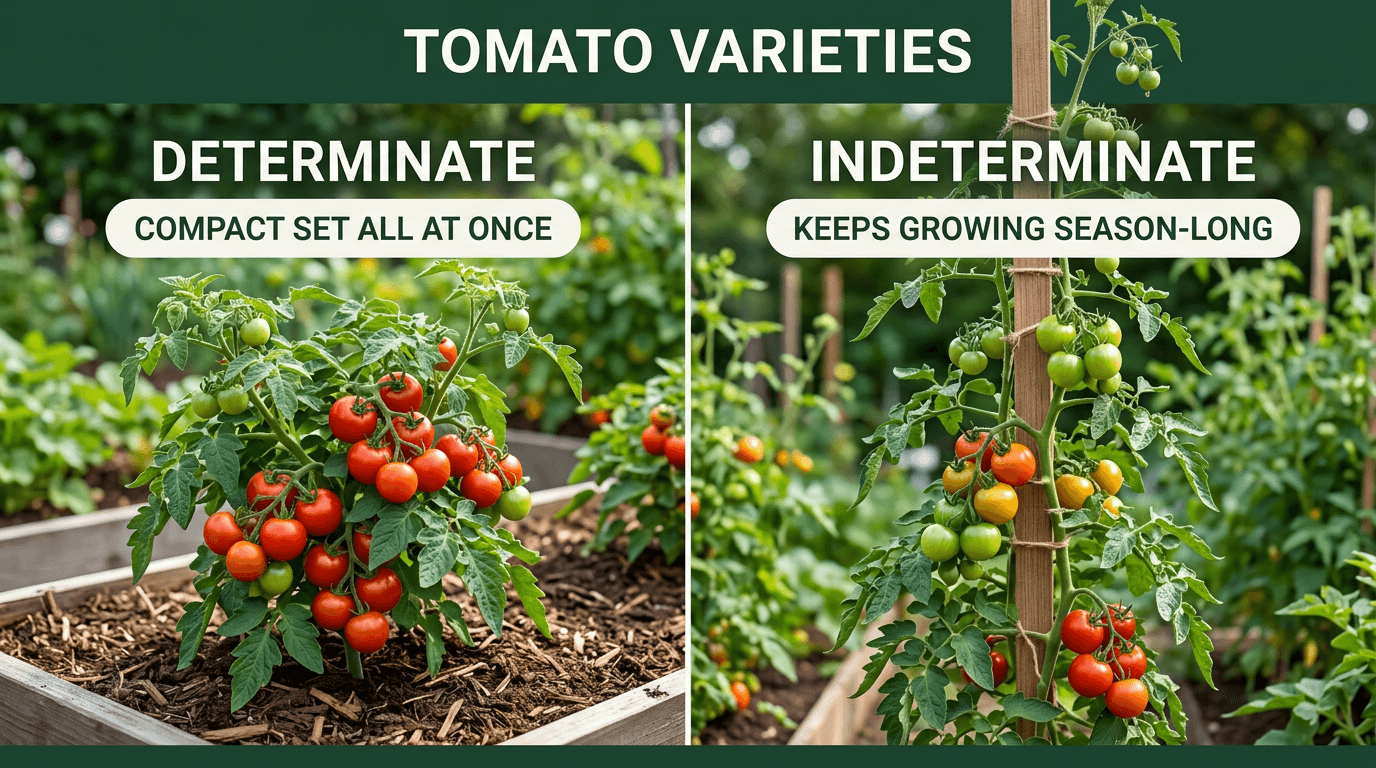
Determinate tomatoes (also called “bush” tomatoes) grow to a fixed height of 3–4 feet, set all their fruit over a 2–4 week window, and then stop. They’re ideal if you want a large harvest for canning or sauce all at once, or if you have limited space. Popular varieties: ‘Roma,’ ‘Celebrity,’ ‘Rutgers,’ ‘Ace.’
Indeterminate tomatoes keep growing and producing until frost kills them. They need staking or caging, can reach 6–8 feet, and provide a continuous harvest from midsummer through fall. Most heirloom and cherry tomatoes are indeterminate. Popular varieties: ‘Brandywine,’ ‘Sun Gold’ (cherry), ‘Cherokee Purple,’ ‘Mortgage Lifter,’ ‘Sweet 100.’
For most home gardeners who want fresh tomatoes over a long season, indeterminate varieties are the better choice. For those who want to process tomatoes in bulk, a determinate paste tomato like ‘San Marzano’ or ‘Amish Paste’ is ideal.
When to Plant Tomatoes
Tomatoes are warm-season plants killed by frost. They go in the ground as transplants after your last frost date, when overnight temperatures are reliably above 50°F and soil is at least 60°F.
Start seeds indoors 6–8 weeks before your planned outdoor transplant date. In Zones 5–7, this typically means starting seeds in March and transplanting in mid-May.
For exact dates by zone: When to Plant Tomatoes · Find Your Zone
Starting Tomatoes from Seed
Sow seeds 1/4 inch deep in seed-starting mix, 2 seeds per cell. Keep moist and warm — 70–80°F speeds germination to 5–10 days. Once seedlings have their first true leaves (the second set), thin to one per cell by snipping the weaker seedling at soil level.
Tomato seedlings need very bright light — 14–16 hours daily. A south-facing window is rarely enough in late winter. Position grow lights 2–3 inches above the top of the plants and raise them as the plants grow.
Hardening Off and Transplanting
Before moving seedlings outdoors, harden them off over 7–10 days. Set plants outside in a sheltered, partly shaded spot for a few hours daily, gradually increasing sun exposure and time outdoors. This prevents transplant shock from wind and direct sun.
Tomatoes have a unique ability: they can develop roots all along their buried stem. When transplanting, bury the seedling deep — remove all but the top 4–6 inches of the plant, and set it in a hole deep enough to accommodate the root ball plus the entire buried stem. This produces a much stronger, more robust root system than transplanting at the same depth it grew in the pot.
Water well after transplanting. If frost is forecast within the first week after planting, protect with row cover or a frost cloth.
Choosing the Right Location
Tomatoes need full sun — 8 hours minimum, more is better. They also need good air circulation to reduce disease. Avoid planting where tomatoes, peppers, eggplant, or potatoes grew in the past 2–3 years.
Give each plant adequate space: 24–36 inches for determinate varieties, 36–48 inches for indeterminate. Crowding leads to poor airflow, increased disease, and competition for nutrients and light.
Soil and Fertilizing
Tomatoes are heavy feeders that benefit from rich, well-draining soil with plenty of organic matter. Before planting, work in 3–4 inches of compost. A soil pH of 6.0–6.8 is ideal.
Fertilize in stages:
- At transplanting: A balanced fertilizer (10-10-10) or a tomato-specific starter fertilizer
- When first flowers appear: Switch to a lower-nitrogen fertilizer (the middle number — phosphorus — should be equal to or higher than nitrogen). Too much nitrogen at this stage produces huge leafy plants with few fruits.
- Every 2–3 weeks through the season: Continue with a balanced or phosphorus-forward fertilizer
Calcium is particularly important for tomatoes — deficiency causes blossom end rot. If you’ve had blossom end rot in the past, add a handful of gypite or garden lime at planting, and maintain consistent moisture (see below).

Watering Tomatoes
Consistent watering is one of the most important factors in growing great tomatoes. Aim for 1–2 inches of water per week, applied deeply at the base of plants. Inconsistent moisture — drought followed by heavy watering — causes cracking, blossom end rot, and uneven ripening.
Water in the morning at the base of plants, never overhead. Wet foliage is the primary cause of blight and other fungal diseases. Drip irrigation or a soaker hose is ideal.
Mulch around plants with 2–3 inches of straw or shredded leaves. This keeps soil moisture more consistent, keeps soil temperature stable, and dramatically reduces disease splash from the soil.
Supporting Tomato Plants
Indeterminate tomatoes must be supported — without it, they sprawl on the ground and become extremely prone to disease and pest damage. Options:
- Tomato cage: The simplest option. Heavy-duty cages (not the flimsy conical ones sold at big box stores) work well for most varieties.
- Stake and tie: Drive a sturdy 6-foot stake 12 inches from the plant. As the plant grows, tie stems loosely to the stake with soft garden tape or old strips of cloth. Works well for single-stem trained plants.
- Florida weave: String woven between posts on either side of a row of plants. Efficient for multiple plants in a row.
Pruning Suckers (For Indeterminate Varieties)
Suckers are new shoots that grow in the “armpit” between the main stem and a branch. Left unchecked, they grow into full branches and the plant becomes a jungle that’s hard to manage and more disease-prone.
Pinch out suckers when they’re small — under 2 inches — by snapping them off with your fingers. Leave the main stem and 2–3 primary branches. Most experienced tomato gardeners train indeterminate plants to 2–3 main stems and remove all other suckers.
Determinate tomatoes should not be heavily pruned — removing suckers from determinates reduces the harvest.
Common Tomato Problems
Blossom drop: Flowers fall off without setting fruit. Caused by temperatures above 90°F or below 55°F during flowering, or by drought stress. Provide consistent water and wait for temperatures to moderate.
Blossom end rot: Dark, sunken spots on the bottom of fruit. Caused by calcium deficiency, almost always due to inconsistent watering rather than actual calcium shortage in the soil. Maintain even moisture and mulch well.
Cracking: Radial or concentric splits in the fruit skin. Caused by rapid uptake of water after a dry period. Consistent irrigation and mulching prevent it.
Early and late blight: See our full tomato blight guide for identification and management.
Harvesting Tomatoes
Tomatoes are ready to harvest when they’ve reached their full color and give slightly when squeezed. Don’t wait for them to be perfectly soft — fully ripe tomatoes left on the vine too long become mealy and attract pests.
Once the first fruits begin to color, you can pick them at the “breaker stage” — when they start to show color but aren’t fully ripe — and ripen them indoors at room temperature. This is especially useful at the end of the season when frost threatens.
Never refrigerate tomatoes. Cold temperatures destroy the flavor compounds and make them mealy. Store at room temperature, stem side down, out of direct sun.