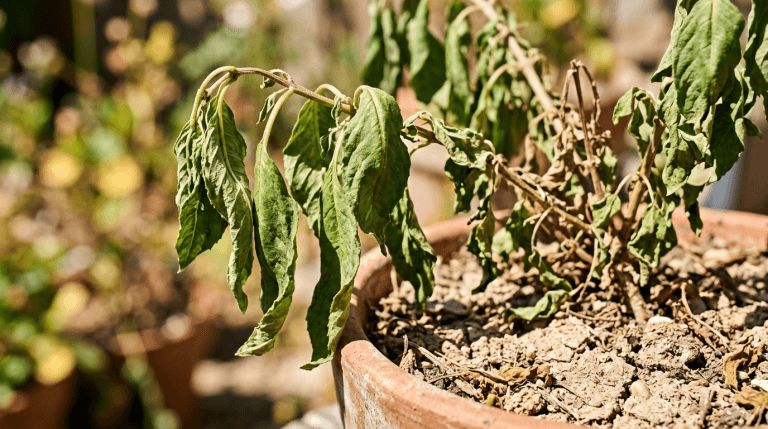
Brown tomato leaves can appear for half a dozen different reasons — and what you need to do depends entirely on which problem you're dealing with. Some are minor and easy to fix. A few are serious.
Here's how to tell them apart.
1. Early Blight (Brown Spots with Yellow Halos)
Early blight is one of the most common tomato diseases in the US. It's a fungal disease that starts on older, lower leaves and works its way up the plant.
What it looks like: Dark brown spots with concentric rings, surrounded by a yellow halo. Spots start on lower leaves first.
What causes it: Fungal spores in the soil splash up onto leaves during rain or watering. Spreads in warm, humid weather.
Fix:
- Remove affected leaves immediately and throw away (don't compost)
- Water at the base — never overhead
- Apply a copper-based fungicide or neem oil to slow spread
- Mulch around plants to prevent soil splash
- Next year: rotate tomatoes to a different spot
2. Septoria Leaf Spot (Small Spots with Dark Edges)
Septoria looks similar to early blight but has its own pattern.
What it looks like: Many small, round spots (about ¼ inch) with dark brown or black edges and lighter centers. Often appears mid-season.
Fix: Same as early blight — remove affected leaves, improve air circulation, avoid overhead watering, apply copper fungicide if spreading quickly.
Quick tip: Both early blight and septoria are nearly universal in US vegetable gardens by late summer. Don't panic — manage them so the plant stays productive, but you probably won't eliminate them entirely.
3. Leaf Scorch or Sun Scald (Papery Brown Patches)
What it looks like: Papery, dry, tan or light brown patches on leaves or fruit, usually on the side facing the sun. No spots or rings.
What causes it: Direct sun on leaves that were previously shaded (often happens after removing leaves), or heat stress.
Fix:
- This is a physical/environmental damage, not a disease
- No spray needed
- Provide shade cloth in extreme heat (above 95°F)
- Avoid suddenly removing large amounts of foliage
4. Fusarium or Verticillium Wilt (Brown Interior Streaks)
These are serious soilborne fungal diseases that work from inside the plant outward.
What it looks like: Leaves turn yellow and brown starting on one side of the plant. If you cut through the main stem near the base, you'll see brown streaking inside.
Fix:
- No cure once infected
- Remove and destroy the plant
- Don't plant tomatoes or peppers in that spot for 3–4 years
- Next year: look for varieties labeled F (fusarium resistant) or V (verticillium resistant)
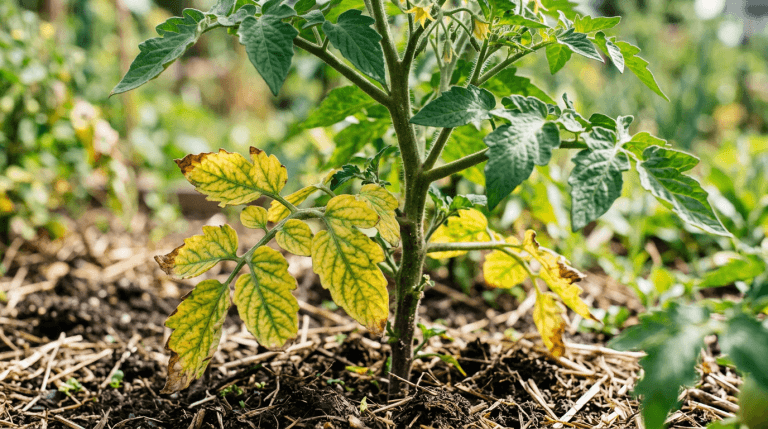
5. Nutrient Deficiency (Yellowing With Brown Tips)
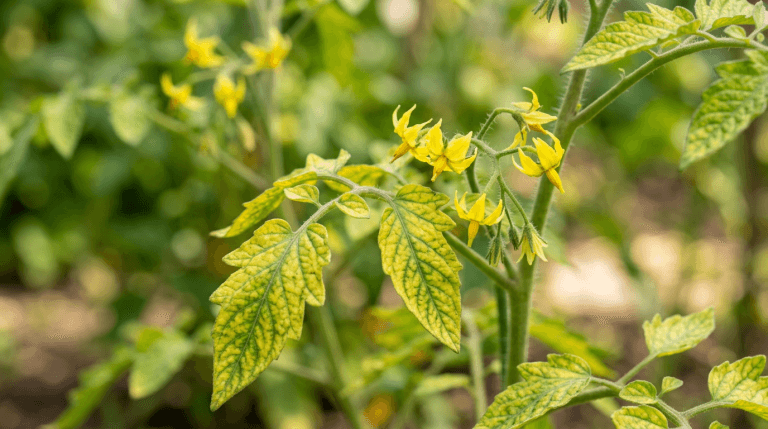
Magnesium deficiency: yellow between veins with brown leaf edges, starting on older lower leaves.
Calcium deficiency: contributes to both brown leaf edges and blossom end rot on fruit.
Fix:
- Magnesium: spray leaves with Epsom salt solution (1 tablespoon per gallon of water)
- Calcium: ensure consistent watering so the plant can absorb calcium; add lime to acidic soil
6. Normal Senescence (Lower Leaves Browning Late Season)
By August or September, the lower leaves of tomato plants naturally yellow and brown. This is just the plant aging — it's putting its energy into fruit, not foliage.
No fix needed. Simply remove the dead lower leaves to improve air circulation and reduce disease spread. The plant is still doing its job.
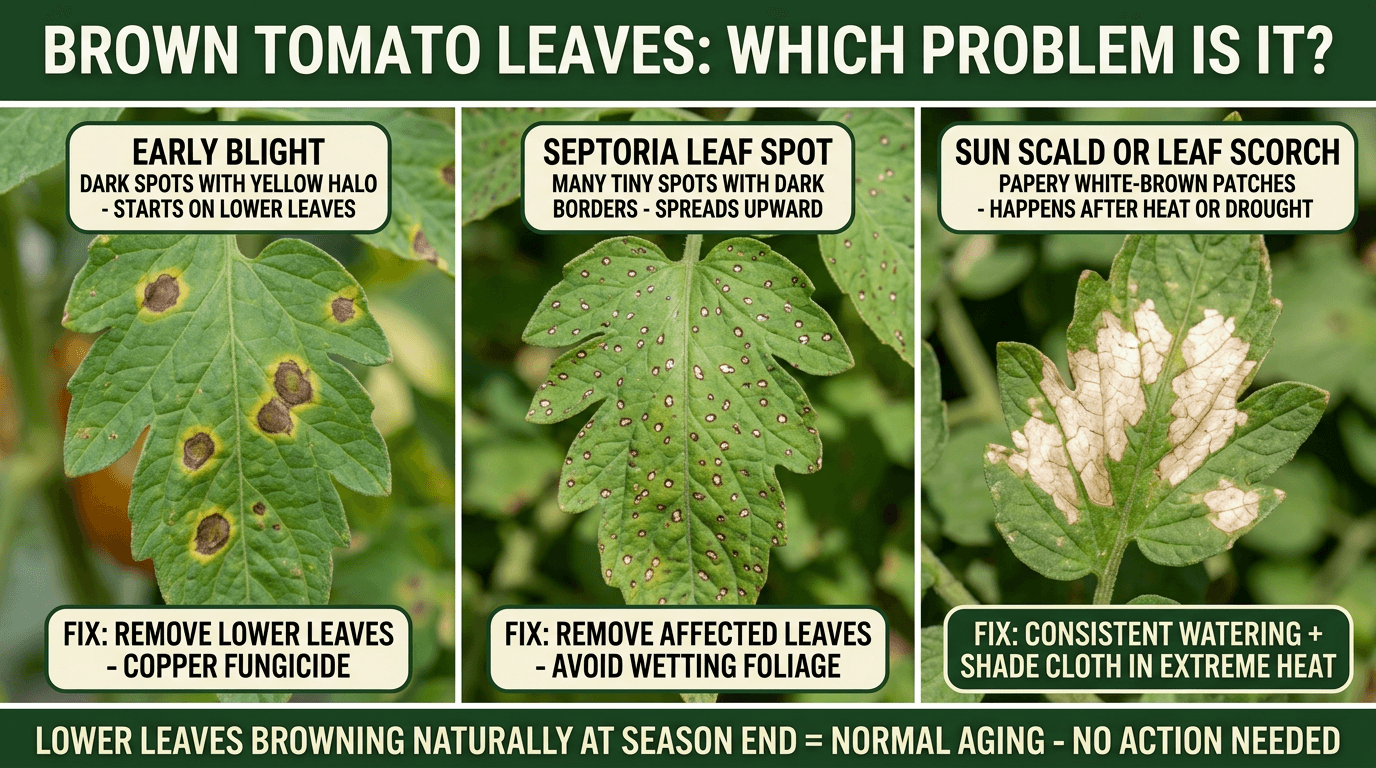
Quick Diagnostic Guide
| What you see | Likely cause |
|---|---|
| Brown spots with yellow rings, lower leaves first | Early blight |
| Many tiny spots with dark edges | Septoria leaf spot |
| Papery tan patches, no spots | Sun scald |
| Yellowing then browning, one side of plant, interior streaking | Fusarium/Verticillium wilt |
| Yellow between veins, brown edges | Magnesium deficiency |
| Lower leaves browning in August | Normal aging |
The most important thing with any tomato leaf problem is to act quickly — remove affected leaves before diseases spread, and improve growing conditions before things escalate.