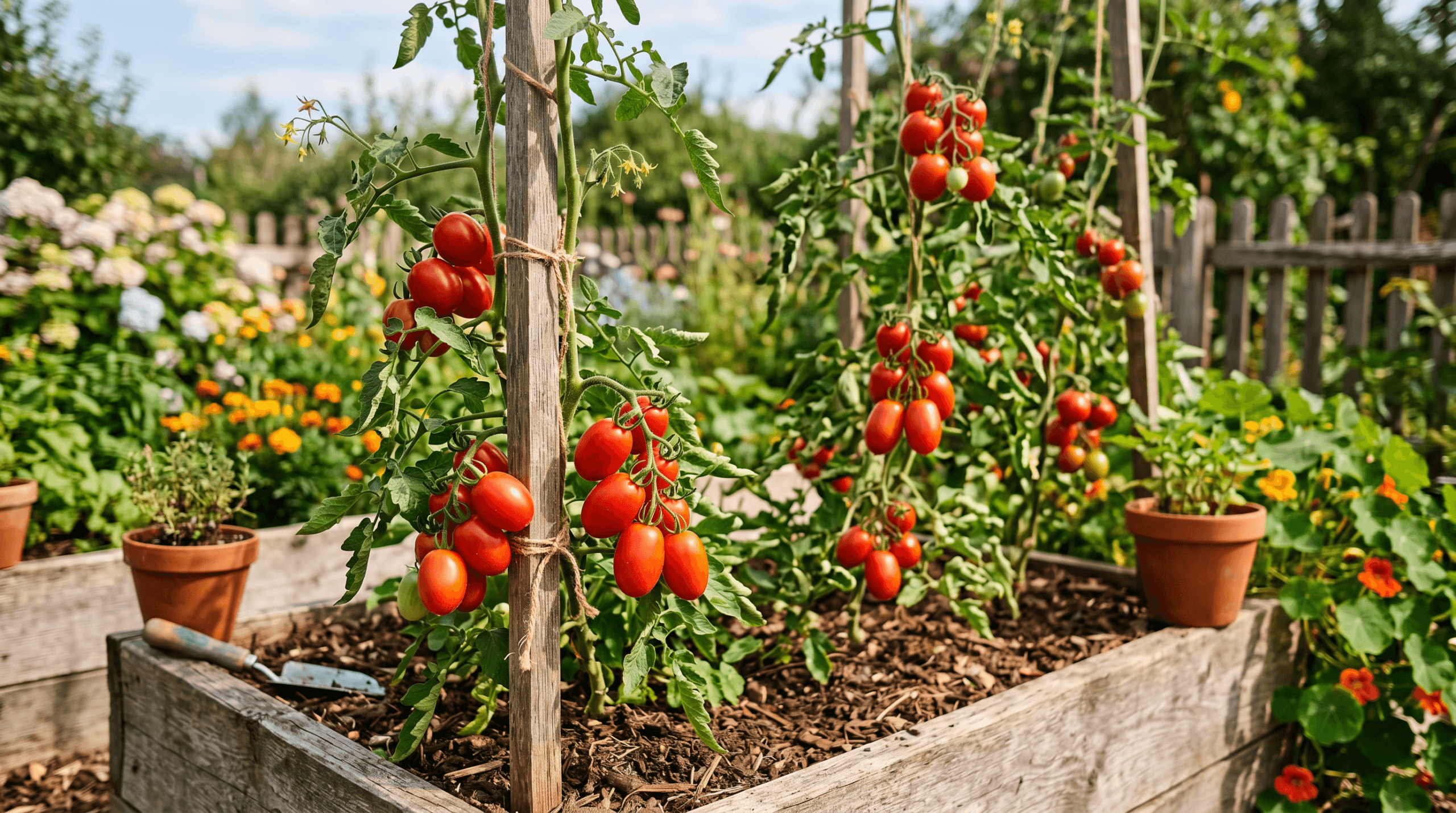
Raised beds are the best place to grow tomatoes. The soil drains well, warms up faster in spring, and you control every inch of what goes into it. Here’s exactly how to do it.
Choosing the Right Tomato Variety
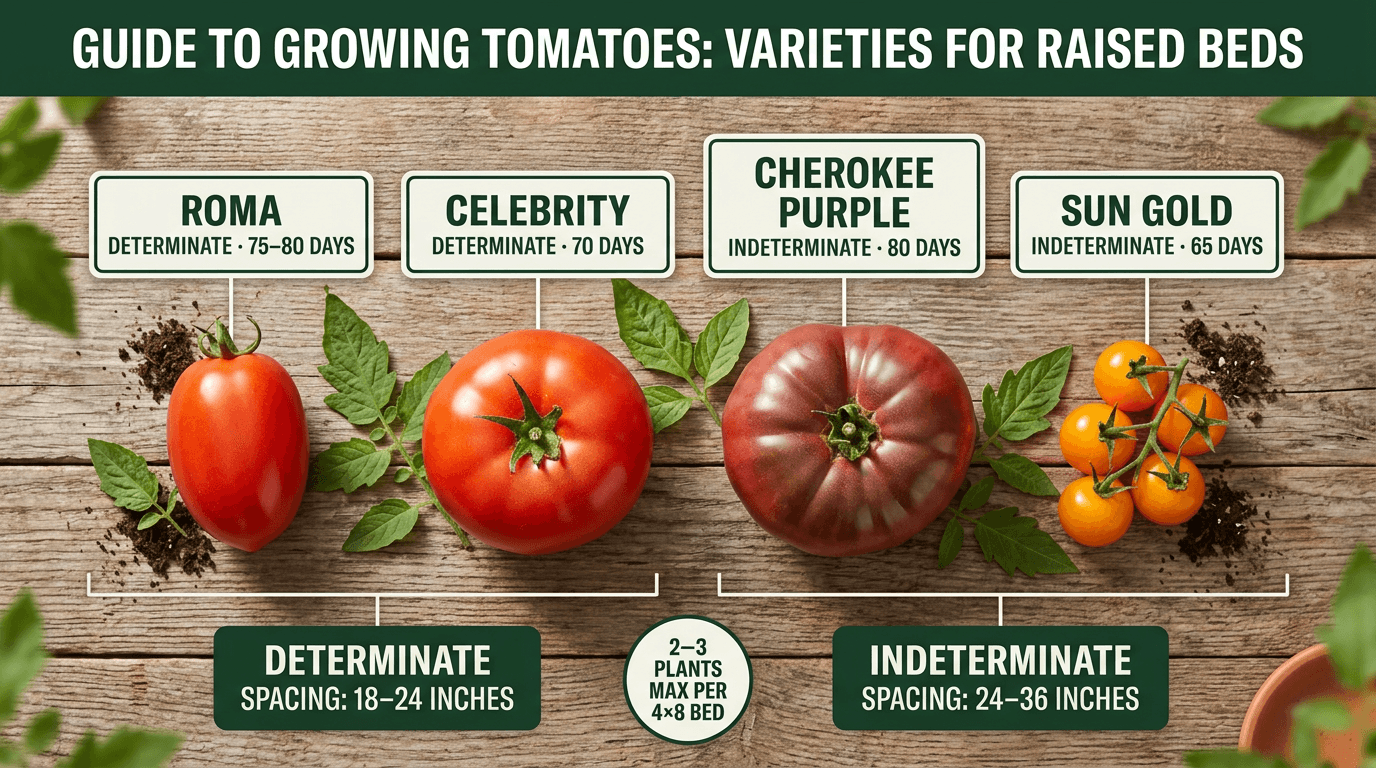
For raised beds, the choice between determinate and indeterminate matters:
- Determinate (bush tomatoes): Compact, produce all at once, then stop. Great for smaller beds. Examples: Roma, Celebrity, Bush Early Girl.
- Indeterminate: Keep growing and producing until frost. Need sturdy caging or staking. More total yield but need more space. Examples: Beefsteak, Cherokee Purple, San Marzano, Sun Gold.
For a 4×8 bed, plan for 2–3 tomato plants maximum.
Soil Mix for Tomatoes in Raised Beds
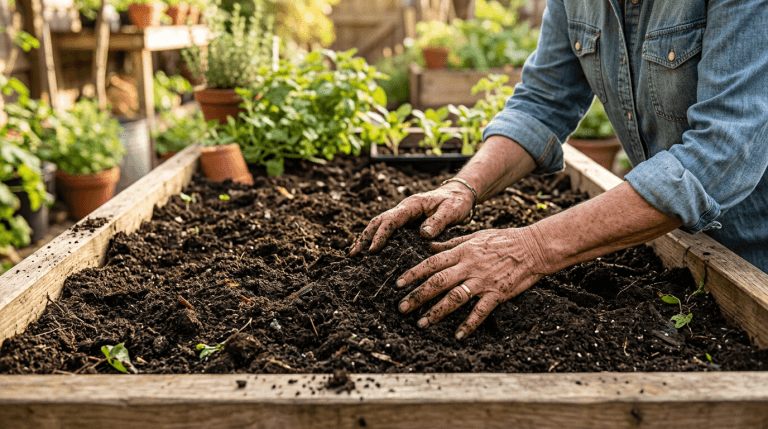
Tomatoes are heavy feeders and need rich, well-draining soil. The ideal raised bed mix:
- 60% quality topsoil
- 30% aged compost
- 10% perlite
Add a slow-release tomato fertilizer at planting time. Tomatoes also need calcium — add a handful of crushed eggshells or dolomite lime to the planting hole to prevent blossom end rot.
When to Plant
Plant tomato transplants after your last frost date when nighttime temperatures stay consistently above 50°F. Tomatoes planted in cold soil stall — they don’t die, but they won’t grow either. Find your last frost date at almanac.com/gardening/frostdates.
How to Plant Tomatoes Deep
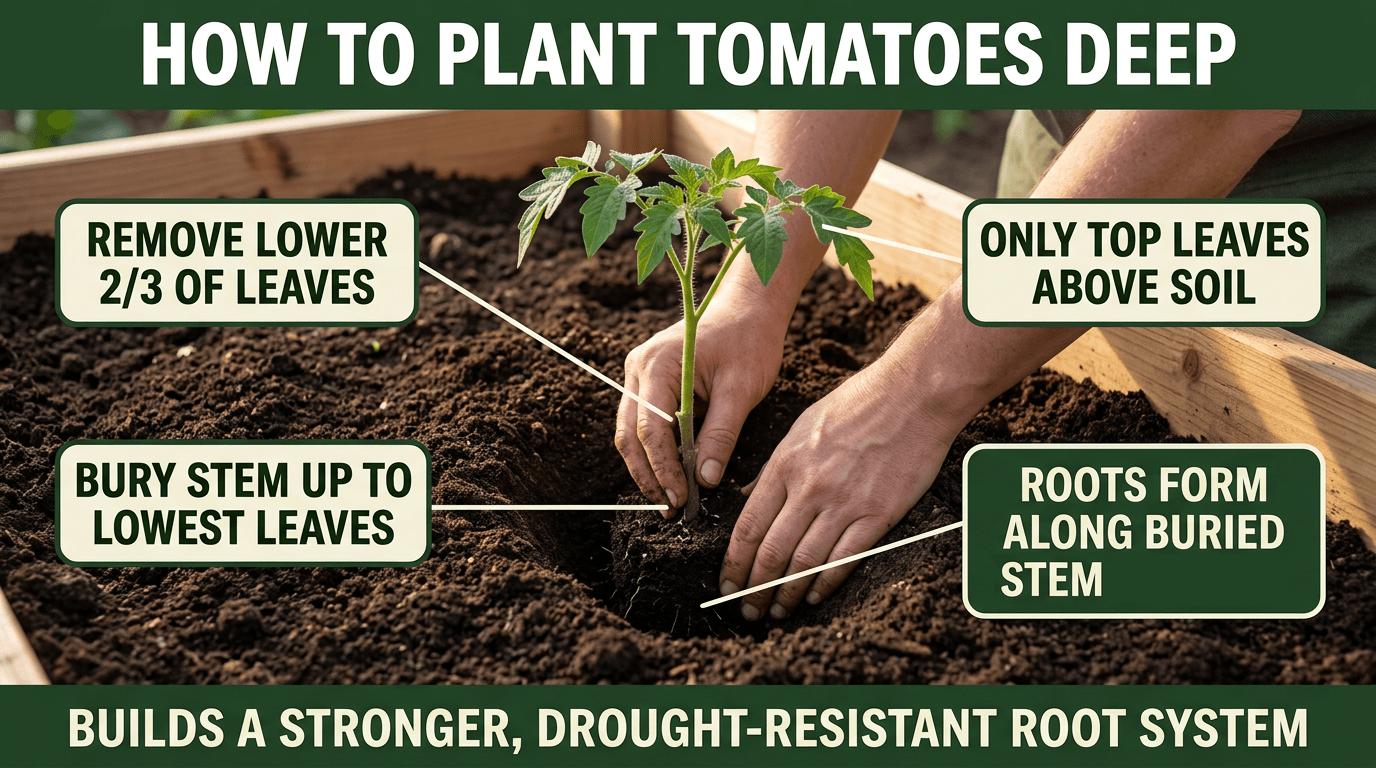
Unlike most plants, tomatoes develop roots along their buried stem. Plant deep:
- Remove the lower 2/3 of leaves
- Dig a hole deep enough to bury the stem up to the lowest remaining leaves
- Or lay the plant on its side in a trench and let the top curve up
This builds a stronger, more drought-resistant root system.
Spacing in a Raised Bed
- Determinate varieties: 18–24 inches apart
- Indeterminate varieties: 24–36 inches apart
Crowding tomatoes invites disease. If you’re tempted to squeeze more in — don’t.
Supporting Your Plants
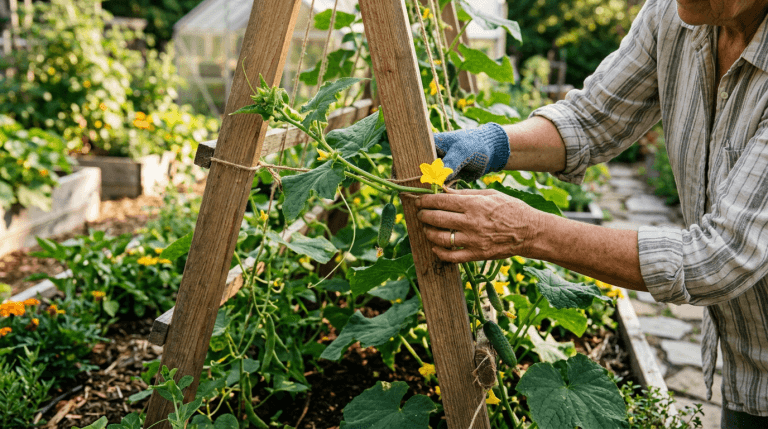
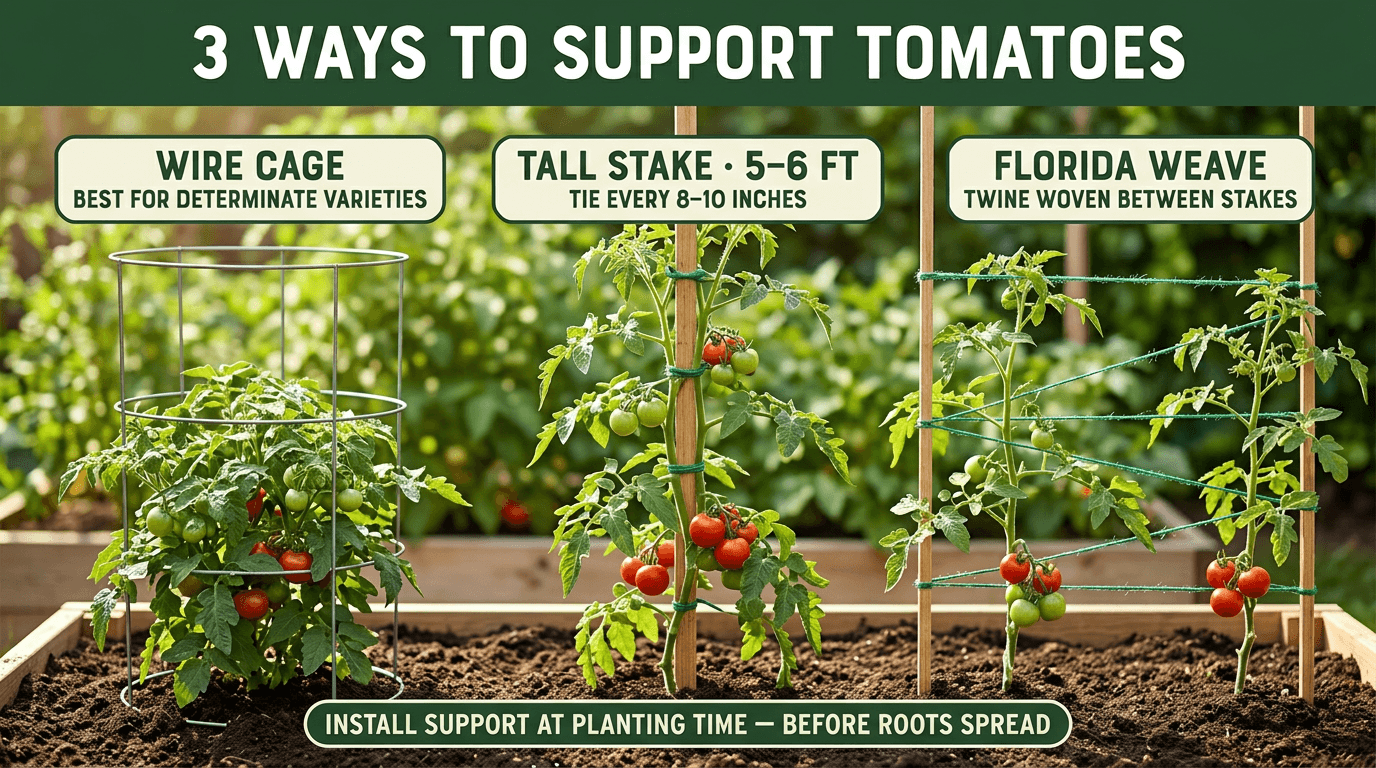
Install your cage or stake at planting time, before the roots spread. Doing it later damages roots.
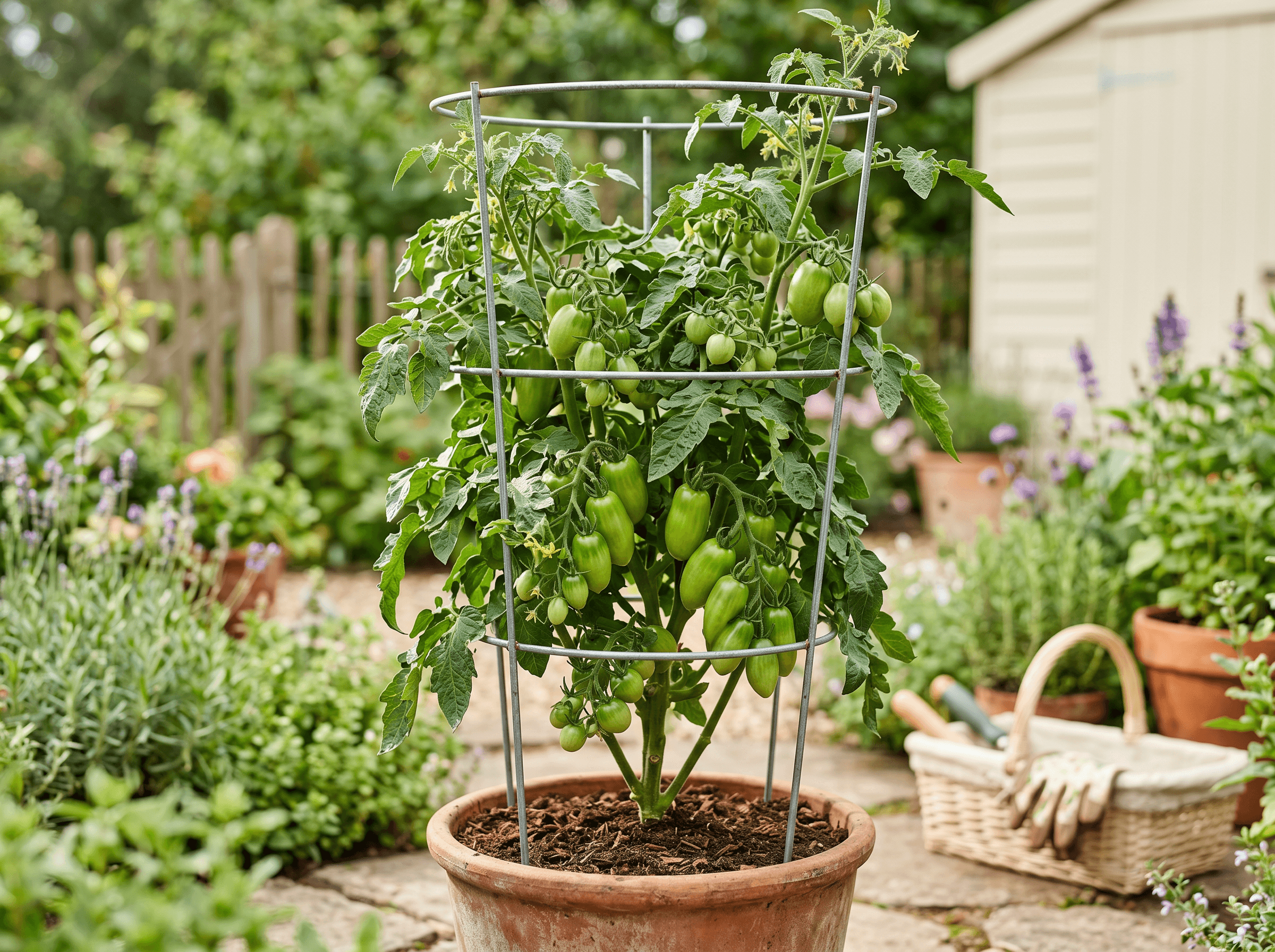
- Tomato cages (heavy-duty wire): Best for determinate varieties and medium indeterminate
- Wooden or metal stakes (5–6 feet tall): For large indeterminate varieties — tie the main stem every 8–10 inches as it grows
- Florida Weave (twine strung between stakes): Efficient for multiple plants in a row
Avoid the flimsy conical cages sold at most hardware stores — they collapse under the weight of a productive plant.
Watering Tomatoes
Inconsistent watering is the #1 cause of problems in tomato plants. It leads to blossom drop, blossom end rot, and cracking.
- 1–1.5 inches per week, deeply at the base
- Drip irrigation or soaker hoses are ideal
- Mulch heavily (3 inches of straw or wood chips) to retain moisture
Feeding Schedule
- At planting: Slow-release balanced fertilizer + calcium
- When first flowers appear: Switch to a tomato-specific fertilizer lower in nitrogen, higher in phosphorus and potassium (e.g., 5-10-10)
- Every 2–3 weeks through harvest: Continue feeding
High nitrogen after flowering = lots of leaves, few fruits.
To Prune or Not to Prune
Determinate varieties: Don’t prune. Let them grow naturally.
Indeterminate varieties: Remove “suckers” — the shoots that grow in the V between the main stem and a branch. Removing them focuses energy on fewer, larger fruits. Leave 1–2 main stems.
Common Problems and Solutions
| Problem | Likely Cause | Fix |
|---|---|---|
| Yellow lower leaves | Normal aging or nitrogen deficiency | Feed with balanced fertilizer |
| Black bottom on fruits | Blossom end rot (calcium/water issue) | Consistent watering + add calcium |
| White patches on leaves | Powdery mildew | Improve air circulation, remove affected leaves |
| Curled leaves | Heat stress or mosaic virus | Shade cloth in extreme heat; remove infected plants |
| No fruit despite flowers | Temps too high/low, poor pollination | Gently shake plants; morning is best for pollination |
Harvesting
Tomatoes are ready when fully colored and slightly soft to the touch. Don’t wait for perfection on the vine — once colored, you can bring them inside to finish ripening at room temperature. Pick frequently. Leaving ripe fruits on the plant slows production.