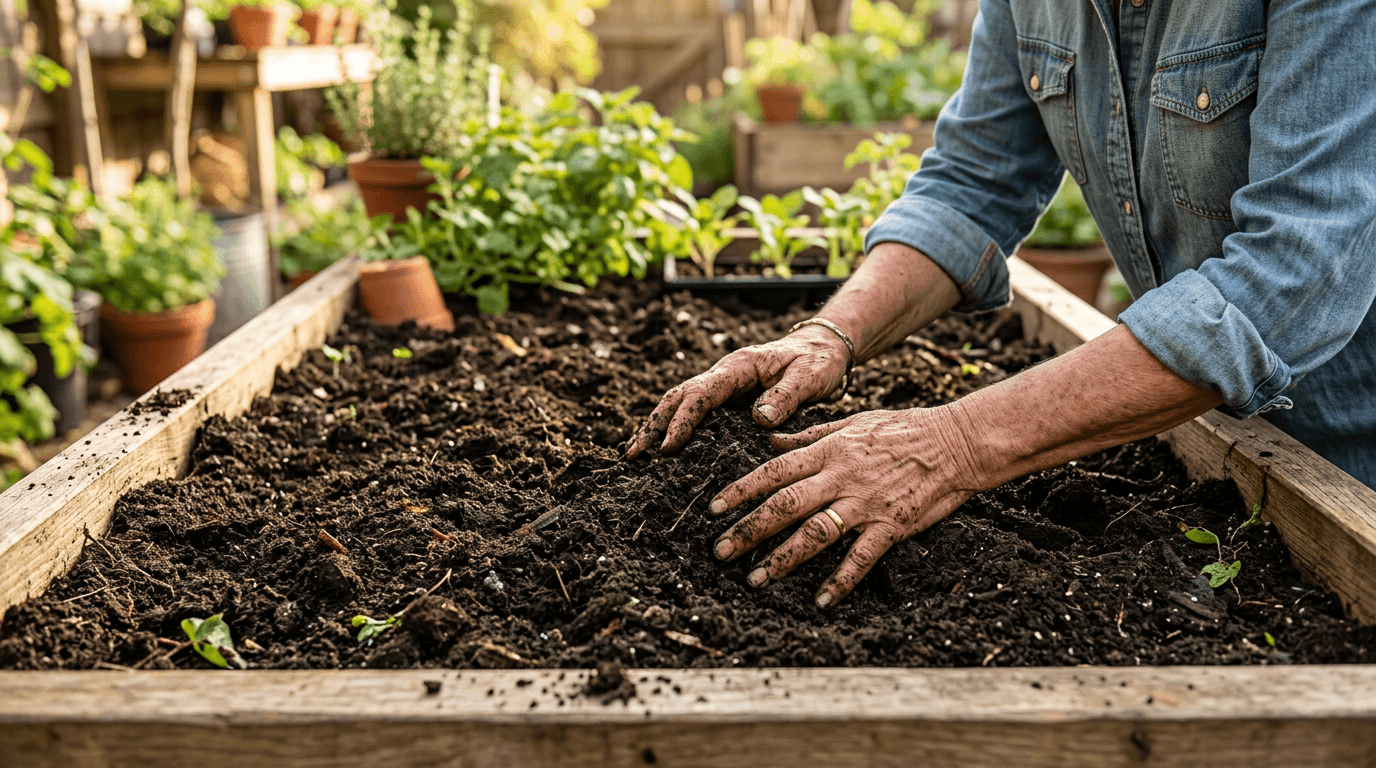
The single biggest factor in how well your raised bed performs isn’t the wood you built it from — it’s what you fill it with. Good raised bed soil drains well, holds enough moisture between waterings, and feeds your plants all season. Get the mix right once, and you’ll be rewarded with healthier plants and a noticeably lighter workload for years.
This guide breaks down the two most popular soil mix recipes, what each ingredient actually does, and how much you’ll need to fill your bed.
Two Popular Mix Recipes
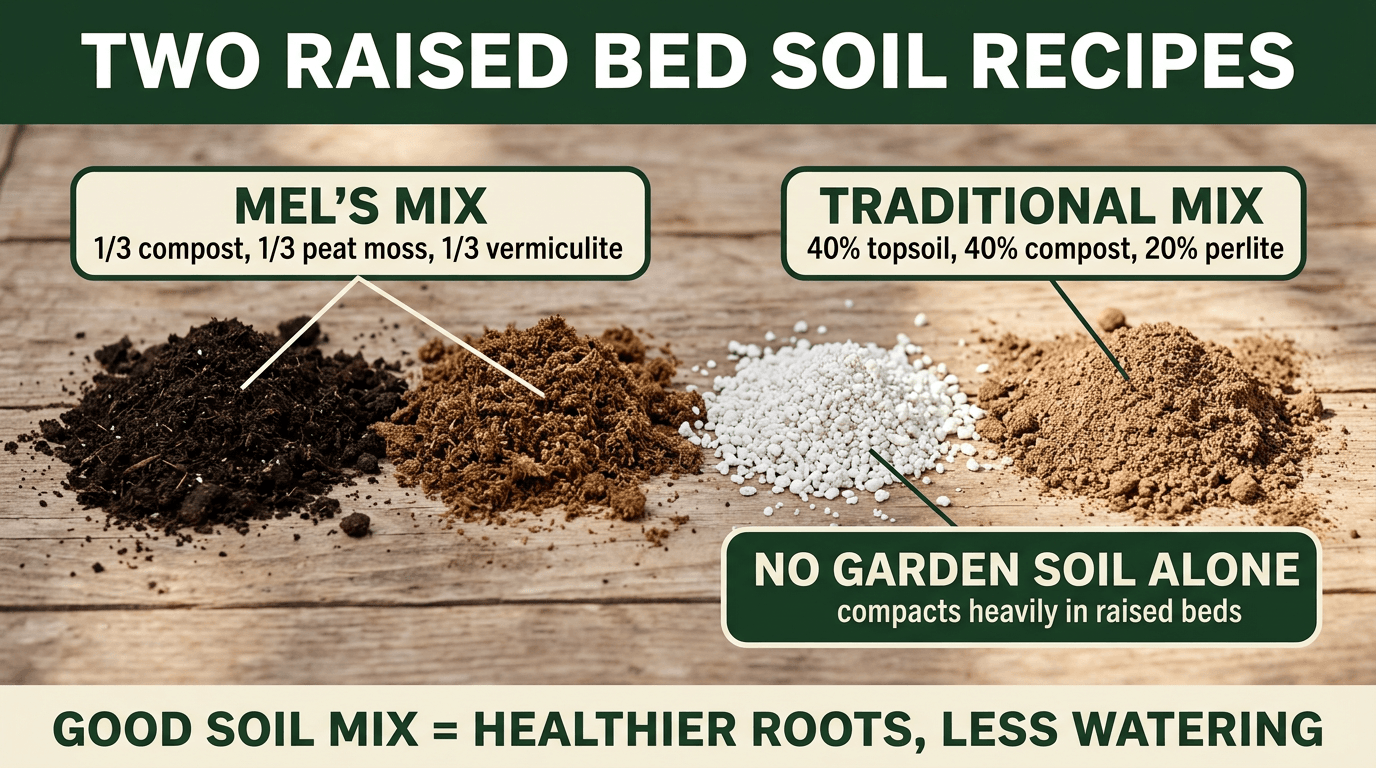
Mel’s Mix (Square Foot Gardening method) — Equal parts by volume:
- 1/3 compost (ideally a blend of several different types)
- 1/3 peat moss or coconut coir
- 1/3 coarse vermiculite
This mix contains no topsoil at all. It’s lightweight, drains beautifully, and holds moisture well — popular for its consistency and reliability, though it’s more expensive to fill a large bed with this recipe.
Traditional (economical) mix — By volume:
- 40% quality topsoil
- 40% compost
- 20% aeration material (perlite or coarse sand)
This version costs significantly less to fill a large bed, especially when topsoil and compost are purchased in bulk rather than by the bag. It performs nearly as well as Mel’s Mix once the bed has a season or two to settle in.
Best bet for most home gardeners: The traditional mix for larger beds, where bulk pricing makes a real difference in cost. Mel’s Mix is worth the extra expense for smaller beds or if you want the most consistent, predictable results right from year one.
Understanding Each Ingredient
Topsoil — The bulk base of a traditional mix. Buy from a reputable bulk supplier rather than bagged “garden soil,” which is often lower quality and more expensive per cubic foot. Avoid digging topsoil straight from your yard for a raised bed — it compacts heavily once confined and may carry weed seeds or lawn chemical residue.
Compost — The nutrient engine of the mix. A blend of a few different compost sources (mushroom compost, composted manure, homemade compost) gives a broader range of nutrients than any single type alone. Always use fully finished, dark, crumbly compost — not fresh, uncomposted material, which can burn roots and rob nitrogen from the soil as it continues to break down.
Peat moss or coconut coir — Both hold moisture and lighten the mix’s texture. Coconut coir is the more sustainable, renewable choice (a byproduct of the coconut industry) and behaves very similarly to peat moss, which is harvested from slow-regenerating bogs. Either works well; coir is generally the better environmental choice.
Perlite or vermiculite — Lightweight volcanic minerals that improve drainage and aeration. Perlite is the better choice for aeration and preventing compaction; vermiculite holds slightly more moisture. Coarse sand is a lower-cost substitute for aeration, though it doesn’t lighten the mix as much.
How Much Soil Do You Need?
Calculate the volume of your bed in cubic feet: length (ft) × width (ft) × height (ft) = cubic feet.
For example, a standard 4×8 foot bed with 12-inch-tall sides needs 4 × 8 × 1 = 32 cubic feet of soil mix.
- Bagged soil typically comes in 1.5 or 2 cubic foot bags — a 32 cubic foot bed needs roughly 16–21 bags
- Bulk soil and compost are sold by the cubic yard (27 cubic feet) — often far cheaper than bagged for larger beds. Many local landscape suppliers deliver bulk soil and compost by the yard.
- For a garden with several beds, ordering bulk ingredients and mixing on a tarp is usually the most economical approach
Mixing and Filling Your Bed
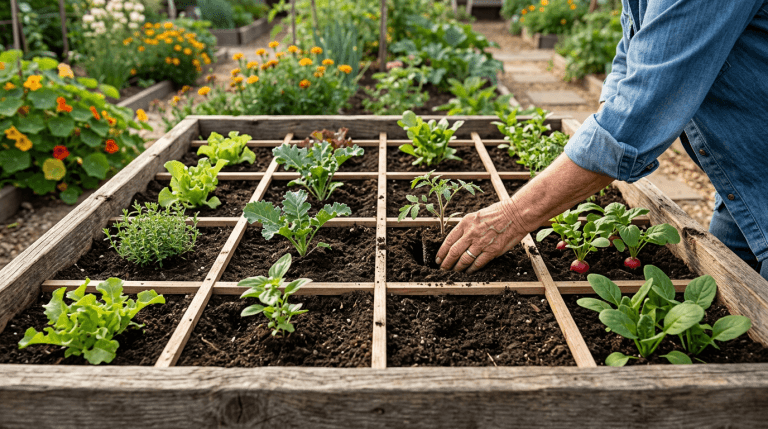
- If using bulk materials, combine ingredients on a large tarp, in a wheelbarrow, or directly in the bed itself, turning with a shovel or garden fork until evenly blended
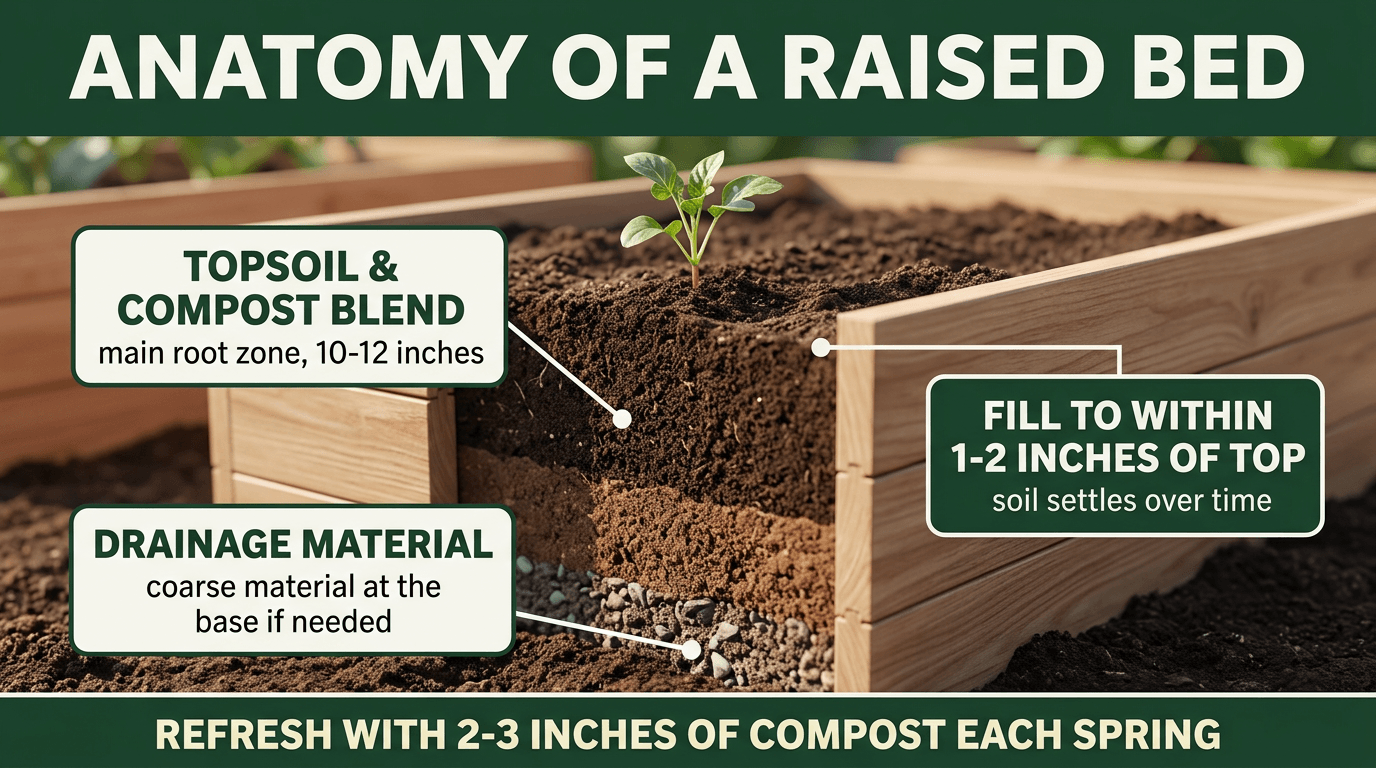
- Fill the bed to within an inch or two of the top, since the mix will settle over the following weeks
- Water the filled bed thoroughly before planting to help the mix settle and reveal any spots that need topping off
- Let a newly filled bed rest for a few days if possible before planting, allowing it to settle further
What to Avoid
- Pure topsoil or native garden soil alone — compacts heavily in the confined space of a raised bed, restricting root growth and drainage
- Fresh, uncomposted manure — too high in ammonia and can burn plant roots; always use fully composted manure that’s dark and odorless
- Construction sand or fine play sand — compacts into a dense, cement-like layer when combined with soil; use only coarse, sharp sand if using sand at all
- Soil from areas treated with herbicides — some lawn and pasture herbicides persist in soil and compost for months or years and can stunt or kill vegetable plants
Refreshing Your Soil Each Year
Raised bed soil settles and loses volume and fertility over time as organic matter breaks down and plants use up nutrients. You don’t need to replace it entirely — just refresh it.
- Each spring, top off beds with 2–3 inches of fresh compost, worked into the top few inches of existing soil
- Every few years, check soil level and add a fresh layer of the original mix ratio if the bed has settled significantly
- Consider a soil test every 2–3 years to check pH and nutrient levels, adjusting amendments as needed
- Cover crops (like clover or winter rye) planted in the off-season can also add organic matter and improve soil structure between growing seasons