Square foot gardening takes the guesswork out of spacing and turns a single raised bed into a highly organized, highly productive grid. Instead of long rows with wide gaps you have to weed, you plant in small, defined squares — each one exactly as full as it should be, no more and no less.
Developed by Mel Bartholomew, this method is especially popular with beginners and gardeners with limited space or mobility, since everything stays within easy reach and there’s no wasted ground to weed or till.
The Basic Concept
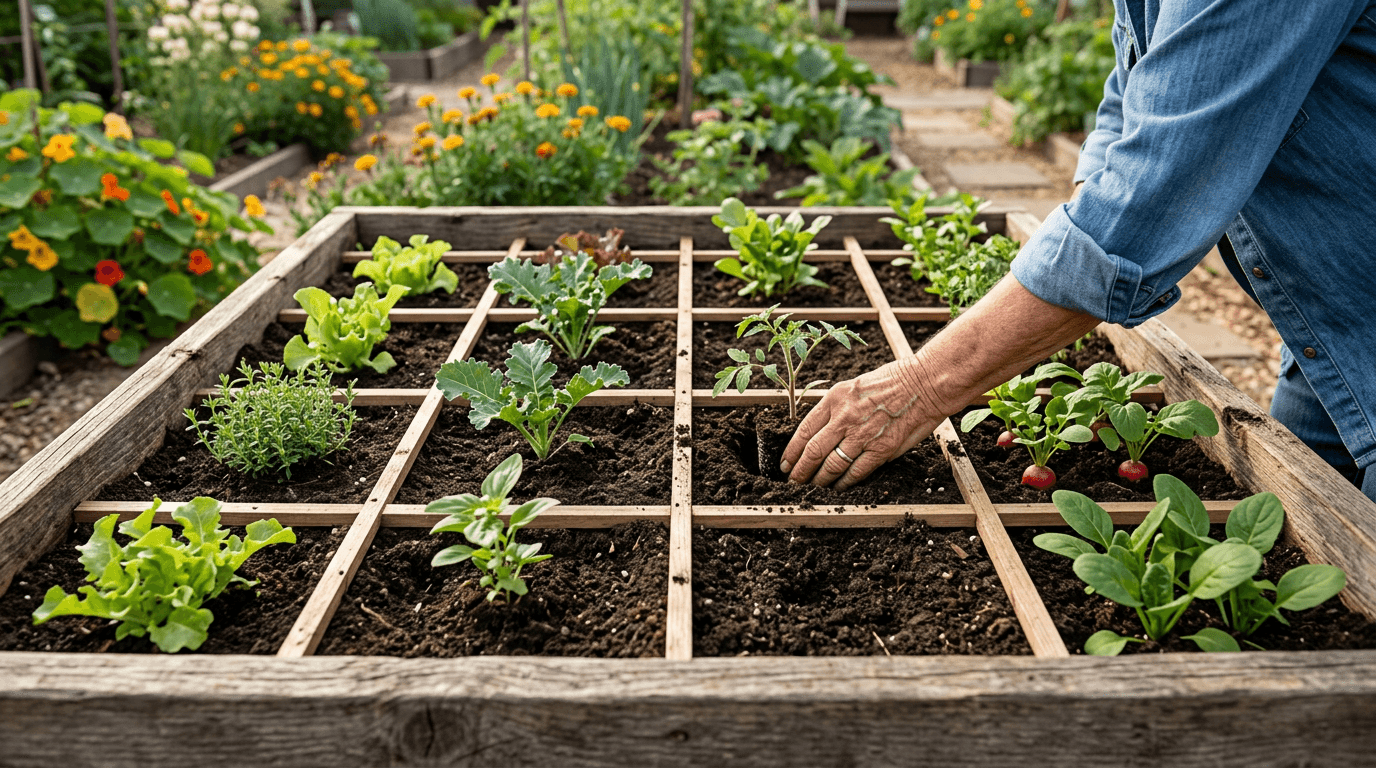
A square foot garden divides a raised bed into a grid of 1-foot by 1-foot squares, physically marked with a lattice of string, wood strips, or thin lath. The classic starting size is a 4×4 foot bed, which creates 16 individual squares — small enough to reach the center from any side without stepping into the bed.
Each square is planted with a specific number of plants based on that plant’s mature size — not by seed packet row spacing, which is designed for traditional single-row field planting and wastes a lot of space in a raised bed.
How to Build the Grid
- Fill your raised bed with quality soil mix (see the Raised Bed Soil Mix guide for recipes)
- Measure and mark 1-foot intervals along each side of the bed
- Create the grid using thin wood lath, garden twine, or even strips of an old mini blind stapled to the bed frame — anything that creates a visible 1-foot by 1-foot division
- Secure the grid so it stays in place through watering and harvesting all season
The physical grid isn’t just for looks — it keeps spacing honest. Without it, it’s easy to drift back into old row-planting habits and overcrowd the bed.
Spacing Chart by Plant Size
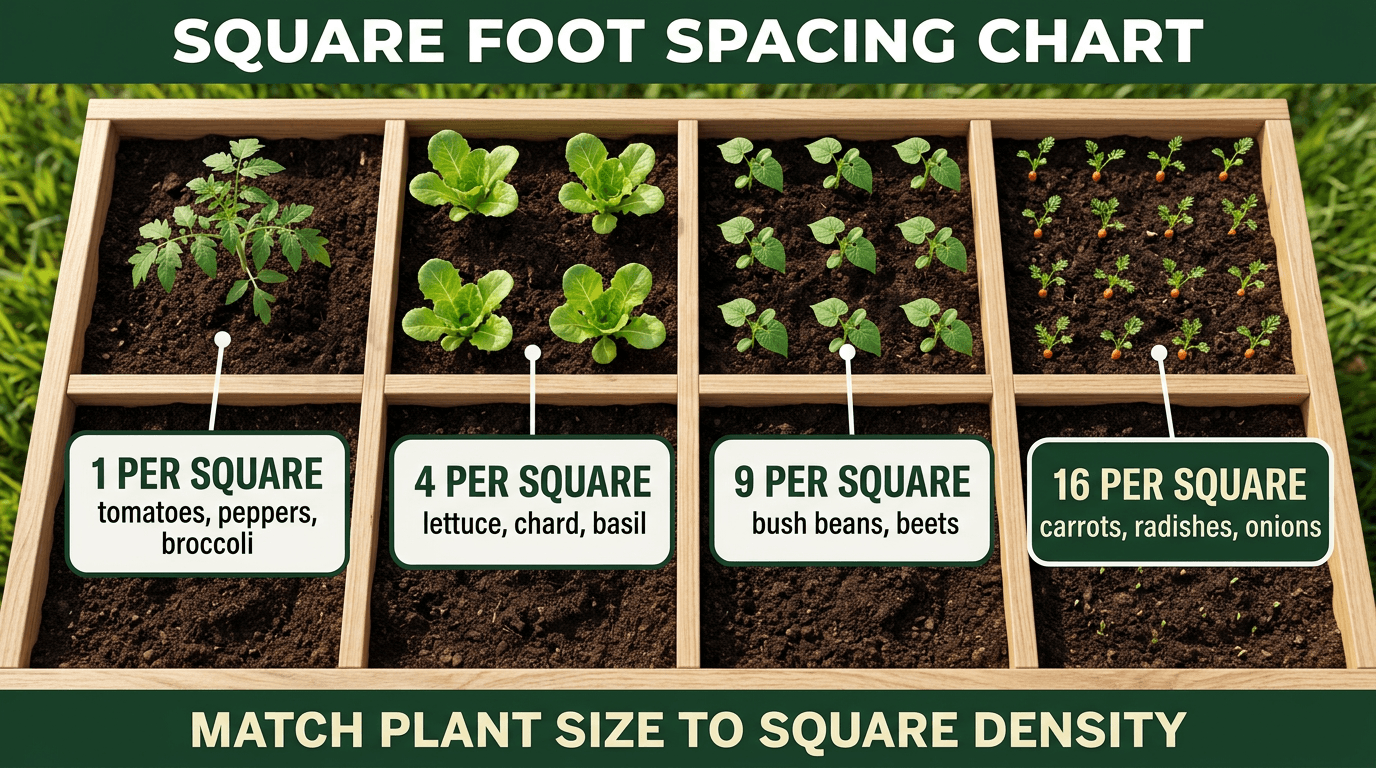
Every vegetable falls into one of four spacing categories, based on how much room the mature plant needs.
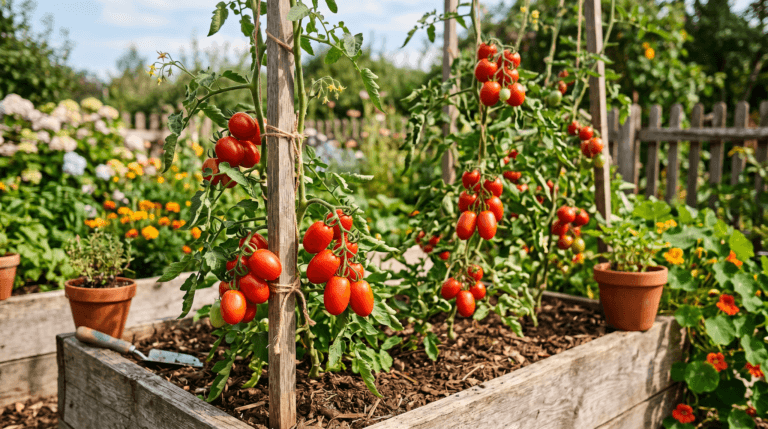
1 plant per square (large plants, roughly 12+ inches of space needed): Tomatoes, peppers, broccoli, cabbage, cauliflower, eggplant.
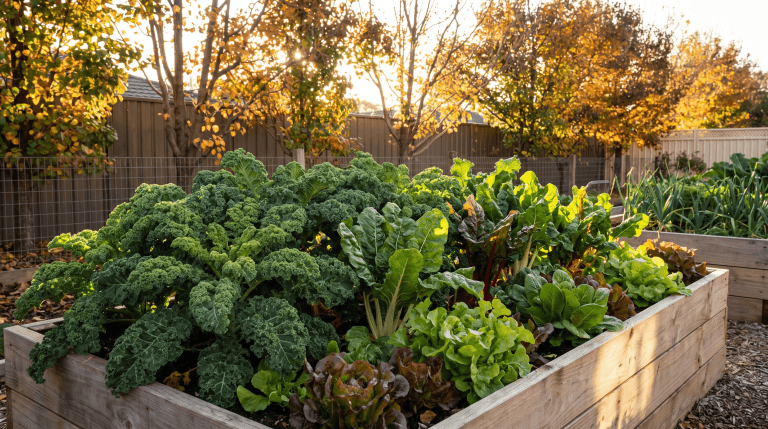
4 plants per square (medium plants, roughly 6 inches apart): Lettuce, Swiss chard, spinach (larger varieties), marigolds, basil.
9 plants per square (small plants, roughly 4 inches apart): Bush beans, beets, turnips, spinach (baby varieties).
16 plants per square (tiny plants, roughly 3 inches apart): Carrots, radishes, onions, garlic.
Check individual seed packets for exact plant spacing recommendations if a vegetable isn’t listed here, then match it to the closest category above.
Handling Vining and Climbing Crops
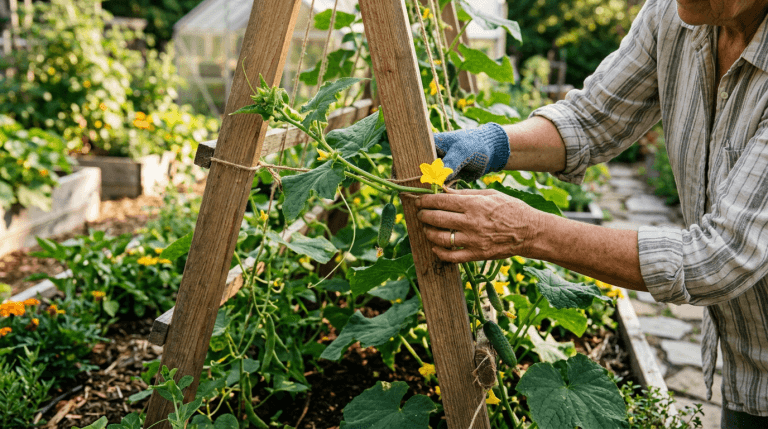
Vining crops like cucumbers, squash, melons, and pole beans need special handling in a square foot layout, since they’d otherwise sprawl across and shade out neighboring squares.
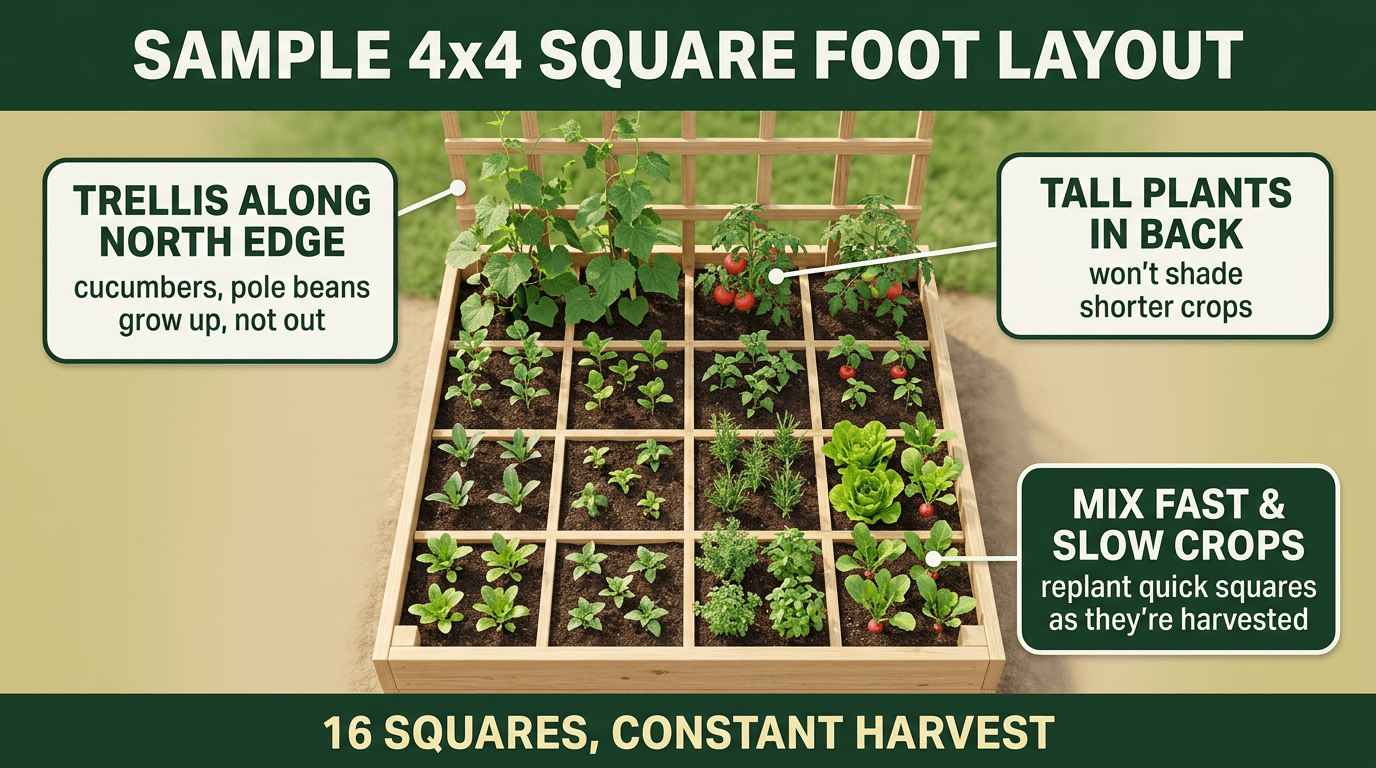
- Position these crops in squares along the north edge of the bed (in the Northern Hemisphere), so their vertical growth doesn’t shade shorter plants
- Install a trellis, cage, or vertical netting directly behind or above their square, training vines upward instead of letting them sprawl
- One vining plant per square is typically enough when grown vertically — cucumbers and squash trained up a trellis take up far less footprint than left to sprawl on the ground
- Support heavier fruit (like melons or large squash) with slings made from netting or old pantyhose tied to the trellis, so the vine doesn’t bear the full weight
Planning Your Layout
With 16 squares in a standard 4×4 bed, a little planning goes a long way toward a productive, balanced harvest.
- Group plants with similar water needs near each other when possible
- Place taller plants (staked tomatoes, trellised vines) where they won’t shade shorter, sun-loving crops
- Mix quick-maturing crops (radishes, lettuce, spinach) with slower ones (tomatoes, peppers) — you can harvest and replant the quick squares multiple times while the slow ones are still growing
- Leave a square or two open, or plan ahead for succession planting, so something is always ready to go into a freshly harvested square
Succession Planting Within the Grid
One of the biggest advantages of square foot gardening is how easy it makes continuous harvests. Because each square is an independent, self-contained unit, you can replant it the moment it’s harvested — without disturbing anything nearby.
- As soon as a square is harvested (radishes pulled, lettuce cut, beans finished), work in a little fresh compost and replant immediately
- Rotate plant families between plantings in the same square when possible — for example, follow beans (which add nitrogen to soil) with a leafy green (which uses nitrogen heavily)
- Keep a simple garden journal or map noting what grew in each square and when, making rotation planning easier season to season
Common Mistakes to Avoid
Using seed packet row spacing instead of square foot spacing — Seed packets are written for traditional row gardens with walking paths between rows. Applying that spacing inside a square foot bed wastes most of the method’s benefit. Always use the per-square counts above instead.
Skipping the physical grid — It’s tempting to eyeball the divisions, but without a visible grid, spacing habits drift back toward overcrowding within just a few weeks.
Not accounting for vertical growth — Placing vining crops in the middle or south side of a bed shades out everything behind them for the rest of the season.
Letting soil quality slide — Because square foot gardens are planted so intensively, soil nutrients get used up faster than in a traditional garden. Topping off with fresh compost between plantings matters more here than in a spread-out row garden.