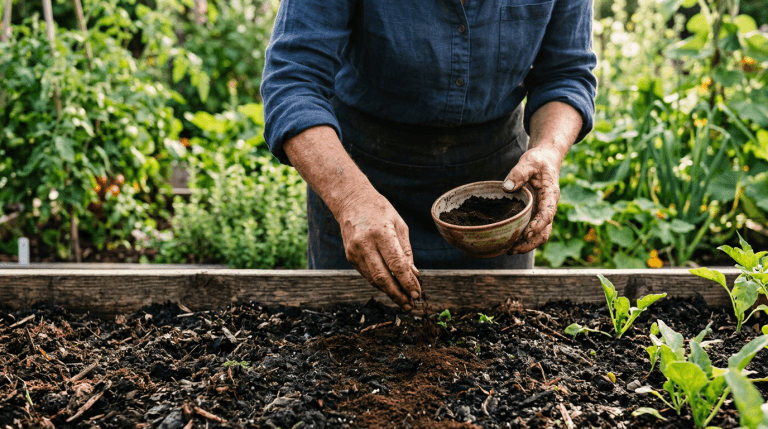
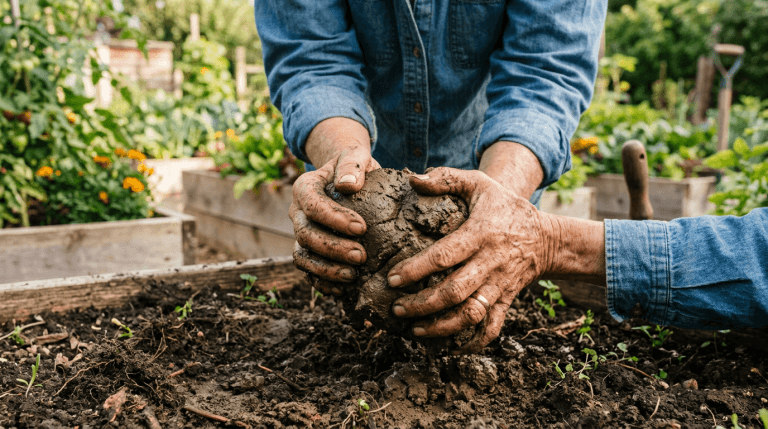
Compost is often called "black gold" by gardeners — and once you've grown anything in compost-rich soil, you'll understand why. Compost improves drainage in clay soil, adds moisture retention in sandy soil, feeds plants slowly and naturally, and builds the kind of living soil that makes everything grow better.
The best part? You make it from stuff you'd otherwise throw away.
What Is Compost?
Compost is organic material — kitchen scraps, yard waste, leaves — that has been broken down by bacteria, fungi, and small organisms into a dark, crumbly, nutrient-rich soil amendment.
Done right, it takes 2–6 months. Done in a relaxed way, it takes longer. Either works.
What Goes In (and What Doesn't)
Compost needs two types of material, called "greens" and "browns."
Greens (nitrogen-rich):
- Vegetable and fruit scraps
- Coffee grounds and paper filters
- Fresh grass clippings
- Plant trimmings (not diseased)
- Eggshells
Browns (carbon-rich):
- Dry leaves
- Cardboard (torn into pieces)
- Paper bags, newspaper
- Straw
- Sawdust (from untreated wood)
- Paper towels
The rough ratio: 2–3 parts browns to 1 part greens.
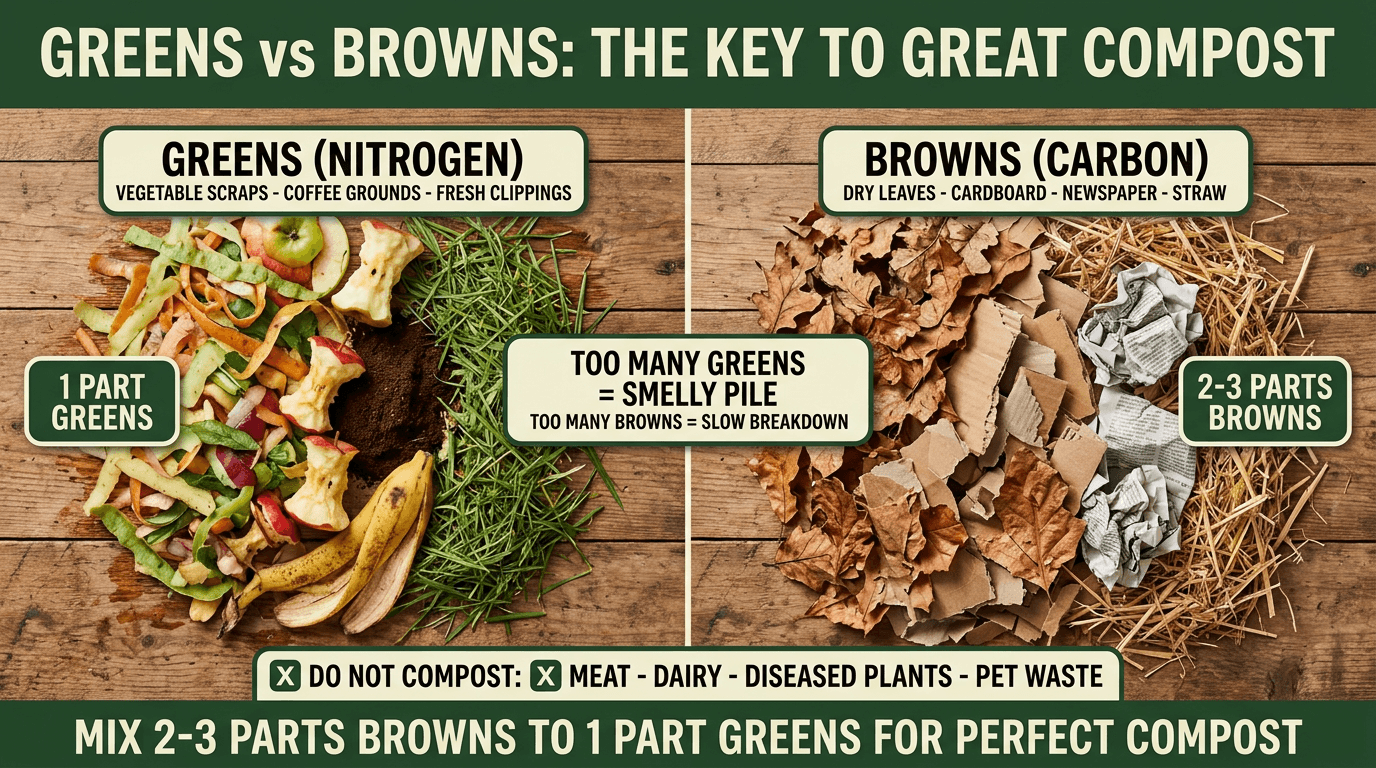
Don't compost:
- Meat, fish, bones (attract pests)
- Dairy products (attract pests)
- Diseased plant material
- Dog or cat waste
- Anything with oil or fats
- Glossy magazine paper
Choose a Composting Method
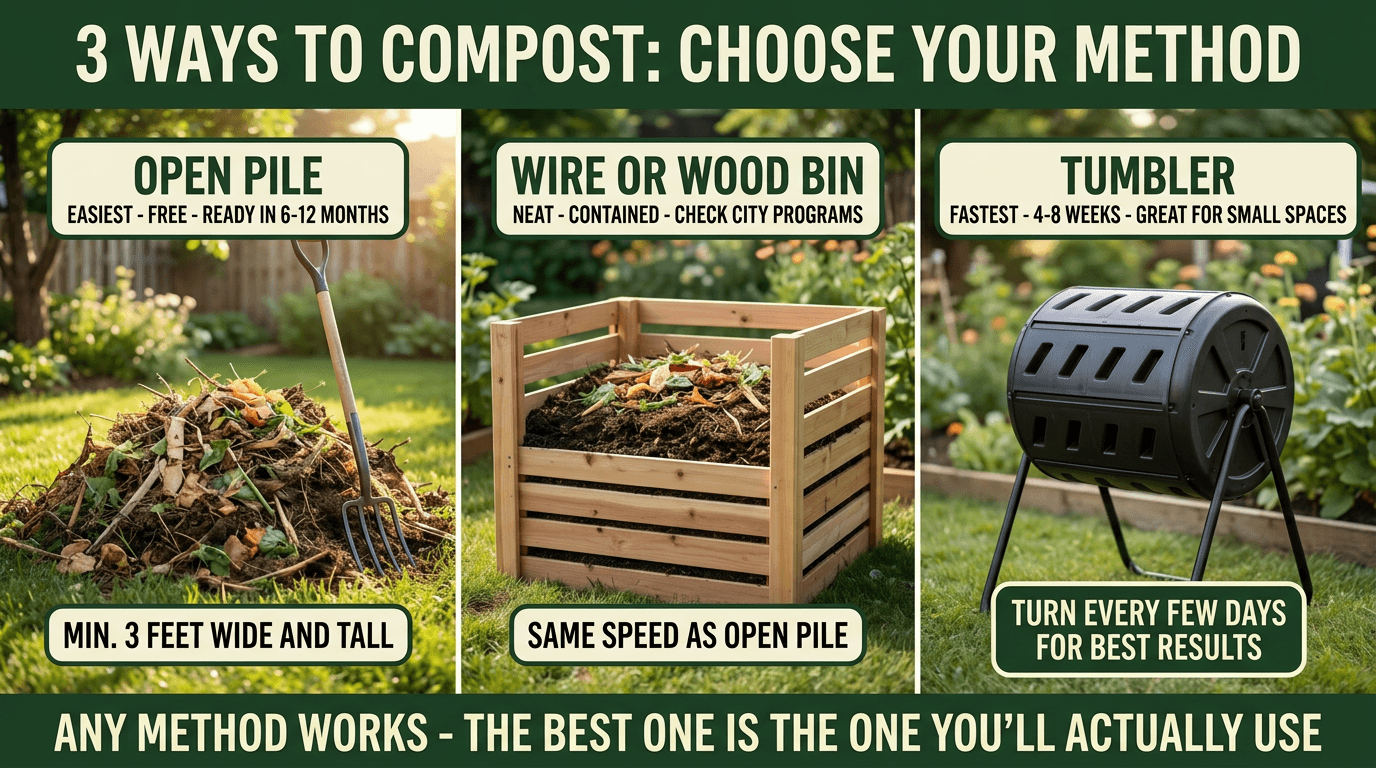
Option 1: Open pile (easiest, slowest) Simply pile material in a corner of your yard. Minimum size: 3 feet wide by 3 feet tall. Turn it occasionally. Ready in 6–12 months.
Option 2: Wire bin or wooden bin Keeps the pile contained and looks neater. Many cities offer subsidized compost bins — worth checking.
Option 3: Tumbler composter A rotating drum that speeds up the process. Produces compost in 4–8 weeks when managed well. Better for smaller spaces and those who don't want to turn a pile manually.
Option 4: Small kitchen composter For apartment gardeners or very small spaces. Collects scraps before transferring to a neighborhood compost program or outdoor bin.
Quick tip: Many municipalities offer free or low-cost compost bins. Search "[your city] compost bin program" before buying.
How to Build and Manage a Compost Pile
- Start with a layer of browns (4–6 inches of leaves or cardboard)
- Add a layer of greens (kitchen scraps or fresh clippings)
- Add another layer of browns
- Moisten lightly — the pile should feel like a wrung-out sponge
- Repeat layers as you add material
Every 1–2 weeks: Turn the pile with a garden fork, moving material from the outside to the inside. The inside of the pile is where the hot, active composting happens.
Signs Your Compost Is Working
- Warmth in the pile (especially after turning) — the bacteria are active
- Shrinking volume — material is breaking down
- Earthy smell — healthy compost smells like forest floor, not rot
Speeding Things Up
If your compost is breaking down slowly:
- Add more greens — nitrogen activates bacteria
- Chop or shred material smaller — more surface area = faster breakdown
- Keep it moist — dry piles don't compost
- Turn more often — every week for fastest results
What Finished Compost Looks Like
Ready compost is:
- Dark brown to black
- Crumbly, not slimy
- Smells earthy, not like rot
- You can't recognize the original materials
If there are still recognizable scraps, it needs more time. Sift out the finished compost from the bottom of the pile and let the rest continue.
How to Use Compost
- Mix into raised bed soil: 2–4 inches worked into the top 6–8 inches
- Use as mulch: Spread 1–2 inches on top of soil around plants
- Add to planting holes: A scoop per hole when transplanting
- Mix into containers: Up to 30% of the total volume
Compost works slowly and safely — you can't overapply it the way you can chemical fertilizers.
Starting a compost pile is one of those small decisions that pays dividends for as long as you garden. Your soil will tell you the difference by the end of the first season.