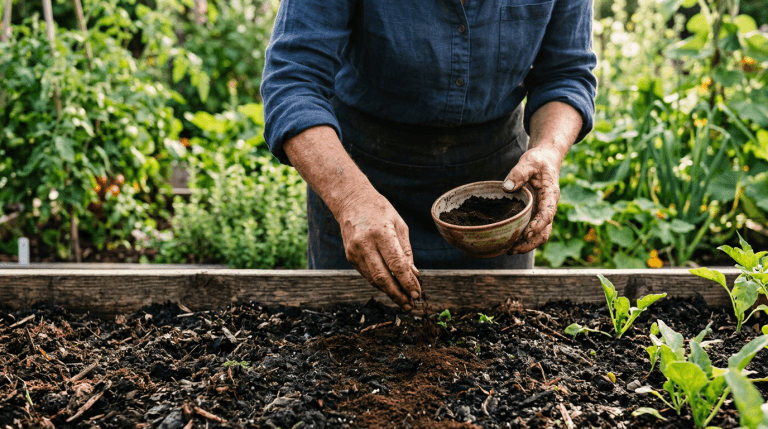
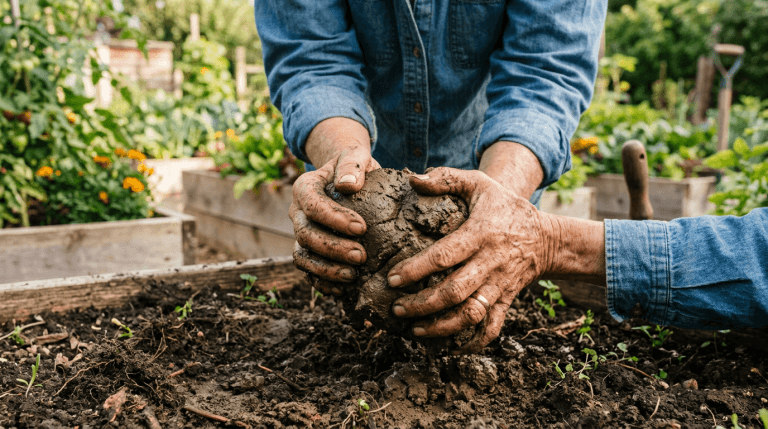
Mulching is one of those garden tasks that takes an hour and keeps paying you back all season. A 2–3 inch layer of mulch around your plants does more work than almost anything else you can do.
Here's what mulch actually does, what to use, and when to apply it.
What Mulch Does for Your Garden
Retains moisture. Mulched soil holds water much longer than bare soil. In summer, this can cut your watering needs in half.
Suppresses weeds. Most weed seeds need light to germinate. Mulch blocks that light. Not 100% effective, but it dramatically reduces weeding time.
Regulates soil temperature. Mulch insulates roots from extreme heat in summer and cold in fall. This extends your harvest season at both ends.
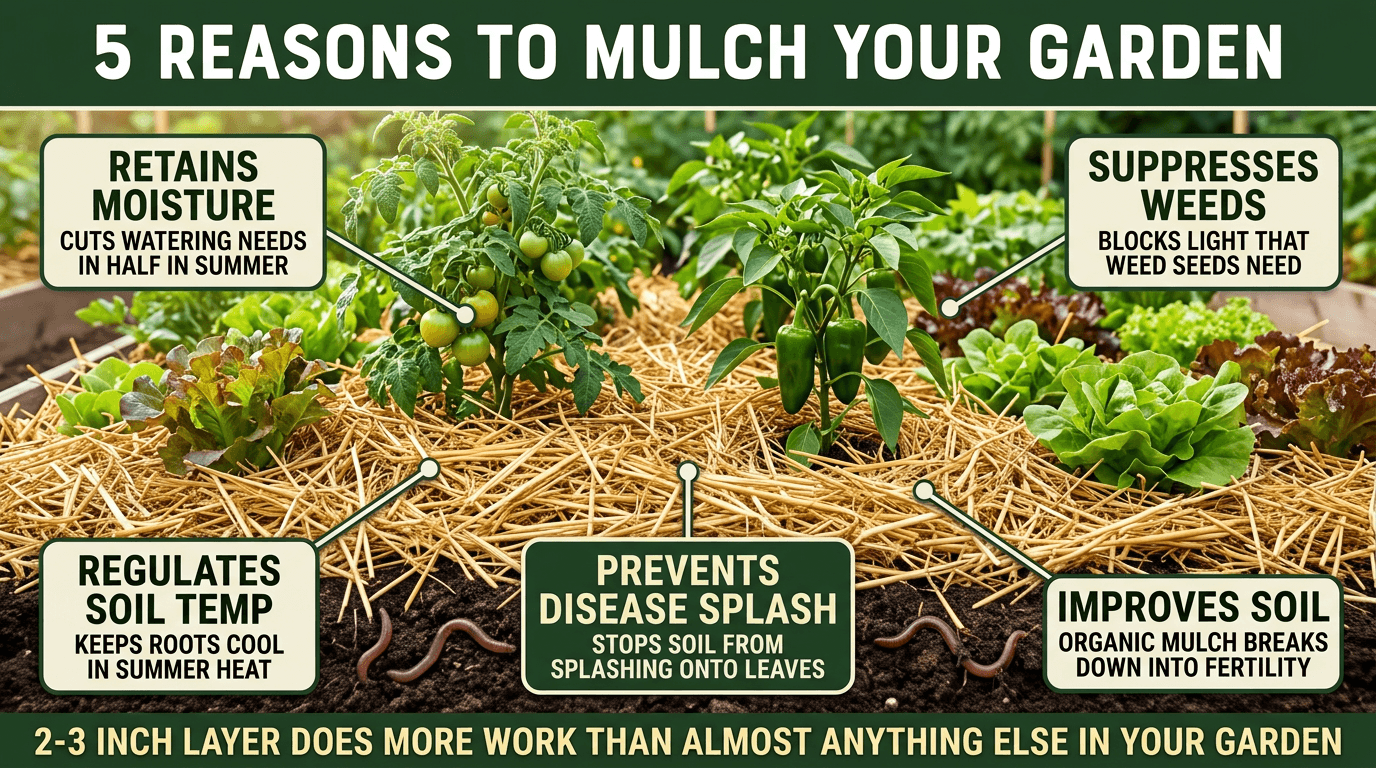
Improves soil over time. Organic mulches break down and add organic matter to the soil. After a season, they become part of your garden's fertility.
Prevents soil splashing. Rain hitting bare soil splashes soil-borne diseases up onto plant leaves. Mulch stops this.
Types of Mulch: Which to Choose
Straw
Best for: vegetable gardens Pros: cheap, easy to apply, breaks down into soil nicely, excellent insulation Cons: may contain weed seeds if not properly processed (look for "weed-free straw") Apply: 3–4 inches
Wood chips / shredded bark
Best for: trees, shrubs, perennials, pathways Pros: long-lasting (1–3 years), attractive appearance, great moisture retention Cons: can tie up nitrogen as it breaks down (don't mix into soil) Apply: 2–3 inches; keep away from plant stems and tree trunks
Grass clippings
Best for: vegetable garden beds Pros: free, adds nitrogen as it breaks down Cons: can mat down and smell if applied too thick Apply: 1–2 inch layers, dried slightly first
Compost
Best for: vegetable gardens, containers, seed beds Pros: improves soil as it breaks down, adds nutrients Cons: doesn't suppress weeds as well as other mulches Apply: 1–2 inches
Shredded leaves
Best for: everything Pros: free, excellent soil builder, earthworms love it Cons: can mat if whole; shred with lawnmower first Apply: 2–3 inches
Quick tip: For vegetable gardens, straw is the most practical mulch for most people. For flower beds and around trees, wood chips are better. Don't mix wood chips into your vegetable bed soil — just lay them on top as a pathway or around the edges.
When to Mulch
Spring: After soil has warmed to at least 60°F. Mulching cold, wet soil in early spring traps cold and slows plant growth. Wait until things warm up.
Summer: Anytime once plants are established. The main benefit is moisture retention during hot weather.
Fall: After the season ends, mulch bare beds to protect soil structure over winter and reduce erosion.
Around newly planted trees and shrubs: Immediately after planting.
How to Mulch: Step by Step
- Weed the area first. Mulch suppresses weeds but won't kill established ones.
- Water the soil if it's dry.
- Apply mulch 2–4 inches deep. Too thin and it won't suppress weeds or retain moisture. Too thick and water can't penetrate.
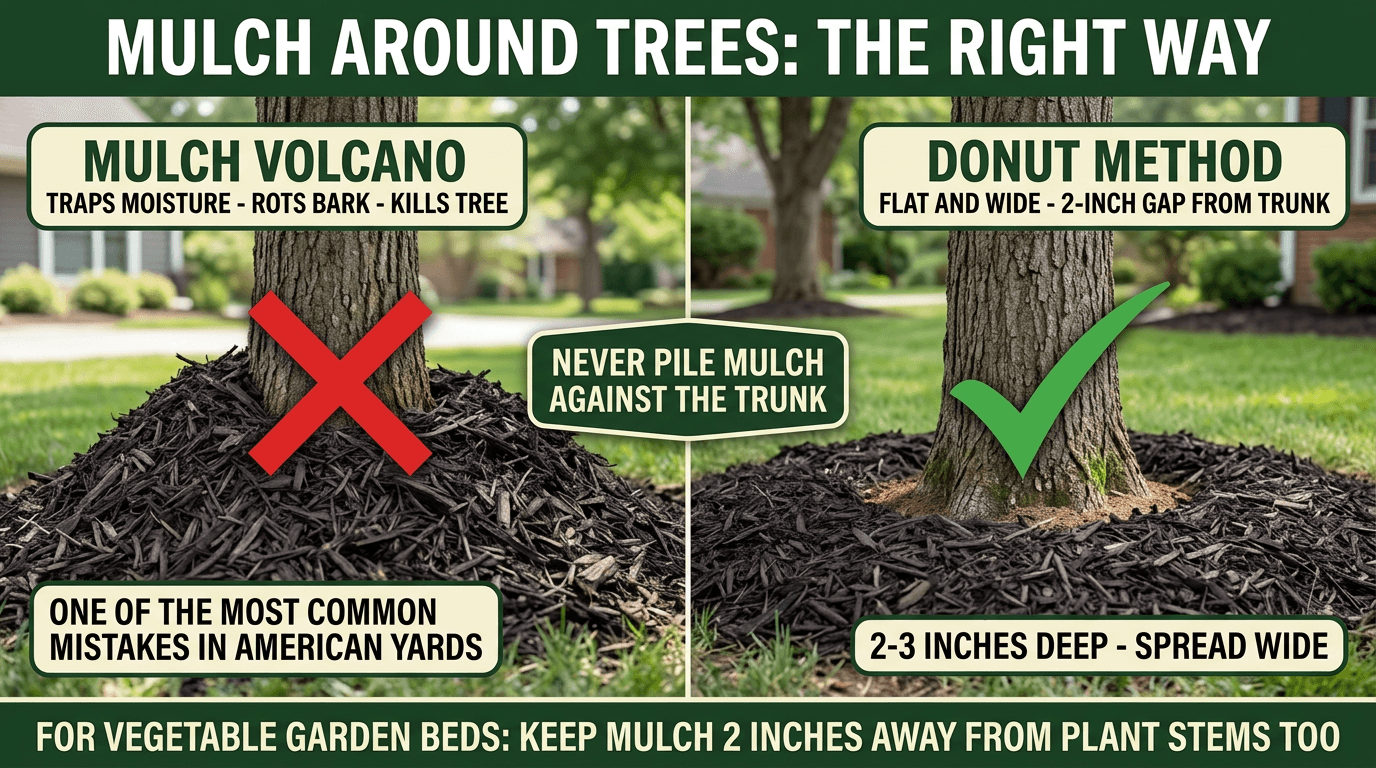
- Keep mulch away from plant stems and tree trunks. Leave a 2–3 inch gap. Mulch piled against stems traps moisture and causes rot.
- Top up as needed — organic mulches break down over time and need refreshing each season.
What Not to Do with Mulch
Don't create "mulch volcanoes" around trees. This is one of the most common mistakes in American yards. Piling mulch high against a tree trunk traps moisture, invites disease, and can slowly kill the tree. Flat and wide, not deep and piled.
Don't use dyed mulch in vegetable gardens. The dyes and wood treatments are not food-safe. Use straw, leaves, or compost instead.
Don't mulch in waterlogged soil. If water is already pooling, mulch will make drainage worse.
Mulching is one of the most time-efficient things you can do in a garden. An hour's work in May saves hours of weeding and watering every week all summer long.