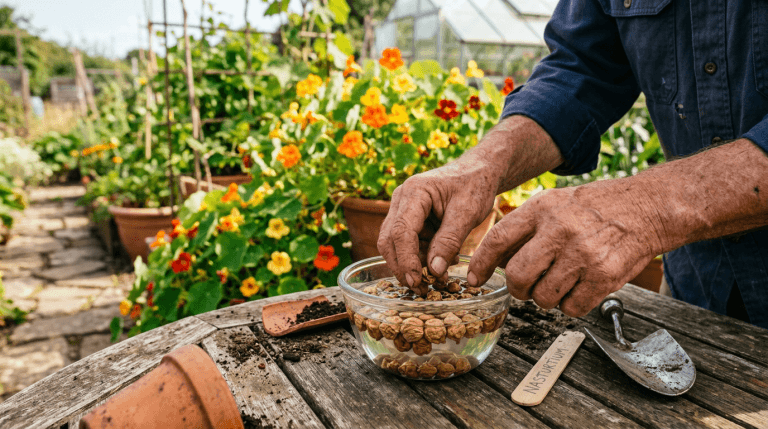
If you could only grow one flower in your garden, marigolds would be a strong candidate. They're nearly indestructible, bloom for months, help protect your vegetables, and cost almost nothing to grow from seed.
They're also just cheerful. Bright orange, yellow, and deep red — marigolds make any garden look alive.
Why Grow Marigolds?
Beyond being beautiful, marigolds are genuinely useful in a vegetable garden:
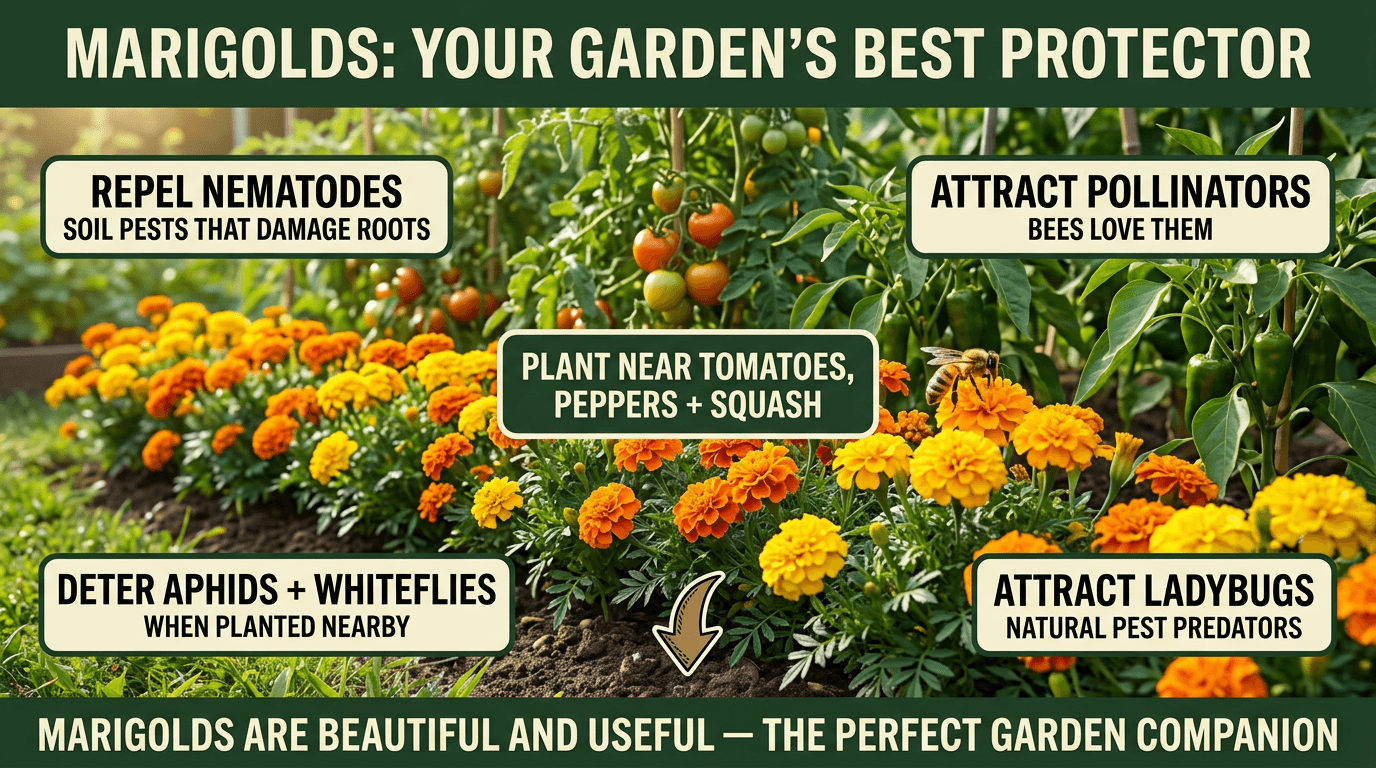
- Repel nematodes in the soil (microscopic pests that damage plant roots)
- Attract beneficial insects like ladybugs and parasitic wasps that eat garden pests
- Deter aphids, whiteflies, and spider mites when planted nearby
- Attract pollinators — bees love them
Plant marigolds near tomatoes, peppers, and squash for best effect.
Types of Marigolds
French marigolds (Tagetes patula): Small, compact, 6–18 inches tall. Best for vegetable garden borders and containers. Bloom longest.
African marigolds (Tagetes erecta): Tall, large pom-pom flowers, 2–4 feet high. Dramatic and long-lasting as cut flowers.
Signet marigolds (Tagetes tenuifolia): Small, ferny leaves with tiny single flowers. Edible petals with a citrus flavor. Great for container edges.
For most gardeners, French marigolds are the easiest and most versatile.
When to Plant Marigolds
- From seed indoors: 6–8 weeks before last frost
- Directly in garden: After last frost, once soil has warmed to 60°F
- From transplants: Anytime after last frost through early summer
Marigolds are some of the fastest flowers from seed — they sprout in 4–7 days and can bloom in as little as 8 weeks.
Quick tip: Direct sowing marigolds in the garden is simple and cheap. Just scratch seeds into the soil, cover lightly, and water. They practically grow themselves.
How to Plant Marigolds
- Full sun — Marigolds need at least 6 hours; 8 is better
- Space: French marigolds 8–10 inches apart; African 12–18 inches
- Soil: Adaptable to almost any soil — but drainage matters
- Depth: Seeds ¼ inch deep; transplants at same level as pot
Care During the Season
Marigolds are genuinely low-maintenance. What they need:
Watering: About 1 inch per week. Let soil dry slightly between waterings — marigolds are more drought-tolerant than most flowers.
Fertilizing: Barely at all. Too much fertilizer produces lots of leaves but fewer flowers. If your soil has compost in it, you probably don't need to fertilize at all.
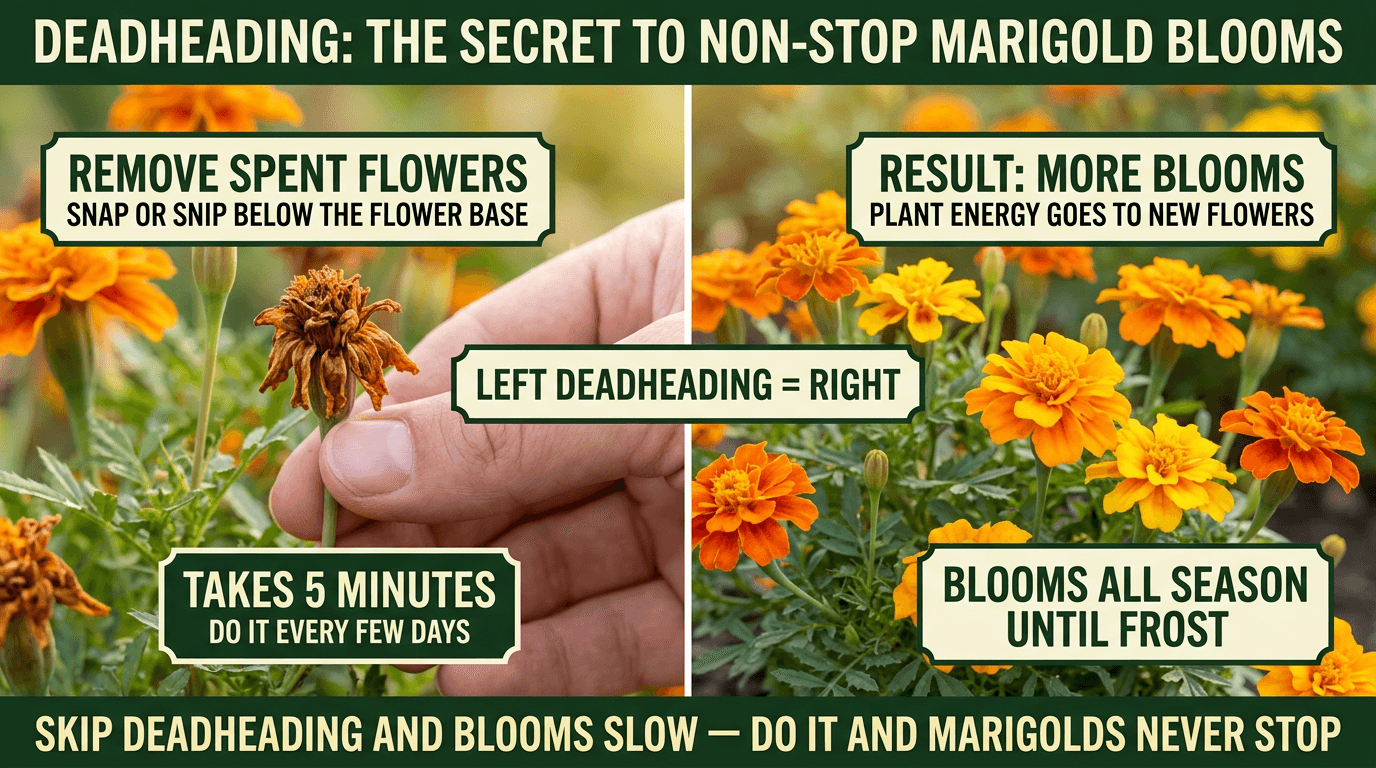
Deadheading: Remove spent flowers to keep the plant blooming.
Common Problems (There Aren't Many)
Leggy, stretched plants: Not enough sun. Move to a sunnier spot.
Powdery mildew: Usually late in the season in humid climates. Improve air circulation or accept it — plants are usually winding down by then anyway.
Spider mites in hot dry weather: Water more consistently and spray leaves with water from below.
Slugs on young plants: Use diatomaceous earth or a beer trap.
Saving Marigold Seeds
Marigolds are one of the easiest flowers to save seeds from. Let a few flowers dry completely on the plant, then pull them off and dry further indoors for a week.
Pull the dried flower apart and you'll find the seeds — long, slender black-tipped pieces. Store in an envelope in a cool dry place until next spring.
Growing marigolds is one of the genuine pleasures of gardening — and one of the easiest. Plant them once, save seeds at the end of the season, and you'll have marigolds every year for free.