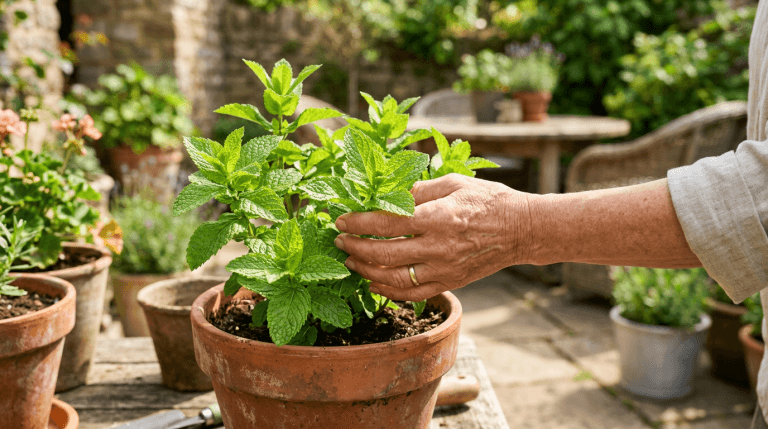
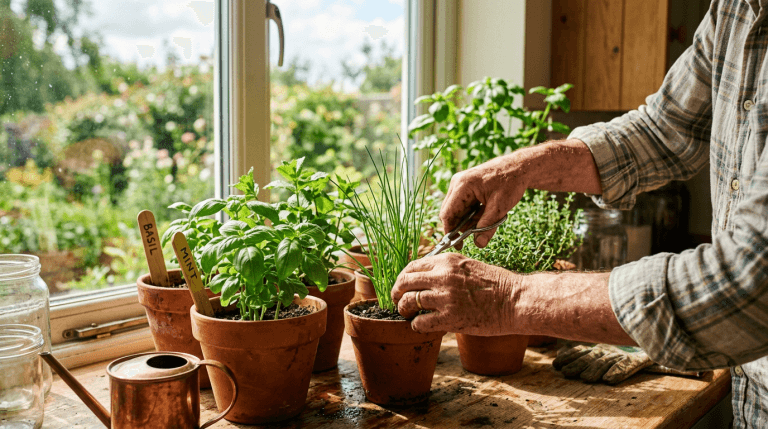
Basil is one of those plants that seems simple but has a few tricks that make the difference between a scraggly, bitter plant and a lush, fragrant bush that produces leaves all summer.
Once you learn those tricks, you'll never buy grocery store basil again.
When to Plant Basil
Basil is extremely cold-sensitive. A light frost will kill it. Even cold nights in the 40s°F can stress it and cause black spots on the leaves.
- Plant outdoors only after your last frost date
- Soil temperature should be at least 60°F (65–70°F is ideal)
- If in doubt, wait one more week
For most of the US, that means mid-May to early June for outdoor planting.
Starting Basil: Seed or Transplant?
From seed: Sow seeds ¼ inch deep, indoors 4–6 weeks before last frost, or directly in the garden once temperatures are warm. Germination is fast — usually 5–7 days.
From transplants: The easiest way. Buy a healthy transplant, harden it off for a few days in a sheltered outdoor spot before planting in the garden.
Quick tip: Buy two or three plants instead of one. They're inexpensive, and you'll use more basil than you think once you have it growing.
Where to Plant Basil
- Full sun — 6–8 hours minimum. Basil grown in shade becomes leggy and flavorless.
- Near tomatoes — Basil is a classic companion plant for tomatoes. Whether or not it improves flavor is debated, but they like the same conditions.
- Good drainage — Basil hates wet feet.
Watering Basil
Basil likes consistent moisture — not soaking wet, not bone dry.
- Water when the top inch of soil is dry
- Water at the base, not overhead (wet leaves can develop fungal spots)
- In containers, basil dries out fast — may need daily watering in summer heat
The Most Important Trick: Pinching
This single step is what separates thriving basil from a plant that flowers, turns bitter, and dies.
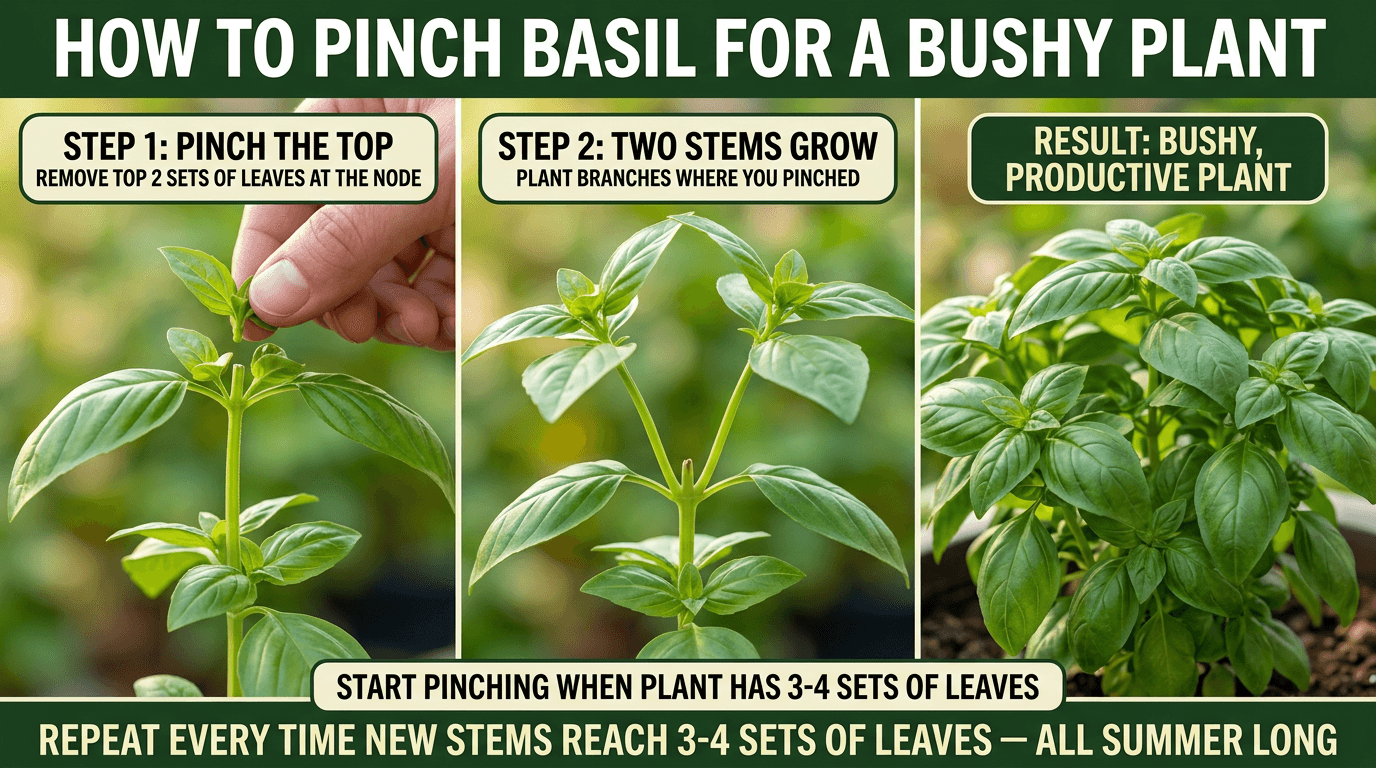
Pinching means removing the growing tip and top set of leaves to force the plant to branch out.
- When the plant has 3–4 sets of leaves, pinch off the top two sets
- The plant responds by growing two new stems where you pinched
- Repeat each time new stems get 3–4 sets of leaves
Do this consistently and one basil plant becomes a full, bushy herb.
Stopping Basil from Flowering (Bolting)
When basil flowers, the leaves become small and bitter. Remove flower buds the moment you see them — every time.
Once basil has fully bolted and gone to seed, it declines fast. Staying on top of flower removal keeps the plant productive for months.
Harvesting Basil
Always harvest from the top of the plant, not the bottom. This is the same as pinching — you're removing the growing tip and encouraging branching.
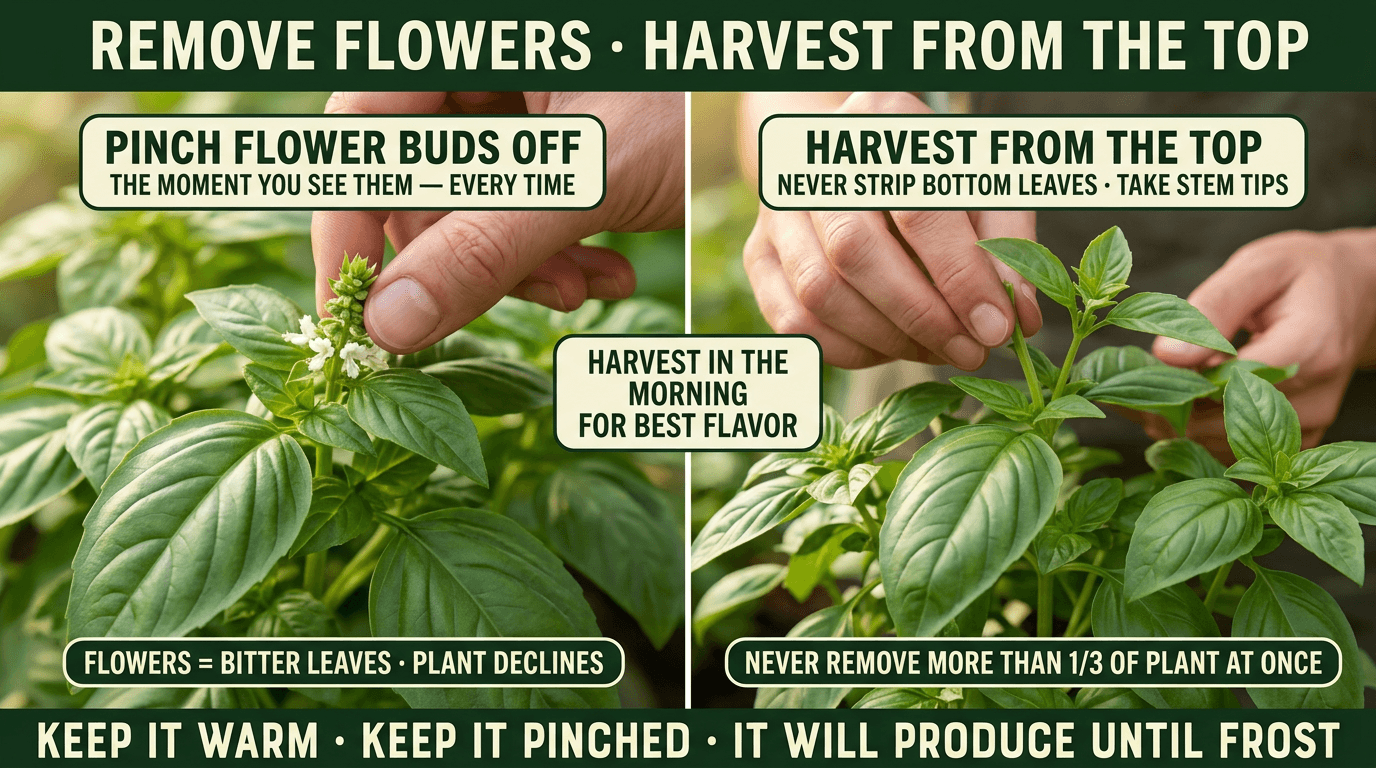
- Pick individual leaves or small stem tips
- Never remove more than 1/3 of the plant at one time
- Harvest in the morning for the best flavor
Growing Basil in Containers
Basil grows very well in pots. Use a pot at least 8 inches wide, good potting mix, and a sunny spot.
Container basil needs:
- More frequent watering (sometimes daily in summer)
- Fertilizer every 2–3 weeks (a liquid balanced fertilizer)
You can also grow basil on a sunny kitchen windowsill year-round.
At the End of the Season
Before the first frost, do one final big harvest. Basil cannot survive frost — so when temperatures are predicted to drop, cut the whole plant.
Make pesto, freeze basil in olive oil in ice cube trays, or dry leaves for winter use.
Basil is generous when you treat it right. Keep it warm, keep it pinched, and it'll keep giving you leaves until October.