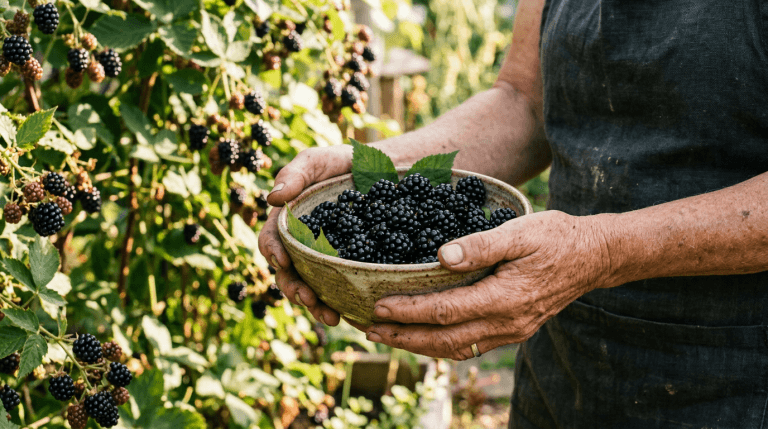
Blueberries are one of the most rewarding fruit bushes you can plant in a US home garden. They're beautiful in spring with white flowers, productive in summer, and turn brilliant red in fall. They also live for 30–50 years with the right care.
The key is getting the soil right from the start. Do that, and blueberries almost grow themselves.
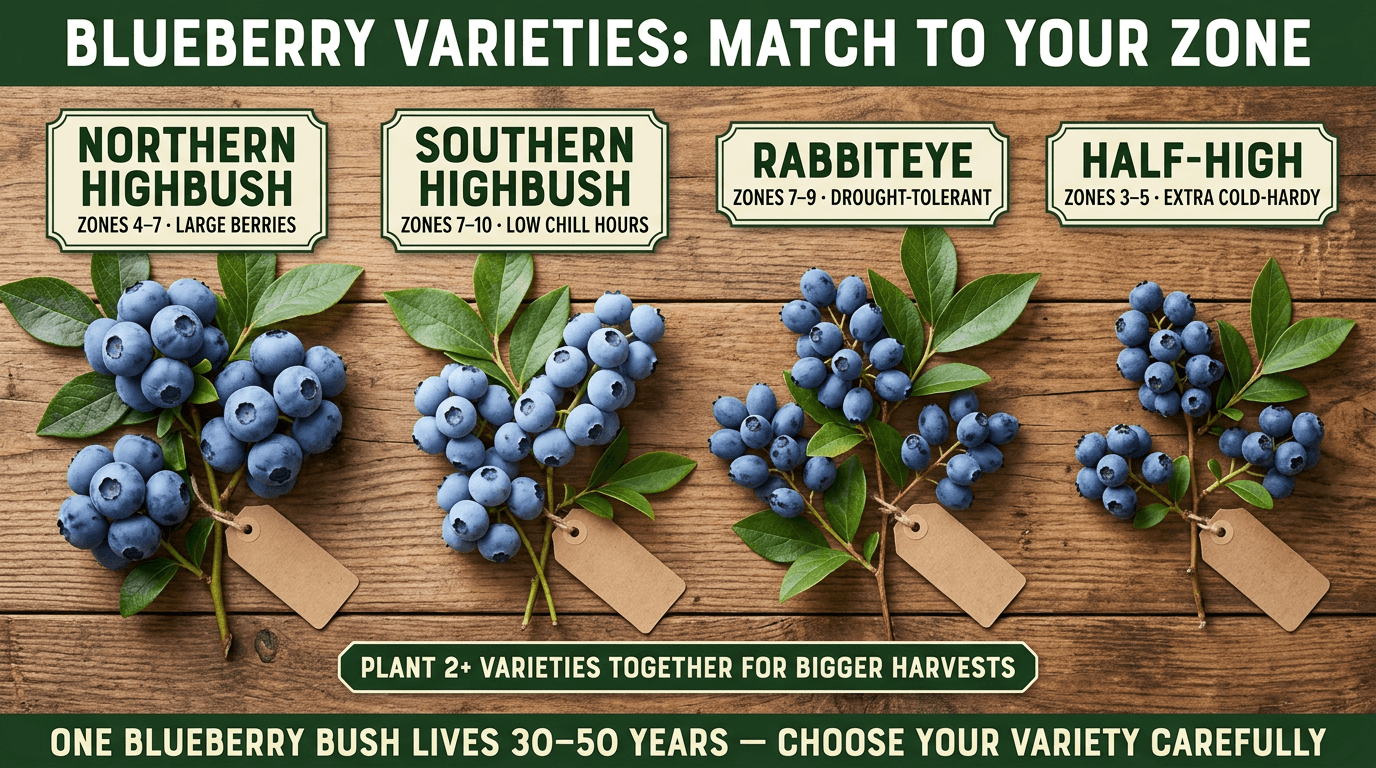
Choose the Right Variety for Your Zone
Not all blueberries thrive everywhere. Match the variety to your climate.
Northern Highbush (Zones 4–7): The most common type. Good cold tolerance, large berries. Varieties: Bluecrop, Duke, Patriot.
Southern Highbush (Zones 7–10): Bred for warm climates with low chill hours. Varieties: O'Neal, Sunshine Blue, Emerald.
Rabbiteye (Zones 7–9): Very drought-tolerant, long-lived. Best for the Southeast. Varieties: Tifblue, Powderblue.
Half-High varieties (Zones 3–5): Extra cold hardy, compact size. Good for northern states. Varieties: Northblue, Polaris.
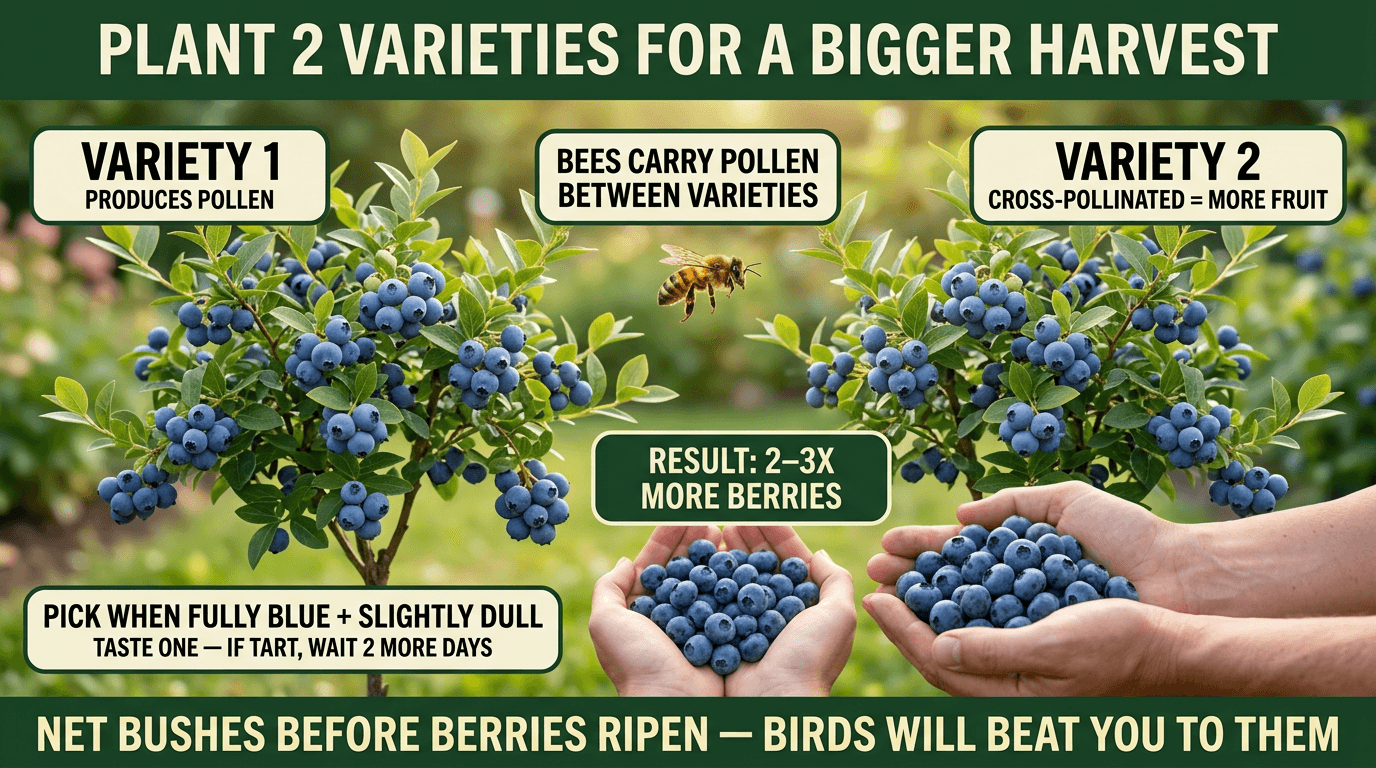
Quick tip: Plant at least 2 different varieties of the same type together. Blueberries produce much more fruit when cross-pollinated. They can self-pollinate, but two varieties mean much bigger harvests.
The Most Important Thing: Soil pH
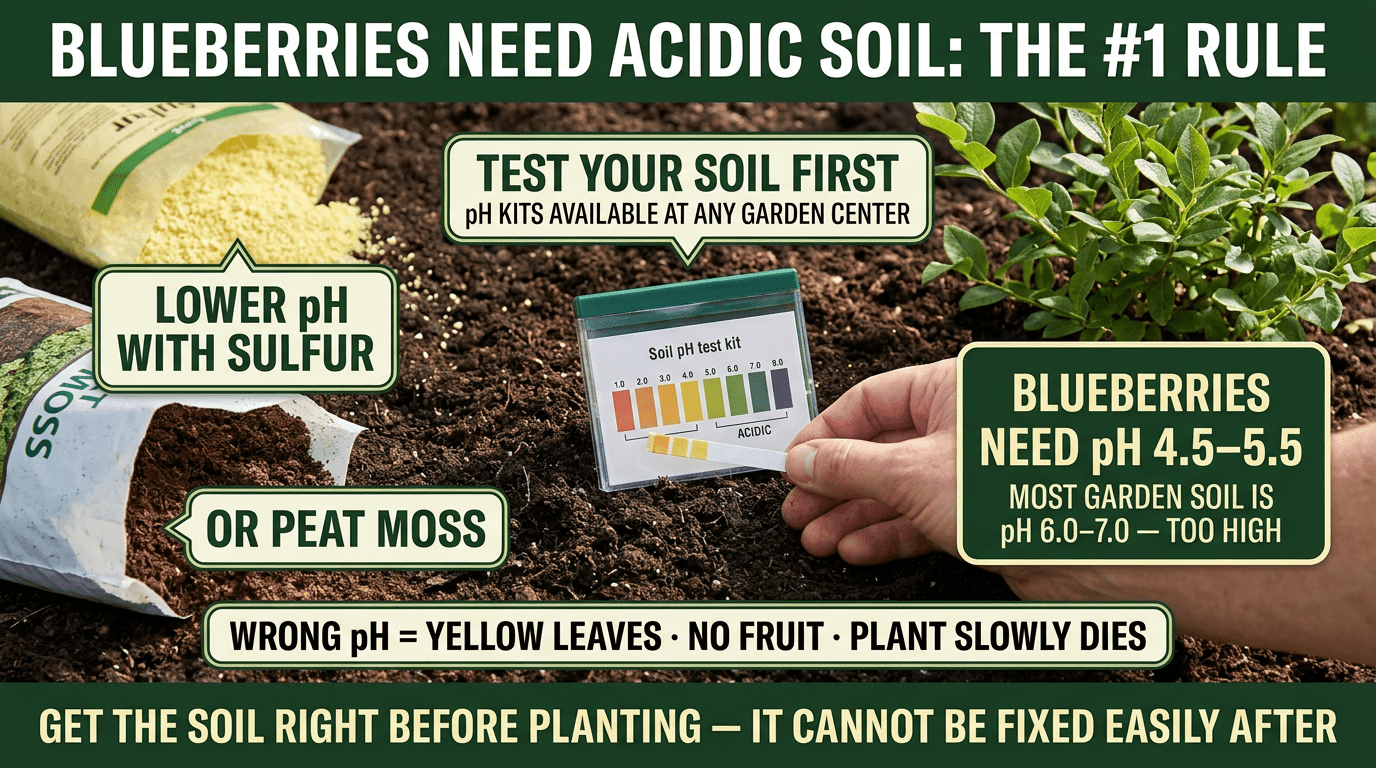
Blueberries must have acidic soil — pH 4.5 to 5.5. Most garden soil is around pH 6.0–7.0, which is too high for blueberries. In the wrong pH, they can't absorb nutrients and will slowly die.
Before planting:
- Test your soil pH (inexpensive test kits at any garden center)
- If needed, lower pH by mixing in sulfur or peat moss
For containers: use a specialized blueberry/azalea potting mix, which is already acidic.
When and How to Plant Blueberries
Best time to plant:
- Zones 3–6: Spring (April–May)
- Zones 7–10: Fall (October–November)
Planting steps:
- Dig a hole 2 feet wide and 1 foot deep
- Mix removed soil with peat moss (50/50)
- Plant the bush at the same depth it was in the pot
- Space plants 4–6 feet apart (or 2–3 feet for dwarf varieties)
- Mulch generously with wood chips, sawdust, or pine needles — all help keep soil acidic
- Water thoroughly
Watering Blueberries
Blueberries have shallow roots and need consistent moisture.
- 1–2 inches per week during growing season
- More frequent watering during fruit ripening
- Never let them dry out completely
- Drip irrigation is ideal — blueberries don't like wet leaves
Fertilizing Blueberries
Use a fertilizer formulated for acid-loving plants (sometimes labeled "azalea & blueberry fertilizer"). Never use regular garden fertilizer — the pH can harm them.
Fertilize twice:
- Early spring, just as leaves appear
- Early summer, after harvest
Don't fertilize in the first year after planting — let roots establish first.
Pruning Blueberries
For the first 2–3 years: remove flower buds so the plant focuses on root and branch development. Yes, this means no berries yet. Be patient — it pays off.
After year 3: light pruning in late winter/early spring. Remove:
- Dead or damaged branches
- Branches crossing through the center
- Oldest, thickest canes (over 6 years old)
Keep 6–8 healthy upright canes per plant.
Harvesting Blueberries
Wait until berries are fully blue AND have a slight dullness (not shiny). Taste one. If it's tart, wait a few more days.
Blueberries ripen over several weeks. Check and pick every 3–5 days during harvest season.
Storage: Fresh in fridge for up to 2 weeks. Freeze beautifully
Why Your Blueberries Might Struggle
Yellow leaves: Usually pH is too high or too low. Test and correct.
Few berries: May need a second variety for cross-pollination, or the plants are too young.
Birds: Blueberries are irresistible to birds. Net the bushes before berries ripen.
Mummy berries (shriveled, gray fruit): A fungal disease. Remove and destroy infected berries. Improve air circulation.
Blueberries are a long-term investment in your garden. Plant them right once, and they'll feed your family for decades.