Raised bed gardens are wonderfully productive — but they have one characteristic that changes how you water: they drain faster than in-ground beds. That thick layer of loose, well-amended soil that makes raised beds so great for root development also means water moves through it quickly. Water too little, and your plants dry out. Water too much in the wrong way, and you wash nutrients through the soil while encouraging disease.
Getting watering right is one of the highest-impact things you can do for your raised bed garden. Here’s exactly how to do it.
How Often to Water a Raised Bed
There’s no single correct watering schedule because the right frequency depends on your climate, season, bed depth, and what you’re growing. That said, most raised bed gardens need watering:
- Spring and fall: Every 2–3 days, or when the top inch of soil feels dry
- Summer (hot, dry weather): Daily or every other day for most vegetables
- After rain: Skip watering and check the soil before resuming
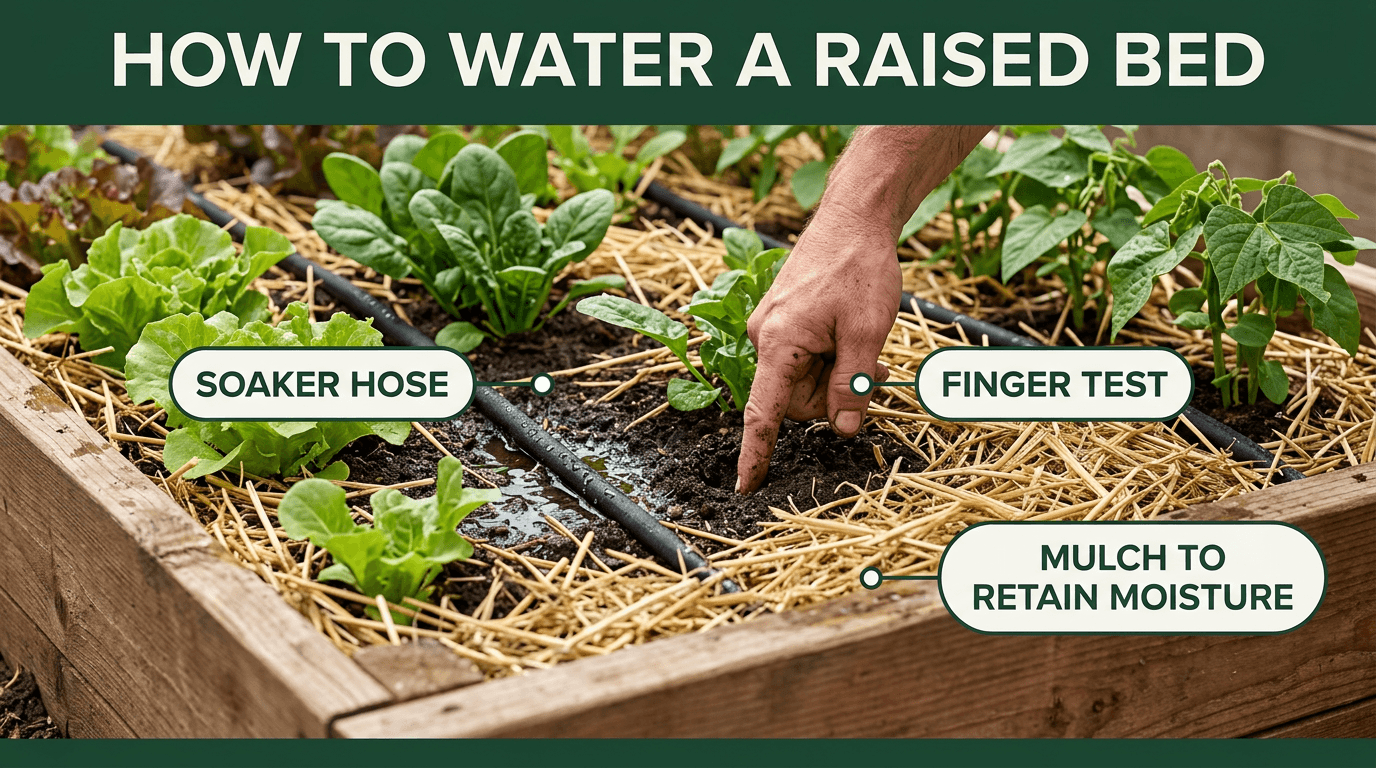
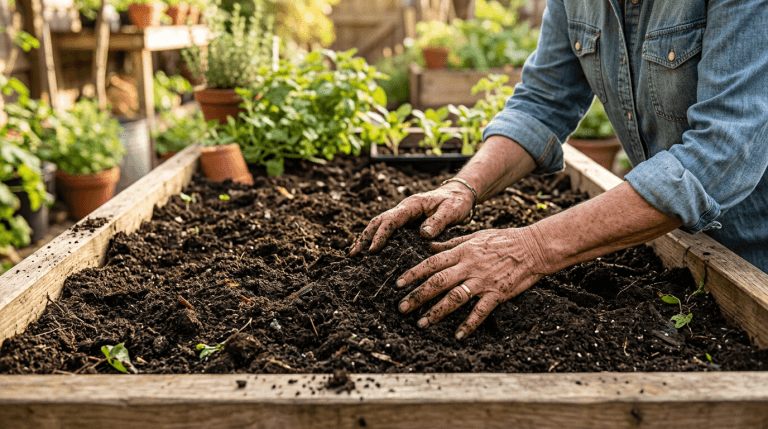
The only reliable guide is the soil itself. Push your finger 1–2 inches into the soil. If it feels dry at that depth, it’s time to water. If it still feels moist, wait another day. This simple test beats any schedule.
How Much Water Does a Raised Bed Need?
Most vegetables need the equivalent of 1–2 inches of water per week. In practice, this means watering deeply enough to wet the soil to a depth of 6–8 inches — where most vegetable roots actively grow.
Shallow watering that only wets the top inch or two trains roots to grow upward toward the surface, making plants more sensitive to drought. Deep watering encourages deep root growth that makes plants more resilient.
To check if you’ve watered deeply enough, water thoroughly, then wait 30 minutes and push a finger or trowel handle into the soil. Has the moisture reached 6 inches down? If not, water more.
The Best Watering Methods for Raised Beds
Drip Irrigation (Best Overall)
Drip irrigation delivers water slowly and directly to the root zone through emitters placed at the base of plants. It’s the most efficient method — virtually no water is lost to evaporation or splash, and foliage stays dry, which dramatically reduces fungal disease.
A simple drip system for a 4×8-foot raised bed costs $30–60 for the tubing, emitters, and fittings, and takes about an hour to set up. Connecting it to a timer makes watering completely automatic. For gardeners who travel or want to reduce daily garden chores, this is the single best investment you can make in your raised bed.
Soaker Hose (Simple and Effective)
Soaker hoses are porous tubes that seep water slowly along their entire length. They’re less precise than drip systems but much simpler and less expensive. Lay them in S-curves through the bed so every plant is within 6 inches of the hose. Cover with mulch to slow evaporation.
Soaker hoses work well for densely planted beds of greens, root vegetables, or herbs. They’re less ideal for widely spaced crops like tomatoes and peppers, where drip emitters can be positioned more precisely.
Hand Watering with a Wand
A watering wand — a long-handled tool with a gentle shower head — lets you water at the base of plants without splashing soil. It’s slower than drip or soaker hose, but it gives you direct control and lets you observe your plants closely at the same time.
The biggest mistake with hand watering is watering too quickly and too briefly. A light sprinkle that wets only the top half inch is worse than not watering at all — it encourages shallow roots and evaporates fast. When hand watering, water slowly and thoroughly, pausing to let water absorb rather than run off the sides of the bed.
Overhead Sprinklers (Use Cautiously)
Overhead sprinklers are inefficient (high evaporation loss) and wet foliage, which promotes fungal diseases like blight, powdery mildew, and downy mildew. If you do use overhead watering, water in the morning so foliage dries during the day. Avoid evening watering — wet leaves overnight are an open invitation to disease.

The Role of Mulch in Watering Efficiency
Mulch is one of the most effective watering tools you have. A 2–3 inch layer of straw, shredded leaves, or wood chips on the soil surface dramatically reduces evaporation — sometimes cutting your watering frequency in half. It also keeps soil temperature more stable, which benefits root growth, and gradually improves soil structure as it breaks down.
Apply mulch after your plants are established (not before — mulch can slow soil warming in early spring). Keep it an inch or two away from plant stems to prevent rot.
Signs You’re Watering Wrong
Underwatering: Wilting during the heat of the day (but recovering in the evening), dry and crumbly soil, slow growth, leaves with brown crispy edges, blossom drop on tomatoes and peppers.
Overwatering: Soil that’s soggy and smells sour, yellowing lower leaves, fungal disease, slugs in high numbers, plants wilting even though the soil is wet (root rot). Overwatered soil is often more damaging than drought because root rot is hard to reverse.
Inconsistent watering: Blossom end rot on tomatoes and peppers (dark sunken spots on the bottom of fruit), cracked or split fruit (sudden wet after dry), irregular-shaped root vegetables like carrots and radishes.