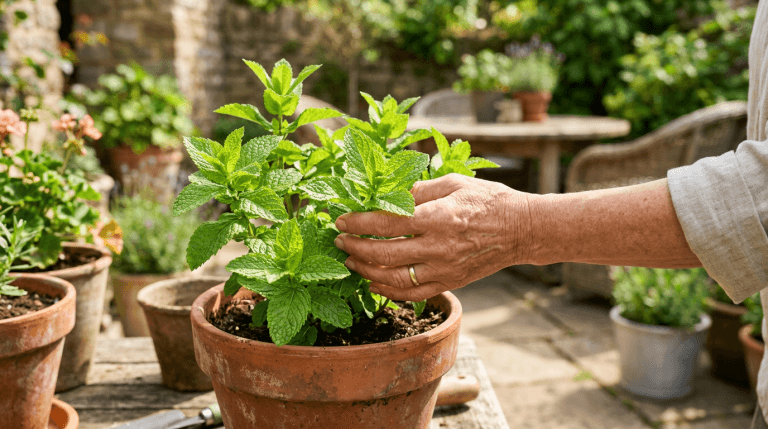
Basil is one of the most popular herbs in the American garden — and one of the most cold-sensitive. Get the timing right, and you’ll have bushy, fragrant plants all summer. Plant too early, and a single cold night can kill or set back your seedlings by weeks.
This guide gives you exact planting dates by USDA zone, plus everything you need to know to get basil started the right way.
When to Plant Basil by Zone
Basil needs soil temperatures of at least 60°F — ideally 65–70°F — to thrive. It’s killed by frost and stunted by cold soil. The safest rule: plant basil outdoors 2 weeks after your last expected frost date, when the soil has warmed and nights stay reliably above 50°F.
To get a head start, start seeds indoors 4–6 weeks before your planned outdoor transplant date.
| USDA Zone | Start Indoors | Plant Outdoors |
|---|---|---|
| Zone 3 | Apr 13 – Apr 27 | Jun 8 – Jun 22 |
| Zone 4 | Apr 3 – Apr 17 | May 29 – Jun 12 |
| Zone 5 | Mar 19 – Apr 2 | May 14 – May 28 |
| Zone 6 | Mar 4 – Mar 18 | Apr 29 – May 13 |
| Zone 7 | Feb 22 – Mar 8 | Apr 19 – May 3 |
| Zone 8 | Feb 6 – Feb 20 | Apr 3 – Apr 17 |
| Zone 9 | Jan 17 – Jan 31 | Mar 14 – Mar 28 |
| Zone 10 | Jan 4 – Jan 18 | Mar 1 – Mar 15 |
Starting Basil Indoors
Sow seeds 1/4 inch deep in seed-starting mix, 2–3 seeds per cell. Keep the medium warm — 70–75°F is ideal. Basil germinates in 5–10 days. Once seedlings have 2 sets of true leaves, thin to one per cell.
Basil needs plenty of light indoors. A sunny south-facing window can work, but seedlings do best under grow lights for 14–16 hours a day. Leggy, weak seedlings are almost always a sign of insufficient light.
Harden off transplants for 7–10 days before moving them outdoors — basil is sensitive to temperature swings and wind.

Direct Sowing Basil Outdoors
You can also direct sow basil seeds directly in the garden once soil is 65°F+ and nights are reliably above 50°F. Scatter seeds on the soil surface, press in lightly, and keep moist. Thin to 12 inches apart once seedlings are 3 inches tall.
Direct-sown basil often catches up to transplants within a few weeks and sometimes outperforms them — the plants never go through transplant stress.
Succession Planting for Continuous Harvest
Basil goes from seed to harvestable plant in about 60–70 days. For a continuous supply through summer, make two or three sowings spaced 3–4 weeks apart rather than one large planting. As the first planting ages and starts to flower, your next planting will be hitting its stride.
Common Timing Mistakes to Avoid
Planting too early: Basil planted in cold soil will sit, sulk, and often develop yellow leaves from cold stress. Wait for genuinely warm conditions — a few extra days makes a big difference.
Not pinching flowers: Once basil starts to flower (bolt), the leaves become smaller and less flavorful. Pinch off flower buds as soon as you see them to keep the plant producing large, fragrant leaves. This can extend your harvest by 4–6 weeks.
Planting in partial shade: Basil needs full sun — 6–8 hours minimum. Less sun means less oil production and less flavor. Choose the sunniest spot in your garden.
When Is Basil Ready to Harvest?
Start harvesting when plants are 6–8 inches tall and have at least 6–8 pairs of leaves. Always cut stems just above a leaf node — the plant branches from that point and produces twice as many stems. Never remove more than one-third of the plant at a time.
Basil is ready for its biggest harvests in midsummer, before hot weather triggers flowering. In Zones 5–7, expect peak harvest from late June through August.