Companion planting sounds complicated — but it's really just the idea that some plants help each other when grown nearby, and some hinder each other.
You don't need to follow a rigid system. A few smart pairings and a few things to avoid can make a real difference in your garden's health and productivity.
Why Companion Planting Works
Different plants interact in different ways:
- Some repel pests that bother their neighbors
- Some attract beneficial insects that eat garden pests
- Some improve soil by fixing nitrogen
- Some provide shade or windbreak that smaller plants appreciate
- Some simply compete and should be kept apart
None of this is magic. It's just thoughtful placement.
The Best Companion Planting Combinations
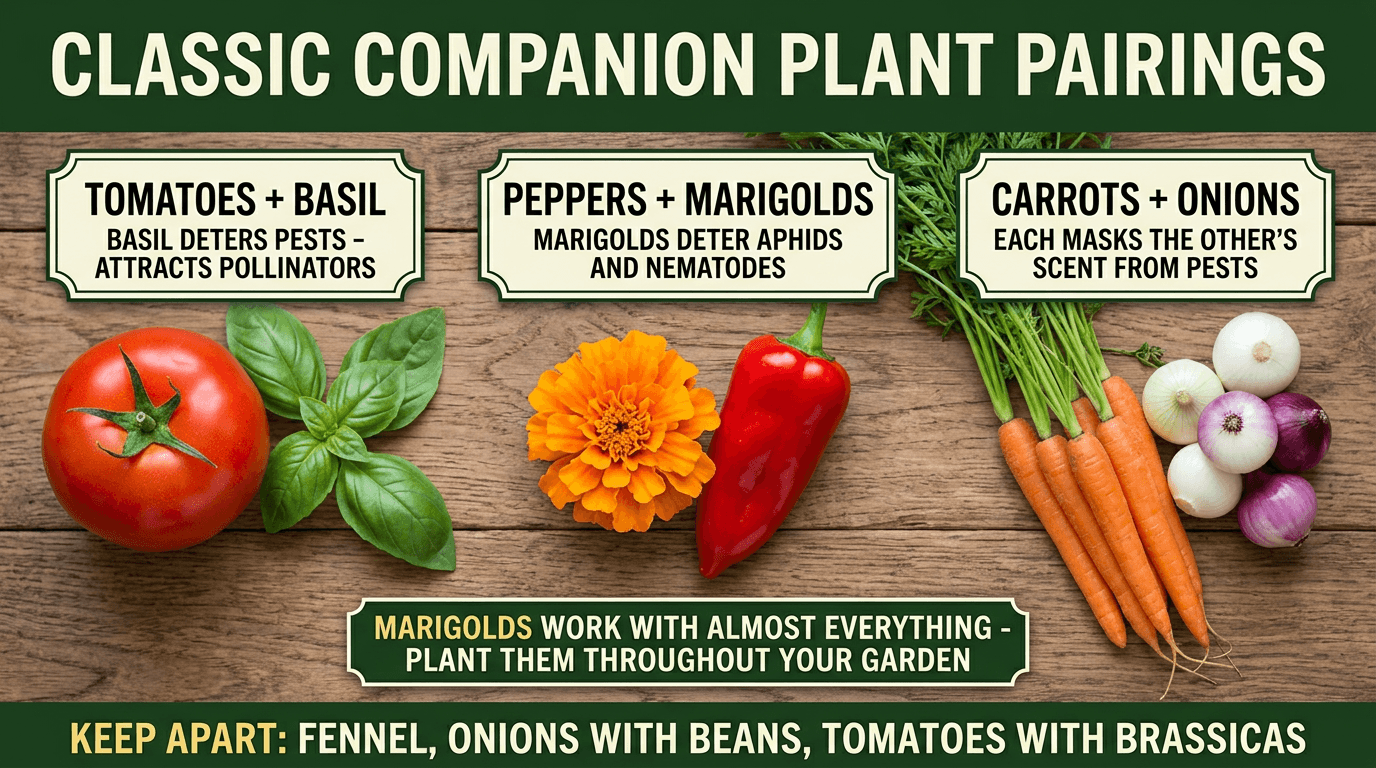
Tomatoes + Basil
One of the most classic pairings in gardening. Basil may deter thrips and aphids near tomatoes. More importantly, basil attracts pollinators and the pairing makes harvesting easy — your tomato and pasta ingredients are right next to each other.
Also good with tomatoes: Marigolds (deter nematodes and whitefly), parsley, carrots, borage.
Keep away from tomatoes: Fennel, brassicas (broccoli, cabbage), corn.
Squash + Beans + Corn (The Three Sisters)
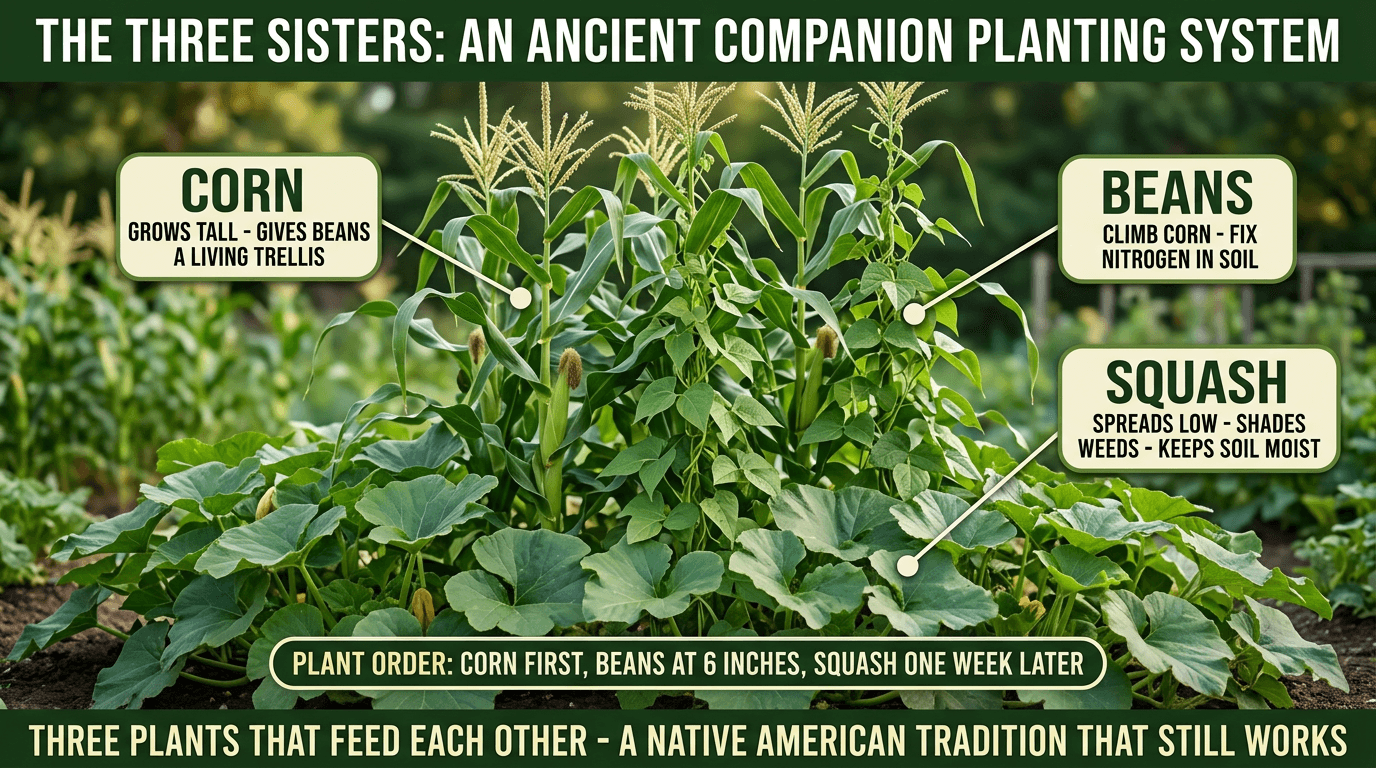
This Native American polyculture is still one of the best companion planting systems. Corn grows tall and gives beans a trellis. Beans fix nitrogen in the soil. Squash spreads along the ground, shading out weeds and keeping soil moist.
Plant corn first, then beans 2 weeks later when corn is 6 inches tall, then squash 2 weeks after that.
Carrots + Onions
Onion smell confuses the carrot fly. Carrot smell confuses the onion fly. They protect each other by masking each other's scent. Plant them in alternating rows.
Cucumbers + Dill
Dill attracts predatory insects that eat cucumber beetles and aphids. Let dill flower near cucumbers. Don't plant dill near carrots though — they inhibit each other.
Peppers + Marigolds
Marigolds deter aphids and other soft-bodied pests. Plant French marigolds around the perimeter of your pepper bed.
Roses + Garlic
Garlic planted at the base of rose bushes deters aphids and black spot. A classic cottage garden trick.
Quick tip: Marigolds are the single most useful companion plant in any garden. Plant them freely throughout your vegetable beds.
The "Three Sisters" Garden in Detail
If you have space (at least a 10×10 foot area), the Three Sisters garden is worth trying:
- Form mounds of soil 18 inches wide, spaced 4 feet apart
- Plant 4–5 corn seeds per mound
- When corn is 6 inches tall, plant 4 bean seeds around each corn stalk
- One week later, plant 2–3 squash seeds between mounds
Keep the planting well-watered. The three plants together need more water than each separately because they're densely planted.
What to Keep Apart
Some plants actively compete or inhibit each other. The main ones to know:
| Don't plant together | Why |
|---|---|
| Fennel + almost everything | Fennel releases chemicals that inhibit most vegetables |
| Onions/garlic + beans/peas | Alliums stunt legume growth |
| Brassicas + tomatoes | Competition and disease spread |
| Cucumbers + potatoes | Spread of blight |
| Dill + carrots | Inhibit each other's growth |
Herbs as Companion Plants
Herbs are some of the best companions in the vegetable garden:
- Basil: Near tomatoes, peppers, asparagus
- Dill: Near cucumbers, brassicas (but not carrots)
- Mint: Near brassicas to deter cabbage moths. Keep mint in containers — it spreads aggressively.
- Chives: Near roses, carrots, tomatoes
- Nasturtiums: As trap crops — aphids prefer them over vegetables
Flowers as Companion Plants
Flowers do important work in the vegetable garden:
- Marigolds: Broad pest deterrent, nematode suppression
- Nasturtiums: Trap crop for aphids; edible flowers
- Borage: Attracts pollinators; deters tomato hornworms
- Zinnias: Attract hoverflies that eat aphids
- Sweet alyssum: Low-growing, attracts beneficial insects
Start simple. Add marigolds throughout your vegetable beds this season. Then try the tomato + basil pairing. From there, build your own observations about what works in your specific garden. The best companion planting knowledge comes from your own backyard.