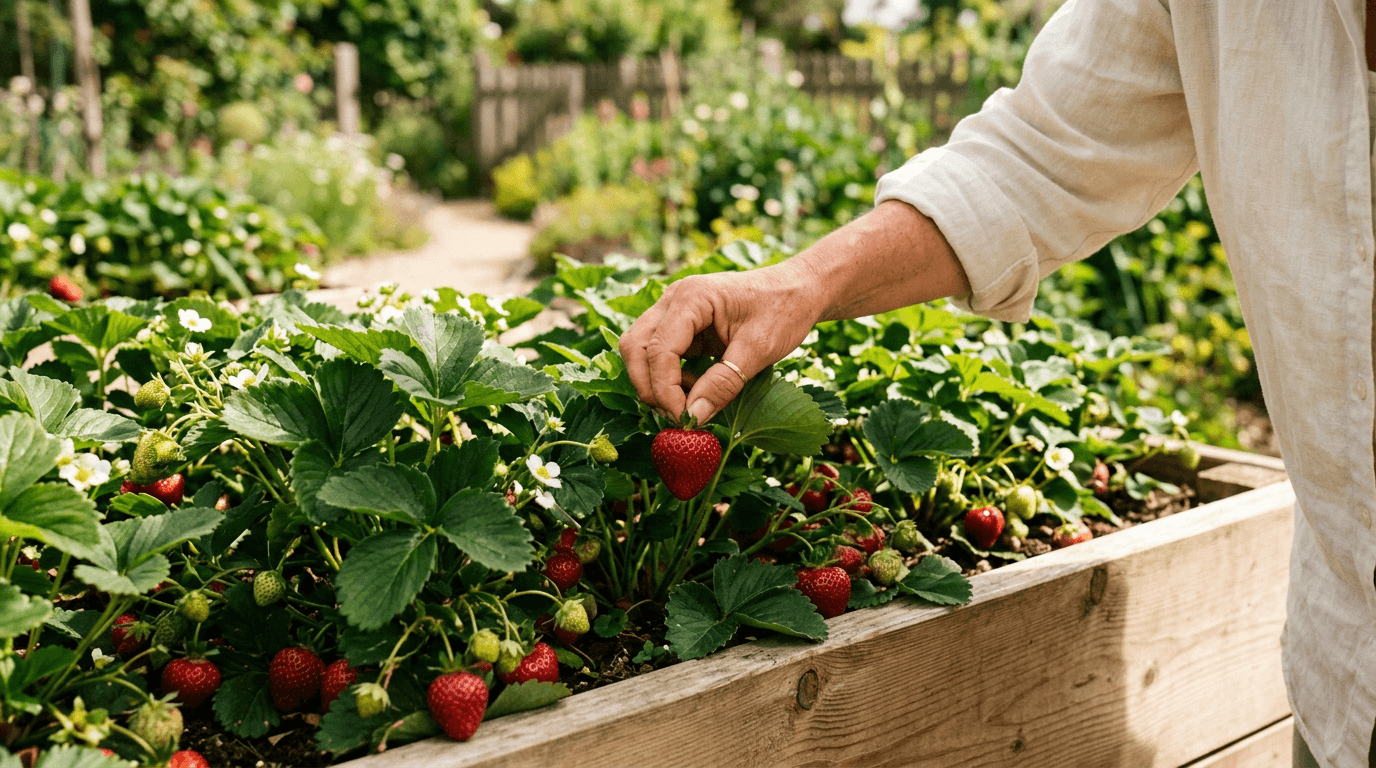
Homegrown strawberries taste nothing like store-bought. They're sweeter, softer, and gone in seconds. The good news is they're one of the most beginner-friendly fruits you can grow — and you don't need much space.
A raised bed, a large planter, or even a hanging basket can produce a satisfying strawberry harvest.
Types of Strawberries
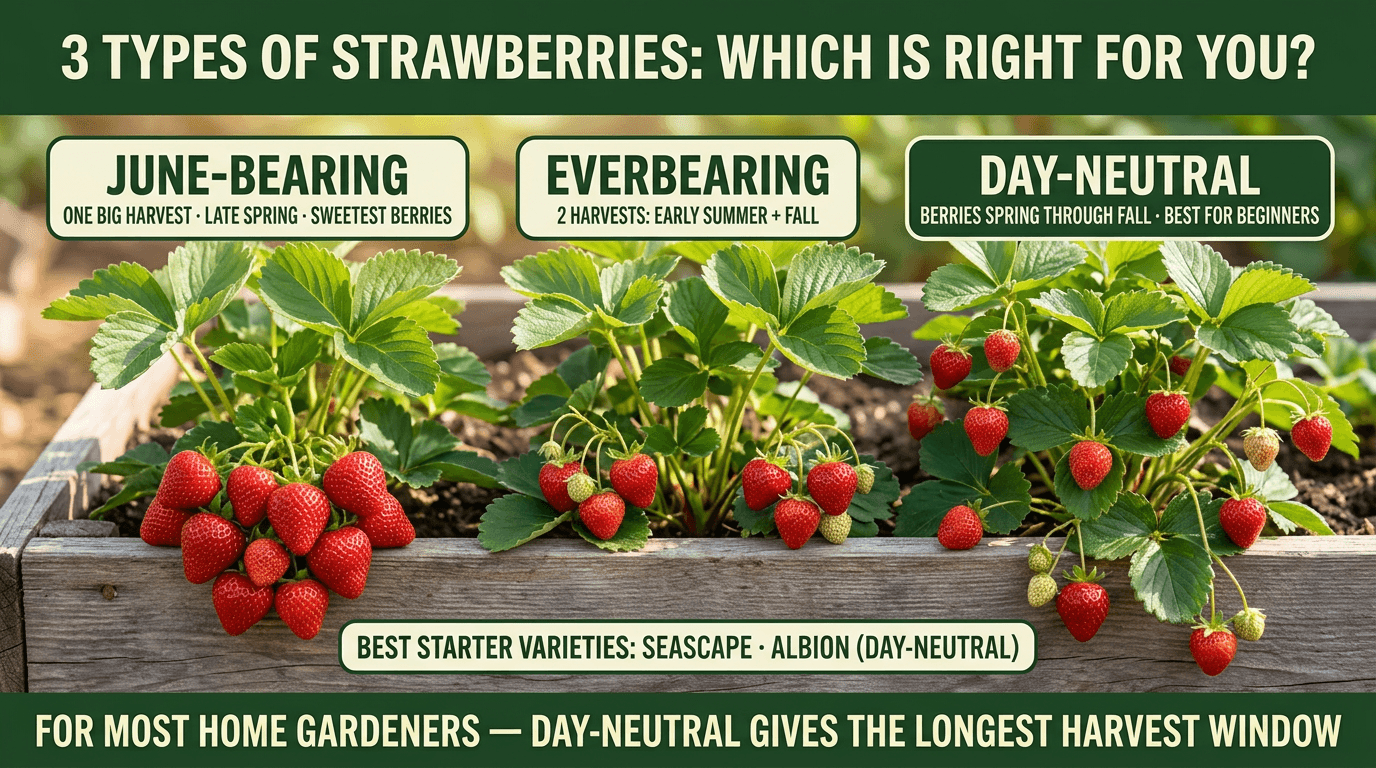
Before you buy plants, know which type you're getting:
June-bearing: One big harvest in late spring or early summer. The sweetest berries. Great for preserves, freezing, or eating fresh.
Everbearing: Two harvests — one in early summer, one in fall. Smaller yields each time, but spread out.
Day-neutral: Produce berries almost continuously from spring through fall (with a summer slowdown in heat). Best choice for most home gardeners.
Quick tip: For beginners, day-neutral varieties like 'Seascape' or 'Albion' give you the most flexibility and the longest harvest window.
When to Plant Strawberries
- Zones 3–6: Plant in spring, as soon as soil can be worked (early April to mid-May)
- Zones 7–8: Plant in fall (September–November) for a spring harvest
- Zones 9–10: Plant in January–February
How to Plant Strawberries
Whether in a raised bed, container, or ground:
- Space plants 18 inches apart (day-neutral) or 12–18 inches apart (June-bearing)
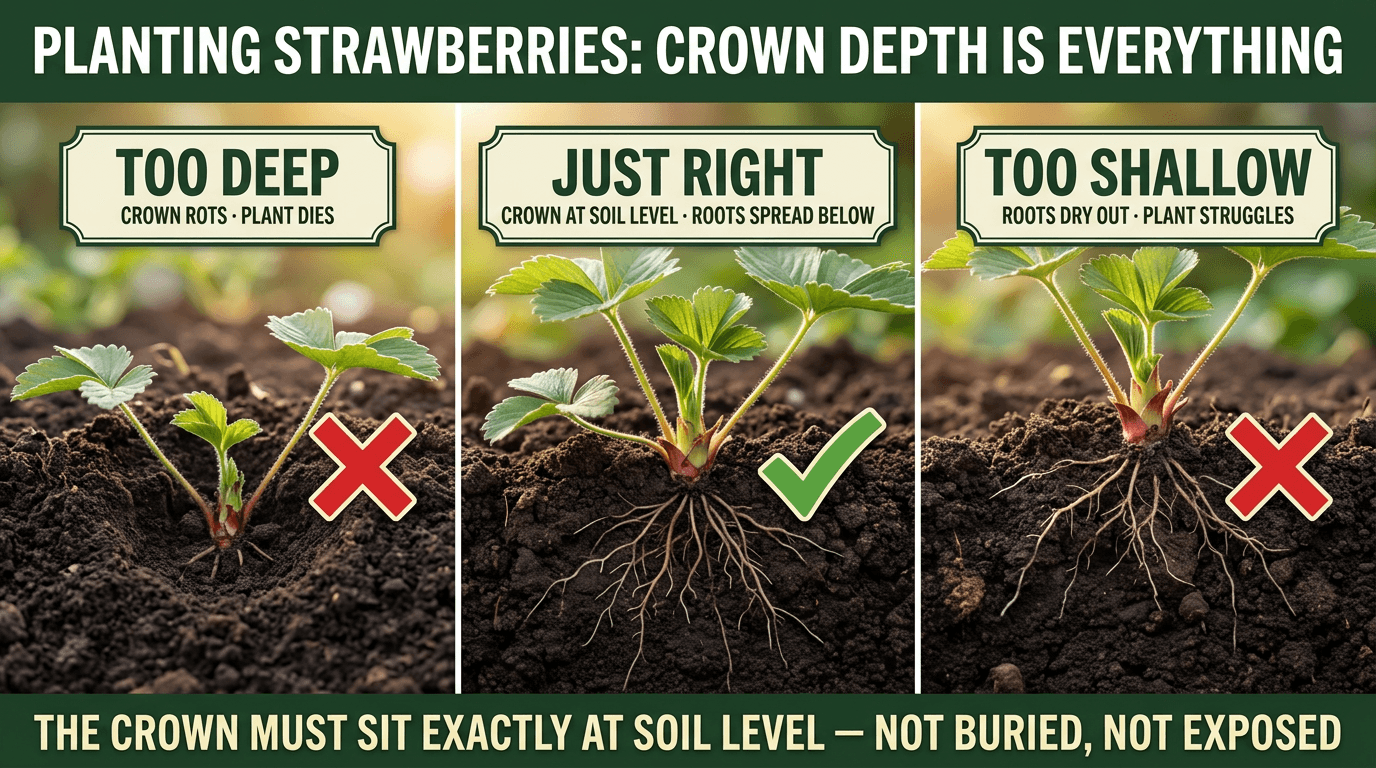
- Plant so the crown (where leaves meet roots) is exactly at soil level — not buried, not sticking up
- Spread the roots out naturally in the hole
- Water thoroughly after planting
Getting the crown depth right is the most important step.
Soil and Containers
Strawberries like:
- Well-drained soil — they hate wet roots
- Slightly acidic pH (5.5–6.5)
- Rich in organic matter
For containers: use a mix of potting soil and compost. Make sure pots have drainage holes. A container at least 12 inches wide and deep per plant is ideal.
For raised beds: a standard raised bed soil mix works perfectly.
Watering Strawberries
Strawberries need consistent moisture — about 1 inch per week.
- Water at the base, not overhead (wet berries mold quickly)
- Drip irrigation or soaker hose is ideal
- During fruiting, water more frequently — every 2–3 days in dry weather
Fertilizing Strawberries
At planting: mix compost into the soil.
After that:
- First year: a balanced fertilizer (10-10-10) in early spring, and again after the first harvest
- Don't overfeed with nitrogen — it grows big plants but small berries
Runners: Keep or Remove?
Strawberry plants send out long horizontal stems called runners, which form new baby plants at the tips. What to do with them:
In the first year: Remove all runners.
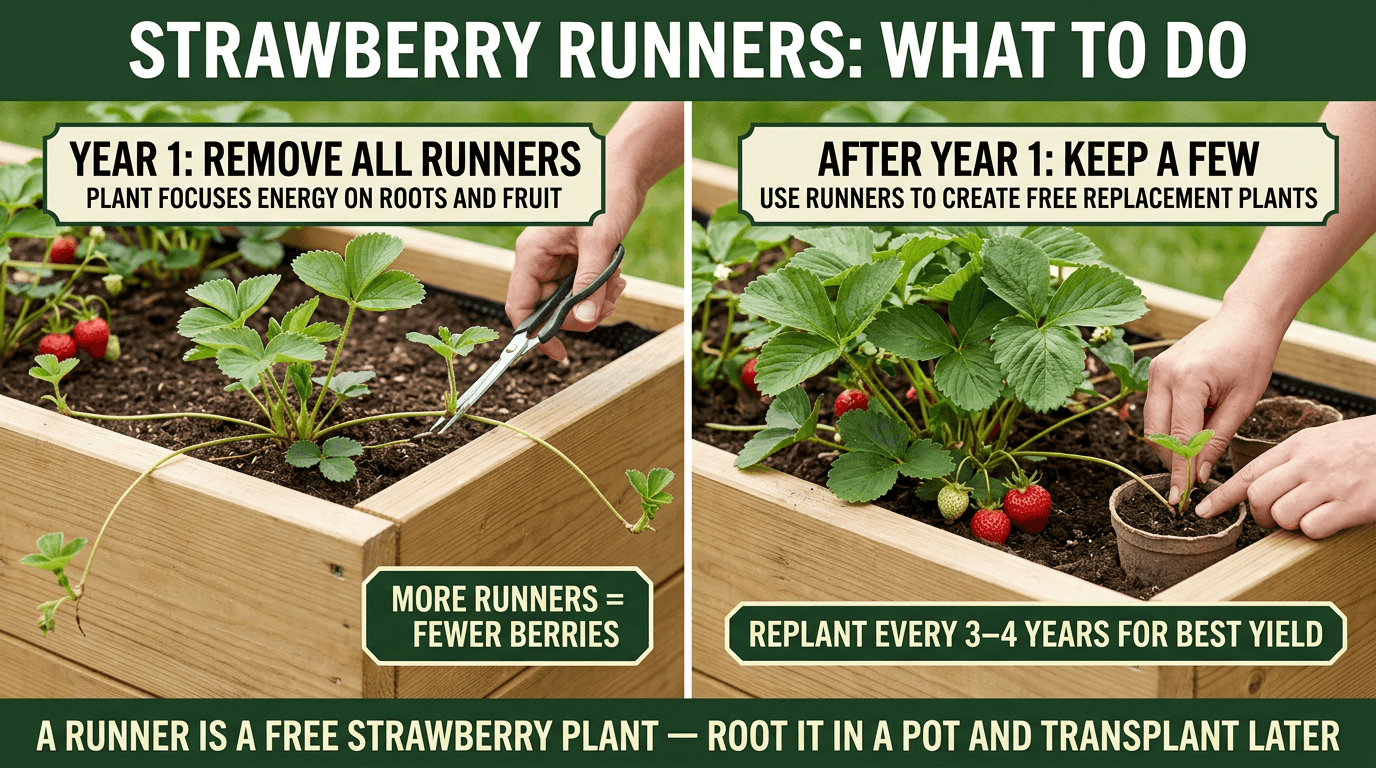
After year one: You can let a few runners root to replace older plants, or keep removing them to maintain productivity.
Common Problems
Berries are small: Often from overcrowding, too little sun, or leaving too many runners. Thin plants and remove runners.
Gray fuzzy mold on berries (botrytis): Too much moisture on fruit. Improve air circulation and pick berries as soon as they ripen.
Birds eating berries before you do: Cover plants with bird netting as soon as berries start turning pink.
Slugs: Sprinkle diatomaceous earth around the base of plants, or use a beer trap.
How Long Do Strawberry Plants Last?
Strawberry plants produce best in years 1–3, then decline. Every 3–4 years, replant with fresh plants or rooted runners from your healthiest plants.
The first bite of a warm, sun-ripe strawberry from your own garden is one of those moments that makes all the work worthwhile. Start with just 6–10 plants — you'll be expanding the patch by next spring.