

Starting seeds indoors is one of the most satisfying things you can do as a gardener. You get earlier harvests, access to more variety choices, and the quiet joy of watching tiny seedlings emerge in late winter when everything outside is still frozen.
It's also simpler than most people expect.
Why Start Seeds Indoors?
Earlier harvests. Tomatoes, peppers, and eggplant need 8–12 weeks indoors before they're ready to go outside. Starting indoors lets you begin the season way before your last frost.
More variety. Garden centers carry maybe 10 tomato varieties. Seed catalogs carry hundreds. Starting from seed opens up the whole world of heirloom and specialty varieties.
Cost savings. A packet of seeds with 20–30 seeds often costs less than a single transplant.
What You Need
You don't need fancy equipment to start.
Essentials:
- Seed-starting trays or small cell packs (72-cell trays are perfect)
- Seed-starting mix (not regular potting soil — it's too dense)
- Seeds
- Light source (more on this below)
- Spray bottle for gentle watering
Nice to have but not required:
- Heat mat (speeds germination for peppers, eggplant, tomatoes)
- Grow light (if you don't have a very sunny south-facing window)
- Humidity dome (keeps moisture in during germination)
When to Start Seeds Indoors
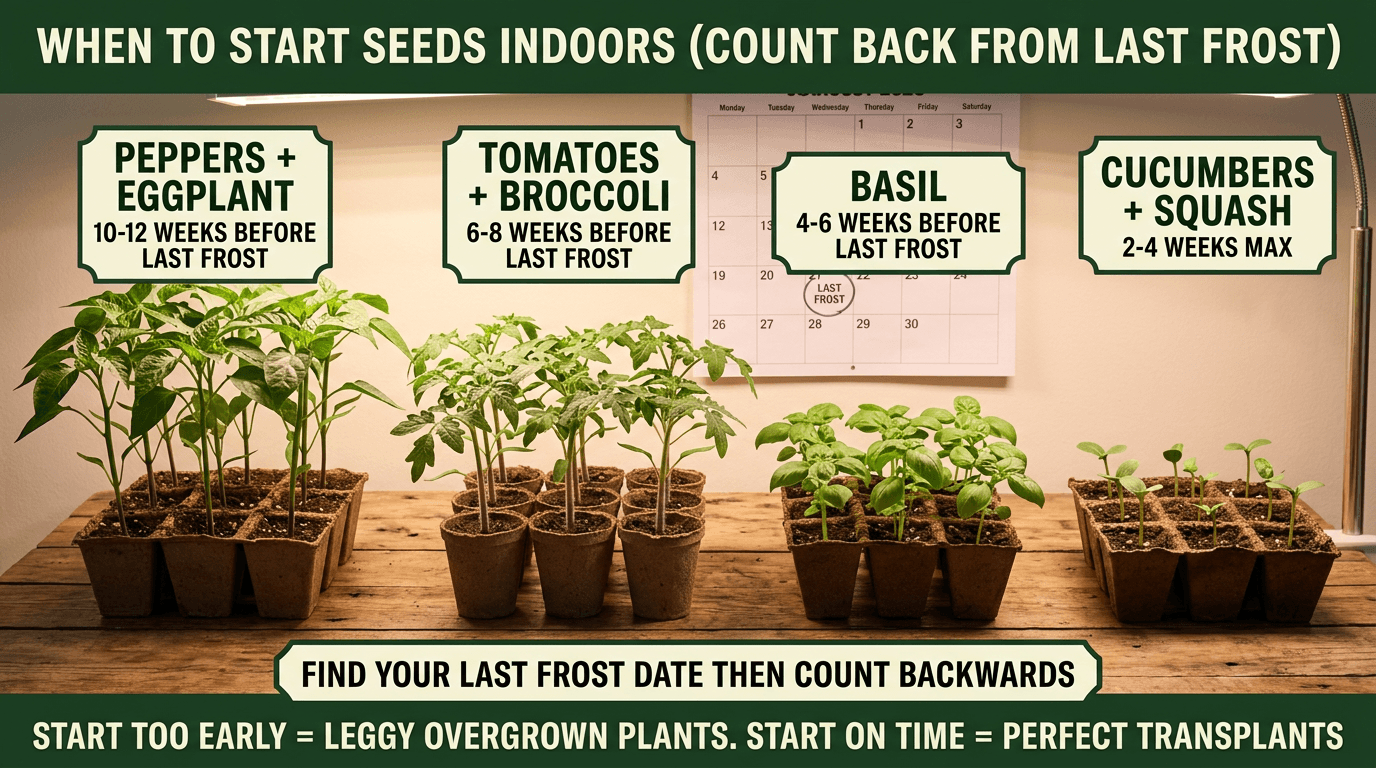
Count backwards from your last frost date:
| Crop | Weeks before last frost |
|---|---|
| Peppers | 10–12 weeks |
| Eggplant | 10–12 weeks |
| Tomatoes | 6–8 weeks |
| Broccoli, cabbage | 6–8 weeks |
| Basil | 4–6 weeks |
| Cucumbers, squash | 2–4 weeks |
Quick tip: Cucumbers and squash can also be direct-seeded in the garden — they don't love transplanting. Start them indoors only if you want a short head start (2–3 weeks maximum).
Step-by-Step: Starting Seeds
Step 1: Fill trays with seed-starting mix Moisten the mix with water until it's damp but not soaking. Fill trays to just below the top.
Step 2: Sow seeds Check the packet for planting depth — most vegetable seeds go ¼ to ½ inch deep. Sow 1–2 seeds per cell. Cover with a thin layer of mix.
Step 3: Label everything You will forget what you planted. Label every row or tray with plant name and date. Masking tape and a marker work fine.
Step 4: Water gently and cover Use a spray bottle for the first watering — heavy water will displace seeds. If you have a humidity dome, place it on top to retain moisture during germination.
Step 5: Provide warmth Most seeds germinate best at 65–75°F soil temperature. The top of a refrigerator, or a heat mat, works well. You don't need light yet — just warmth.
Step 6: Once seeds sprout — give them light immediately As soon as you see green, move trays to your brightest light. This is the most common mistake: seedlings in insufficient light grow tall, pale, and weak (called "leggy"). They won't recover well.
A south-facing window can work but often isn't bright enough in January–March. A simple shop light with LED bulbs kept 2–3 inches above the seedlings works excellently.
Caring for Seedlings
Watering: Let the surface dry slightly between waterings. Wet soil constantly leads to damping off (a fungal disease that kills seedlings at the soil line). Bottom-watering — pouring water into the tray below so roots draw it up — is ideal.
Fertilizing: Start-up mix has no nutrients. After the first true leaves appear, begin fertilizing weekly with a half-strength liquid fertilizer.
Thinning: If two seedlings germinate in the same cell, snip the weaker one with scissors. Don't pull — you'll disturb the roots of the other.
Hardening Off Before Transplanting
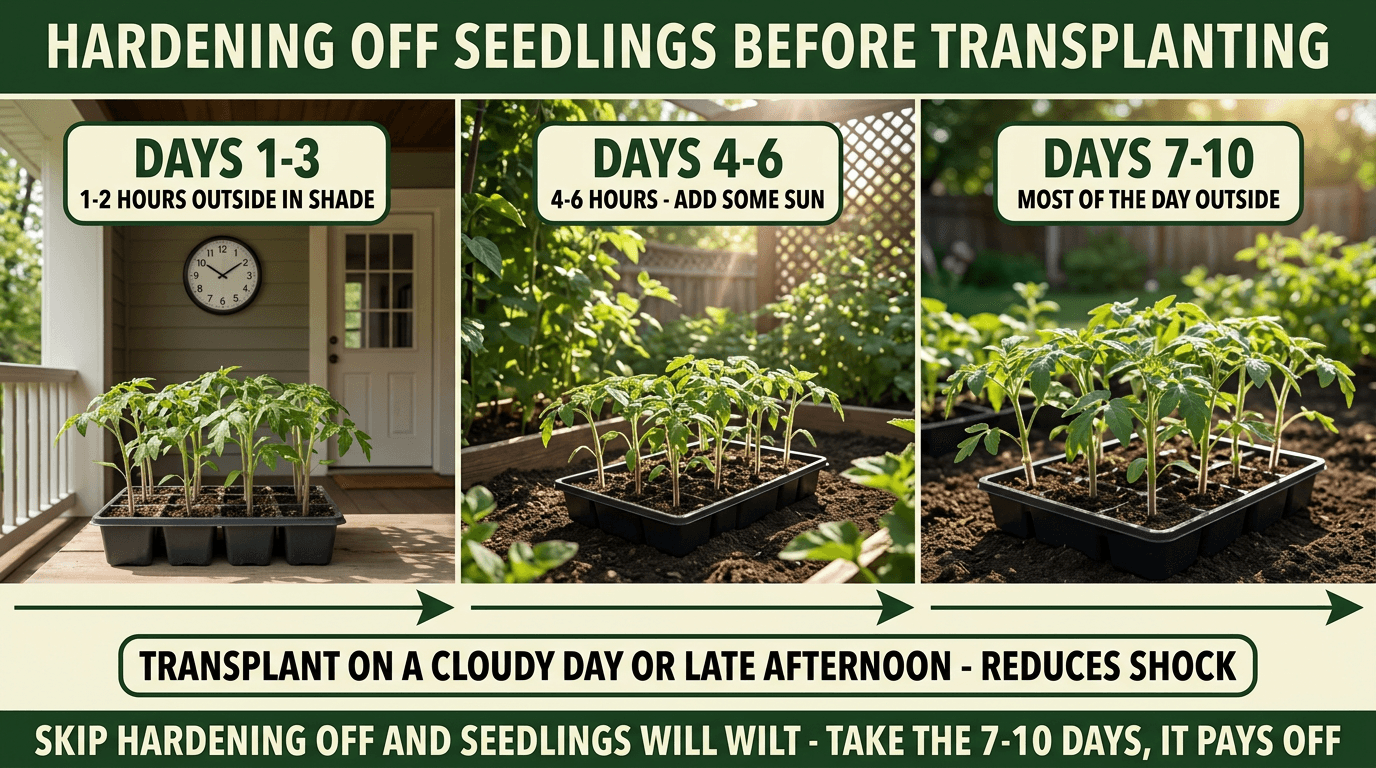
Seedlings grown indoors are soft and unaccustomed to wind, direct sun, and temperature swings. Before transplanting outside, you need to harden them off over 7–10 days:
- Day 1–3: Set outside in a sheltered spot for 1–2 hours, then bring back in
- Day 4–6: Extend to 4–6 hours, include some sun exposure
- Day 7–10: Leave outside most of the day; bring in at night if frost risk remains
After hardening off, transplant on a cloudy day or in late afternoon to reduce transplant shock.
Starting seeds indoors is one of winter's best remedies. By the time spring arrives, you'll have a tray full of healthy plants ready to hit the ground running.