

Peppers are a little slower than tomatoes, a little fussier about cold, but once they get going — they produce all summer long with very little work. Bell peppers, jalapeños, banana peppers, poblanos — they all grow the same basic way.
Here's the full guide.
Choose the Right Pepper Variety
All peppers grow the same basic way, but the variety you choose determines flavor, heat level, and how you'll use the harvest.
Bell Peppers — Sweet, no heat, thick-walled. Great fresh, roasted, or stuffed. Start out green and turn red, yellow, or orange the longer they stay on the plant.
Jalapeño — Medium heat, thick-walled, the classic choice for salsa, pickling, and poppers. Reliable and productive for beginners.
Poblano — Mild heat, large and heart-shaped, the traditional pepper for stuffing (chile relleno). Dried poblanos become ancho chiles.
Banana Pepper — Mild and tangy, long and slender. A favorite for pickling and sandwich toppings.
Habanero / Ghost Pepper — Very hot to extreme heat. Small plants, small fruit, big punch — a little goes a long way in the kitchen.
Best bet for most home gardeners: Bell peppers or jalapeños. Both are forgiving, productive, and useful in everyday cooking.
Start Peppers Early Indoors
Peppers have a long growing season — 70 to 90 days from transplant to harvest. That's why you need to start them indoors early.
- Zones 3–5: Start seeds indoors 10–12 weeks before your last frost
- Zones 6–7: Start seeds 8–10 weeks before last frost
- Zones 8–10: Start seeds 6–8 weeks before, or buy transplants
Most gardeners find it easier to buy pepper transplants from a garden center rather than starting from seed. Either way works fine.
When to Transplant Outside
Wait until nighttime temperatures are consistently above 55°F. Peppers will sulk — or just sit there and do nothing — if nights are cold.
This usually means transplanting 2–3 weeks after tomatoes in most zones.
Quick tip: If you transplant too early and get a cold snap, drape a lightweight frost cloth over your plants overnight. It can make a big difference.
Where to Plant Peppers
- Full sun: 8+ hours per day is ideal
- Sheltered spot: Peppers love heat and don't like wind
- Well-drained soil: They don't like wet feet
Raised beds are excellent for peppers — the soil warms up faster and drains better than in-ground beds.
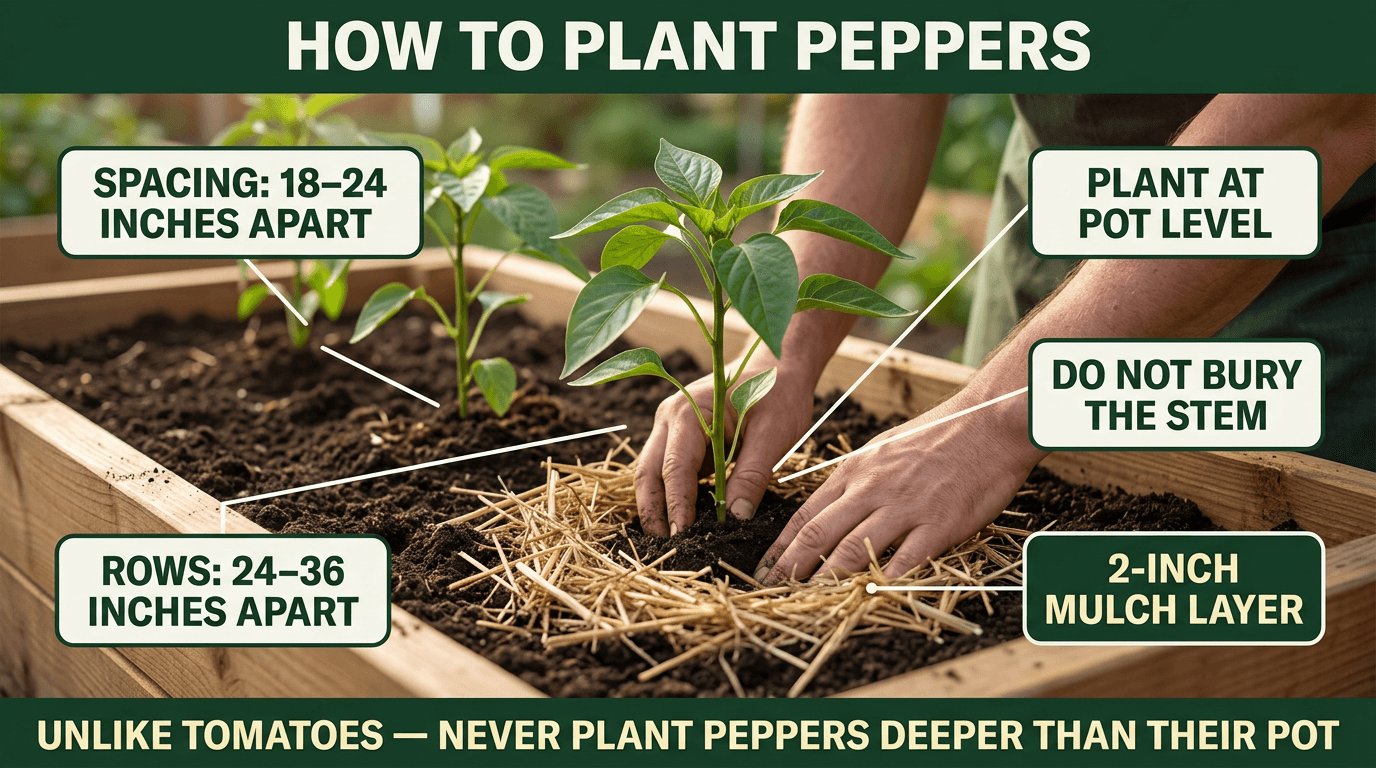
How to Plant Peppers
- Dig a hole slightly deeper than the root ball
- Space plants 18–24 inches apart in rows 24–36 inches apart
- Water well after planting
- Add a 2-inch layer of mulch around each plant
Unlike tomatoes, don't bury the stem of pepper plants deeper than they were growing. Plant them at the same level they were in their pot.
Watering Peppers
Peppers like even moisture — not too dry, not waterlogged.
- Aim for about 1 inch of water per week
- Water deeply and less frequently (not a little every day)
- Mulch helps retain moisture and keeps roots cool
Inconsistent watering causes the most common pepper problems — blossom drop (flowers fall off before fruiting) and cracked or misshapen fruit.
Fertilizing Peppers
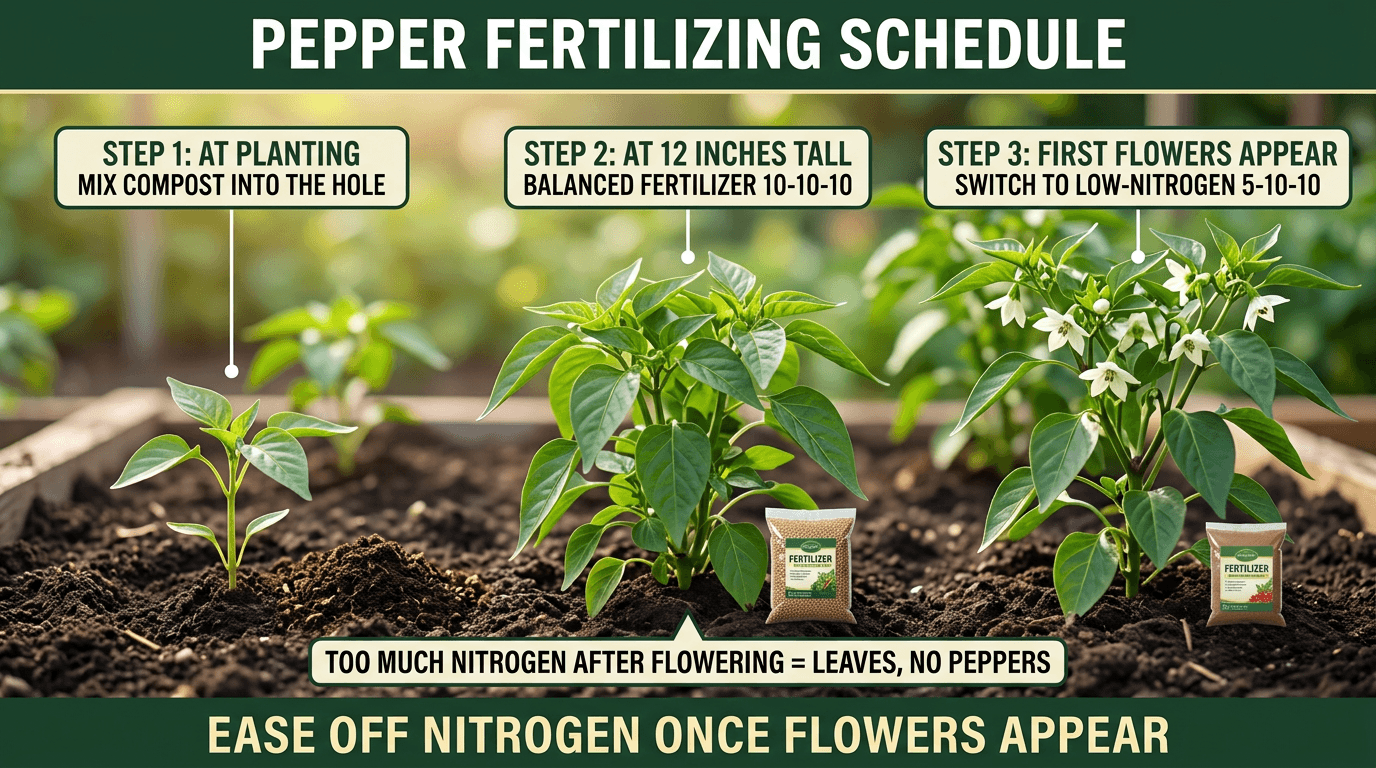
Peppers are moderate feeders. Here's a simple schedule:
- At planting: mix compost into the hole
- When plants reach 12 inches tall: balanced fertilizer (10-10-10)
- When first flowers appear: switch to a low-nitrogen fertilizer (like 5-10-10)
Too much nitrogen after flowering gives you big leafy plants with few peppers. Once flowers appear, ease off the nitrogen.
Staking Peppers
Once peppers start producing, the branches can get heavy. A simple bamboo stake and twist tie per plant is all you need. Do this before the plant needs it — not after a branch snaps.
When to Harvest Peppers
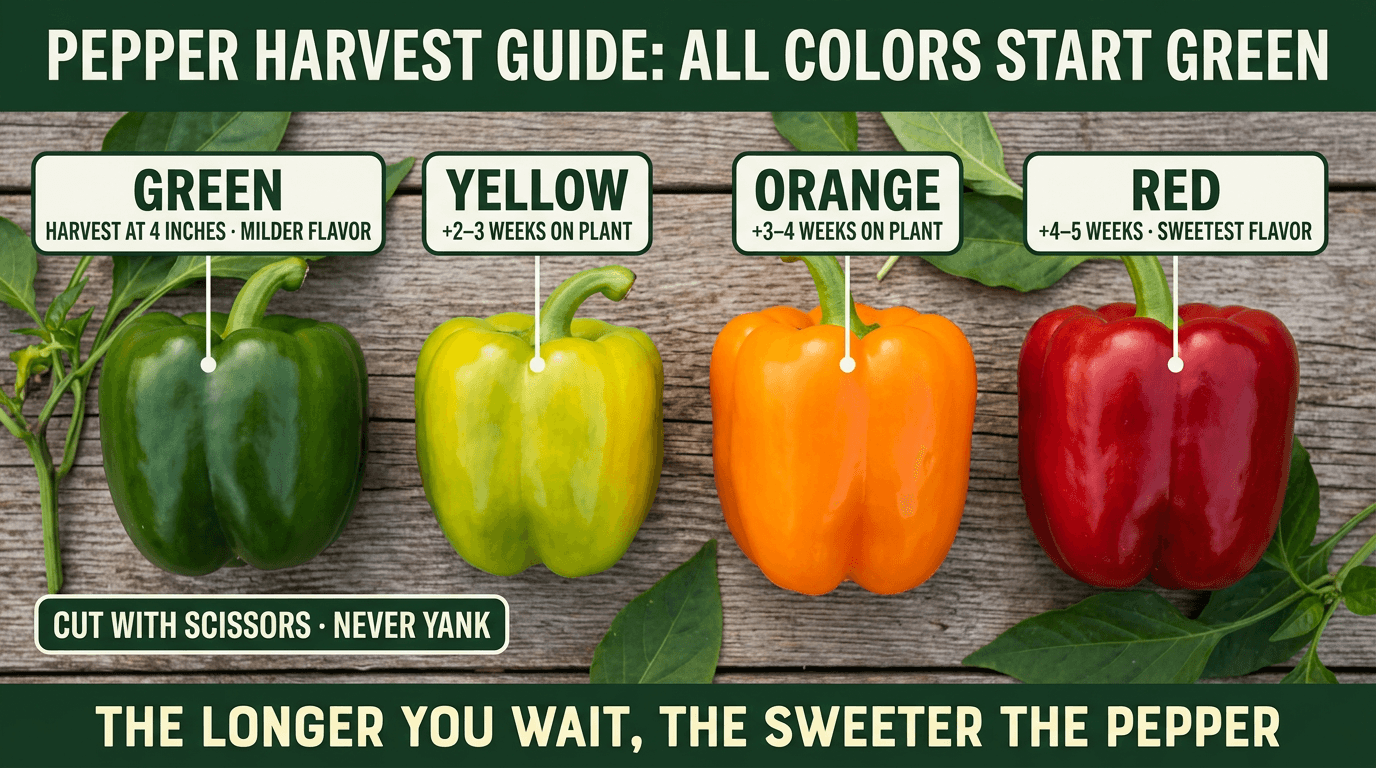
Here's something many gardeners don't realize: all bell peppers start out green. Red, yellow, and orange bell peppers are just green peppers that were left on the plant longer.
- Green peppers: Harvest any time once full size (about 4 inches)
- Colored peppers (red, yellow, orange): Leave on the plant another 2–4 weeks
- Hot peppers: Harvest green or wait for full color — color increases heat in some varieties
Use scissors or pruners to cut peppers. Don't yank them — you can break branches.
Common Pepper Problems
Flowers dropping off: Usually temperature stress (too cold at night or too hot above 90°F), or inconsistent watering. Be patient — flowering will resume.
Small or misshapen fruit: Often from poor pollination. Gently shake plants when in flower, or let a breeze do the work.
Leaves curling: Could be pests (check undersides of leaves for aphids), too much heat, or irregular watering.
No fruit after flowers: Peppers are self-pollinating but benefit from air movement. Make sure they're not blocked from wind.
Peppers reward patience. They're slow starters but by August, you'll have more than enough. Pick regularly to keep the plant producing all the way to first frost.
Storing Your Harvest
- Refrigerator: Store unwashed peppers in the crisper drawer. Sweet peppers keep for 1–2 weeks; hot peppers often last a bit longer.
- Freezer: Slice or dice peppers and freeze in a single layer on a tray before transferring to a labeled bag — no blanching needed. Keeps for 10–12 months, best for cooked dishes since the texture softens once thawed.
- Drying (hot peppers): String whole peppers into a ristra and hang in a warm, dry spot, or use a dehydrator. Dried peppers keep for about a year and can be ground into homemade chili powder.
- Pickling: A quick vinegar brine is a popular way to preserve jalapeños and banana peppers — ready to eat within a day and keeps for weeks in the fridge.
