Curling pepper leaves are one of those problems that can mean several different things — and the fix depends entirely on which one you're dealing with. The good news is that once you identify the cause, most of these problems are very fixable.
Here's how to figure out what's going on and what to do about it.
1. Heat and Sun Stress (Most Common)
In summer heat above 90°F, pepper leaves often curl or roll inward to reduce water loss. This is actually a natural defense response, not a sign that something is seriously wrong.
How to tell: Happens during the hottest part of the day; leaves uncurl in the evening. Plant otherwise looks healthy.
Fix:
- Water more consistently and deeply
- Add mulch around the base to keep roots cool
- If in a container, move to a spot with afternoon shade during extreme heat
- In most cases, you just need to wait it out — the plant is coping
2. Inconsistent Watering
Both underwatering and overwatering can cause leaf curl in peppers.
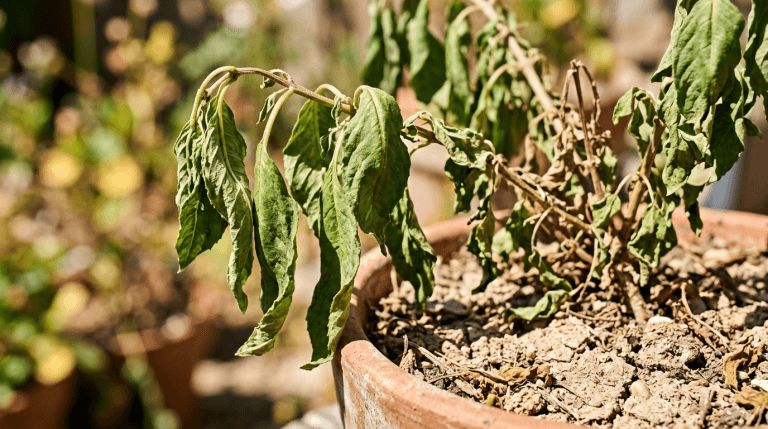
Underwatered: Leaves curl inward and may feel dry or papery. Soil is dry 2 inches down.
Overwatered: Leaves curl downward and may look yellowed or swollen. Soil is wet.
Fix:
- For underwatering: Water deeply and regularly (1 inch per week minimum)
- For overwatering: Let the soil dry out before watering again; improve drainage
Quick tip: Push your finger 2 inches into the soil before watering. If it's still moist, wait. If dry, water deeply.
3. Aphids or Other Pest Damage
Aphids and broad mites cause leaves to curl, pucker, and deform — especially on new growth at the tips.
How to tell: Look at the undersides of leaves, especially the newest growth. Aphids are tiny green, yellow, or black clusters. Broad mites are invisible to the naked eye but cause distinctive tight curling and bronzing of new leaves.
Fix for aphids:
- Blast with a strong stream of water from a hose
- Spray with insecticidal soap (repeat every 3–4 days)
- Encourage ladybugs and lacewings — they eat aphids
Fix for broad mites:
- Remove and destroy heavily affected leaves
- Spray with neem oil (coat all leaf surfaces, including undersides)
- Repeat every 5–7 days for 2–3 weeks
4. Viral Disease
Some plant viruses cause leaf curl combined with mottled coloring, stunted growth, or twisted new leaves. Common culprits include pepper mild mottle virus and cucumber mosaic virus, both spread by aphids.
How to tell: Leaves are curled AND have unusual color patterns (mosaic, yellow streaking) or the plant is generally small and struggling.
Fix:
- No cure for viral disease
- Remove and destroy infected plants
- Control aphids aggressively (they spread the virus)
- Don't compost infected plants
5. Herbicide Drift
If you or a neighbor applied a broadleaf herbicide (weed killer) nearby, drift can cause distinctive curling, twisting, and distortion — especially on new growth.
How to tell: Multiple plants suddenly show symptoms together. New leaves appear twisted or cupped. Problem appears suddenly after a nearby lawn treatment.
Fix:
- Nothing much can be done once damage occurs
- Keep plants well-watered to help them recover
- Mild exposure: plants often recover in a few weeks
- Severe exposure: plants may not recover
6. Transplant Stress
Newly transplanted peppers often curl their leaves temporarily as they adjust to their new environment. This is normal and usually resolves in a week.
Fix: Keep new transplants consistently watered. Avoid full intense sun for the first 2–3 days. This stress goes away on its own.
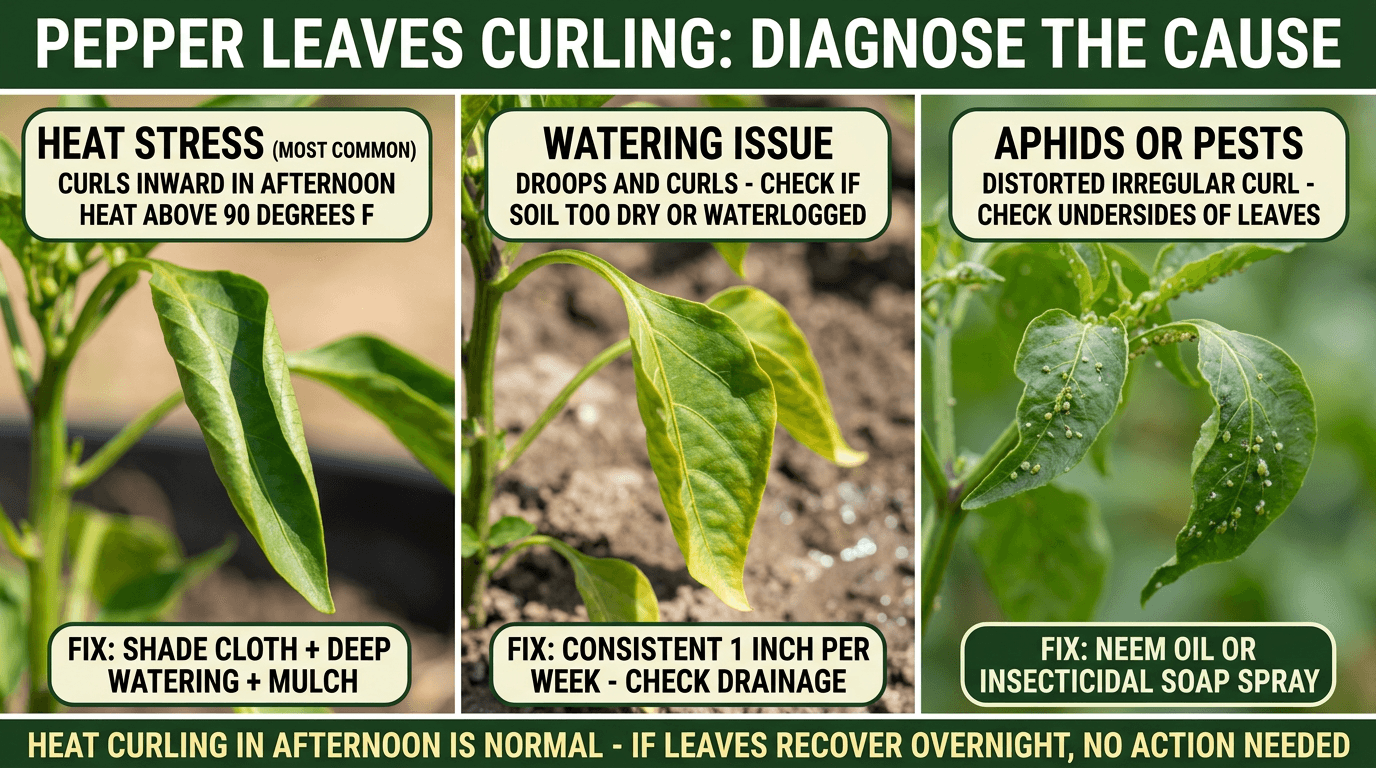
How to Diagnose Your Pepper Problem
Work through this quick checklist:
- Are leaves curling in from the edges in hot weather with no other symptoms? → Heat stress.
- Is soil bone dry? → Underwatering.
- Is soil constantly wet? → Overwatering.
- Are new leaf tips curling tightly with small insects visible on undersides? → Aphids.
- Is new growth tight, bronzed, and brittle with no visible insects? → Broad mites.
- Are leaves mottled or striped with unusual colors? → Viral disease.
- Did symptoms appear after nearby lawn treatment? → Herbicide drift.
Most curling pepper leaves are nothing to panic about. Heat and inconsistent watering are the most common causes by far — and both have simple fixes.