Clay soil gets a bad reputation, but it’s not all bad news. Clay holds nutrients and moisture far better than sandy soil — the problem is drainage, compaction, and how slow it is to warm up in spring. The good news is that clay soil can absolutely be improved, and in the meantime, there are ways to garden successfully in it right away.
This guide covers both: quick fixes that let you plant now, and the long-term changes that gradually transform heavy clay into rich, workable garden soil.
How to Tell If You Have Clay Soil
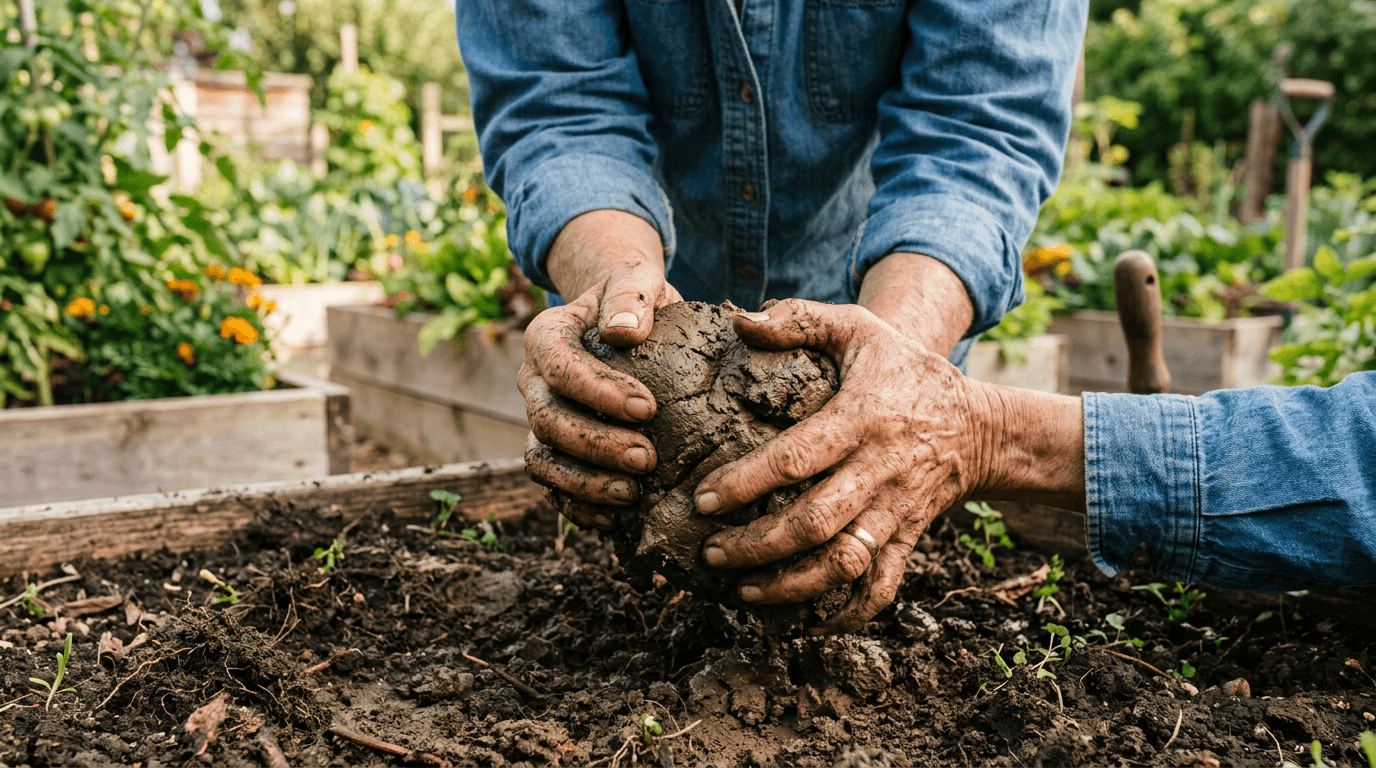
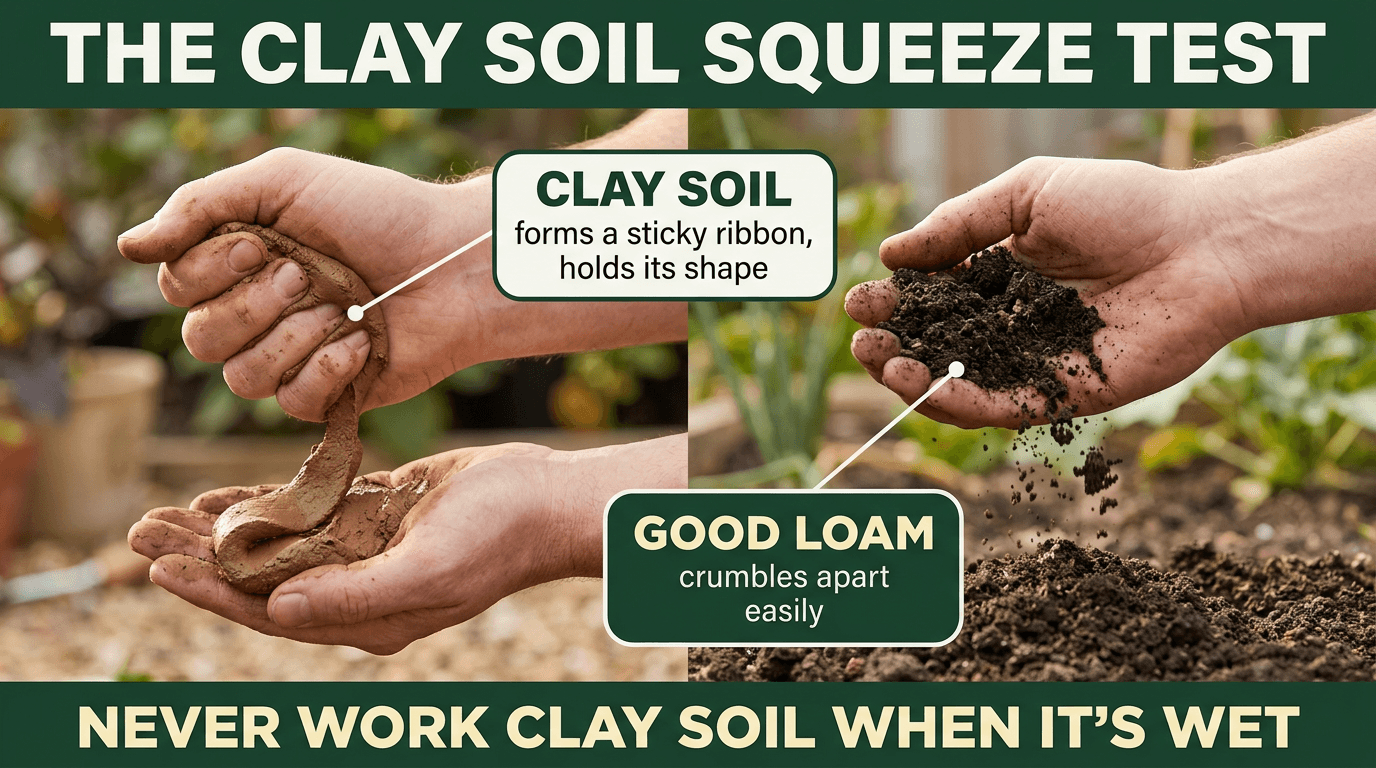
A simple squeeze test tells you almost everything you need to know. Grab a handful of moist (not soaking wet) soil and squeeze it into a ball.
- If it forms a slick, sticky ball that holds its shape and can be smeared into a ribbon between your fingers, you have clay soil
- Clay soil also cracks visibly when it dries out, drains slowly after rain (water may pool for hours), and feels heavy and dense when you dig
- For a more detailed picture, try a jar test: fill a clear jar about a third full of soil, add water, shake well, and let it settle overnight. The layers that settle out (sand on bottom, silt in the middle, clay on top) show you the exact composition of your soil
Quick Fixes — Gardening in Clay Right Now
These changes don’t fix the underlying soil, but they let you plant successfully this season while long-term improvements take hold.
Build raised beds. This is by far the fastest, most reliable solution. Instead of fighting to improve the native clay, build up with a quality soil mix on top of it. Roots grow in the good soil above, largely bypassing the drainage and compaction problems below. See the Raised Bed Soil Mix guide for exact recipes.
Never work clay soil when it’s wet. This is the single most important rule for clay. Digging, tilling, or even walking on wet clay compacts it further and can undo months of improvement in minutes. Wait until a handful of soil crumbles rather than smears when squeezed before working it.
Stay off the soil entirely when possible. Use stepping stones, mulched paths, or raised bed frames to avoid walking directly on garden soil — foot traffic compacts clay significantly over time.
The Long-Term Fix: Organic Matter
Improving clay soil structure permanently takes time — typically a few seasons of consistent effort — but organic matter is the single most effective tool for the job.
- Work 2–3 inches of finished compost into the top 6–8 inches of soil every season, spring and fall if possible
- Organic matter improves clay’s structure from both directions — it helps break up dense particles for better drainage, while also improving the water-holding capacity clay is already good at
- Leaf mold (decomposed fallen leaves) is an excellent, often free, source of organic matter for clay improvement
- Avoid working large amounts of sand into clay soil — a persistent gardening myth. Mixing sand and clay in the wrong proportions creates a texture closer to concrete than to soil. Organic matter is the safer, more effective choice
Cover Crops — Nature’s Soil Breakers
Certain cover crops do the work of breaking up compacted clay through their root systems, at no cost beyond the seed.
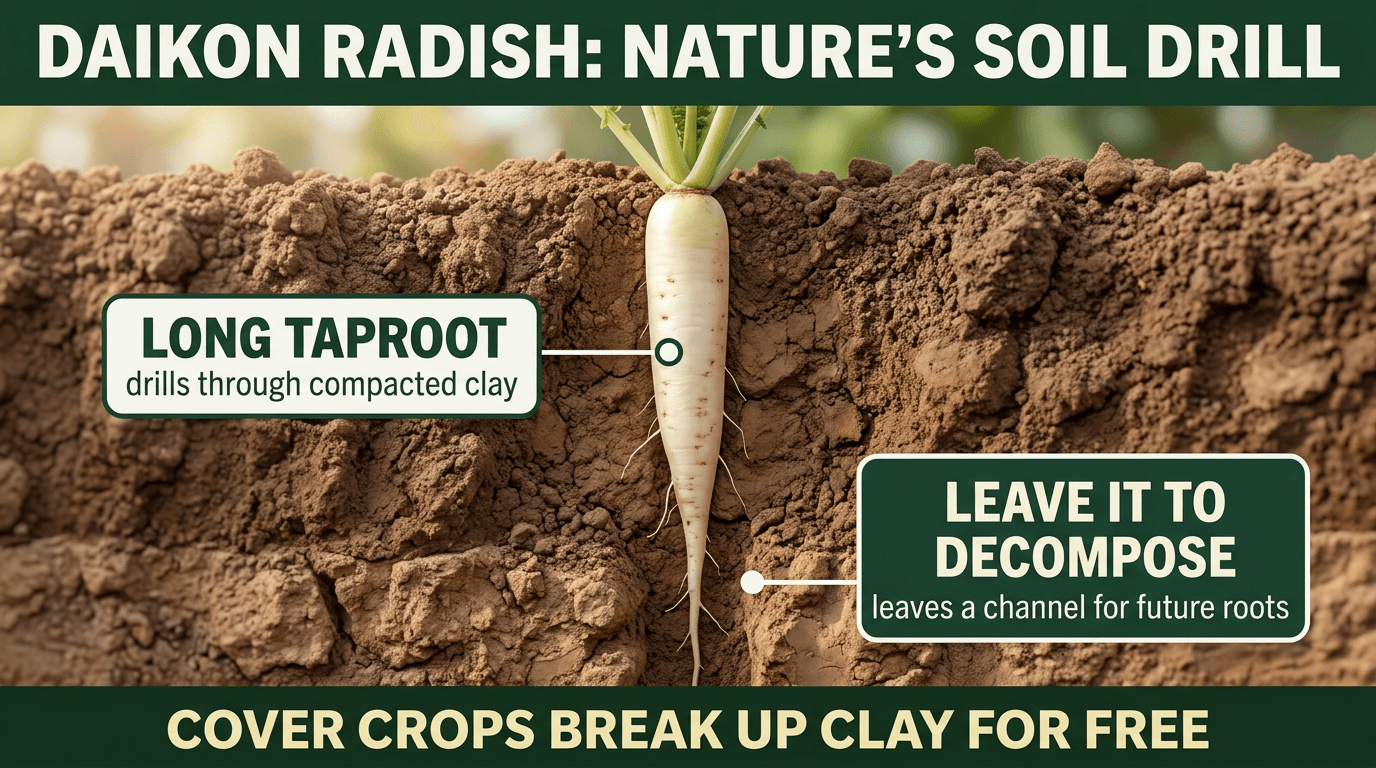
- Daikon radish (tillage radish) — Grows a long, thick taproot that physically drills through compacted clay layers. Left in the ground over winter, the root decomposes and leaves a channel behind that improves drainage and lets future roots follow the same path.
- Clover — Fibrous roots improve soil structure while also adding nitrogen back into the soil as the plant breaks down.
- Buckwheat — A fast-growing summer cover crop that adds organic matter quickly and helps suppress weeds while soil improvement is underway.
Sow cover crops in beds that are resting between growing seasons, then cut them down and work the residue into the soil (or leave roots to decompose in place) before your next planting.
Should You Use Gypsum?
Gypsum (calcium sulfate) is often marketed as a clay-breaking miracle product, but it’s more limited than the marketing suggests.
- Gypsum is genuinely effective on sodium-affected clay soils (common in some arid regions and coastal areas), where it displaces sodium and improves structure
- On ordinary clay soil without a sodium problem, gypsum has little to no measurable benefit
- A basic soil test is the only reliable way to know if gypsum will actually help your specific soil — skip it unless a test confirms a sodium issue
- For most home gardeners, organic matter delivers far more reliable results than gypsum
Minimize Soil Disturbance
Heavy tilling might seem like it would loosen clay, but repeated tilling actually breaks down soil structure over time and can create a compacted “hardpan” layer just below the tilled depth.
- A no-dig or minimal-till approach — adding compost on top rather than digging it in deeply — lets earthworms and soil organisms gradually incorporate organic matter while preserving natural soil structure
- Over a few seasons, this builds a naturally looser topsoil layer without the setbacks that come from repeated heavy tilling
What to Plant While You Wait
Some vegetables tolerate clay soil better than others while you’re working on long-term improvement:
- More clay-tolerant: Broccoli, cabbage, beans, squash, and many perennial fruits and berries
- Struggles most in clay: Root vegetables like carrots and potatoes, which need loose soil to form straight, well-shaped roots — these are excellent candidates for a raised bed while your native soil improves