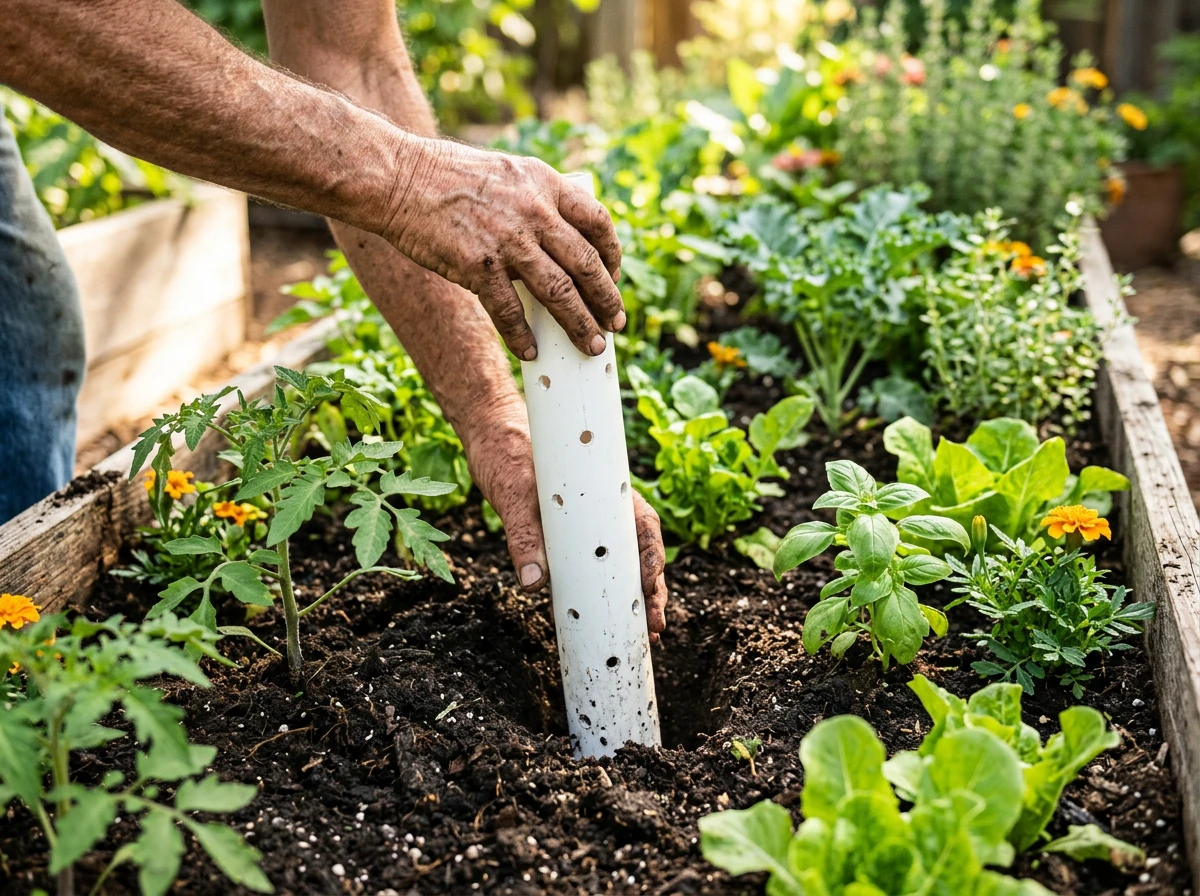
If you’ve scrolled past a gardening video lately, there’s a good chance you’ve seen this one: a simple pipe buried in a garden bed, feeding kitchen scraps straight to worms living right where your plants need them most. The worm tower is one of the most popular DIY composting projects going around right now — and unlike a lot of trends, this one actually works.
It’s cheap, it takes about twenty minutes to build, and it turns kitchen scraps into fertilizer without ever leaving your garden bed.
What Is a Worm Tower?
A worm tower (also called a vermicomposting tower or in-ground worm feeder) is a perforated pipe or container buried vertically in your garden bed, with the top sticking a few inches above soil level. You drop kitchen scraps in through the top, and worms already living in your soil — plus worms that migrate in from the surrounding bed — move in to break the scraps down.
As the worms process the scraps, the nutrient-rich castings and liquid they produce seep out through the holes directly into the surrounding soil — right at root level, with zero effort to haul or spread finished compost.
What You’ll Need
- A length of PVC pipe, 4–6 inches in diameter and about 18–24 inches long (a coffee can, 5-gallon bucket, or terracotta pot with the bottom removed also works)
- A drill with a ½–¾ inch bit
- A pipe cap or lid to keep pests and rain out of the opening (optional but recommended)
- A post-hole digger or narrow spade
How to Build It
- Drill holes all around the lower two-thirds of the pipe, spaced about 2–3 inches apart. These holes let worms in and let nutrients seep out into the surrounding soil.
- Dig a vertical hole in your garden bed, deep enough that the pipe sits with about 4–6 inches still above the soil surface once buried.
- Set the pipe in the hole and backfill soil firmly around it so it stands upright and stable.
- Add a couple inches of shredded cardboard or dry leaves in the bottom to get things started, along with a handful of garden soil to introduce worms and microbes.
- Cap the top loosely, or cover with a flat stone, to keep out rain, pests, and curious critters while still allowing airflow.

Where to Place It
- Position the tower in the center of a raised bed or within a few feet of the plants you want to benefit most — nutrients spread outward from the tower but don’t travel far
- For a larger bed, install two or three towers spaced a few feet apart rather than relying on just one
- Avoid placing it right against the wood frame of a raised bed, where digging the hole is harder and nutrients reach fewer roots
What to Feed It
Feed a worm tower the same way you’d feed a compost pile or worm bin — with a few extra cautions since it’s sitting right in your growing bed.
- Good scraps: Vegetable and fruit peels, coffee grounds, crushed eggshells, tea bags (remove staples), and shredded paper or cardboard
- Avoid: Meat, dairy, oily foods, and heavily processed foods — these attract pests and rodents and can smell before they break down
- Add scraps in small amounts every few days rather than dumping large quantities at once, giving worms time to keep up
- Chop or tear scraps into smaller pieces to speed up decomposition
Common Problems
Bad smell — Usually means too much food was added at once, or meat/dairy snuck in. Stop feeding for a week and let existing material break down before adding more.
No worms showing up — Garden soil worm populations vary by location and season. If your tower isn’t attracting worms naturally within a few weeks, add a handful of worms from an existing compost pile or a small amount of red wigglers to jump-start it.
Fruit flies — Cap the opening more securely, and bury scraps slightly rather than leaving them sitting right at the surface of the pipe opening.
Slow breakdown in winter — Worm activity slows significantly in cold soil. This is normal; feeding lightly and expecting less activity through winter is the right approach rather than a sign something’s wrong.
Why It Works So Well
A traditional compost pile produces finished compost you then have to haul and spread. A worm tower skips that step entirely — nutrients are released directly into the soil surrounding your plants’ roots, continuously, with almost no ongoing effort beyond dropping in scraps every few days. It’s a small, low-cost project that turns kitchen waste into steady, hands-off fertilizer exactly where your plants can use it.