An indoor herb garden means fresh basil, mint, or rosemary is never more than a few steps from your kitchen — even in the dead of winter. It takes a bit more attention than an outdoor bed, mainly because light indoors is far more limited than most people expect, but the payoff is fresh herbs on hand all year round.
Here’s how to set up a windowsill or countertop herb garden that actually thrives, not just survives.
Light — The Make-or-Break Factor
Insufficient light is the number one reason indoor herbs fail. Most culinary herbs need significantly more light than people assume.
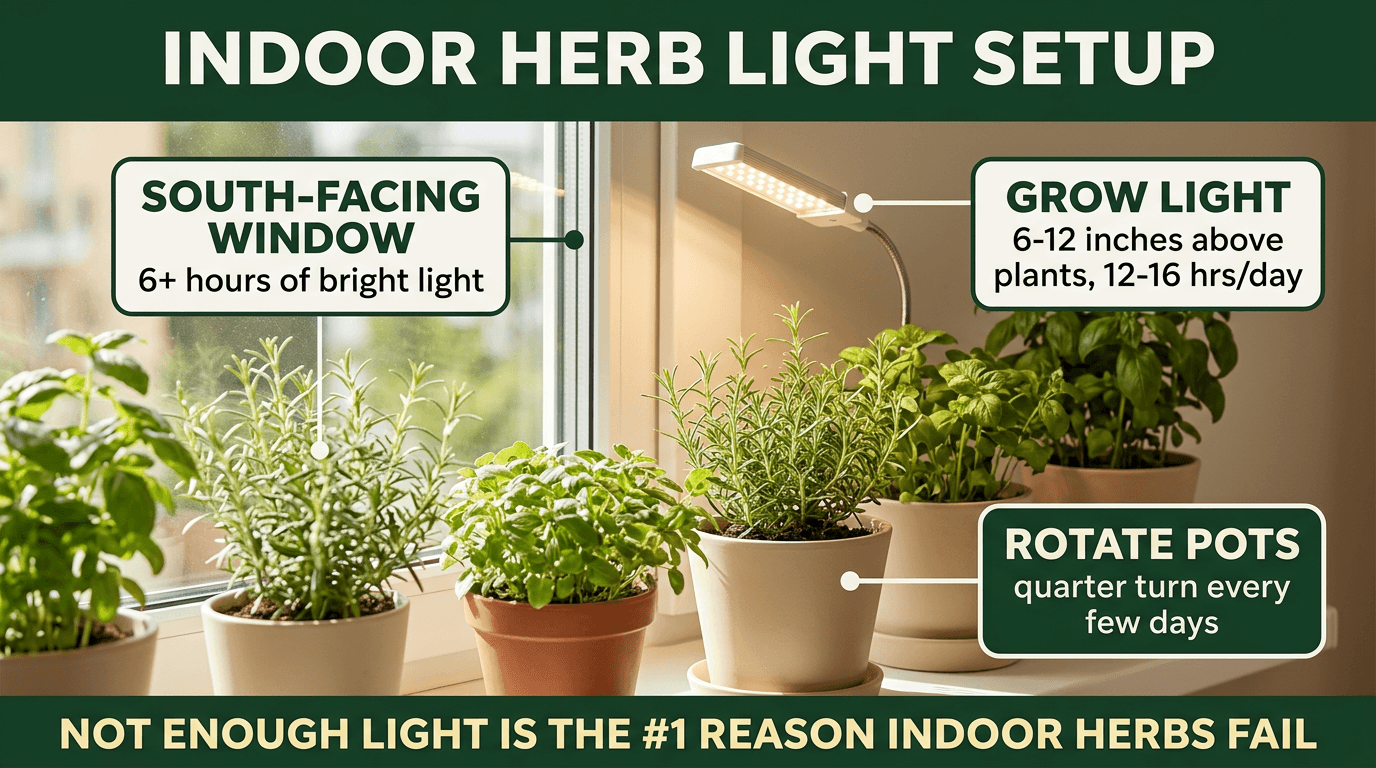
- A south-facing window is ideal, providing the most consistent light throughout the day. East or west-facing windows can work for more shade-tolerant herbs like mint and chives, but often aren’t enough for basil or rosemary.
- Most herbs need at least 6 hours of bright light daily — direct sun is best, but a consistently bright window can work for the more forgiving herbs
- If your windows don’t provide enough light, use a grow light. A simple full-spectrum LED grow light positioned 6–12 inches above the plants, run for 12–16 hours a day, reliably replaces natural sunlight and is often more consistent than a window, especially in winter
- Rotate pots a quarter turn every few days if relying on window light alone — plants lean and stretch toward a single light source, and rotating keeps growth even
Best Herbs for Growing Indoors
Chives — One of the easiest and most forgiving indoor herbs. Tolerates lower light better than most and comes back reliably after cutting.
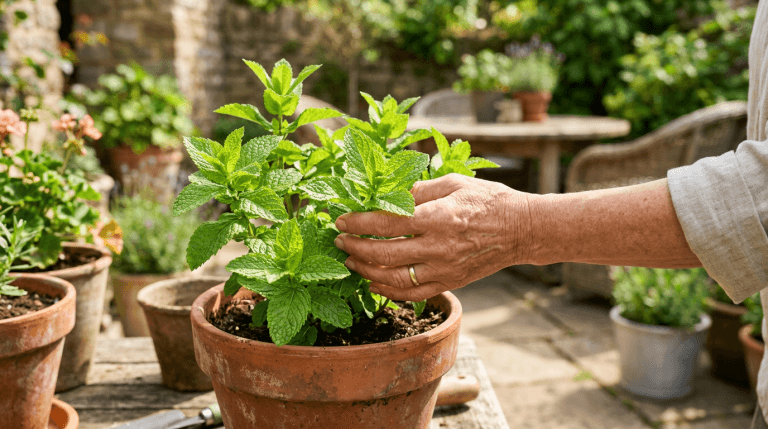
Mint — Grows vigorously indoors with minimal fuss, and containing it in a pot is actually ideal since it prevents the aggressive spreading mint is known for outdoors.
Parsley — Handles indoor conditions well once established, though it’s slow to germinate from seed (see the How to Grow Parsley guide for the soaking trick that speeds this up).
Basil — The most popular indoor herb, but also the fussiest. Needs the brightest light and warmest spot available, and struggles in cold drafts or low light — a common candidate for supplemental grow lights.
Thyme and Oregano — Mediterranean herbs that prefer things on the dry side. Excellent choices as long as the pot has very good drainage.
Rosemary — Rewarding but the trickiest of the common indoor herbs. Needs excellent drainage and should dry out noticeably between waterings — overwatering is the most common way indoor rosemary dies.
Herbs that struggle most indoors: Cilantro tends to bolt quickly indoors due to inconsistent light and warmer indoor temperatures, giving a shorter harvest window than most other herbs.
Choosing Pots and Soil
- Choose pots with drainage holes — this is non-negotiable for indoor herbs, since standing water in a pot without drainage is one of the fastest ways to kill an herb
- Use a saucer underneath to protect windowsills and furniture from water damage
- Start with 4–6 inch pots for most herbs; larger, more vigorous growers like rosemary or mint benefit from 6–8 inch pots
- Terra cotta pots are a good choice since their porous walls let excess moisture evaporate, helping prevent overwatering
- Use a quality well-draining potting mix — never garden soil, which compacts badly in containers and may carry outdoor pests or diseases indoors
- For Mediterranean herbs (rosemary, thyme, oregano), mix in extra perlite or coarse sand for even better drainage
Watering Indoor Herbs
- Check soil moisture with your finger before watering — stick it about an inch into the soil; if it’s still moist, wait
- Water thoroughly until it drains from the bottom, then empty the saucer so pots never sit in standing water
- Overwatering, not underwatering, kills far more indoor herbs. When in doubt, wait a day longer rather than watering again
- Mediterranean herbs (rosemary, thyme, oregano) prefer to dry out more between waterings than moisture-loving herbs like mint, basil, and parsley
Temperature and Humidity
- Most herbs thrive in typical indoor temperatures of 65–75°F
- Keep pots away from cold drafts near winter windows and away from hot, drying air near heating vents — both stress plants significantly
- Indoor air, especially with winter heating running, is often drier than herbs prefer. Occasional misting or a nearby humidity tray (a shallow tray of water and pebbles under the pot, not touching the water) helps humidity-loving herbs like basil and parsley
Fertilizing Indoor Herbs
Unlike garden soil, potting mix has a limited nutrient supply that gets used up over time, so indoor herbs need occasional feeding that outdoor herbs in rich garden soil often don’t.
- Feed monthly with a balanced liquid fertilizer diluted to about half the strength recommended on the label — indoor herbs are sensitive to over-fertilizing
- Skip fertilizing in winter if growth slows significantly due to lower light, resuming as light and growth pick back up
Harvesting for Continued Growth
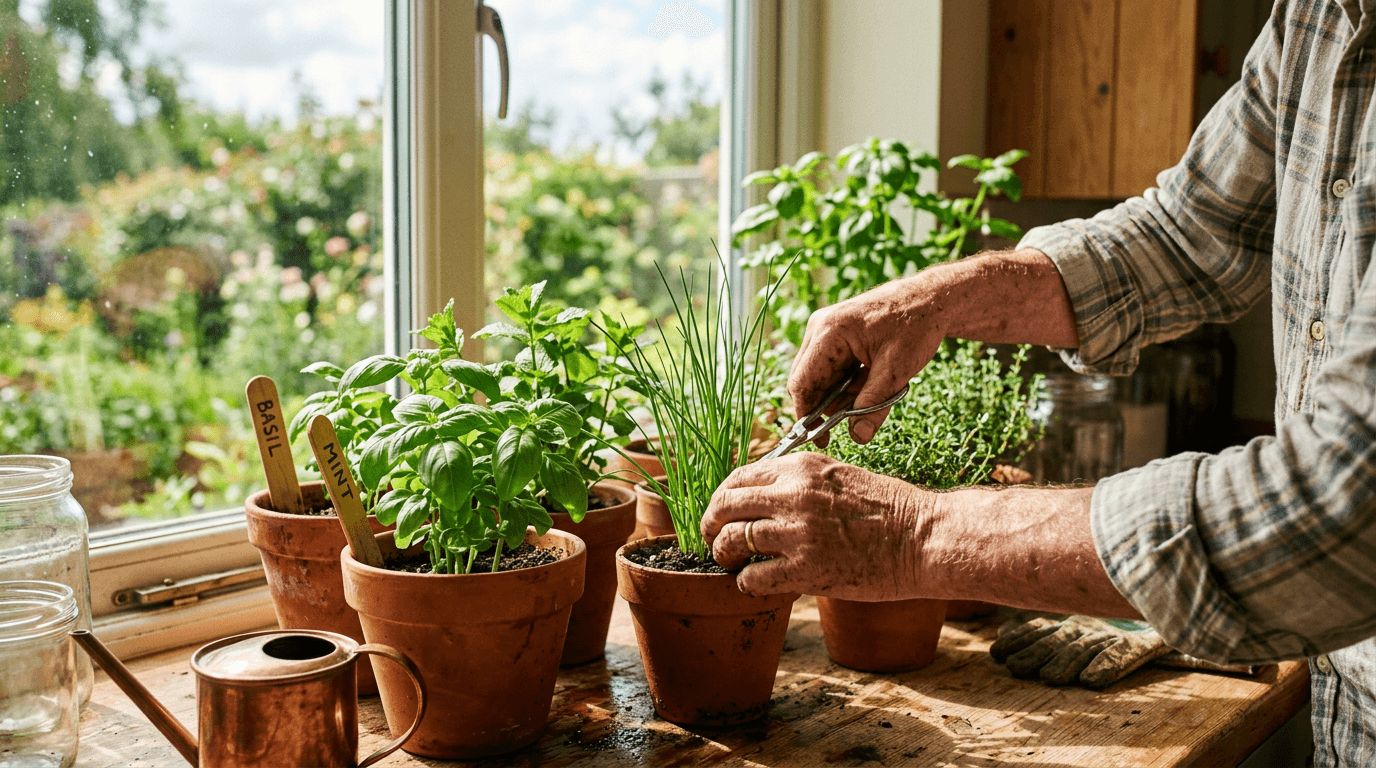
- Harvest regularly using the same cut-and-come-again approach as outdoor herbs — snip stems just above a leaf node rather than stripping whole plants
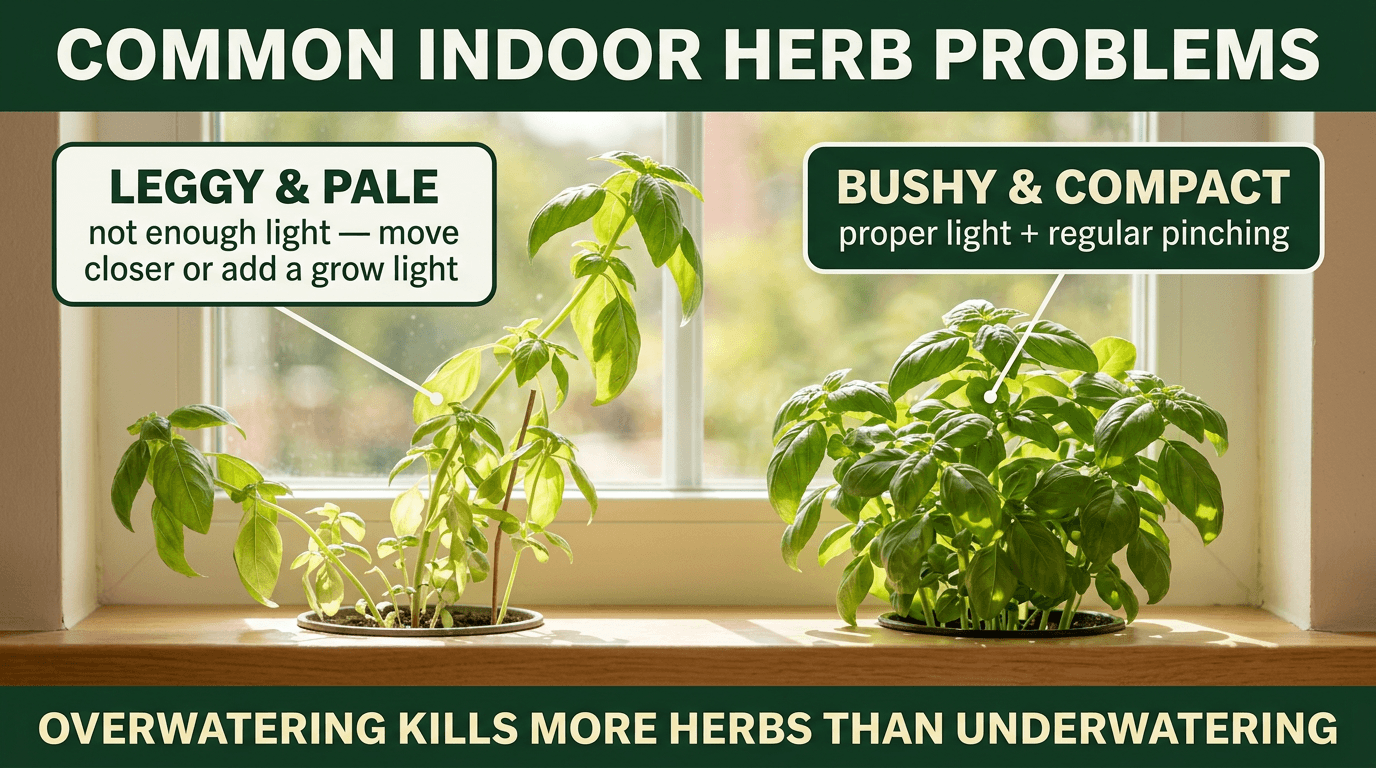
- Regular pinching and harvesting actually encourages bushier, fuller growth rather than tall, leggy stems reaching for the light
- Leggy, stretched-out growth is almost always a light problem — if pinching doesn’t fix it, move the plant closer to the window or add a grow light
- Most indoor herbs can be harvested lightly within a month of establishing, and continuously afterward with proper care