Parsley is the herb most gardeners overlook — tucked as a garnish in the grocery store, easy to forget in the garden too. That’s a shame, because fresh parsley from your own bed tastes far brighter than anything in a plastic clamshell, and the plant itself is remarkably easy to keep alive.
It’s slow to get going, but once established, a couple of parsley plants can supply a household with fresh herb for months — and in mild climates, right through winter.
Choose the Right Parsley Variety
Curly Parsley — The classic ruffled-leaf variety often used as a plate garnish. Milder flavor than flat-leaf types. Its dense, compact growth also makes it an attractive edging plant.
Flat-Leaf (Italian) Parsley — Broader, flatter leaves with a stronger, more robust flavor. The preferred choice for cooking among most chefs and home cooks. Slightly more heat-tolerant than curly types.
Best bet for most home gardeners: Flat-leaf parsley if you cook with it often — the flavor holds up better in dishes. Curly parsley if you want a tidy, ornamental-looking border plant that doubles as a fresh herb source.
A quick botany note: Parsley is a biennial, meaning it naturally lives for two growing seasons. In year one, it focuses on leaf growth — that’s your harvest window. In year two, it sends up a flower stalk and goes to seed, and the leaves turn bitter. Most gardeners treat it as an annual and replant each spring.
When to Plant Parsley
Parsley is a cool-season herb that tolerates light frost well, making it one of the earliest herbs you can get into the ground.
- Direct sowing: Sow outdoors 2–3 weeks before your last spring frost date, once soil can be worked
- Starting indoors: Start seeds indoors 6–8 weeks before your last frost date — this gives parsley’s notoriously slow germination a head start
- Fall planting (mild-winter zones 8–10): Parsley can also be sown in late summer for a fall and winter harvest
Not sure of your frost dates? Check the Find Your Zone guide to look up your USDA hardiness zone.
Preparing the Soil
- Choose a spot with full sun to partial shade — parsley tolerates more shade than most herbs, especially helpful in hot climates
- Work 2 inches of compost into loose, well-draining soil before planting
- Aim for a soil pH between 6.0 and 7.0
- Parsley develops a long taproot, so loosen soil at least 8–10 inches deep for the healthiest plants
How to Sow Parsley — and Why It’s Slow
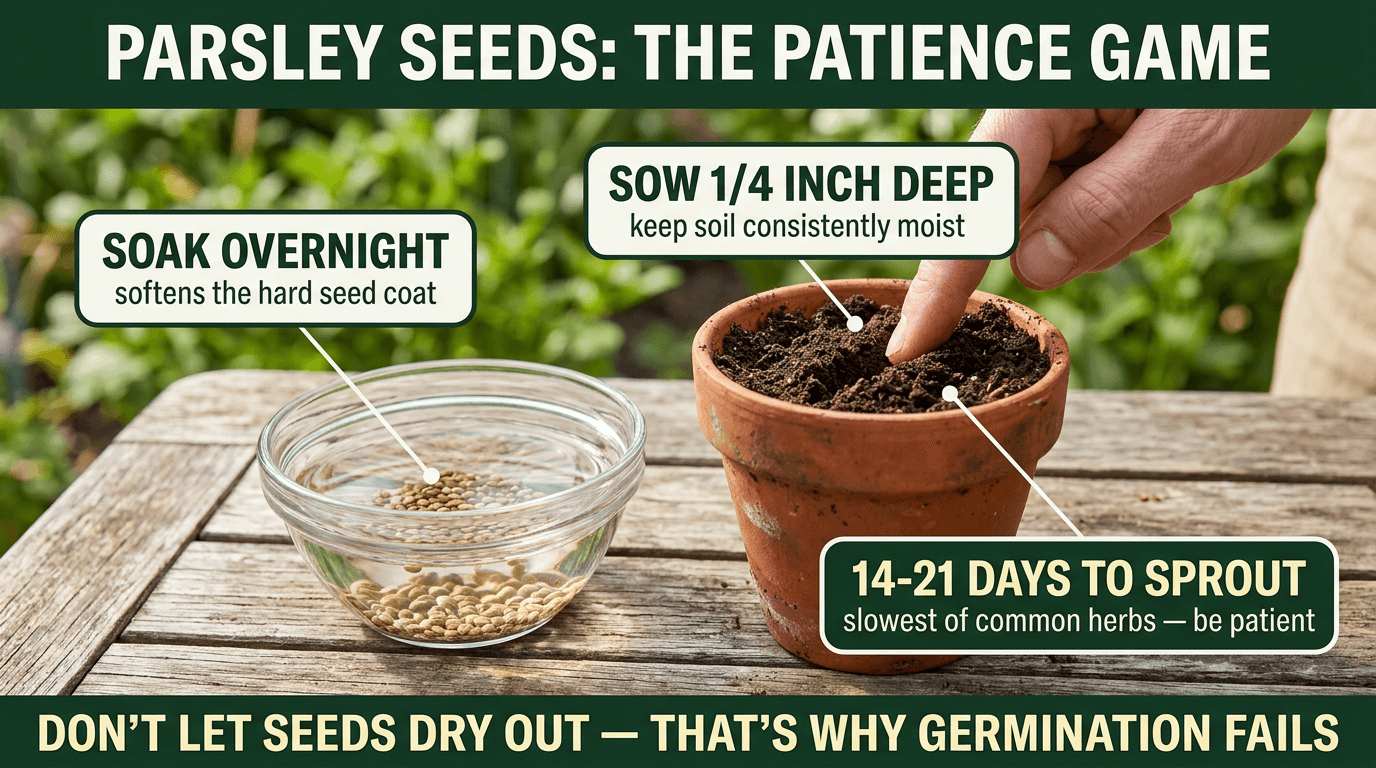
Parsley has a well-earned reputation for slow, uneven germination — it can take 3 weeks or more to sprout, testing the patience of even experienced gardeners.
- Soak seeds overnight in room-temperature water before sowing — this softens the seed coat and speeds up germination significantly
- Sow seeds ¼ inch deep, spacing them 6–8 inches apart (or sow thickly and thin later)
- Keep soil consistently moist during the entire germination period — parsley seeds that dry out even once may fail to sprout
- Be patient: germination typically takes 14–21 days, sometimes longer in cool soil
- Once seedlings have 2–3 true leaves, thin to 8–10 inches apart
Because germination is slow, most home gardeners find transplants easier. Starting seeds indoors, or simply buying young parsley plants from a garden center, sidesteps weeks of waiting and uncertainty.
Watering Parsley
- Water regularly to keep soil consistently moist, especially during germination and while plants are young
- Established plants tolerate brief dry spells better but produce best with about 1 inch of water weekly
- Mulch lightly around plants to retain moisture and suppress weeds
- Avoid waterlogged soil — good drainage prevents root rot
Fertilizing Parsley
- Work compost into the soil before planting — parsley usually doesn’t need much beyond that
- Since you’ll be harvesting leaves continuously, a light feeding with balanced fertilizer or fish emulsion every 4–6 weeks keeps growth vigorous
- Avoid heavy nitrogen fertilizers, which can push rapid, weak growth with diminished flavor
Common Parsley Problems
Parsleyworm (black swallowtail caterpillar) — A green-and-black striped caterpillar that feeds on parsley, dill, and related herbs. It’s the larval stage of the black swallowtail butterfly. Many gardeners simply let a few caterpillars feed, since the damage is usually minor and the butterflies are a welcome pollinator — or relocate them to a sacrificial plant if you want to protect your harvest.
Aphids — Small clusters of insects on new growth and stems. Spray off with a strong stream of water or use insecticidal soap for persistent infestations.
Slow or no germination — The most common frustration with parsley. Almost always caused by seeds drying out during the germination period, or seed that wasn’t soaked beforehand. Keep soil consistently moist and be patient — it can take 3 weeks.
Bolting (flowering) — Triggered by prolonged heat or the natural end of the plant’s first-year cycle. Once parsley bolts, leaves turn bitter. Cut off flower stalks promptly to extend leaf production, or plan to replant for a fresh crop.
Harvesting Parsley
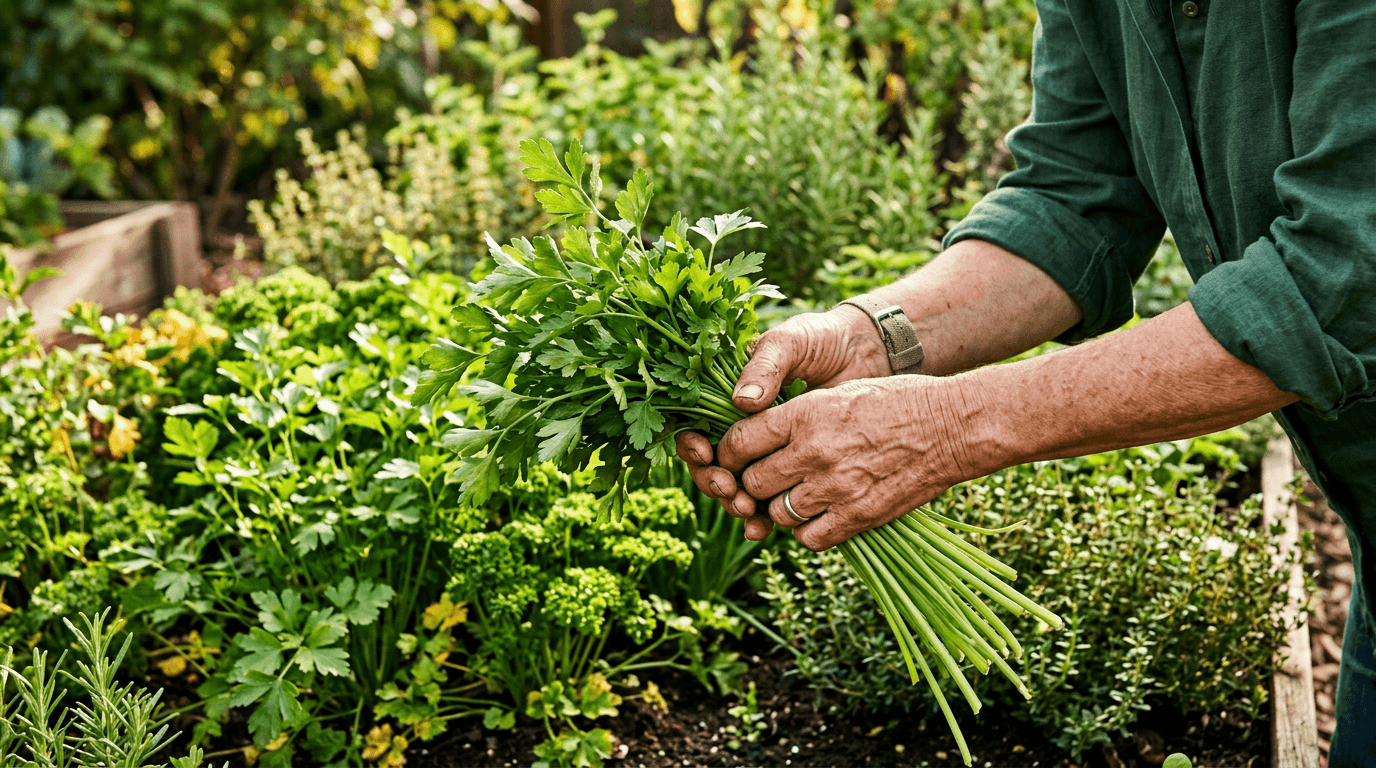
Parsley is a cut-and-come-again herb — harvest a little at a time and the plant keeps producing new growth for weeks or months.
- When to start harvesting: Once plants have at least 3 stem clusters and are well established, usually 70–90 days after sowing (sooner from transplants)
- How to harvest: Cut outer, older stems at the base, close to the soil line, always leaving the young inner growth intact to keep producing
- Never cut more than about a third of the plant at once — this keeps it healthy and productive
- Harvest regularly; frequent light harvesting encourages more vigorous new growth than occasional heavy cutting

Storing Your Harvest
- Refrigerator (short-term): Trim stem ends and stand parsley upright in a glass of water like cut flowers, loosely covered with a plastic bag. Keeps fresh for 1–2 weeks; change the water every few days.
- Refrigerator (wrapped): Alternatively, wrap unwashed parsley in a damp paper towel and store in a sealed bag in the crisper drawer for about a week.
- Freezer: Chop fresh parsley and freeze in ice cube trays with a little water or olive oil — convenient pre-portioned cubes for cooking. Keeps for up to 6 months.
- Drying: Parsley can be air-dried or dehydrated, though it loses some flavor and color compared to fresh or frozen. Store dried parsley in an airtight container away from light.