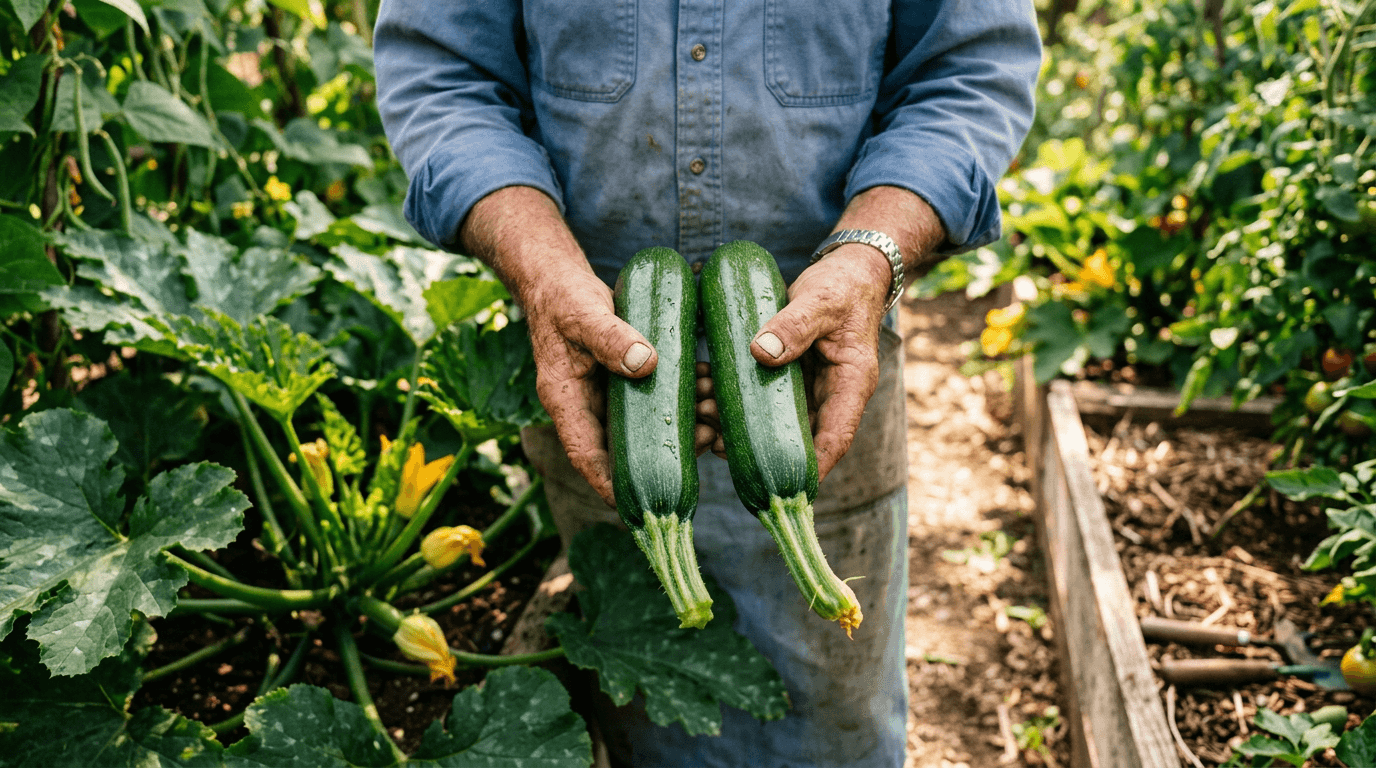
If you’ve ever heard a gardener joke about leaving bags of zucchini on neighbors’ doorsteps, there’s a reason: this is one of the most productive vegetables you can grow. A single healthy plant can produce more squash than most households can eat, making it a favorite for beginners who want a big, satisfying harvest from minimal effort.
The tricky part isn’t growing zucchini — it’s keeping up with it. This guide covers everything from planting to harvest, plus how to manage its famously fast growth.
Choose the Right Zucchini Variety
Black Beauty — The classic dark green zucchini most people picture. Reliable, productive, and widely available. A great all-purpose choice.
Costata Romanesco — An Italian heirloom with ribbed, pale green fruit and a nuttier flavor. Slightly less productive than Black Beauty but prized for taste and texture.
Golden/Yellow Zucchini — Bright yellow skin, similar flavor and growth habit to green varieties. A nice way to add color to the garden and the plate.
Eight Ball / Round Zucchini — Round, tennis-ball-shaped fruit. Fun for stuffing and roasting whole. Compact plants work well in smaller spaces.
Best bet for most home gardeners: Black Beauty is the most forgiving and productive choice, especially for a first zucchini crop.
When to Plant Zucchini
Zucchini is a warm-season crop with zero tolerance for frost. Both the plant and the seeds are killed by cold temperatures, so timing matters.
- Direct sowing: Wait until 1–2 weeks after your last frost date, once soil temperatures reach at least 60°F (70°F is ideal)
- Starting indoors: Start seeds indoors 3–4 weeks before your last frost date, then transplant outside after all frost danger has passed
- Succession planting: Sow a second round of seeds 4–6 weeks after your first planting to extend the harvest season and replace plants if squash vine borers strike
Zucchini germinates and grows quickly once temperatures are warm — cold, wet soil is the most common reason seeds fail to sprout. When in doubt, wait a little longer rather than rushing.
Not sure of your frost dates? Check the Find Your Zone guide, or see the full When to Plant Zucchini guide for exact zone-by-zone dates.
Preparing the Soil
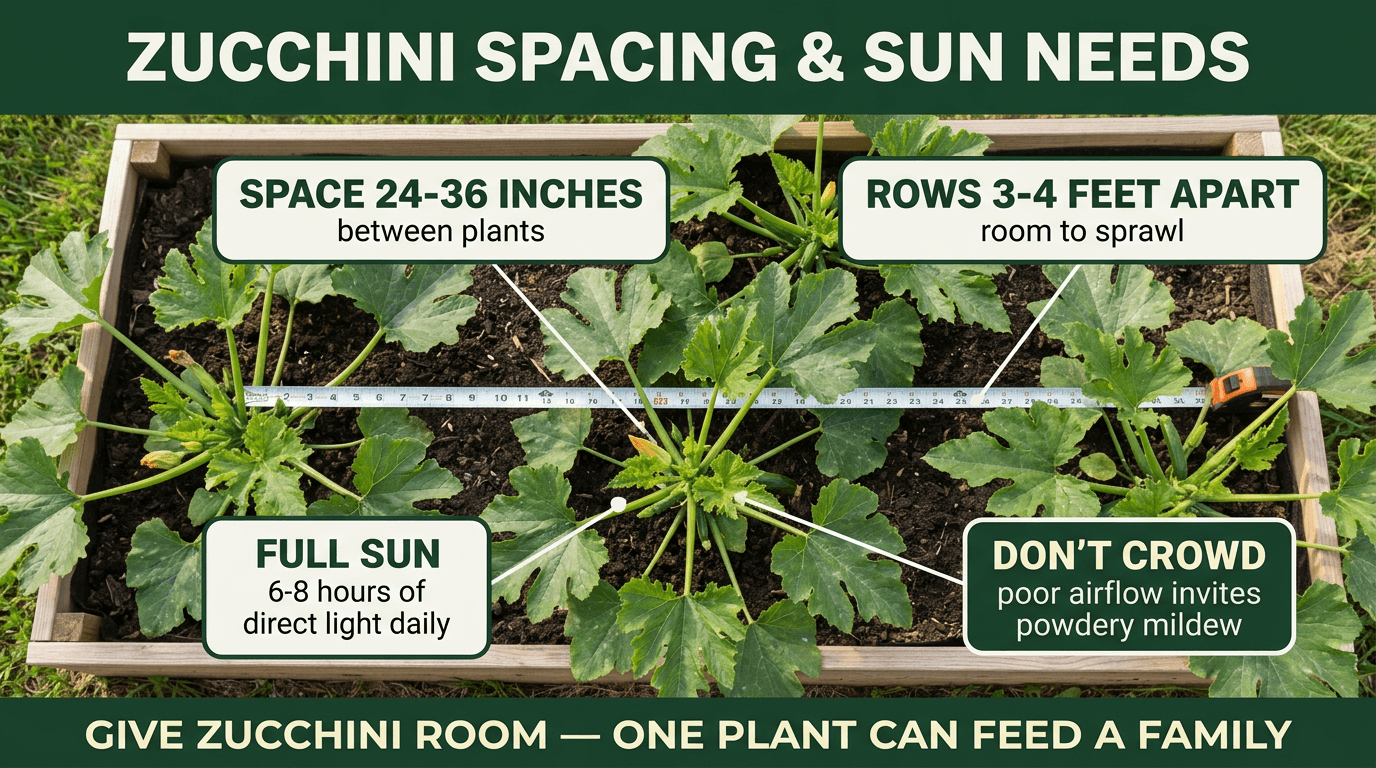
- Choose a spot with full sun — at least 6–8 hours of direct sunlight daily
- Work 3–4 inches of compost or aged manure into the soil before planting; zucchini is a heavy feeder
- Aim for a soil pH between 6.0 and 6.8
- Ensure good drainage — raised beds or mounded rows work especially well
Planting Zucchini
Zucchini plants get big — often 2–3 feet wide with sprawling leaves — so give them plenty of room from the start.
- Plant seeds 1 inch deep, either in rows or traditional mounds (“hills”) of 2–3 seeds each
- Space plants 24–36 inches apart, with rows 3–4 feet apart
- Once seedlings reach 3–4 inches tall, thin to the strongest 1–2 plants per group
- Water gently right after planting
Don’t underestimate the spacing. A common beginner mistake is planting zucchini too close together. Crowded plants get poor airflow, which increases powdery mildew risk, and they compete heavily for nutrients — reducing your total harvest even though you planted more seeds.
Watering Zucchini
- Water deeply 1–2 times per week, aiming for 1–2 inches of water weekly (rain plus irrigation)
- Water at the base of the plant rather than overhead — wet leaves are a major contributor to powdery mildew
- Mulch heavily (3–4 inches of straw) to retain soil moisture and reduce watering frequency
- Increase watering during fruit production and hot, dry stretches — inconsistent moisture leads to bitter or misshapen fruit
Fertilizing Zucchini
- Work a balanced fertilizer (10-10-10) into the soil at planting
- Once flowering begins, switch to a fertilizer lower in nitrogen and higher in phosphorus and potassium to support fruit production over leaf growth
- Side-dress with compost or a balanced fertilizer every 3–4 weeks during the growing season, since zucchini is a heavy, continuous feeder
Pollination — Why Flowers Sometimes Don’t Turn Into Fruit
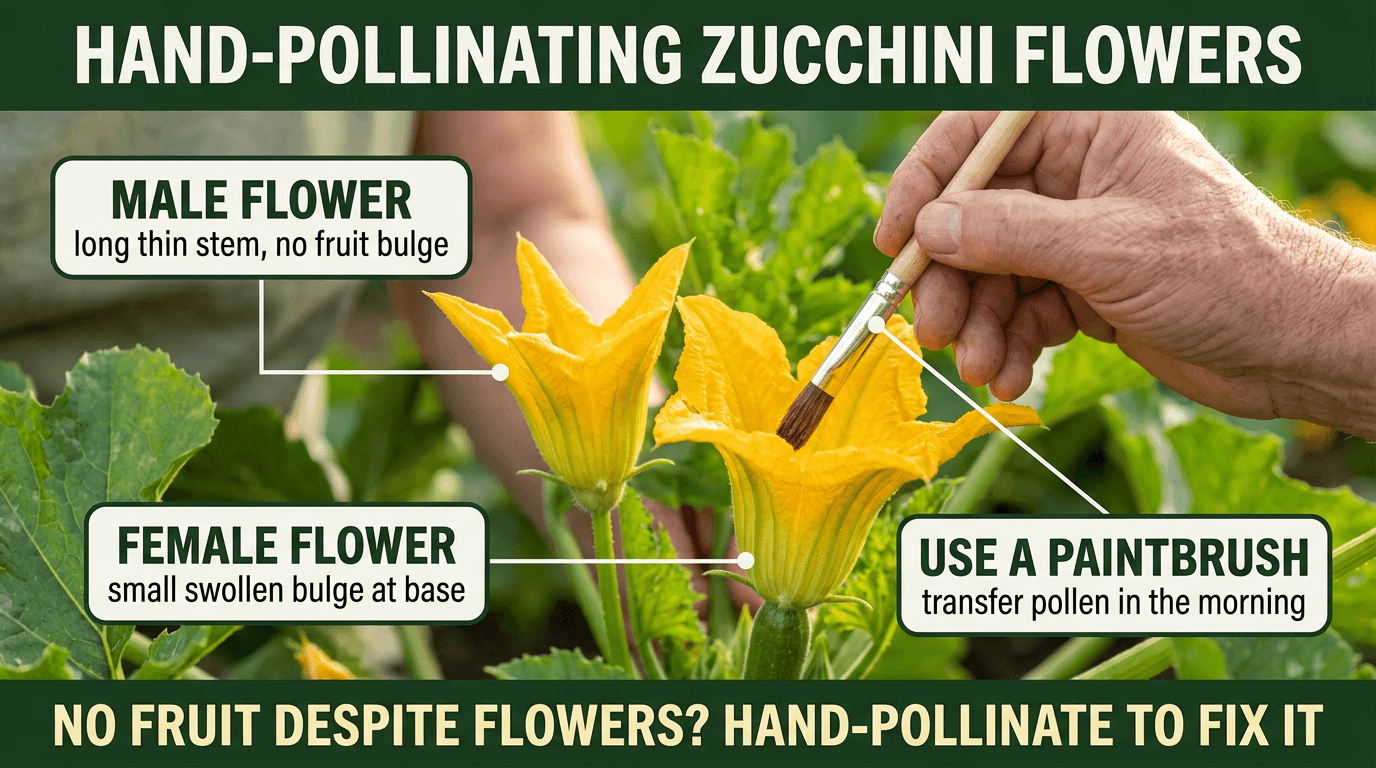
Zucchini plants produce separate male and female flowers on the same plant, and only female flowers develop into fruit — but they need pollen from a male flower, usually delivered by bees, to do it.
- Male flowers grow on long, thin stems and usually appear first, sometimes a week or two before females
- Female flowers have a small swollen bulge at the base — that bulge is the baby zucchini waiting to develop
- If female flowers wither and drop without producing fruit, low bee activity is the most common cause
Hand-pollinating fixes the problem: Using a small paintbrush or cotton swab, collect pollen from inside a male flower and gently brush it into the center of an open female flower in the morning, when flowers are freshly open. This takes just a minute and dramatically improves fruit set if pollinator activity is low in your area.
Common Zucchini Problems
Powdery mildew — White, powdery patches on leaves, especially in humid weather or crowded plantings. Improve airflow with proper spacing, water at the base, and remove badly affected leaves. A diluted milk spray or fungicide can help manage outbreaks.
Squash vine borers — A serious pest that tunnels into stems, causing sudden wilting even with adequate water. Look for a small hole near the base of the stem with sawdust-like frass. Prevention (row covers on young plants, checking stems regularly) is more effective than treatment once borers are inside.
Squash bugs — Gray-brown shield-shaped insects that suck sap from leaves, causing yellowing and wilting. Check the undersides of leaves for clusters of copper-colored eggs and remove them by hand.
Blossom end rot — A dark, sunken spot on the blossom end of the fruit, usually caused by inconsistent watering rather than a soil deficiency. Keep moisture levels steady with regular deep watering and mulch.
No fruit despite flowers — Almost always a pollination issue. See the hand-pollination technique above.
Harvesting Zucchini
Zucchini grows fast — sometimes doubling in size within a day or two — so frequent harvesting is essential.
- Best size to harvest: 6–8 inches long, when the skin is still glossy and tender
- Check plants every 1–2 days during peak season — zucchini left on the vine too long grows large, seedy, and tough
- Cut the fruit from the vine with a knife or pruning shears, leaving about an inch of stem attached
- Wear gloves if handling prickly-stemmed varieties, as the stems and leaves can be mildly irritating to skin
Consistent harvesting keeps plants productive. Letting even one zucchini grow oversized signals the plant to slow down new fruit production. Regular picking, even of smaller fruit, keeps the plant producing for weeks longer.
Storing Your Harvest
- Refrigerator: Store unwashed zucchini in a loose plastic bag in the crisper drawer. Keeps well for about 1 week.
- Room temperature: Zucchini can sit at room temperature for a couple of days but softens faster than in the fridge.
- Freezer: Shred or slice zucchini, blanch briefly (slices: 2–3 minutes; shredded: not required), drain well, and freeze in labeled bags. Great for future soups, breads, and stir-fries.
- Too much harvest? Shredded zucchini freezes especially well for zucchini bread — no need to blanch, just squeeze out excess moisture before freezing.