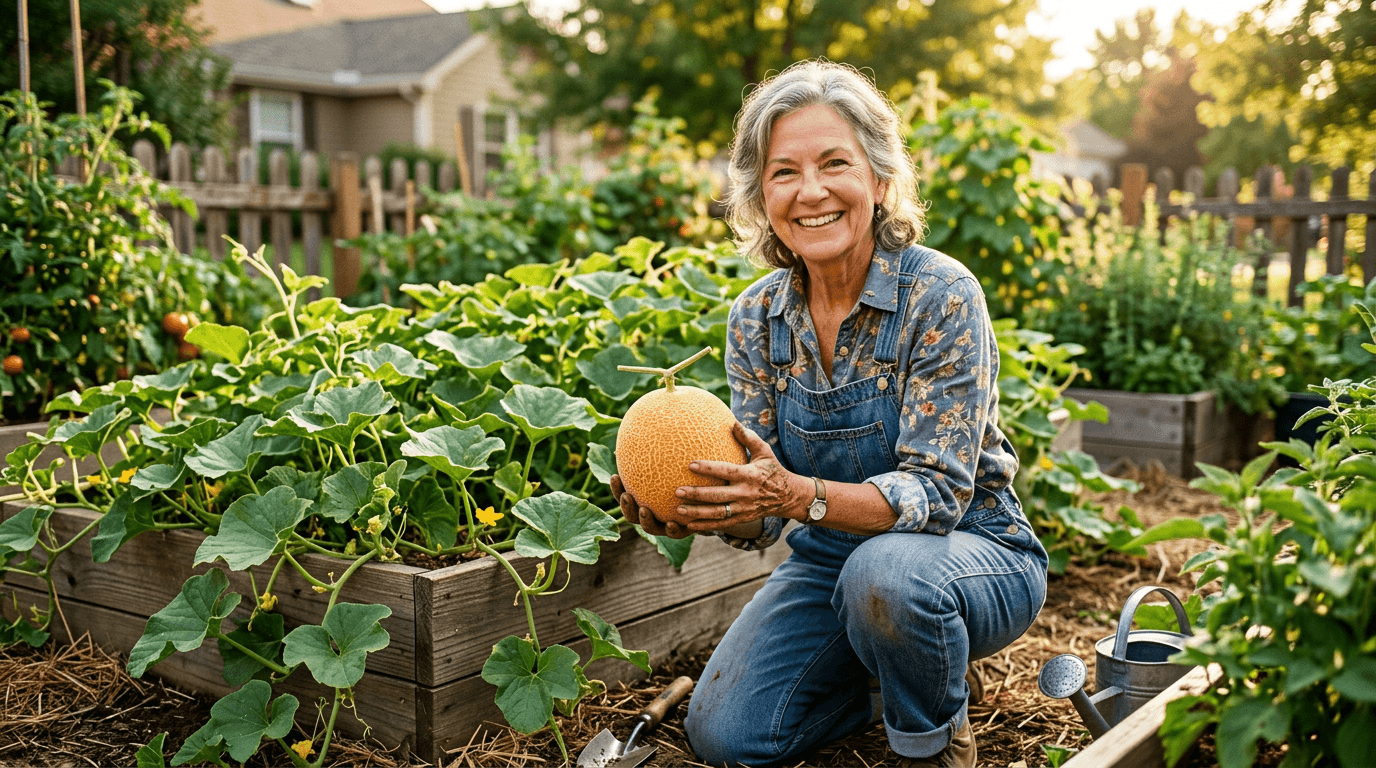
A ripe homegrown cantaloupe is one of summer’s finest rewards. Sweet, fragrant, and nothing like what you find at the grocery store. Melons do need heat and space — but with the right setup, they’re easier than most people think.
Types of Melons
Cantaloupe (muskmelon): The most popular type in the US. Orange flesh, netted skin. Varieties: Hale’s Best, Honey Rock, Athena. Matures in 70–85 days.
Honeydew: Smooth pale skin, green flesh. Sweeter and milder. Takes 85–100 days and needs more heat.
Crenshaw, Galia, Canary: Specialty types with excellent flavor. Grow the same way as cantaloupe.
Quick tip: For short-season zones (3–5), choose fast-maturing varieties like Earliqueen or Minnesota Midget (65 days). Bred for cooler climates.
When to Plant Melons
- Zones 3–5: Start seeds indoors 2–4 weeks before last frost; transplant after last frost once soil reaches 70°F
- Zones 6–7: Direct sow or transplant after last frost, mid-May
- Zones 8–10: Direct sow March–April; possible second crop in late summer
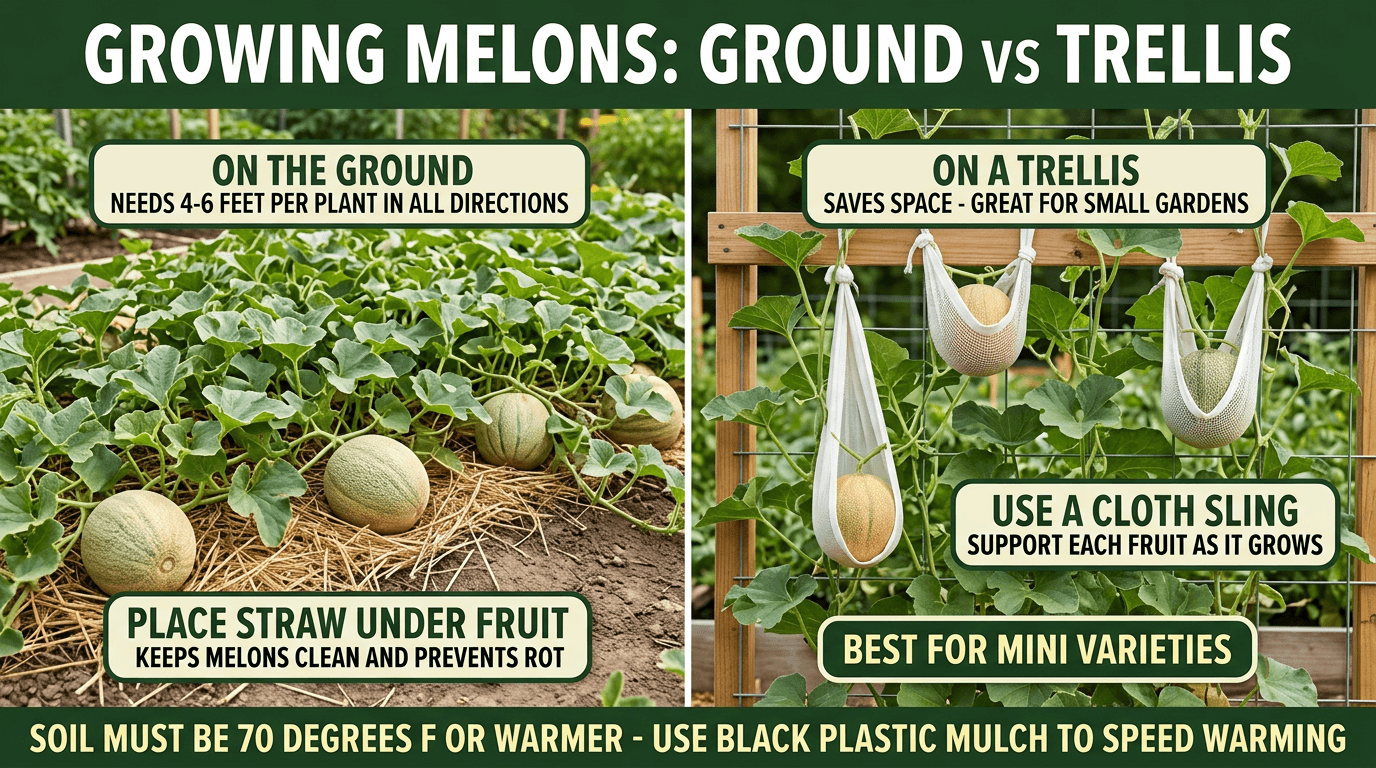
Melons need warm soil (70°F+) to thrive. Black plastic mulch speeds soil warming in cooler zones.
Where to Plant Melons
- Full sun: 8+ hours per day — no exceptions
- Space: Vines spread 6–8 feet. Plan accordingly or grow on a sturdy trellis
- Rich, well-drained soil amended with compost
Raised beds are excellent for melons — the soil warms faster and drains better.
How to Plant Melons
Direct sow: plant 2–3 seeds per hill (a small mound), 1 inch deep, hills spaced 4–6 feet apart. Thin to the strongest plant per hill once seedlings reach 2 inches.
Transplants: handle roots carefully — melons dislike root disturbance. Plant at the same depth as the pot. Space 18–24 inches apart on a trellis, or 4–6 feet apart on the ground.
Watering Melons
Give melons 1–2 inches of water per week, deeply and at the base. Drip irrigation is ideal — wet leaves invite powdery mildew.
The critical rule: Once fruits reach tennis-ball size, reduce watering gradually. Too much water near harvest dilutes sweetness and can crack fruit.
Fertilizing Melons
- At planting: mix compost into planting holes
- When vines reach 12 inches: balanced fertilizer (10-10-10)
- When flowers appear: switch to lower-nitrogen fertilizer (5-10-10) to promote fruit set
Pollination: What You Need to Know
Like zucchini, melons produce separate male and female flowers. Male flowers appear first — no fruit forms from them. Female flowers have a tiny melon at their base.
Bees do the work. If bees are scarce, hand-pollinate: use a small paintbrush to transfer pollen from a male flower to the center of a female flower.
When to Harvest Melons
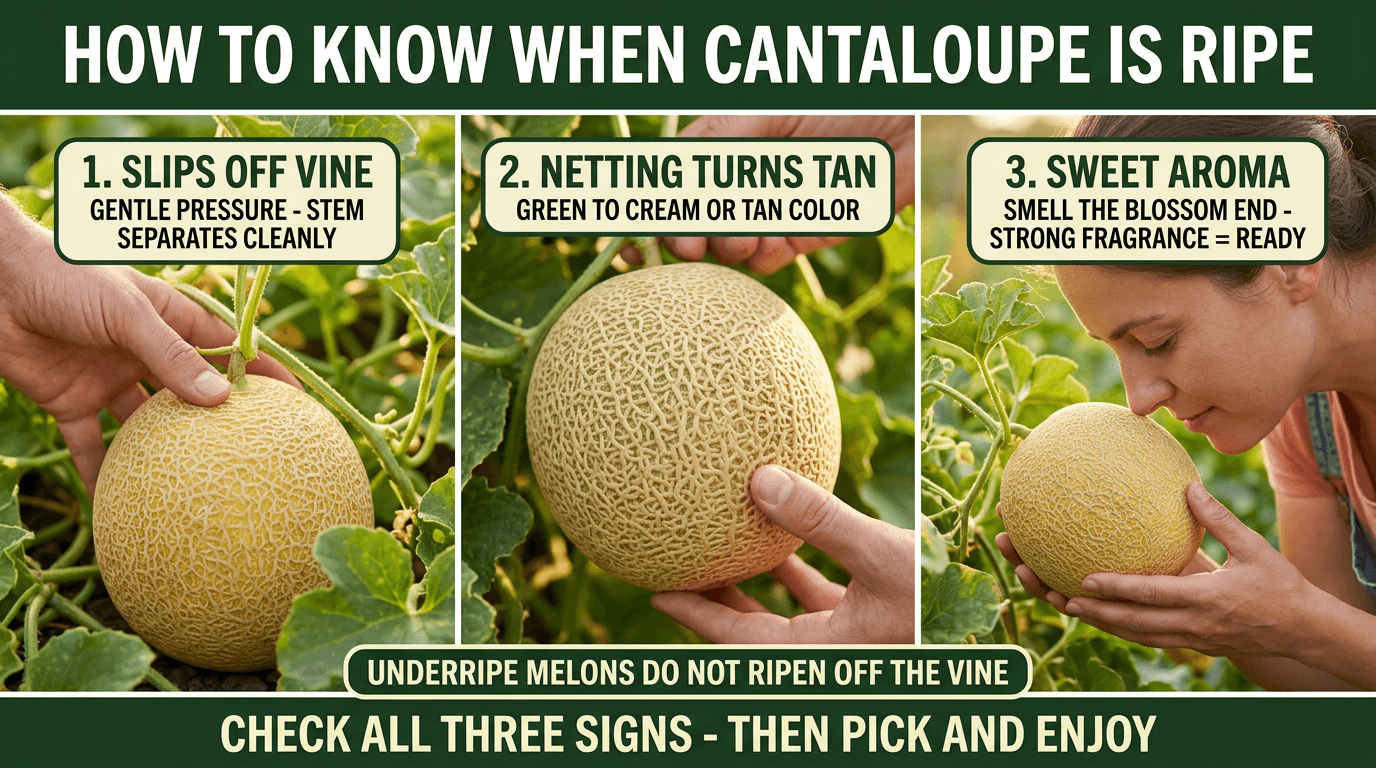
Cantaloupe is ready when:
- It slips easily off the vine with gentle pressure — the stem separates cleanly
- The skin netting turns from green to tan or cream
- You smell a strong sweet fragrance at the blossom end
Honeydew doesn’t slip — harvest when the blossom end yields slightly when pressed and smells sweet.
Underripe melons will not ripen off the vine. Patience pays.
Common Problems
Powdery mildew: Normal late in the season. Improve airflow and remove heavily affected leaves.
Cracked fruit: Inconsistent watering near harvest. Reduce water gradually as fruit matures.
No fruit despite flowers: Lack of pollination. Plant flowers nearby to attract bees, or hand-pollinate.
Bitter taste: Usually from water stress. Consistent moisture during vine growth is essential.