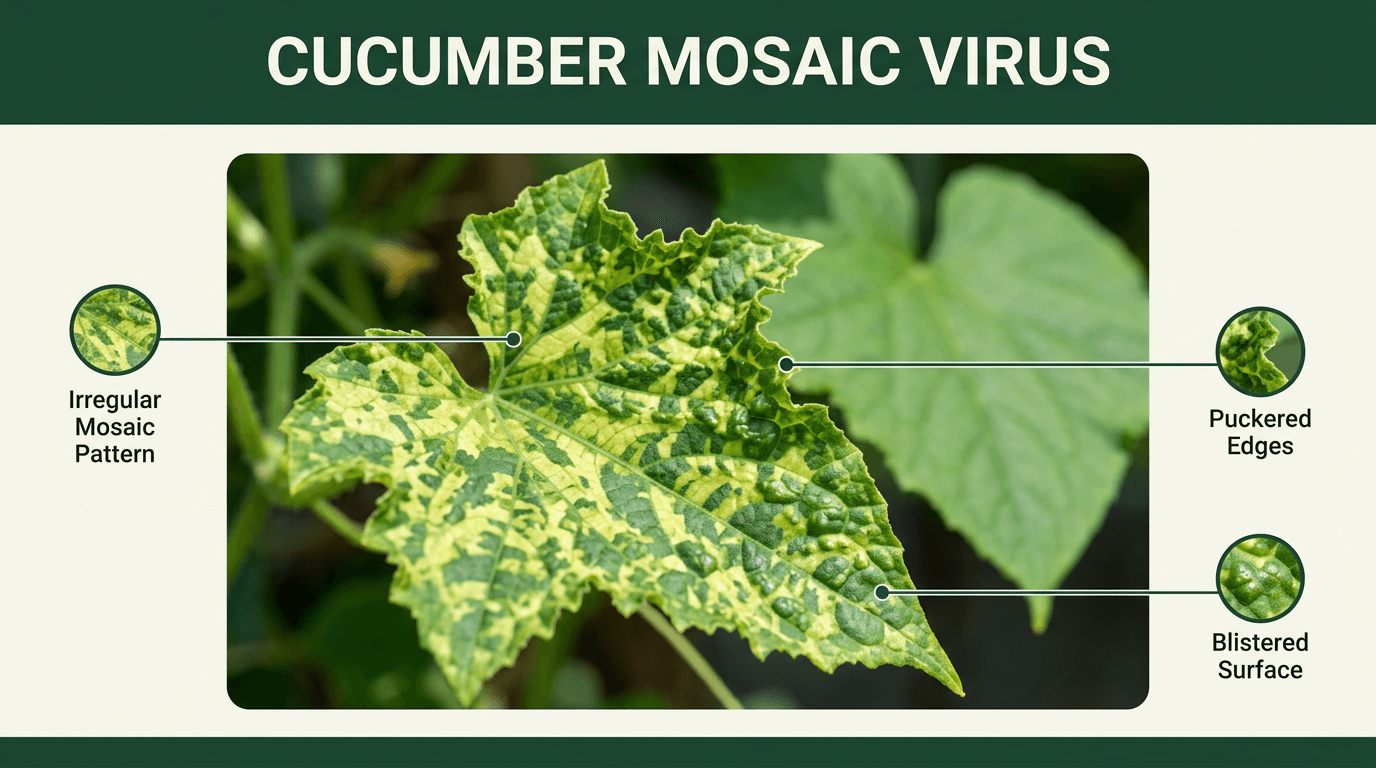
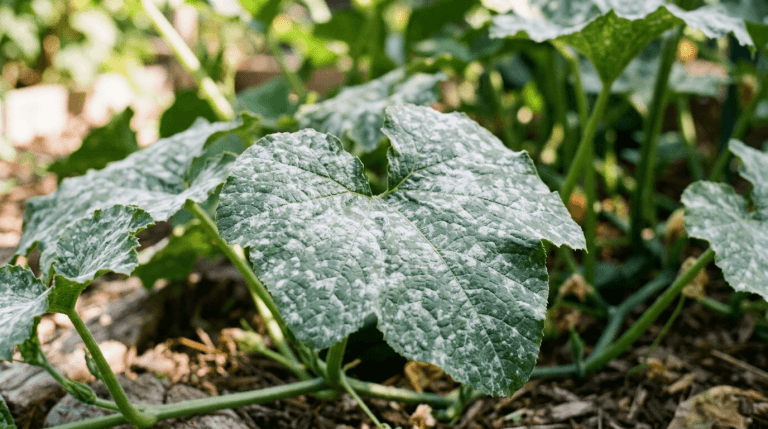
You’re checking on your cucumbers, squash, or peppers one morning and notice something wrong with the leaves — a patchy, irregular mix of light green and dark green, almost like a mosaic tile pattern. Some leaves are puckered or distorted. The new growth looks stunted and twisted. This is almost certainly Cucumber Mosaic Virus, one of the most widespread plant viruses in the home vegetable garden.
Here’s what you need to know — and what you can actually do about it.
What Is Cucumber Mosaic Virus?
Cucumber Mosaic Virus (CMV) is a plant virus that infects an unusually wide range of vegetables, fruits, and ornamentals — over 1,200 plant species in total. Despite its name, it doesn’t just affect cucumbers. In the vegetable garden, common hosts include:
- Cucumbers, squash, zucchini, melons
- Peppers and tomatoes
- Beans and peas
- Spinach, lettuce, and celery
The virus disrupts the plant’s ability to produce chlorophyll properly, which creates the characteristic mosaic pattern of light and dark patches on leaves.
Symptoms to Look For
CMV symptoms vary by plant and by strain, but the most consistent signs are:
- Mosaic pattern on leaves: Irregular patches of light green, yellow-green, and dark green on the same leaf. Looks like a mosaic tile design.
- Distorted or puckered leaves: Leaves may be crinkled, cupped downward, or have bumpy, uneven surfaces.
- Stunted new growth: New leaves emerge smaller than normal and may be severely distorted.
- Reduced fruit production: Infected plants often produce fewer fruits, and the fruits may be mottled, bumpy, or deformed.
- Overall plant stunting: Severely infected plants grow slowly and remain smaller than healthy plants.
How CMV Spreads
Cucumber Mosaic Virus is spread primarily by aphids — small, soft-bodied insects that feed on plant sap. An aphid carrying the virus can transmit it to a healthy plant in as little as 30 seconds of feeding. The aphid doesn’t even need to be visibly infested on the plant — it can pick up the virus from a wild plant in your yard, fly to your garden, take a brief test-taste of your vegetable, and move on.
CMV can also spread through:
- Contaminated tools (pruners, stakes, hands) that touch plant sap
- Infected transplants brought from a nursery or neighbor
- Some weed species that serve as virus reservoirs (especially common weeds like chickweed, purslane, and bittercress)
CMV is not spread by water, air, or soil contact alone.

Is There a Cure?
No. There is no treatment for Cucumber Mosaic Virus once a plant is infected. Fungicides, pesticides, and fertilizers will not cure it. The virus lives inside the plant’s cells and cannot be removed.
However, infected plants can still produce some harvest, especially if infection occurs late in the season. A mildly infected cucumber or squash may produce 60–70% of normal yields. Severely infected plants — especially those infected as seedlings — should usually be removed to prevent further spread.
What to Do with Infected Plants
If symptoms are mild and the plant is still productive, you can leave it and harvest what you can. Wash your hands and tools after touching infected plants before moving to healthy ones.
If infection is severe or the plant is stunted and not producing, pull and dispose of it. Do not compost infected plants — composting doesn’t reliably kill plant viruses. Bag and trash them, or burn if local rules allow.
How to Prevent CMV
Control aphids aggressively. Since aphids are the main vector, keeping aphid populations low is your best defense. Check plants regularly under leaves. Knock aphids off with a strong stream of water. Apply insecticidal soap at first sign of infestation. Encourage beneficial insects like ladybugs and parasitic wasps by avoiding broad-spectrum insecticides.
Use reflective mulch. Silver or aluminum reflective mulch under plants confuses aphids and significantly reduces aphid landings. It’s particularly effective for cucumbers and peppers.
Row cover at transplanting. Floating row cover placed immediately after transplanting blocks aphids from reaching young plants during their most vulnerable stage. Remove when plants begin to flower (for crops that need pollination).
Remove weeds. Many common weeds harbor CMV and serve as aphid hosts near your garden. Keep a weed-free buffer around vegetable beds, especially in spring.
Choose resistant varieties. Many modern cucumber, squash, and pepper varieties have been bred for CMV resistance. Look for “CMV” or “V” in the disease-resistance codes on seed packets. Resistant varieties may still get infected but show milder symptoms and maintain better yields.
Sanitize tools. Wipe pruners and stakes with a 10% bleach solution or 70% rubbing alcohol between plants, especially if you’ve been working near infected ones.