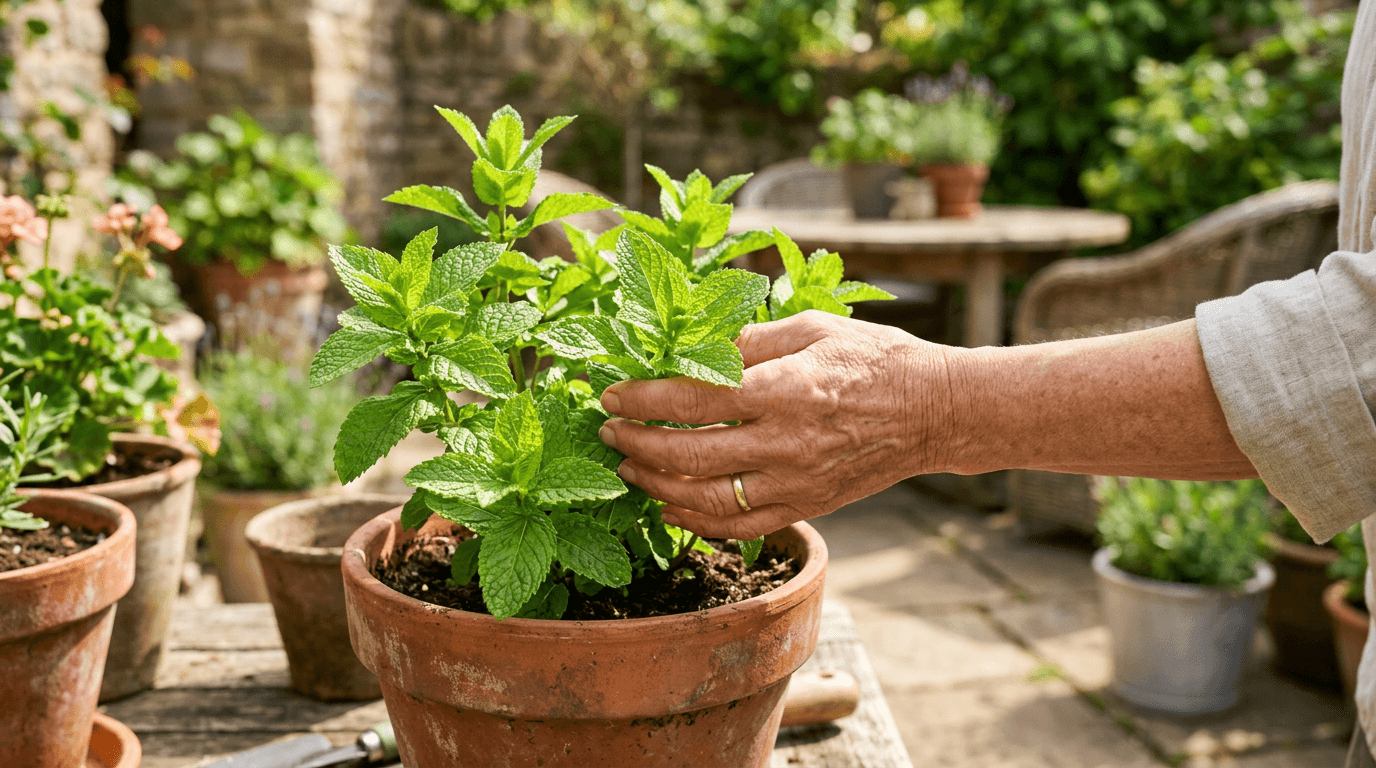
Mint might be the easiest herb you’ll ever grow — so easy, in fact, that the real challenge isn’t getting it to grow, it’s keeping it from taking over. Give mint an inch of space in open garden soil and it will happily claim a foot within a season.
The good news: with one simple precaution, mint becomes a wonderfully low-maintenance herb that provides fresh leaves for tea, cooking, and cocktails from spring through frost.
Choose the Right Mint Variety
Peppermint — Strong, classic minty flavor with a cooling aftertaste. The most popular choice for tea. Dark green leaves with purple-tinged stems.
Spearmint — Milder and sweeter than peppermint, with bright green leaves. The traditional choice for mojitos, mint sauce, and savory cooking.
Chocolate Mint — A peppermint variety with a subtle cocoa aroma alongside the mint flavor. Fun for desserts and a nice addition to an herb garden.
Apple Mint — Softer, fuzzy leaves with a milder, fruitier flavor. Slightly less aggressive spreader than peppermint or spearmint, though still vigorous.
Best bet for most home gardeners: Spearmint for cooking and drinks, peppermint if tea is your main use. Either is equally easy to grow.
The One Rule for Growing Mint: Contain It
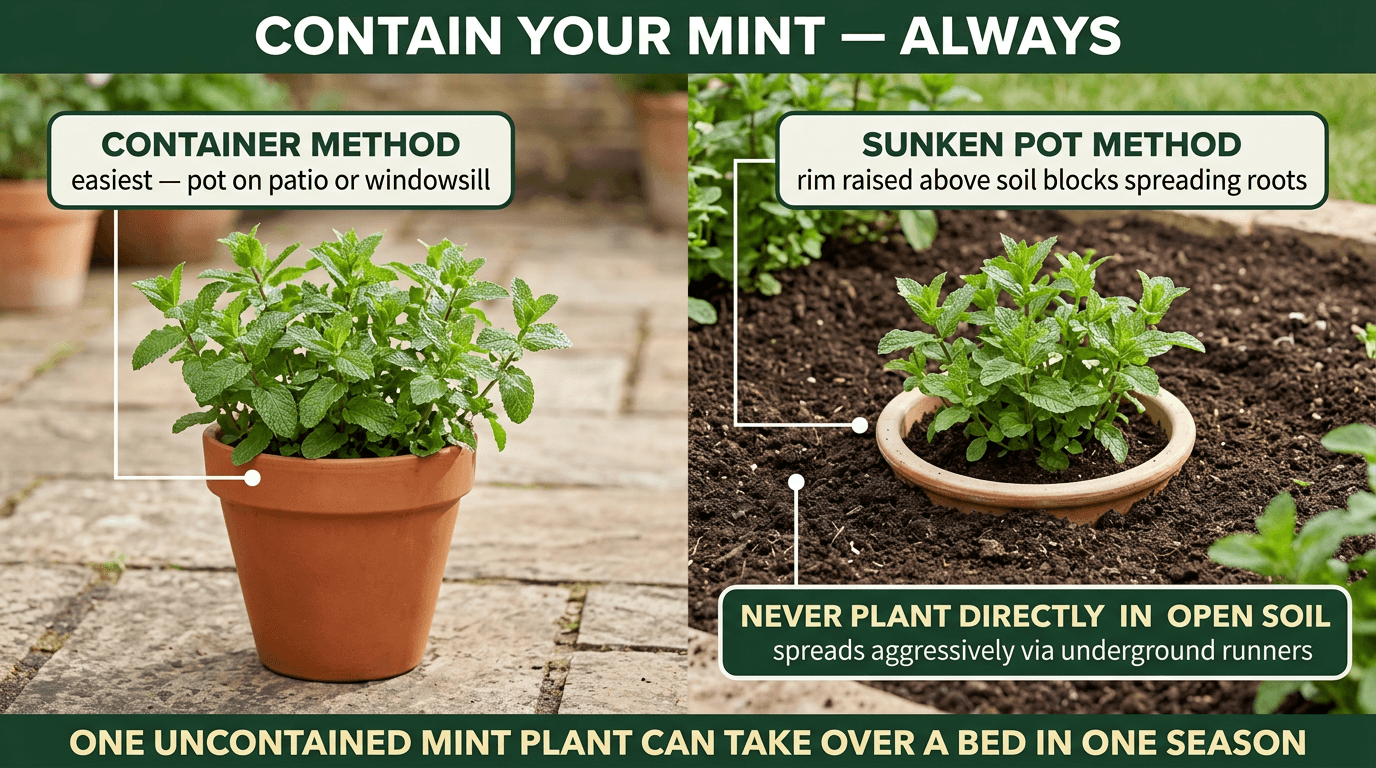
Mint spreads through underground runners called rhizomes, and it does this aggressively. Planted directly in garden soil, a single mint plant can spread several feet in one growing season, crowding out neighboring plants and becoming very difficult to remove completely.
The solution is simple: always grow mint in a container, even if that container is sunk into the ground.
- Container gardening (recommended): Grow mint in a pot on a patio, porch, or windowsill. This is the easiest way to enjoy mint without any spreading concerns.
- Sunken pot method: If you want mint in a garden bed, plant it in a bottomless or drilled pot buried in the soil, with the rim raised an inch or two above ground level, to physically block the spreading rhizomes.
- Dedicated bed: Some gardeners give mint its own isolated bed, surrounded by mowed lawn or hardscaping, and simply let it spread within that boundary.
When to Plant Mint
Mint is a hardy perennial in most USDA zones (typically Zones 3–9) and can go in the ground or into containers once the danger of hard frost has passed.
- Transplants or cuttings: Plant outdoors 2–3 weeks after your last spring frost date
- Indoor containers: Mint can be started or transplanted indoors any time of year if grown on a bright windowsill
- Fall planting (mild-winter zones): Mint can also be planted in early fall in Zones 7–9
Not sure of your frost dates? Check the Find Your Zone guide to look up your USDA hardiness zone.
Starting Mint: Cuttings vs. Seeds
Most gardeners skip seeds entirely. Mint seeds germinate slowly and unevenly, and named varieties (like a specific peppermint or chocolate mint) don’t always grow true from seed. The far easier route is starting from a nursery transplant or a cutting from an existing plant.
Growing mint from a cutting (the easiest method):
- Snip a 4–6 inch stem from a healthy mint plant, cutting just below a leaf node
- Remove the lower leaves, leaving just the top 2–3 sets
- Place the cutting in a glass of water, ensuring the stripped node is submerged
- Set the glass in a bright spot out of direct harsh sun, changing the water every few days
- Roots typically appear within 1–2 weeks
- Once roots are 1–2 inches long, transplant into potting soil
This method is so reliable that a single mint plant from a grocery store or a friend’s garden can become an entire container garden in a matter of weeks.
Planting Mint in a Container
- Choose a container at least 12 inches wide with good drainage holes
- Fill with quality, well-draining potting mix
- Plant transplants or rooted cuttings at the same depth they were growing previously
- Space multiple plants 12–18 inches apart if using a larger container or bed
- Water thoroughly after planting
Mint tolerates full sun to partial shade, and in hot summer climates, a little afternoon shade actually helps prevent leaf scorch and keeps growth lush.
Watering and Fertilizing Mint
- Mint likes consistently moist soil — water whenever the top inch of soil feels dry, which may mean daily watering for container plants in hot weather
- Container-grown mint dries out faster than in-ground plants, so check moisture regularly
- Feed lightly with a balanced fertilizer or compost once a month during the growing season — mint doesn’t need heavy feeding to thrive
- Refresh potting soil or top-dress with compost each spring for container-grown mint
Common Mint Problems
Mint rust — Orange, powdery pustules on the undersides of leaves. Remove and destroy affected leaves promptly, improve airflow around plants, and avoid overhead watering. Severely affected plants may need to be cut back hard or discarded.
Spider mites — Tiny pests causing stippled, faded leaves, especially in hot, dry conditions. Increase humidity around plants and rinse leaves with water; insecticidal soap helps with heavier infestations.
Leggy, sparse growth — Usually caused by insufficient light or lack of regular pinching. Move to a brighter spot and pinch stem tips regularly to encourage bushier growth.
Escaping the container — Mint can root through drainage holes if a pot sits directly on soil. Elevate containers slightly or check periodically for rogue rhizomes escaping underneath.
Harvesting Mint
Mint is another cut-and-come-again herb, and frequent harvesting actually improves the plant rather than depleting it.
- When to start harvesting: Once plants reach about 4–6 inches tall, usually a few weeks after planting
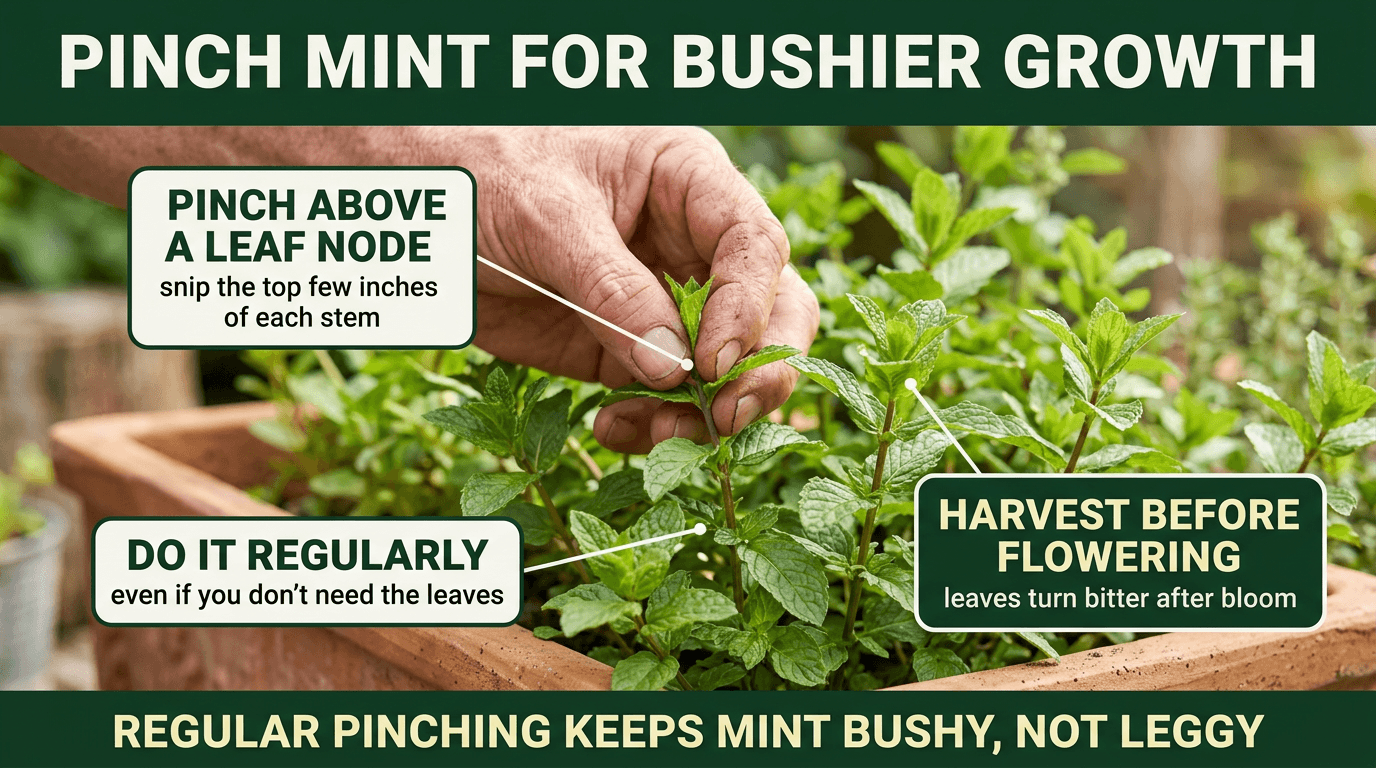
- How to harvest: Pinch or snip stems just above a leaf node, taking the top few inches of growth
- Pinch regularly, even if you don’t need the leaves — this single habit does more than anything else to keep mint bushy and productive rather than tall, leggy, and sparse
- Harvest before flowering for the best flavor; once mint flowers, leaves can turn slightly bitter
Storing Your Harvest
- Refrigerator (short-term): Stand cut stems upright in a glass of water, loosely covered with a plastic bag, like fresh flowers. Keeps for about a week, changing the water every couple of days.
- Freezer: Chop leaves and freeze in ice cube trays with a little water — perfect for future teas, smoothies, and cocktails. Keeps for up to 6 months.
- Drying: Hang small bundles of mint upside down in a warm, dry, airy spot out of direct sun. Once fully dry and crumbly (1–2 weeks), store in an airtight container for tea use year-round.