
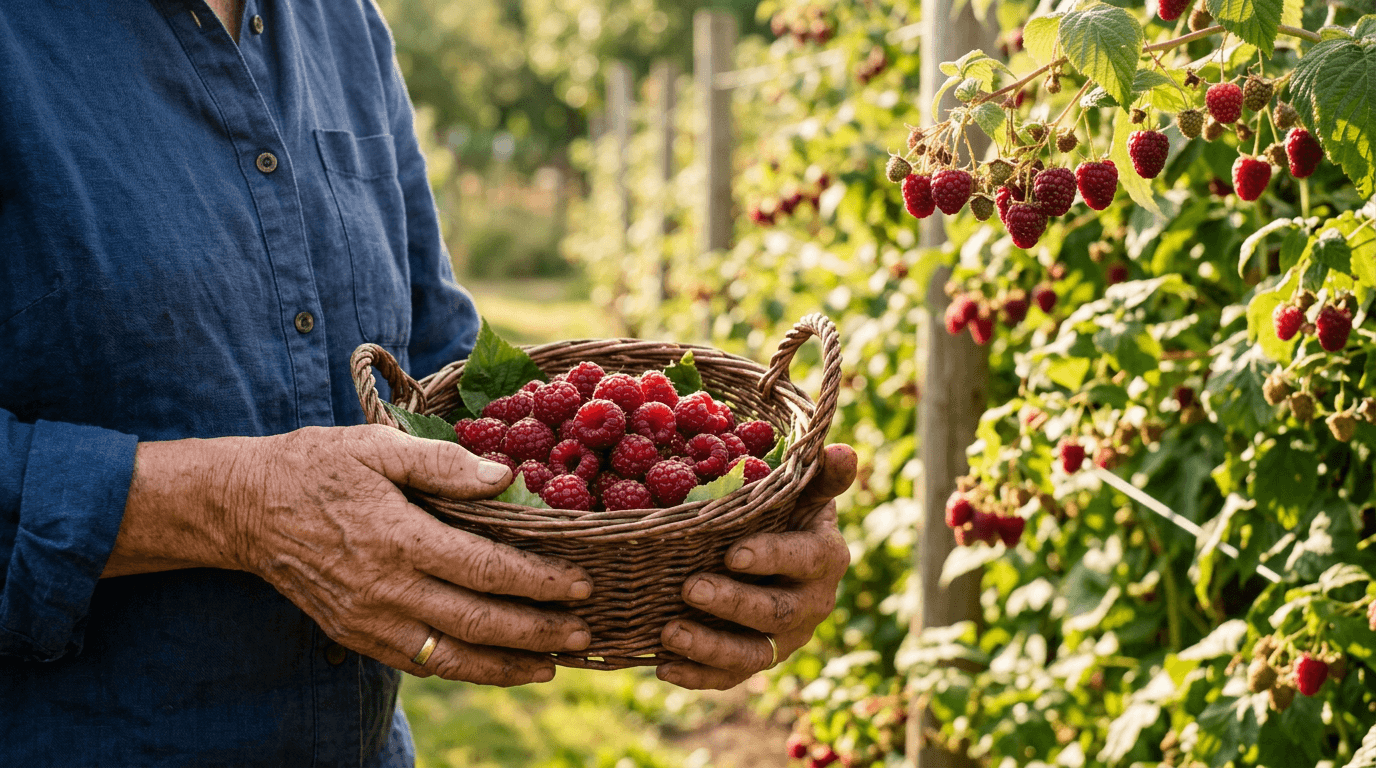
Few things beat walking out to the garden and picking a handful of sun-warmed raspberries straight off the cane. Once established, a raspberry patch is a perennial investment that keeps producing for a decade or more, with far less fuss than most people expect.
The one thing raspberries do ask for is a little structure — both literally, in the form of support, and in your understanding of how the canes grow and fruit. Get that right, and the rest is straightforward.
Summer-Bearing vs. Everbearing — The Most Important Choice
Before choosing a variety, understand this distinction — it affects everything from pruning to how many harvests you’ll get each year.
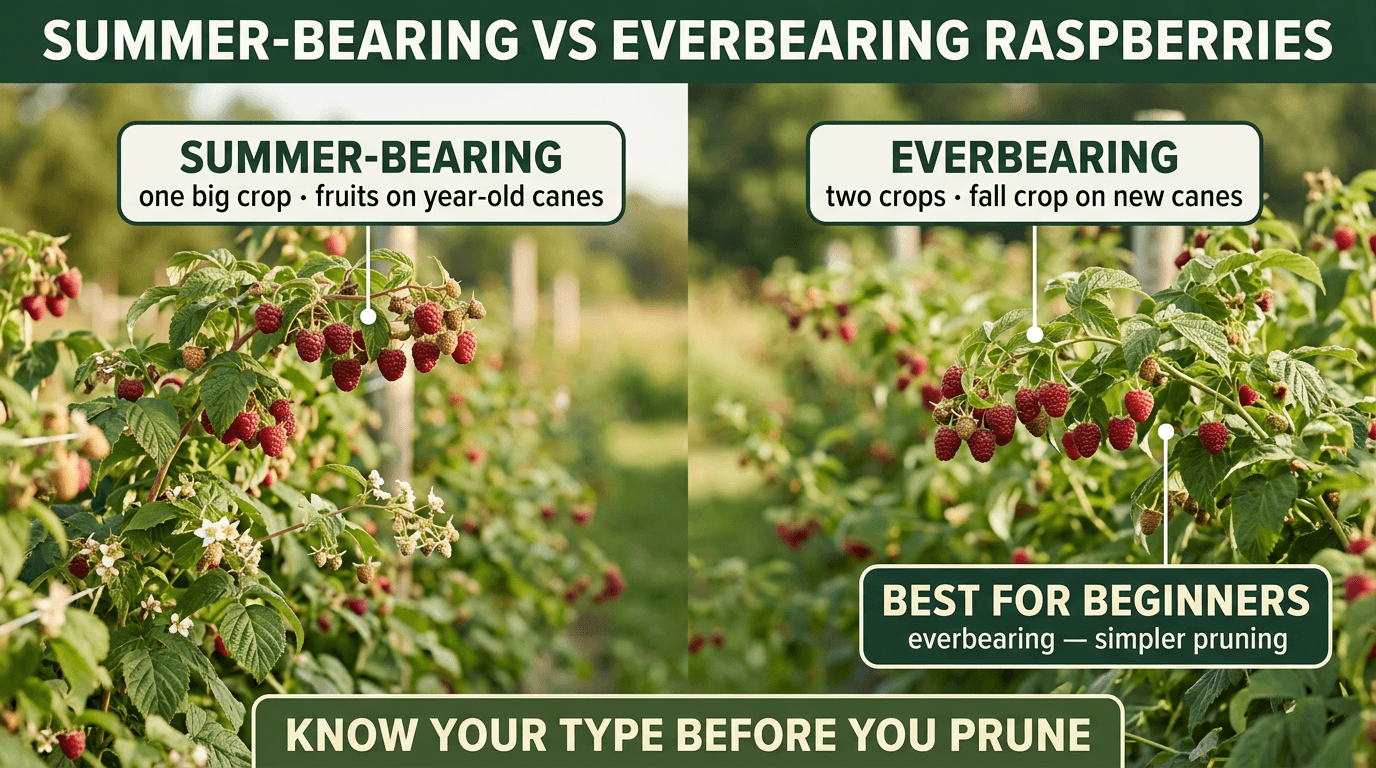
Summer-bearing (floricane-fruiting) raspberries — Produce one large crop in early-to-mid summer, on canes that grew the previous year. Varieties: Latham, Killarney, Boyne. Best if you want one big harvest, ideal for canning and preserving.
Everbearing (primocane-fruiting) raspberries — Produce two crops: a smaller one in early summer on year-old canes, and a larger one in fall on new canes grown that same year. Varieties: Heritage, Caroline, Autumn Bliss. Best for gardeners who want a longer harvest window, and easier to prune (see below).
Best bet for most home gardeners: Everbearing varieties like Heritage. If you cut everbearing canes to the ground each winter, you sacrifice the small early-summer crop but get a single, heavy fall harvest and dramatically simpler pruning — a great trade-off for beginners.
Raspberries are also grouped by color — red and yellow varieties are the most cold-hardy and widely grown; black and purple raspberries have a richer flavor but are slightly less cold-tolerant and more disease-prone.
When to Plant Raspberries
Raspberries are typically planted as dormant bare-root canes in early spring, though potted plants can be planted anytime during the growing season.
- Bare-root canes: Plant in early spring, 4–6 weeks before your last frost date, as soon as the soil can be worked
- Potted plants: Can be planted spring through early fall, giving roots time to establish before winter
- Most varieties are hardy in USDA Zones 3–9, though always check the specific cold-hardiness of your chosen variety
Not sure of your frost dates or zone? Check the Find Your Zone guide.
Preparing the Soil and Site
- Choose a spot with full sun — at least 6 hours of direct sunlight for the best fruit production
- Raspberries prefer slightly acidic, well-draining soil with a pH between 5.6 and 6.5
- Work 2–3 inches of compost into the soil before planting to improve drainage and fertility
- Avoid low spots where water collects — raspberries are highly susceptible to root rot in soggy soil
- Choose a site away from wild brambles or old tomato/pepper/eggplant beds, which can harbor diseases that affect raspberries
Setting Up Support
Raspberry canes are naturally floppy and benefit enormously from support — it keeps fruit off the ground, improves airflow, and makes harvesting far easier.
The simplest system: Set sturdy posts at each end of the row (and every 10–15 feet for longer rows), then run two horizontal wires between them — one at about 3 feet high, one at about 5 feet high. Train canes to grow up between the wires, which contains their spread and keeps fruiting canes upright.
Install the trellis system at planting time, before canes get tall and unwieldy.
Planting Raspberry Canes
- Soak bare-root canes in water for 1–2 hours before planting to rehydrate the roots
- Dig a hole wide enough to spread the roots out fully, at the same depth the plant was growing in the nursery (look for the soil line on the cane)
- Space plants 2–3 feet apart within a row, with rows 6–8 feet apart for adequate airflow and access
- Backfill with soil, firm gently, and water thoroughly
- Cut canes back to about 6 inches after planting to encourage strong root establishment before top growth
Watering and Mulching
- Water deeply 1–2 times per week, aiming for about 1–1.5 inches of water weekly, more during fruit development and dry spells
- Raspberries have shallow roots, so consistent moisture matters more than deep soil saturation
- Apply 3–4 inches of mulch (straw, wood chips, or shredded leaves) around the base of plants to retain moisture, suppress weeds, and moderate soil temperature
- Avoid overhead watering when possible — wet foliage increases the risk of fungal disease
Fertilizing Raspberries
- Apply a balanced fertilizer (10-10-10) or compost in early spring as new growth begins
- A second light feeding after the first harvest supports continued cane growth and next year’s fruiting wood
- Avoid excess nitrogen, which produces lush leafy canes at the expense of fruit and increases disease susceptibility
Pruning — The Step That Confuses Beginners
Pruning depends entirely on which type you’re growing, so revisit the summer-bearing vs. everbearing distinction from earlier.
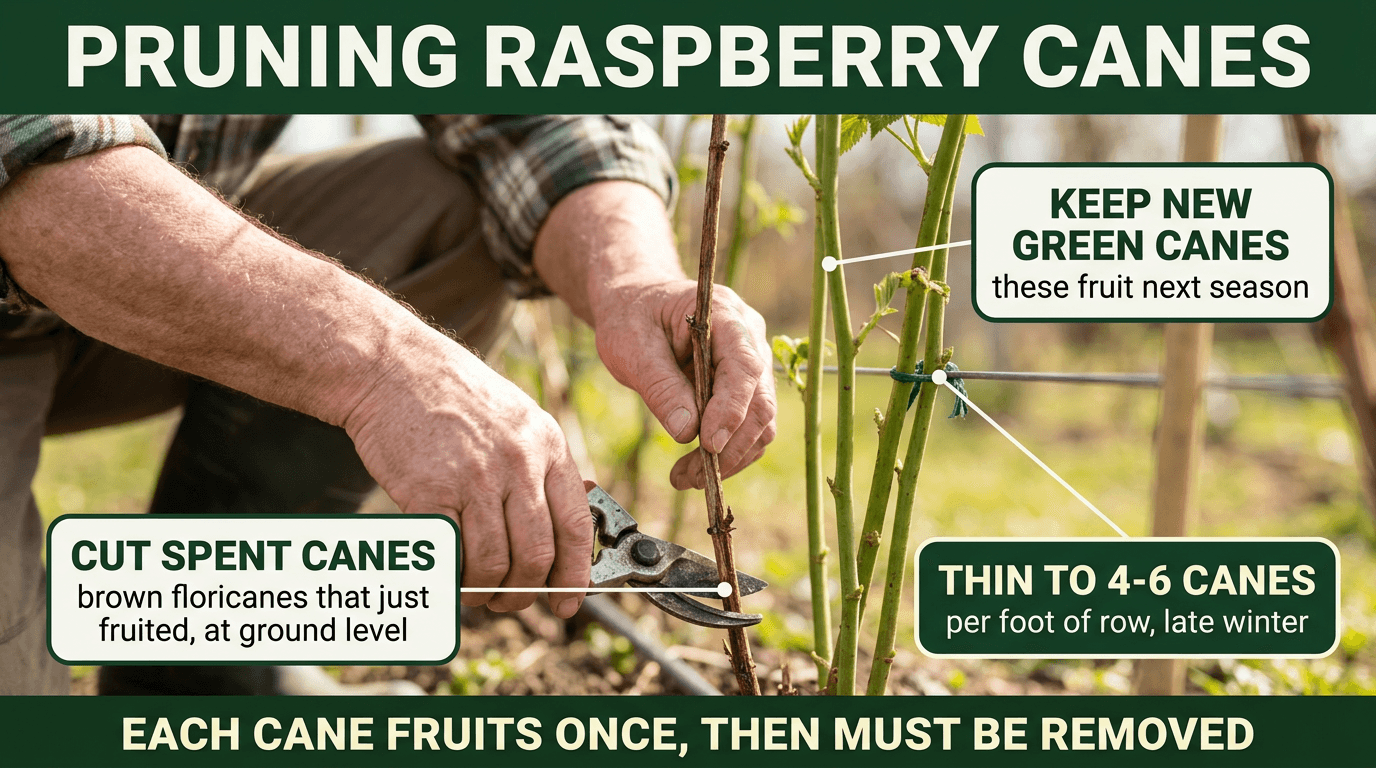
For everbearing varieties (simplest method): Cut all canes down to the ground in late winter, before new growth starts. This sacrifices the small early-summer crop but produces one strong, heavy fall harvest and keeps the patch tidy and manageable.
For summer-bearing varieties: After harvest, cut out the canes that just fruited (floricanes) at ground level — they die naturally after fruiting and won’t produce again. Leave this year’s new green canes (primocanes) standing; they’ll overwinter and produce next summer’s crop. In late winter, thin remaining canes to the strongest 4–6 per foot of row, removing weak or damaged ones.
Why pruning matters: Raspberry canes are biennial — each individual cane grows one year, fruits the next, then dies. Without pruning, dead canes accumulate, airflow drops, and disease risk rises sharply.
Common Raspberry Problems
Cane borers — Insects that tunnel into cane tips, causing wilting just below the growing tip. Prune out and destroy wilted tips a few inches below the damage.
Spider mites — Tiny pests causing stippled, dusty-looking leaves, especially in hot, dry weather. Rinse foliage with water and improve airflow through proper pruning and spacing.
Raspberry fruitworm — Small beetles whose larvae feed on developing fruit. Handpick beetles when spotted, and clean up fallen debris in fall to reduce overwintering populations.
Verticillium wilt and root rot — Soil-borne diseases that cause sudden wilting and cane death, often from planting in poorly drained soil or after tomatoes/peppers. Ensure good drainage and avoid planting where these crops grew recently.
Anthracnose and cane blight — Fungal diseases causing spots or cankers on canes. Improve airflow through proper pruning and spacing, and remove infected canes promptly.
Harvesting Raspberries
Newly planted raspberries typically need a full year to establish before producing a meaningful harvest — expect your first real crop in year two.
- When they’re ready: Berries should be fully colored (deep red, gold, or black depending on variety), plump, and slightly soft
- How to pick: Gently tug the berry — a ripe raspberry separates easily from its white core and stays hollow (unlike blackberries, which keep their core)
- Check plants every 2–3 days during peak season, since ripe berries don’t hold well on the cane
- Harvest in the cool morning hours when possible — berries are firmer and less prone to crushing
Storing Your Harvest
Fresh raspberries are delicate and don’t keep long, so plan to use or preserve them quickly.
- Refrigerator: Store unwashed in a single layer in a shallow, ventilated container. Keeps for only 2–3 days — wash just before eating.
- Freezer: Spread unwashed berries in a single layer on a baking sheet, freeze until solid, then transfer to a labeled freezer bag. Frozen raspberries keep for up to 12 months and are excellent in smoothies and baking.
- Jam and preserves: Raspberries are a classic choice for jam, given how quickly fresh berries spoil and how well the flavor holds up when preserved.
