The Short Answer — and Why It’s More Complicated Than That
You’ve probably seen the posts: spray weeds with white vinegar and they die overnight. It sounds perfect — cheap, natural, safe for kids and pets, no chemicals. And there’s enough truth in it to keep the idea circulating. But there’s also enough misleading simplification to leave you frustrated when your dandelions come back stronger than ever.
Here’s the honest version. Vinegar does kill weeds — but only under specific conditions, and with significant limitations that most Pinterest posts leave out entirely.
Household Vinegar vs. Horticultural Vinegar
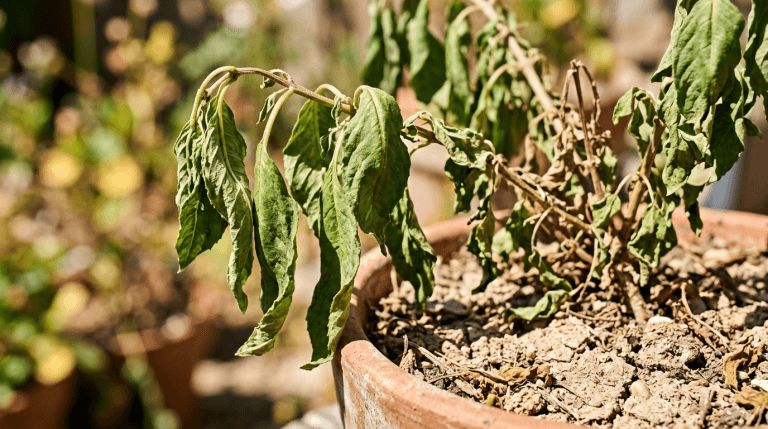
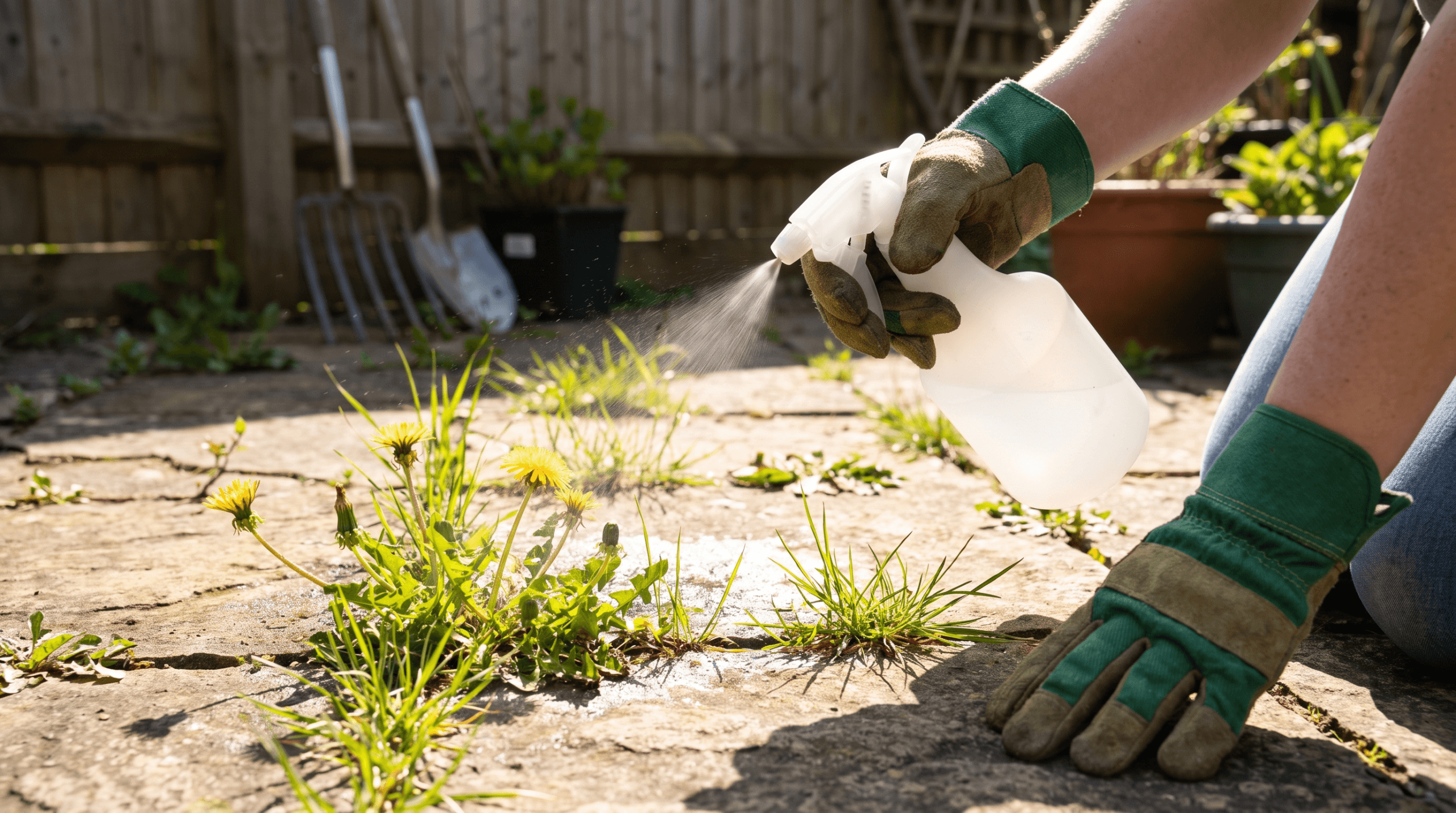
The vinegar in your kitchen cabinet is 5% acetic acid. That concentration will damage tender young weeds — annual seedlings, grass poking through cracks in pavement — especially on a hot, sunny day when the acetic acid can penetrate leaf surfaces effectively. Spray it on a small weed in full sun, and you’ll likely see it wilt and brown within a few hours.
But that’s where most of the success stories end. Horticultural vinegar is 20 to 30% acetic acid — four to six times stronger than the household version. That concentration is genuinely effective on a much wider range of weeds, including more established plants. It’s also caustic — it can cause chemical burns on skin and serious eye injury. You need gloves, eye protection, and ideally a respirator when applying it. This is not a casual product to spray around barefoot.
When people say “vinegar works,” they often mean horticultural vinegar. When people are disappointed in results, they used the kitchen kind on mature weeds. These are two very different products producing two very different outcomes.
What Vinegar Actually Does — and Does Not Do
Vinegar is a contact herbicide. It kills what it touches — the green, above-ground parts of the plant. It does not travel through the plant’s vascular system the way systemic herbicides like glyphosate do, and it does not kill roots.
For annual weeds — plants that complete their life cycle in one season and don’t have extensive root systems — this matters less. Killing the top of a crabgrass seedling in June often kills the plant, because annuals don’t have the root reserves to re-sprout. Hit them when they’re small and you may be done with them.
For perennial weeds — dandelions, bindweed, creeping Charlie, thistle — vinegar is mostly a temporary frustration. You spray the leaves, they die back, and within a week or two the plant pushes up fresh growth from its roots, which are entirely unaffected. You can repeat applications to exhaust the root’s energy reserves over time, but it takes many applications and months of persistence. Most people give up before the root is actually dead.
This is the core limitation that most vinegar-weed-killer posts fail to mention. If you have perennial weeds, vinegar is not your solution — or not a quick one.
Where Vinegar Weed Killer Actually Makes Sense
Vinegar shines in specific situations. Cracks in pavement, paths, gravel driveways — places where you want nothing to grow and you don’t care about soil chemistry. Annual weeds in bare areas where you’re starting fresh. Young seedling weeds caught early in the season before they establish.
Soil pH is worth mentioning. Repeated vinegar application acidifies soil — sometimes significantly. In a driveway crack, this doesn’t matter. In your vegetable bed, it absolutely does. If you’re spraying vinegar near or in garden beds to control weeds, you’re likely making the soil environment worse for your desirable plants over time.
This is why the comparison to simply pulling weeds is worth making. Pulling a dandelion — root and all, with a proper weeder tool that levers the taproot out — kills the plant immediately and permanently. It takes 30 seconds. Vinegar on the same plant requires multiple applications, leaves the root intact through early attempts, and may acidify your soil in the process. For individual weeds in beds, pulling is almost always the better choice.
Watch Out For: Drift and Nearby Desirable Plants
Vinegar — especially horticultural vinegar — will damage or kill any plant it contacts, including the ones you love. On a windy day, droplets can drift onto nearby foliage. If you’re spraying near flower beds, vegetable gardens, or lawn edges, you need to be extremely careful about drift. A cardboard shield held between the weed and desirable plants is a practical low-tech solution when spot-treating.
The other myth worth addressing: apple cider vinegar. A common claim online suggests it’s more effective than white vinegar for weeds. It isn’t. The active ingredient in both is acetic acid, and the concentration is the same (5%). Any slight difference in results comes from application conditions, not the type of vinegar. Use whatever’s cheapest.
What doesn’t work at all: baking soda, boiling water, salt by itself, essential oils. These appear in “natural weed killer” recipes constantly. Boiling water works — it’s thermal damage, not chemical — but it’s impractical at scale. Salt also works but permanently degrades soil. The others have minimal to no effect.