The Thing That Actually Makes the Difference
Before we talk about plants or repellents or timing, there’s one piece of mosquito control that outperforms everything else combined, and it’s free: eliminate standing water. Mosquitoes breed in still water. A female can lay 100 to 300 eggs in a container as small as a bottle cap. Within 7 to 10 days in warm weather, those eggs become biting adults.
Go outside right now and look for water. Saucers under potted plants that collect rain. An overturned frisbee. A clogged gutter. Old tires stacked behind the shed. Tarps that hold puddles. Wheelbarrows left out. Low spots in the lawn that stay wet for days. Every one of these is a breeding site, and removing or emptying them is the single most effective thing you can do.
Change birdbath water at least once a week — it only takes a few days for eggs to develop into larvae in standing water. If you have a pond, rain barrel, or any permanent water feature you can’t drain, read the section below about mosquito dunks. The standing water strategy sounds almost too simple to work, but studies consistently show it reduces mosquito populations more than any other single intervention.
Mosquito Dunks for Water Features and Rain Barrels
If you have a pond, water garden, birdbath, or rain barrel that you can’t or don’t want to drain, mosquito dunks are your solution. These small, donut-shaped products contain Bacillus thuringiensis israelensis — Bti for short — a naturally occurring bacteria that kills mosquito and fungus gnat larvae but is harmless to fish, birds, pets, beneficial insects, and people.
Drop one dunk per 100 square feet of water surface. It slowly dissolves and remains effective for about 30 days. Mosquito dunks are available at most garden centers and hardware stores, are inexpensive, and are one of the few mosquito control products with solid scientific backing. If you have any standing water features in your yard, use them.
Mosquito Bits work similarly but dissolve faster — useful for quick treatment of problem areas or for grinding up and sprinkling into soil where fungus gnats are breeding in planters.
Plants That Help — and the Limits You Should Know
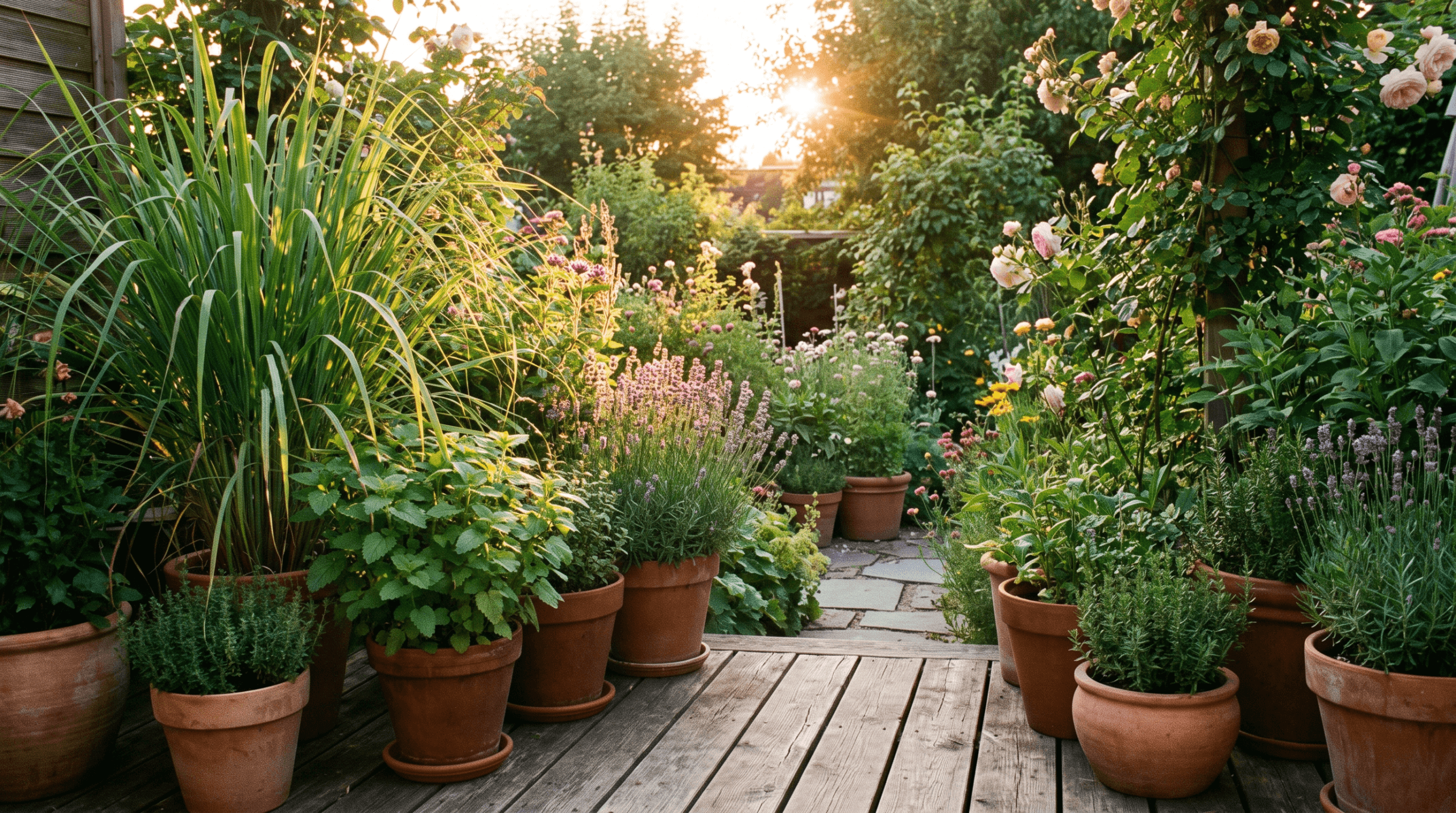
Citronella candles are made from citronella oil, which comes from citronella grass — a real plant. The candles provide modest protection in calm conditions if you’re sitting right next to them. But citronella plant itself (the “mosquito plant” often sold at garden centers, actually a scented geranium) releases very little of its oil into the air without physical crushing of the leaves. Simply growing it in your yard does not create a mosquito-repelling zone.
Lemon balm, catnip, and lavender contain compounds that repel mosquitoes in lab settings — but again, the concentration in ambient air from a garden plant is too low to provide meaningful protection. These plants are worth growing for dozens of other reasons, but “keeps mosquitoes away” isn’t a reliable one.
The exception is when you crush and rub the leaves directly on your skin. Lemon balm rubbed on exposed skin does provide short-term, modest repellency — better than nothing, not better than DEET. If you’re looking for a plant-based option and you have lemon balm growing, it’s worth knowing about.
Fans — One of the Most Underrated Tools
Mosquitoes are weak fliers. They struggle in any wind above 1 mile per hour — which is barely a breeze. A simple box fan aimed at seating areas on your patio or porch does two useful things: it physically blows mosquitoes away from the area, and it disperses the carbon dioxide and body heat that mosquitoes use to locate you.
Outdoor fans are particularly effective on calm evenings when mosquito activity peaks. They won’t eliminate every mosquito, but they make sitting outside dramatically more comfortable without any chemicals. If you’re creating an outdoor living space and mosquitoes are a problem, a weatherproof outdoor ceiling fan or a large box fan on the ground pointed at your seating is one of the best investments you can make.
Time Your Outdoor Activity
Most mosquito species are most active at dawn and dusk. The hour after sunrise and the hour or two before and after sunset are peak biting times. Midday — especially in hot, dry weather — is when mosquitoes hide in shaded, humid spots and bite the least.
This sounds obvious, but it’s genuinely useful. If you can shift your gardening to mid-morning or early afternoon and avoid being outside in the last two hours of daylight without protection, you’ll notice a significant difference in how often you’re bitten. You don’t have to rearrange your life around mosquitoes, but knowing when they’re most active helps you choose when to use additional protection.
What Doesn’t Work
Bug zappers kill insects — but they mostly kill moths and beetles, not mosquitoes. Mosquitoes are attracted to CO2 and body heat, not UV light. Studies have shown bug zappers are essentially useless for mosquito control and may actually harm beneficial insects drawn to the light.
Dryer sheets, ultrasonic repellers, and vitamin B1 patches have all been studied and found to provide no meaningful mosquito protection. They show up constantly in online recommendations, and they consistently fail in controlled research. Save the money.
Bat houses and purple martin houses are often promoted as mosquito control. Bats do eat mosquitoes — along with hundreds of other insect species — but they don’t preferentially hunt mosquitoes, and the impact on local mosquito populations is too small to be a reliable control strategy. Put up a bat house because bats are wonderful. Don’t put it up expecting mosquito relief.