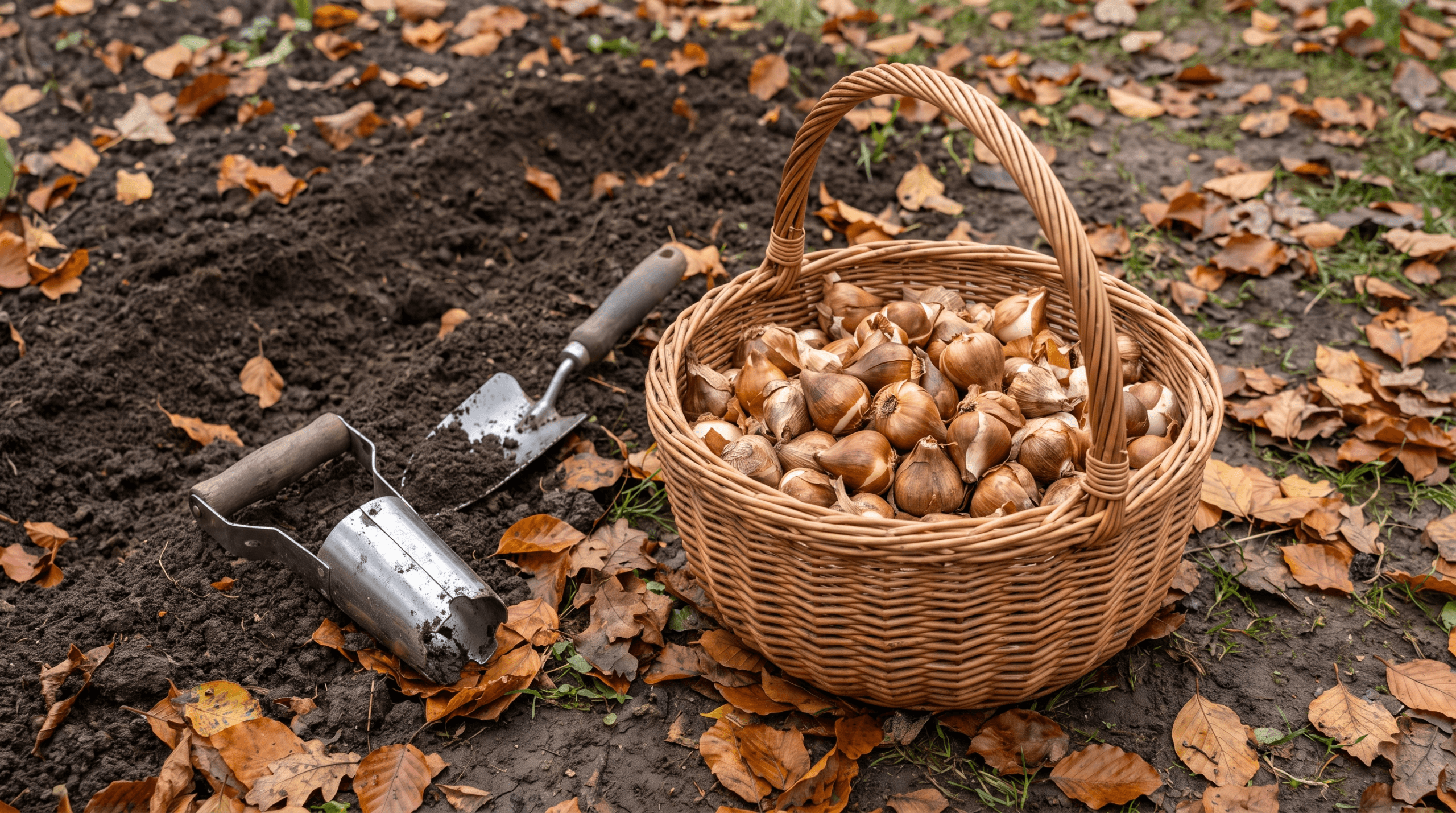
Why You Plant Bulbs in Fall for Spring Flowers
If you’ve never grown spring bulbs before, the timing feels backwards at first. You’re planting in October or November — sometimes even December in warmer zones — and you won’t see a single flower for five to seven months. But the plant logic makes complete sense once you understand vernalization.
Tulips, daffodils, hyacinths, and crocuses evolved in climates with cold winters. They need a sustained cold period — typically 12 to 16 weeks below 45°F — to trigger the physiological changes that lead to spring blooming. Without that cold, the bulb just sits there. It doesn’t know spring has arrived because it never experienced winter.
This is why tulips don’t naturalize reliably in Zone 9 and 10 without being pre-chilled in the refrigerator for 6 to 8 weeks before planting. It’s also why buying pre-cooled bulbs from a nursery (rather than digging and storing your own) is often easier in warm climates. The cold isn’t just tolerated — it’s required.
When to Plant by Zone
The goal is to get bulbs into the ground after air temperatures have cooled consistently to below 40°F but before the ground freezes solid. Planting too early — in warm soil — can cause bulbs to rot or sprout immediately, sending up growth that gets killed by winter cold. Planting too late means bulbs don’t have time to develop roots before the ground locks up, and they may not bloom well.
In Zones 3 and 4, plant bulbs in September and early October. The ground freezes early here, and you need bulbs in the soil before that happens. In Zones 5 and 6, October is the sweet spot — mid-October through early November. In Zones 7 and 8, aim for late October through November. In Zone 9, November through December, using pre-chilled bulbs for tulips and hyacinths. In Zone 10, pre-chilled bulbs planted in December or treated as annuals are your option — only daffodils, paperwhites, and some species tulips will naturalize without extensive cold.
Planting Depth and Spacing
Depth matters more with bulbs than with almost any other garden planting. Plant too shallow and bulbs are vulnerable to temperature extremes and squirrel damage. Plant too deep and the emerging shoot may exhaust its energy before it reaches sunlight.
The general rule is to plant bulbs at a depth of two to three times their diameter. For a tulip bulb that’s about 2 inches across, that means 4 to 6 inches deep. Daffodil bulbs are slightly larger — aim for 6 to 8 inches deep. Crocus corms are small — 3 to 4 inches is right. Hyacinths go about 6 inches down.
For spacing, plant tulips and daffodils about 6 inches apart, hyacinths 6 to 8 inches, and crocuses 3 to 4 inches. If you’re going for a naturalistic look — which tends to be more beautiful and lower-maintenance than rigid rows — scatter bulbs loosely and plant them where they land. The random spacing looks intentional once they bloom.
Place bulbs with the pointed end up and the flat base down. If you genuinely can’t tell which end is which — it happens with crocus corms especially — plant them on their side. They’ll right themselves.
Deer-Resistant Options and Pest Management
Squirrels and deer are the two great enemies of spring bulbs. If either is a problem in your garden, your planting choices matter.
Daffodils — and all narcissus — are poisonous and completely deer-resistant and squirrel-proof. Once you know this, daffodils start to look a lot more appealing. They also naturalize beautifully, meaning the clumps multiply over years without any effort on your part. In areas with heavy deer pressure, daffodils are often the only spring bulb that survives reliably.
Tulips are magnets for deer, and squirrels love them. If you want tulips in a high-pressure area, plant them in wire cages (hardware cloth folded into a basket), or sprinkle the planting hole with bulb-specific repellent granules. Replanting every year — treating tulips as annuals — is the honest approach in zones where they struggle to perennialize anyway.
Alliums — ornamental flowering onions — are deer-resistant, squirrel-proof, and spectacularly beautiful in late spring. Giant alliums with their softball-sized purple globes are one of the most underused bulbs in home gardens. They go in at the same time as tulips and daffodils, at a depth of 3 to 4 times the bulb diameter.
Planting in Containers
Spring bulbs do beautifully in pots, window boxes, and containers — and it’s one of the best ways to force blooms right outside your door. Use a pot with drainage holes and fill with well-draining potting mix. You can plant bulbs more densely in pots than in the ground — tulips can be almost touching — because you’re going for a single-season display.
Container bulbs need the same cold period as in-ground ones. In cold zones, leave the pots outside in a sheltered spot or in an unheated garage where they’ll experience winter temperatures without freezing solid. In warm zones, refrigerate the bulbs (in paper bags, away from fruit) for 12 to 16 weeks, then plant and move pots outside when you’re ready for spring blooms.
Watch Out For: Wet Soil and Squirrel Digging
Bulbs rot in waterlogged soil. If your planting area stays soggy after rain, build a raised bed or mix coarse sand into the planting hole to improve drainage. A bulb sitting in cold, wet soil will decay over winter rather than root and bloom. This is one of the most common causes of bulb failure, and drainage is the fix.
Squirrels are a real problem. They can smell freshly disturbed soil and will dig up newly planted bulbs within days. The most reliable solution is to lay wire mesh (1 inch hardware cloth) over the planting bed immediately after planting and cover it with mulch. The bulbs grow up through it in spring. You can also try laying cut holly branches or other prickly material over the bed as a deterrent — squirrels don’t like working around thorns.