Your Frost Date Is the Number You Need to Know
Before you can protect your garden from frost, you need to know when your first frost is likely to arrive. The USDA hardiness zones tell you how cold winters get, but frost dates are more specific — they’re the average date your area sees its first 32°F night in fall. You can find yours by entering your zip code at the Old Farmer’s Almanac or the NOAA frost date calculator.
That date is a probability, not a certainty. A “first frost date” typically means there’s a 50% chance of frost on or before that day. To be safer, plan for 2 weeks earlier than that. If your average first frost is October 15, start paying attention in late September.
Watch your local forecast when nights start dipping. Frost usually happens on clear, calm nights when temperatures drop below 36°F at dusk — the radiative cooling effect brings ground-level temps several degrees lower than the official reading. A cloudy, breezy night is far less likely to frost even if the forecast says 34°F. Learn to read those conditions.
What Frost Actually Does to Plants
Not all frost is the same, and not all plants respond the same way. A light frost — 29 to 32°F — damages tender plants but kills very little outright. A hard frost — below 28°F — is where real damage happens, and a killing frost — sustained temperatures in the mid-20s — will end most vegetable crops.
Frost damage happens when ice crystals form inside plant cells, rupturing them. When you see blackened, mushy plant tissue the morning after a frost, that’s what occurred. Some plants can recover from light cell damage if they thaw slowly — this is why you don’t spray frosted plants with water in the morning, which causes rapid thawing and more damage. Let them thaw on their own.
Certain crops are dramatically more vulnerable than others. Basil blackens at the first hint of cold — even 40°F nights stress it. Tomatoes, peppers, cucumbers, squash, beans, and eggplant all suffer at 32°F. These are your priority plants to protect.
Row Covers, Sheets, and Cloches — What Actually Works
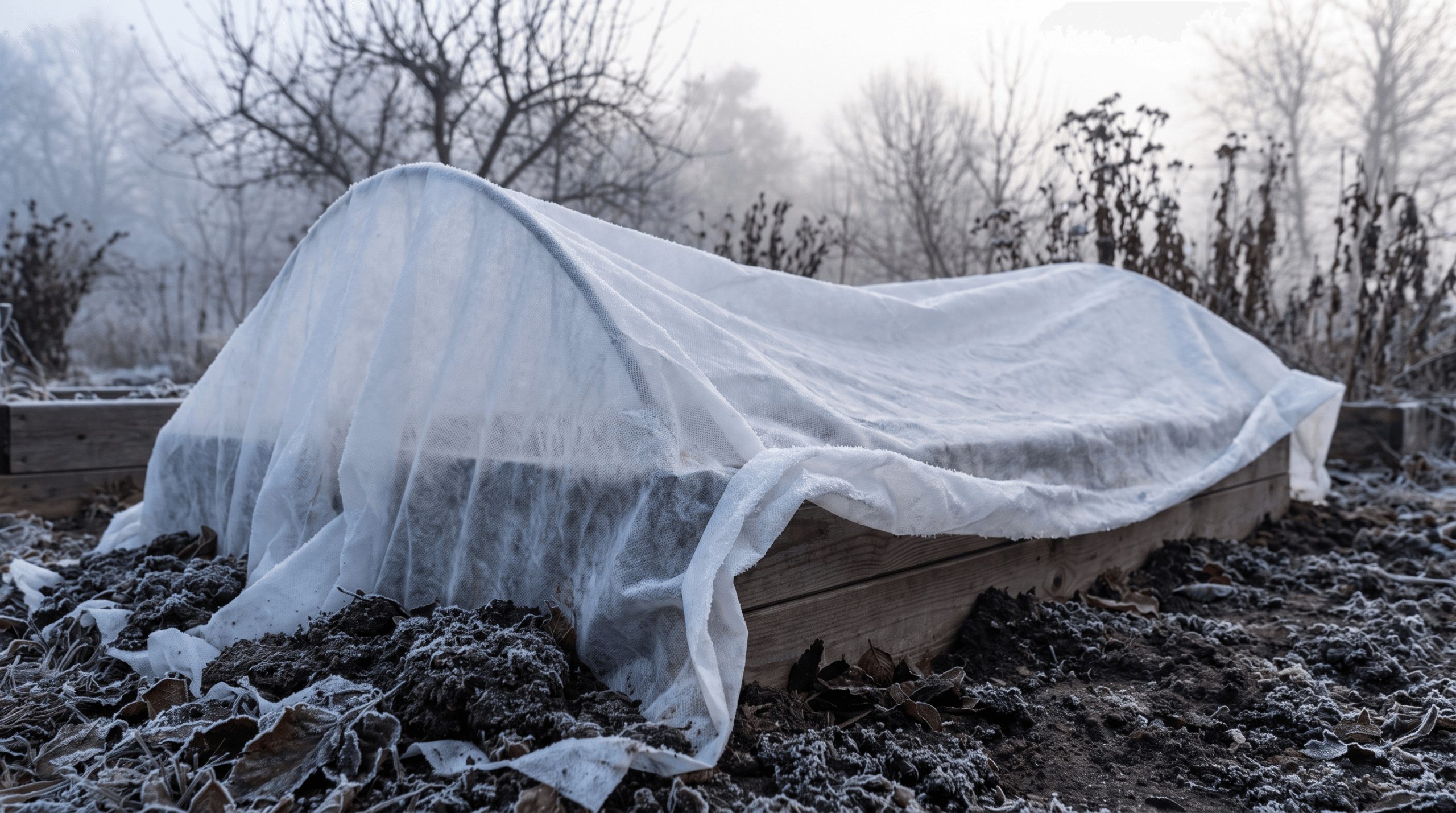
Row cover fabric — also called floating row cover or Reemay — is the best frost protection tool for most home gardeners. It’s lightweight, lets light and water through, and can provide 2 to 4 degrees of frost protection depending on weight. The heavier 1.5 oz fabric protects to about 24°F; the lighter 0.5 oz is good for a few degrees of protection and mainly extends the season by a couple of weeks.
Drape row cover directly over plants or use hoops to hold it up. The edges need to be held down — soil, rocks, or pins work. Even draped loosely, row cover makes a meaningful difference on a cold night.
Old bed sheets work in a pinch but they’re not ideal. Cotton absorbs moisture and can hold cold against the plant. If you use sheets, drape them over hoops or stakes so they’re not touching the foliage — contact with the cold fabric can cause the same kind of damage frost does. Remove sheets in the morning when temperatures rise above 40°F, or you risk cooking the plants.
Cloches — glass or plastic domes placed over individual plants — are excellent for protecting transplants and smaller plants. Wall-O-Waters, which are plastic tepees filled with water, can protect plants down to about 16°F through the thermal mass of the water. These are worth having if you routinely push the season on tomatoes and peppers.
Which Plants to Leave Alone
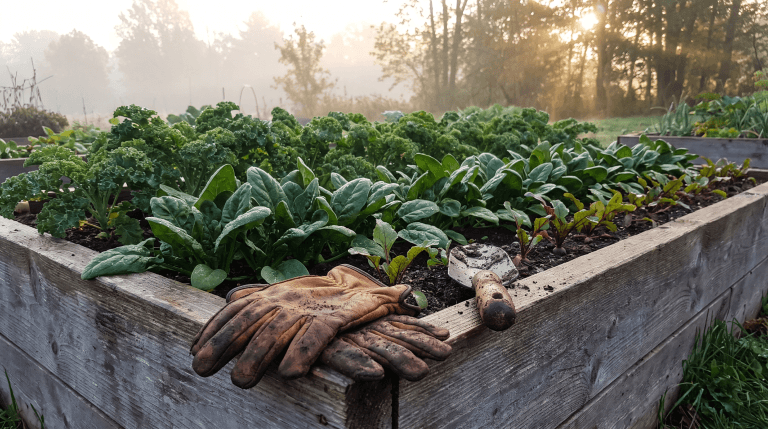
Not every plant in your garden needs protection — and over-protecting certain crops actually robs you of their best flavor. Kale, collards, Brussels sprouts, spinach, arugula, and carrots are cold-hardy crops that actually improve after frost. The cold triggers them to convert starches to sugars, resulting in sweeter, more complex flavor than you’d get from summer-grown versions.
Garlic, onions, and leeks planted in fall are meant to go through winter — don’t worry about them at all. Hardy perennials like thyme, sage, mint, and chives can handle frost without help. Broccoli and cabbage can take temperatures down to the mid-20s before they need protection.
Focus your effort on the warm-season crops that you’re trying to squeeze a few more weeks out of: tomatoes, peppers, eggplant, basil, cucumbers, and beans. Those are the plants that make frost protection worth the work.
Container Plants — The Often-Forgotten Problem
Container plants need more attention than in-ground plants during a frost. Pots expose roots on all sides to the cold — unlike soil in the ground, which holds heat — and roots are significantly less cold-hardy than the above-ground parts of a plant. A tomato that would survive 30°F with row cover in the ground might lose its roots entirely in a terra cotta pot at that same temperature.
Move tender container plants — citrus, tropical herbs, pepper plants you’re overwintering — inside when frost threatens. Even a garage or covered porch that stays above 40°F is enough for most of them. If pots are too large to move, cluster them together against a south-facing wall and wrap the containers themselves in burlap or bubble wrap to insulate the root zone.
Watch Out For: Leaving Protection On Too Long
The mistake people make is draping row cover or sheets over plants on a cold night and forgetting to remove them. Trapping heat under cover on a warm, sunny day — even in fall — can cause plants to overheat and wilt badly. Row cover is particularly dangerous on sunny days because it builds heat quickly.
Get in the habit of checking your covered plants by mid-morning. If the day is warm and sunny, pull the cover back. Most frost events are single-night occurrences — the following day is often perfectly pleasant, and your plants need light and air circulation.
Also: don’t try to protect plants that are already done. A tomato plant that’s been hit by disease, stopped setting fruit, and is mostly foliage isn’t worth covering. Pull it, compost what’s healthy, and move on. Frost protection is for plants that still have something to give you.