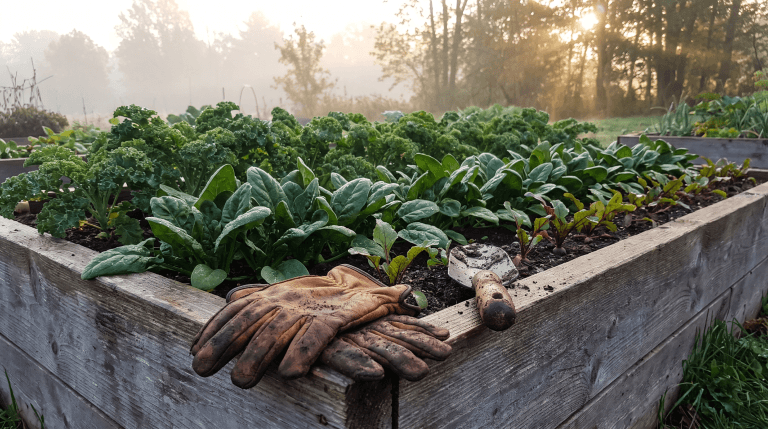
The garden is sleeping, but your best planning happens now. Winter is the one season when you can step back from the day-to-day work of growing and think clearly about what you actually want from next year’s garden — what to grow more of, what to try for the first time, and how to set yourself up for fewer problems and more harvests.
This guide walks you through the most useful winter planning tasks, in roughly the order they’re most valuable to do.
Review This Year’s Garden
Before you can plan well for next year, it helps to be honest about what worked and what didn’t this year. If you kept notes during the season, this is the time to reread them. If you didn’t, do it now from memory while it’s still reasonably fresh.
Ask yourself:
- Which crops produced well and which were disappointing?
- Where did pests or disease cause the most trouble?
- Were there any beds that consistently underperformed?
- What did you wish you’d planted more of? Less of?
- Did your timing feel right, or were you always a little early or late?
A few sentences of honest assessment is worth more than any gardening book. Your garden, your soil, your microclimate — no one knows it better than you do after a season of paying attention.
Plan Your Crop Rotation
Crop rotation means not planting the same crop family in the same bed year after year. It reduces soil-borne diseases, breaks pest cycles, and balances nutrient use. Winter is the ideal time to plan it because you can see the full picture of what went where this year and map out next year’s arrangement.
The four main crop families to rotate:
- Nightshades (Solanaceae): Tomatoes, peppers, eggplant, potatoes. Heavy disease burden — rotate every 3–4 years if possible.
- Brassicas (Cruciferae): Broccoli, cabbage, kale, Brussels sprouts, radishes. Clubroot and cabbage worm cycles benefit from rotation.
- Cucurbits (Cucurbitaceae): Cucumbers, squash, melons, zucchini. Rotate to manage vine borers and mosaic viruses.
- Roots and legumes: Carrots, beets, onions, beans, peas. Less critical to rotate, but still worth noting.
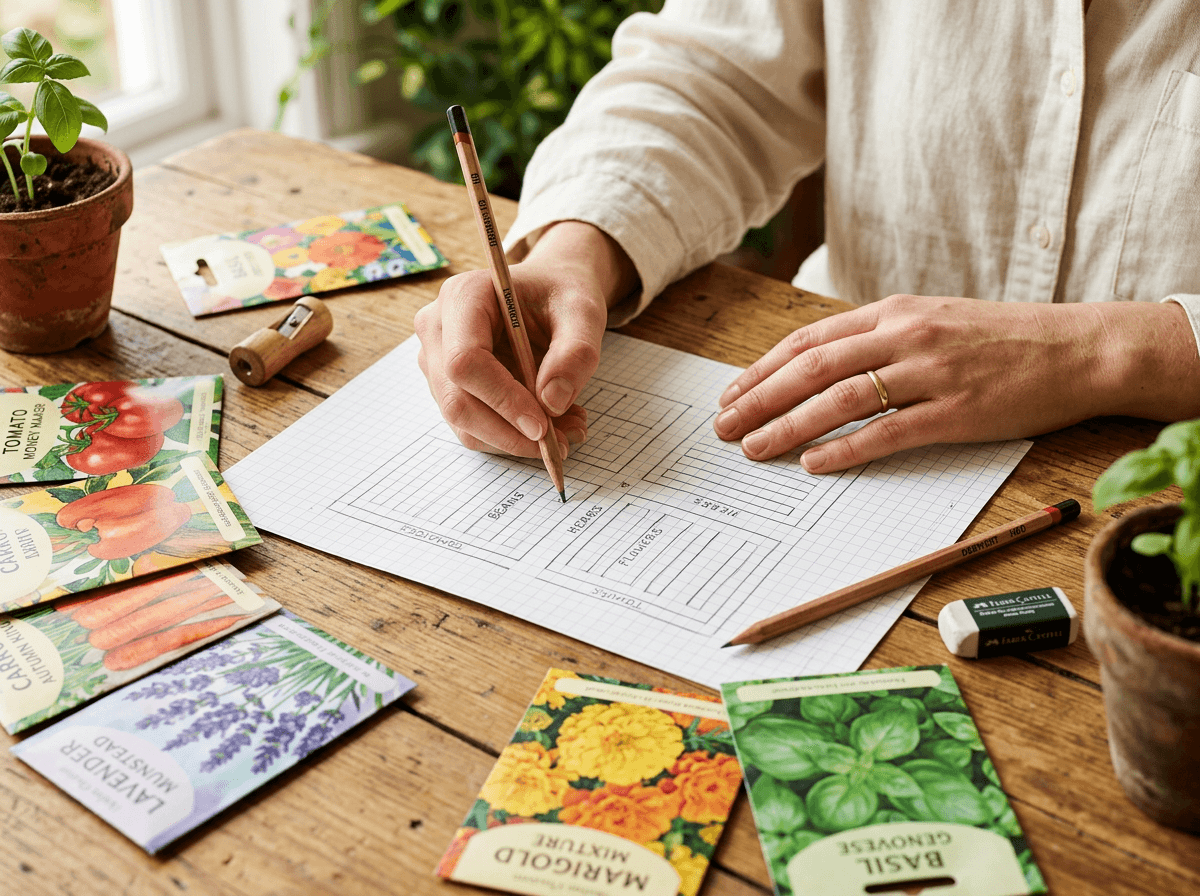
A simple sketch of your beds on graph paper, with what grew where each year, makes rotation planning straightforward and keeps you from having to rely on memory.
Order Seeds Early
The single most important winter task for many gardeners is ordering seeds before the best varieties sell out. January through early February is the right window — seed catalogs come out in December and popular varieties are frequently sold out by late winter.
For each crop you plan to grow, consider:
- Days to maturity: Does this variety have time to mature in your season? Zone 4 gardeners need to pay more attention to this than Zone 8 gardeners.
- Disease resistance: Especially important for tomatoes (look for V, F, N, T codes) and cucumbers (CMV, powdery mildew resistance).
- Heirloom vs. hybrid: Heirlooms have unique flavor and you can save seeds; hybrids often have better disease resistance and uniformity.
Good seed sources to browse: Baker Creek Heirloom Seeds, Seed Savers Exchange, Johnny’s Selected Seeds, High Mowing Organic Seeds, Botanical Interests.
Map Your Garden for Next Season
A garden map doesn’t need to be fancy — a rough sketch on graph paper works perfectly. Mark each bed and note:
- What you plan to plant there
- What crop family occupied that bed this year (for rotation)
- Any amendments you want to add before planting season
- Bed dimensions so you can calculate how many plants or seed packets you need
Once you have a map, you can calculate realistic quantities. “I want to grow tomatoes” is less useful than “I have two 4×8 beds, I’ll grow 8 plants, so I need 8 transplants or 1 seed packet.”
Soil Improvement Planning
Winter is also the right time to plan soil amendments. If you had any of these issues this season, address them now:
- Heavy clay or poor drainage: Plan to add 4–6 inches of compost per bed next spring, or build raised beds.
- Acidic soil (brassica problems, blueberry beds): Apply garden lime now — it takes months to fully raise pH, so early application matters.
- Nitrogen deficiency (pale, slow-growing plants): Plan a compost or aged manure top-dressing in early spring.
- Recurring disease: Plan crop rotation and consider adding beneficial fungi (mycorrhizal inoculant) at planting time next season.
Check and Maintain Equipment
A quiet winter afternoon is the perfect time for tool maintenance that never seems to get done during the busy season. Work through this list:
- Sharpen hoe, spade, and pruner blades with a metal file or whetstone
- Clean and oil all metal tool heads to prevent rust
- Replace broken handles
- Check your hose for cracks or leaks
- Test grow lights and seed-starting equipment before you need them in February or March
- Inventory seed-starting supplies: cells, trays, potting mix — order what you need
Set Your Planting Calendar
Once you know what you’re growing and have your frost dates, build a planting calendar. Work backward from your last frost date:
- Tomatoes, peppers, eggplant: start indoors 8–10 weeks before last frost
- Broccoli, cabbage, kale: start indoors 6–8 weeks before last frost
- Basil, melons, cucumbers: start indoors 4–6 weeks before last frost
- Peas, spinach, lettuce: direct sow 4–6 weeks before last frost
Mark these dates on a calendar now. It’s far easier to do this in January than to calculate it in March when you’re already behind.
For zone-specific planting windows, our monthly planting calendar breaks it down month by month. And if you’re not sure of your zone, find it here.