

Spinach is one of the most nutritious vegetables you can grow, and one of the fastest. Under good conditions, you can be harvesting tender leaves in as little as 40 days. It thrives in cool weather, which means you can grow it when most vegetables can’t — early spring and fall, when your garden would otherwise sit empty.
If you’ve tried growing spinach before and watched it bolt into bitter flowers the moment summer arrived, this guide will show you exactly how to time your plantings so that doesn’t happen again.
Types of Spinach Worth Growing
Spinach comes in three main types, each with slightly different leaf texture and growth habits.
Flat-leaf (smooth-leaf) spinach has smooth, tender leaves that are easiest to wash and work with in the kitchen. It matures quickly — often 40–45 days — and is the most common type found in seed packets. ‘Space,’ ‘Melody,’ and ‘Tyee’ are reliable varieties.
Savoy spinach has crinkled, textured leaves with a rich flavor that many gardeners love. The wrinkled leaves hold a bit more dirt and need an extra rinse, but the flavor is worth it. ‘Bloomsdale Long Standing’ is the classic savoy variety and one of the most bolt-resistant options available.
Semi-savoy spinach splits the difference — mildly crinkled leaves that are easier to clean than full savoy, with good flavor and better heat tolerance. ‘Catalina’ and ‘Teton’ are popular semi-savoy picks.
For beginners, start with a semi-savoy or flat-leaf variety. They’re forgiving, fast, and produce abundantly.
When to Plant Spinach
Spinach is a cool-season crop. It grows best when temperatures are between 35°F and 65°F. Once daytime highs push past 75°F, spinach bolts — it sends up a flower stalk, and the leaves turn bitter. You can’t reverse bolting, so timing is everything.
Most US gardeners have two good growing windows:
- Spring planting: Sow seeds directly in the garden 4–6 weeks before your last expected frost date. Spinach germinates in soil as cold as 35°F and can handle light frosts. In Zones 5–7, this is often late February through March.
- Fall planting: Sow 6–8 weeks before your first expected fall frost. In most zones, this is late August through September. Fall spinach is often sweeter and more productive than spring plantings — and it can even overwinter in Zones 6 and warmer with light protection.
Gardeners in Zones 8–10 can grow spinach through the entire winter without any frost protection. It’s one of the best cool-season crops for mild climates.
Choosing the Right Spot
Spinach grows well in full sun during spring and fall when temperatures are cool. In warmer spells, afternoon shade significantly slows bolting and extends your harvest window. If you have a spot that gets morning sun and shade after noon, that’s ideal for late spring or early fall plantings.
Spinach also does well in containers — a pot 8 inches deep and 12 inches wide supports a productive planting. This makes it easy to move into shade during unexpected warm snaps.
Preparing the Soil
Spinach prefers rich, well-draining soil with plenty of organic matter. It’s a heavy nitrogen feeder, so adding 2–3 inches of compost before planting makes a noticeable difference in leaf size and color. Aim for a soil pH of 6.5–7.0 — spinach is one of the few vegetables that doesn’t tolerate acidic soil well. If your soil is below 6.0, adding garden lime a few weeks before planting will help.
Good drainage is essential. Spinach roots sitting in soggy soil will rot quickly, especially in cold, wet spring soil.
How to Plant Spinach
Direct Sowing (Recommended)
Spinach doesn’t transplant well — its roots don’t like disturbance — so direct sowing in the garden is the best approach. Sow seeds ½ inch deep and 2 inches apart in rows 12 inches apart. Seeds germinate in 7–14 days when soil is between 45–70°F.
Once seedlings reach 2–3 inches tall, thin them to 4–6 inches apart. Don’t skip thinning — crowded spinach produces small leaves and bolts faster. You can eat the thinnings in a salad.
Succession Planting
Sow a short row every 2–3 weeks throughout the cool season rather than all at once. This staggers your harvest and gives you a steady supply of fresh leaves rather than an overwhelming abundance followed by nothing.
Watering Your Spinach
Spinach needs consistent moisture — about 1 inch of water per week. The soil should stay evenly moist but never waterlogged. Uneven watering (dry then wet then dry) stresses the plant and triggers bolting earlier than it otherwise would.
Water at the base of plants rather than overhead to reduce the risk of downy mildew. Morning watering is ideal so any splashed leaves dry out during the day.
Mulching around plants with a thin layer of straw or shredded leaves keeps moisture in and soil temperature down — both of which extend your harvest window.
Fertilizing
If you’ve added compost to your soil, you may not need any additional fertilizer. But if your plants look pale or grow slowly, side-dress with a balanced fertilizer or diluted fish emulsion once the plants are 3–4 inches tall. Focus on getting healthy growth in early weeks — once a plant is close to bolting, fertilizer won’t help.
Common Spinach Problems
Bolting: The most common frustration. Caused by heat and long days. Plant at the right time, choose bolt-resistant varieties like ‘Bloomsdale Long Standing’ or ‘Space,’ and provide afternoon shade. Once it bolts, pull the plant and replant in the fall.
Downy mildew: Yellow patches on leaves with a gray-purple fuzz underneath, usually during cool, damp weather. Improve airflow by thinning plants, avoid overhead watering, and look for resistant varieties labeled “DMR.”
Leaf miners: Pale, winding tunnels inside the leaves made by tiny fly larvae. Remove and destroy affected leaves. Row cover placed at planting prevents the adults from laying eggs.
Slugs: Irregularly shaped holes in leaves, usually found in cool, damp conditions. Check under leaves at night and handpick. Diatomaceous earth around the base of plants also helps.
How to Harvest Spinach
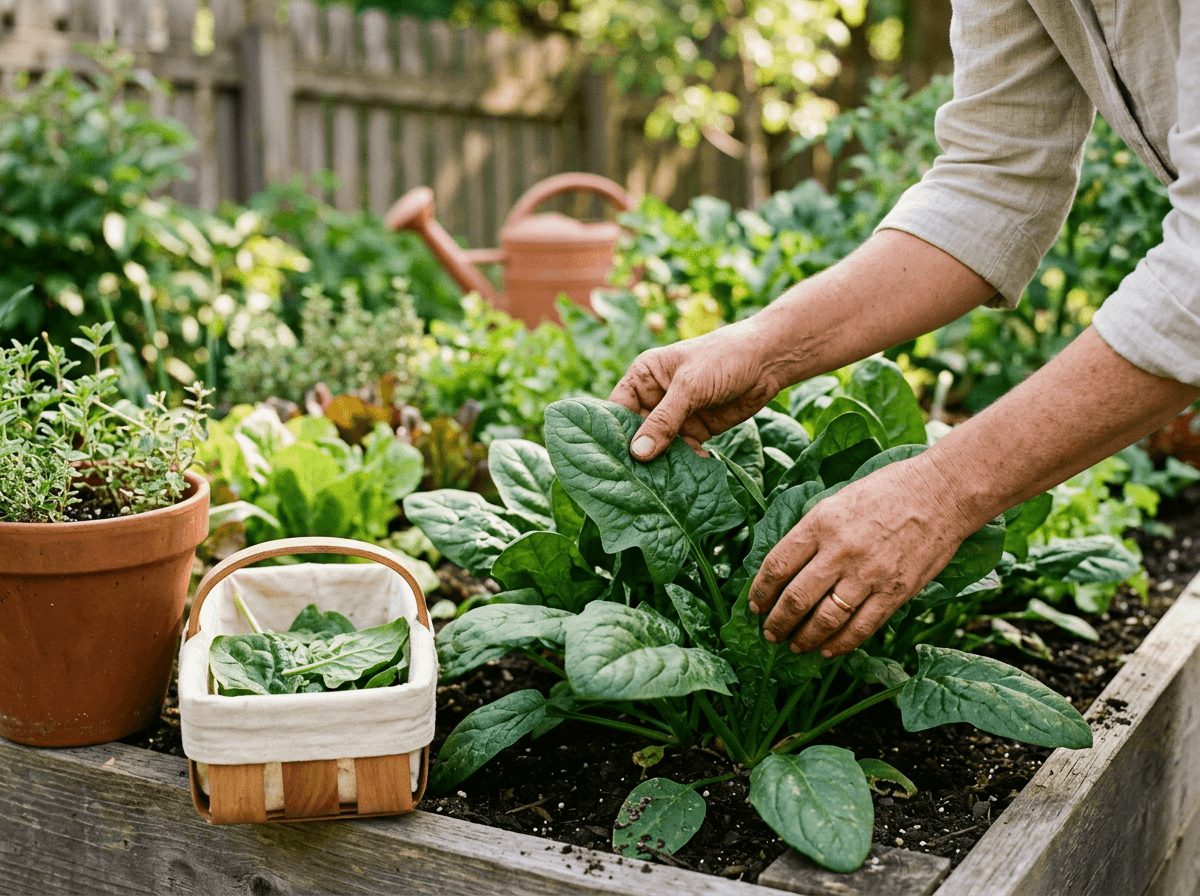
Spinach is ready to harvest when the outer leaves are full-sized — usually 40–50 days after seeding. Don’t wait for the plant to fully mature before you start picking.
Use the cut-and-come-again method: harvest the outer leaves first, cutting them an inch above the soil and leaving the small inner leaves to keep growing. The plant will produce new leaves and you can harvest again in 7–10 days. One well-timed planting can produce 3–4 harvests before it bolts.
Alternatively, cut the entire plant at soil level when it’s full-sized. This works best for savoy types that form a more defined rosette.
Harvest in the morning when leaves are at their crispest. Hot afternoon sun wilts freshly cut leaves quickly.
Storing Fresh Spinach
Freshly picked spinach keeps for 3–5 days in the refrigerator. Rinse in cold water, spin or shake dry, and store in a bag with a slightly damp paper towel. Spinach absorbs odors easily, so keep it away from strong-smelling foods.
For longer storage, blanch spinach for 2 minutes in boiling water, cool in ice water, squeeze dry, and freeze in portions. Frozen spinach works perfectly in soups, smoothies, and cooked dishes.


