If you’ve spent years feeling like gardening has too many rules — exact spacing, companion planting charts, precise rows — chaos gardening is the trend that throws all of that out. It’s been all over social media lately, and the appeal is simple: scatter a mix of seeds, let them grow wherever they land, and see what happens.
It sounds too easy to work, but it genuinely does — with a few smart choices that make the difference between a happy tangle of flowers and vegetables and a bed where the toughest plants crowd out everything else.
What Is Chaos Gardening?
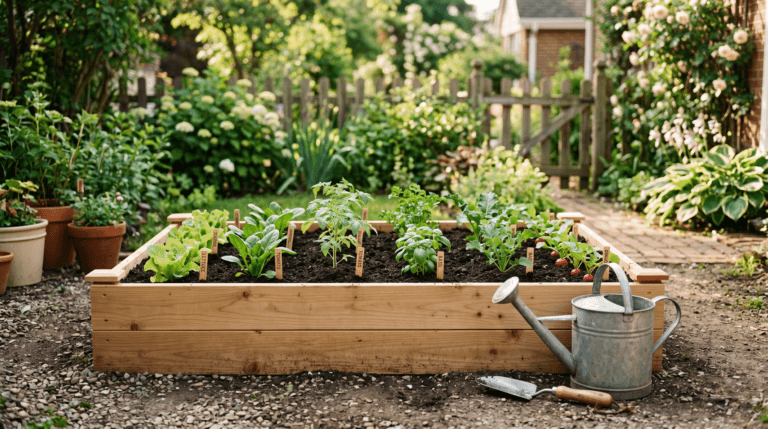
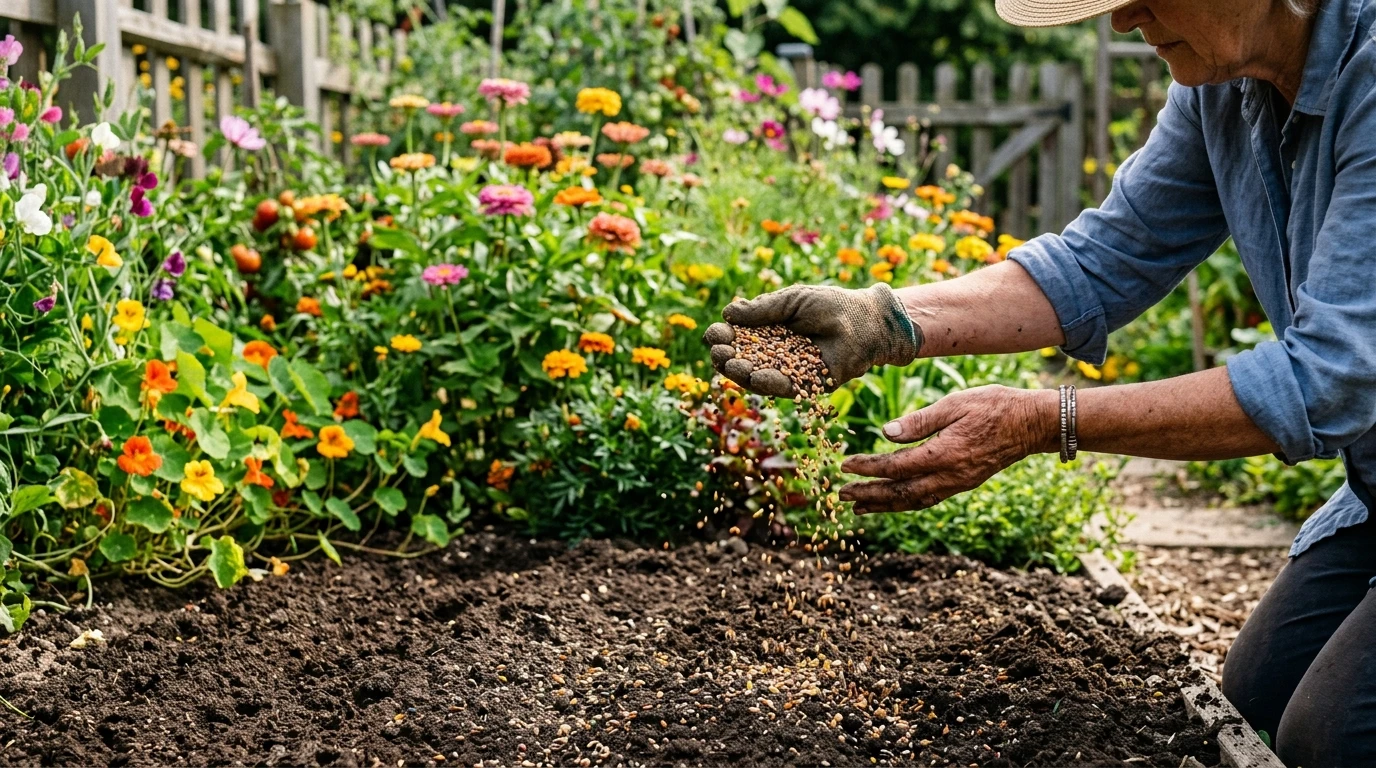
Chaos gardening means broadcasting a mix of seeds — vegetables, herbs, and flowers together — across a bed without rows, without measured spacing, and without a planned layout. You let the plants figure out where they grow best, thinning only if things get seriously overcrowded.
It’s the opposite of a neatly planned vegetable garden, and that’s exactly the point. There’s no wrong way to scatter a handful of seeds, which makes it especially appealing if traditional garden planning has ever felt overwhelming.
Why It Actually Works
- Plants self-thin naturally — seeds that land too close together compete, and the stronger seedlings generally win out, doing some of the thinning work for you
- Mixed plantings confuse pests — many insect pests locate host plants by scent and sight; a dense mix of different plants makes your crops harder for them to find compared to a single-crop row
- Flowers draw in pollinators — mixing in zinnias, cosmos, and marigolds alongside vegetables brings in bees and other pollinators that improve fruit set on your vegetables too
- It fills space efficiently — a chaos bed tends to end up densely planted, which shades the soil, conserves moisture, and leaves little room for weeds to establish
How to Start a Chaos Garden
- Loosen the soil in your chosen bed and rake it roughly level — no need for a perfectly fine seedbed
- Mix your seeds together in a bowl or bucket (see variety suggestions below)
- Scatter the seed mix by hand across the bed, aiming for an even but generous spread
- Rake very lightly, or sprinkle a thin layer of compost over the top, just enough to give seeds soil contact
- Water gently and keep the bed consistently moist until seedlings are established
- Step back and let it grow — resist the urge to over-manage it
Choosing a Good Seed Mix
The single biggest factor in how well a chaos garden turns out is the seed mix itself. A thoughtless mix lets a few aggressive plants take over; a balanced one produces the lush, varied look chaos gardening is known for.
Good candidates for a beginner chaos bed: Zinnias, cosmos, marigolds, nasturtiums, calendula, sunflowers, bush beans, lettuce and salad greens, radishes, dill, and basil. These vary in height and habit but none of them is so aggressive it smothers everything nearby.
Use with caution: Squash, cucumbers, and other sprawling vines can be included, but their wide leaves will shade out smaller, slower plants nearby. Give them their own general area within the bed rather than mixing them evenly throughout.
Best left out of a true chaos mix: Corn, large winter squash, and any crop where you need a full, reliable harvest of that specific plant — chaos gardening trades precise yield for low effort and biodiversity, so save your most important food crops for a planned bed.
Balance height and sun needs when mixing: Combine a few taller plants (sunflowers, cosmos) with lower-growing ones (lettuce, marigolds) so shorter plants aren’t entirely shaded out — total unpredictability is fine, but a little intention in the mix goes a long way.
What to Expect (and What to Watch For)
Some plants will dominate. Fast, vigorous growers like nasturtiums or squash may outcompete slower seedlings nearby. This is part of how chaos gardening works — but if you notice a struggling plant being smothered, it’s fine to gently move mulch or nearby foliage aside to give it light.
Weeding is trickier at first. Without rows, it’s harder to tell a wanted seedling from a weed in the first couple of weeks. Learn to recognize your seedlings’ first true leaves, or simply wait a bit longer before weeding so plants are easier to identify.
Harvesting takes more searching. Vegetables tucked into a chaos bed aren’t lined up for easy picking — expect to hunt a little for ripe produce among the flowers and foliage.
Some self-seeders return next year. Calendula, cosmos, and dill often drop seed and come back on their own the following season — a nice bonus if you want it, or something to weed out if you don’t.
Where Chaos Gardening Works Best
- A dedicated flower and pollinator bed — the lowest-stakes place to try chaos gardening, since there’s no crop yield riding on the outcome
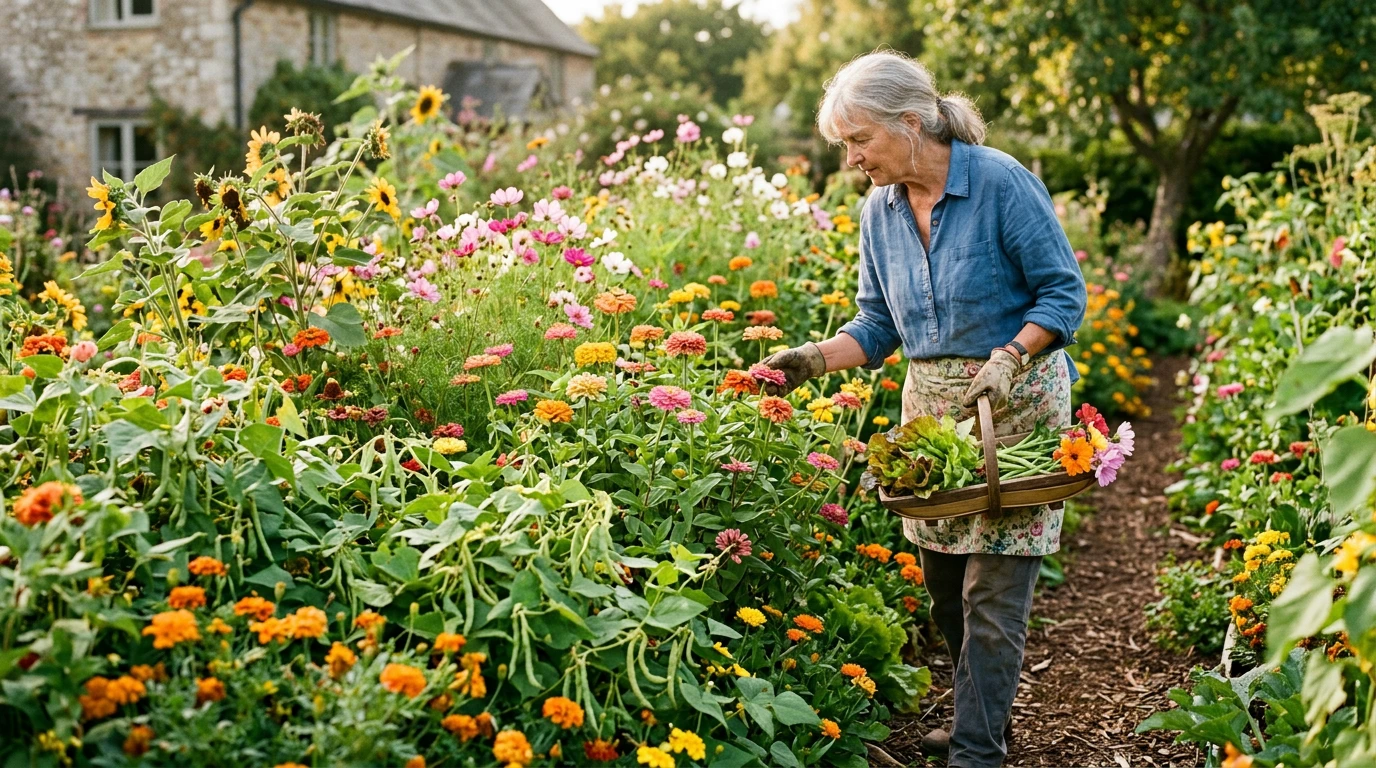
- A cutting garden — a chaos mix of zinnias, cosmos, and other cut flowers gives armfuls of blooms all summer with essentially no maintenance
- A spare corner or new bed you’re not sure what to do with — a great low-commitment way to fill space while you figure out your garden’s longer-term plan
- Alongside a planned vegetable garden, rather than replacing it entirely — many gardeners keep their key food crops in an organized bed and reserve one separate area for chaos planting
Chaos gardening isn’t about abandoning good gardening sense — it’s about accepting that not every bed needs a blueprint. Scatter generously, choose a mix that won’t fight itself too hard, and let the rest sort itself out.