Tomato blight is the most feared word in the summer garden. It can take a healthy, productive plant and reduce it to a blackened mess within days. But “blight” actually refers to two distinct diseases — early blight and late blight — that look different, behave differently, and require different responses. Knowing which one you’re dealing with is the first step to managing it effectively.
Early Blight vs. Late Blight: Key Differences
| Early Blight | Late Blight | |
|---|---|---|
| Cause | Alternaria solani (fungus) | Phytophthora infestans (water mold) |
| Conditions | Warm, humid; 75-85°F | Cool, wet; 60-70°F nights |
| Where it starts | Older lower leaves first | Any part of plant |
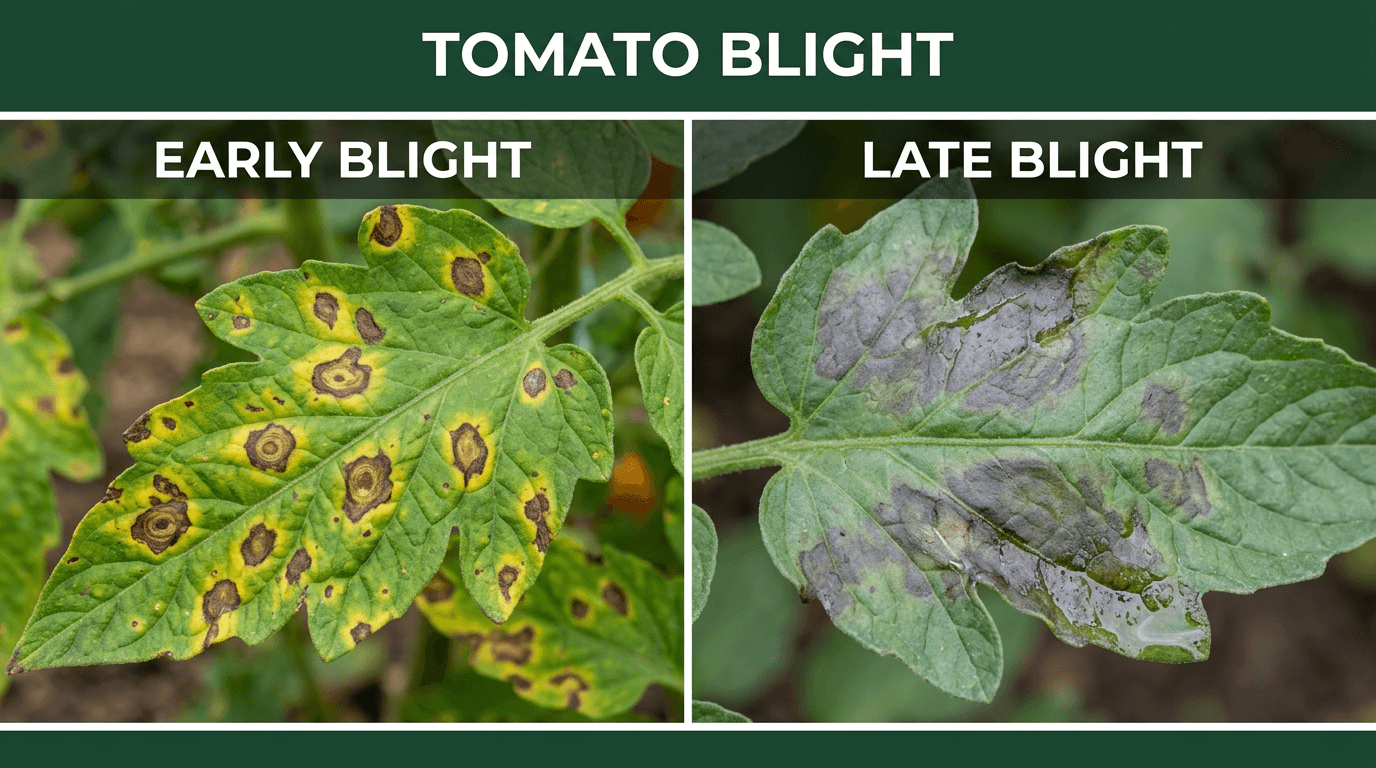
| Lesion shape | Round with concentric rings (target-like) | Irregular, water-soaked, spreading fast |
| Spreads | Slowly up the plant | Very rapidly; can destroy plants in days |
| Severity | Manageable with good practices | Can be catastrophic; urgent action needed |
Early Blight: Symptoms and Management
Early blight is the more common of the two, and it’s present in almost every garden to some degree by midsummer. It’s caused by a fungus that lives in soil and on plant debris, and it spreads upward from lower leaves via water splash.
Symptoms: Dark brown spots on older leaves, starting at the bottom of the plant. Spots are roughly circular, often with a yellow halo, and frequently show a target-like pattern of concentric rings inside the dark spot. Affected leaves yellow and drop. Fruit can also develop dark, sunken spots near the stem end.
Management:
- Remove affected leaves as soon as you spot them — don’t compost them.
- Keep a layer of mulch around plants to prevent soil splash carrying spores onto lower leaves.
- Water at the base of plants, not overhead. Drip irrigation or a soaker hose is ideal.
- Apply a copper-based fungicide or a chlorothalonil fungicide at the first sign of disease and continue on a 7–10 day schedule. These are preventive — they stop spread, not active infection.
- Stake or cage plants well to keep foliage off the ground.
Late Blight: Symptoms and Management
Late blight is the disease that caused the Irish Potato Famine, and it remains one of the most destructive plant diseases in the world. It spreads through airborne spores and can devastate entire plantings in days. Unlike early blight, it’s a genuine emergency when it appears.
Symptoms: Irregular, greasy-looking, dark green or brown water-soaked patches that expand rapidly. In humid conditions, a white or gray downy mold may appear on the undersides of lesions. Affected stems turn brown and collapse. Tomatoes develop firm, brown, irregularly shaped spots that spread through the fruit. The whole plant can die within 1–2 weeks of infection.
Management:
- Act immediately. Unlike early blight, late blight does not slow down. Remove and destroy (bag and trash — do not compost) all affected plant material the day you spot it.
- Apply copper fungicide preventively. If late blight is reported in your area (check local extension service alerts), start applying copper fungicide before symptoms appear. Once late blight is present on a plant, fungicides slow spread but cannot cure it.
- Remove severely infected plants. If a plant is more than 30–40% affected, remove it entirely to protect neighboring plants.
- Avoid overhead watering and working with plants when leaves are wet — you can spread spores on your hands and clothing.

How to Prevent Both Blights
Choose resistant varieties. Many modern tomato varieties have been bred with resistance to early blight (EB), late blight (LB), or both. Look for these resistance codes when choosing varieties. ‘Mountain Magic,’ ‘Jasper,’ and ‘Defiant’ have good late blight resistance. ‘Juliet’ and many cherry tomatoes show good general disease resistance.
Rotate crops. Don’t plant tomatoes, potatoes, peppers, or eggplant in the same bed more than once every 3 years. Blight pathogens survive in soil and on debris.
Prune for airflow. Remove suckers to keep plants open and airy. Good airflow reduces the humid microclimate that fungi thrive in.
Mulch deeply. A 3–4 inch layer of straw or wood chip mulch around plants keeps blight spores in the soil from splashing onto lower foliage during rain or irrigation.
Don’t work wet plants. Handle tomato plants only when foliage is dry — morning working after dew has dried is ideal.