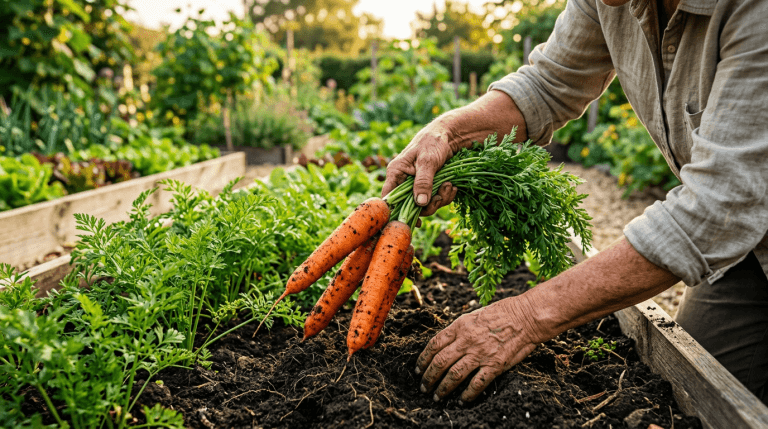
Few things in the garden are as satisfying as digging up your first batch of homegrown potatoes. You push a shovel into the ground, turn the soil, and there they are — a dozen or more golden or red tubers you grew yourself from a small piece of potato. It never gets old.
Potatoes do take some space and a little patience, but the process is straightforward and very forgiving. This guide covers everything from choosing the right variety to harvest day.
Choosing Your Potato Variety
Potatoes come in dozens of varieties, grouped by skin color, flesh color, and most importantly — how long they take to mature.
Early-season potatoes (70–90 days) mature fastest and are ready before summer heat sets in. Great for gardeners in shorter growing seasons or for getting “new potatoes” — small, thin-skinned tubers harvested young. Popular varieties: ‘Yukon Gold,’ ‘Red Norland,’ ‘Caribe.’
Mid-season potatoes (90–110 days) offer more yield and better storage than early varieties. They’re a good all-purpose choice for most gardeners. Popular varieties: ‘Red Pontiac,’ ‘Kennebec,’ ‘Adirondack Blue.’
Late-season potatoes (110–135 days) produce the highest yields and store the longest. If you want potatoes in the cellar all winter, plant a late-season variety. Popular varieties: ‘Russet Burbank,’ ‘Katahdin,’ ‘German Butterball.’
For beginners, ‘Yukon Gold’ or ‘Red Norland’ are hard to beat — they’re early, productive, and delicious.
When to Plant Potatoes
Potatoes are one of the earliest vegetables you can plant in spring. They go in the ground 2–4 weeks before your last expected frost date, when soil has warmed to at least 45°F. In Zones 5–7, this is typically late March to mid-April.
Potato vines will be killed by a hard freeze, but a light frost after the leaves emerge is usually fine — the underground tubers are protected by the soil. If a hard frost is forecast after planting, mound soil over any emerged shoots to protect them.
In Zones 8–10, potatoes are often planted in fall or winter (September–January) for a spring harvest, avoiding the intense summer heat that causes problems for tuber development.
For exact dates in your zone: When to Plant Potatoes · Find Your Zone
Starting with Seed Potatoes
Potatoes are not grown from seeds — they’re grown from seed potatoes, which are small whole potatoes or pieces of potato. Each piece needs at least one “eye” — the small sprout nub from which the plant grows.
Buy certified seed potatoes from a garden center or seed catalog rather than using grocery store potatoes. Grocery potatoes may be treated with sprout inhibitors or carry diseases. Certified seed potatoes are grown disease-free and are the right starting point for a healthy crop.
If your seed potatoes are larger than a golf ball, cut them into pieces 1.5–2 oz each (roughly the size of an egg), each with 1–2 eyes. Let cut pieces dry for 1–2 days before planting so the cut surfaces callous over — this reduces rot.
Small seed potatoes (golf-ball size or smaller) can be planted whole with no cutting needed.

Choosing the Right Spot
Potatoes need full sun — at least 6 hours per day. They also need room: plan on 2–3 square feet per plant. In a standard in-ground bed, plant in rows 3 feet apart with plants 12 inches apart within the row.
Avoid planting where tomatoes, peppers, or eggplant grew in the past 2–3 years. These are all in the same plant family and share diseases and pests.
Preparing the Soil and Planting
Potatoes grow underground, so loose, well-draining soil is essential. Compacted or heavy clay soil limits tuber development and makes harvest difficult. Work in 3–4 inches of compost before planting and loosen the soil 12 inches deep if possible.
Plant seed potatoes in trenches 4 inches deep and 12 inches apart, eyes facing up. Cover with 4 inches of soil. As plants grow, you’ll add more soil on top — a technique called hilling.
Hilling: The Most Important Potato Technique
When your potato plants reach 6–8 inches tall, mound soil up around the stems, burying all but the top 3–4 inches of growth. Do this again when the new growth reaches 6–8 inches above the hill. Repeat once or twice more during the season.
Why hill potatoes? Tubers form on the underground stems — not in the original soil. Hilling creates more stem underground, which means more room for potatoes to form. It also prevents tubers from being exposed to sunlight, which turns them green and makes them mildly toxic.
You can hill with soil, straw, or a combination of both. Many gardeners use straw for the upper layers because it’s easier to dig through at harvest and keeps the soil looser.
Watering Your Potatoes
Potatoes need about 1–2 inches of water per week, especially from the time the plants flower through harvest. This period is when tubers are sizing up, and uneven moisture during this time causes irregular, knobby, or cracked potatoes.
Water deeply and consistently — shallow, frequent watering keeps moisture near the surface where it doesn’t help developing tubers. A soaker hose or drip system works well for potatoes.
Stop watering about 2 weeks before your planned harvest date to allow the skins to firm up, which helps with storage.
Fertilizing
Potatoes are moderate feeders. Work compost into the soil before planting. When plants are about 6 inches tall, you can side-dress with a balanced fertilizer (10-10-10) or a fertilizer slightly higher in phosphorus and potassium than nitrogen. Too much nitrogen late in the season produces lush vines with small potatoes.
Common Potato Problems
Colorado potato beetle: Bright yellow and black striped beetles and their reddish larvae that defoliate plants. Check plants daily, handpick adults and larvae, and crush orange egg clusters on leaf undersides. Neem oil spray is effective for larger infestations.
Late blight: Dark, water-soaked lesions on leaves that quickly spread and kill the plant. This is the disease that caused the Irish Potato Famine. Plant disease-resistant varieties, ensure good airflow, and avoid overhead watering. Remove and destroy any infected plants immediately — do not compost them.
Scab: Rough, corky patches on potato skin. Caused by alkaline soil and dry conditions. Keep soil pH below 6.0 and water consistently. Scabby potatoes are still edible — just peel them.
Green potatoes: Caused by exposure to sunlight. Always hill properly and keep potatoes covered with soil or mulch. Cut away any green portions before eating — they contain solanine, which is mildly toxic.
How to Harvest Potatoes
You can harvest potatoes at two stages depending on what you want.
New potatoes are small, thin-skinned tubers harvested early, about 2–3 weeks after the plants flower. Carefully reach into the soil near the base of the plant and feel around for small potatoes. Take a few from each plant without disturbing the rest — the main crop continues to develop.
Full harvest happens when the vines have died back completely, usually 2–3 weeks after the foliage yellows and collapses. This signals the tubers are fully mature. Stop watering, wait 2 weeks for skins to firm, then dig carefully with a garden fork. Push the fork in at least 12 inches away from the plant stem to avoid spearing potatoes.
Harvest on a dry day when the soil is not waterlogged. Lay potatoes on the ground for a few hours to dry — this helps the skin cure and improves storage life.
Curing and Storing Potatoes
Fresh-dug potatoes with firm skins can go straight to the kitchen. But if you want to store them, curing first makes a big difference. Spread potatoes in a single layer in a cool (50–65°F), dark, humid spot for 1–2 weeks. This thickens the skin and heals any small cuts from harvesting.
After curing, store potatoes in a cool (38–45°F), dark, well-ventilated location — a basement, root cellar, or cool garage. Properly cured and stored potatoes from late-season varieties can last 4–6 months.
Never store potatoes near apples or onions. Apples emit ethylene gas that causes potatoes to sprout; onions absorb the moisture potatoes release and deteriorate faster.