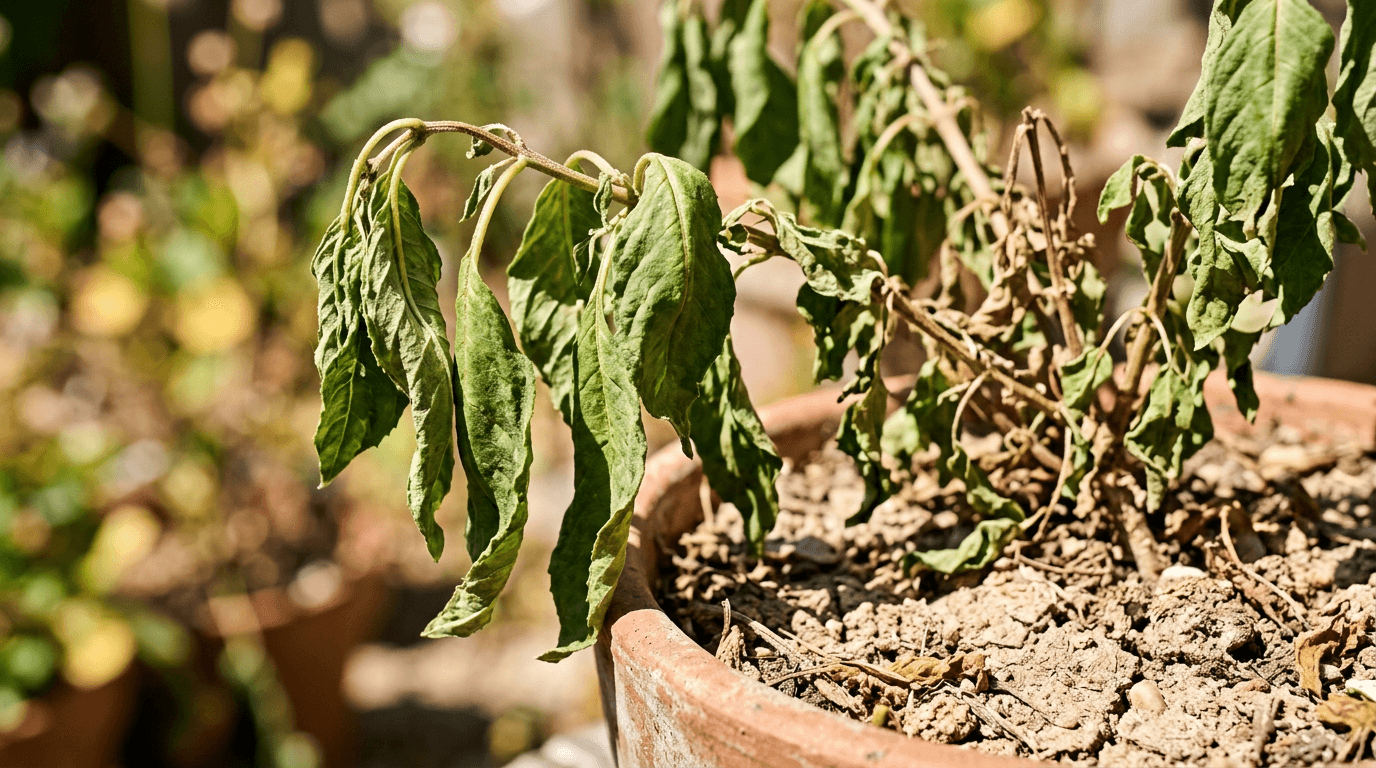
Your plants looked fine this morning, and now they’re drooping in the afternoon heat. Wilting can be harmless — or a sign of real trouble. The key is knowing the difference and responding the right way.
Is the Wilting Actually a Problem?
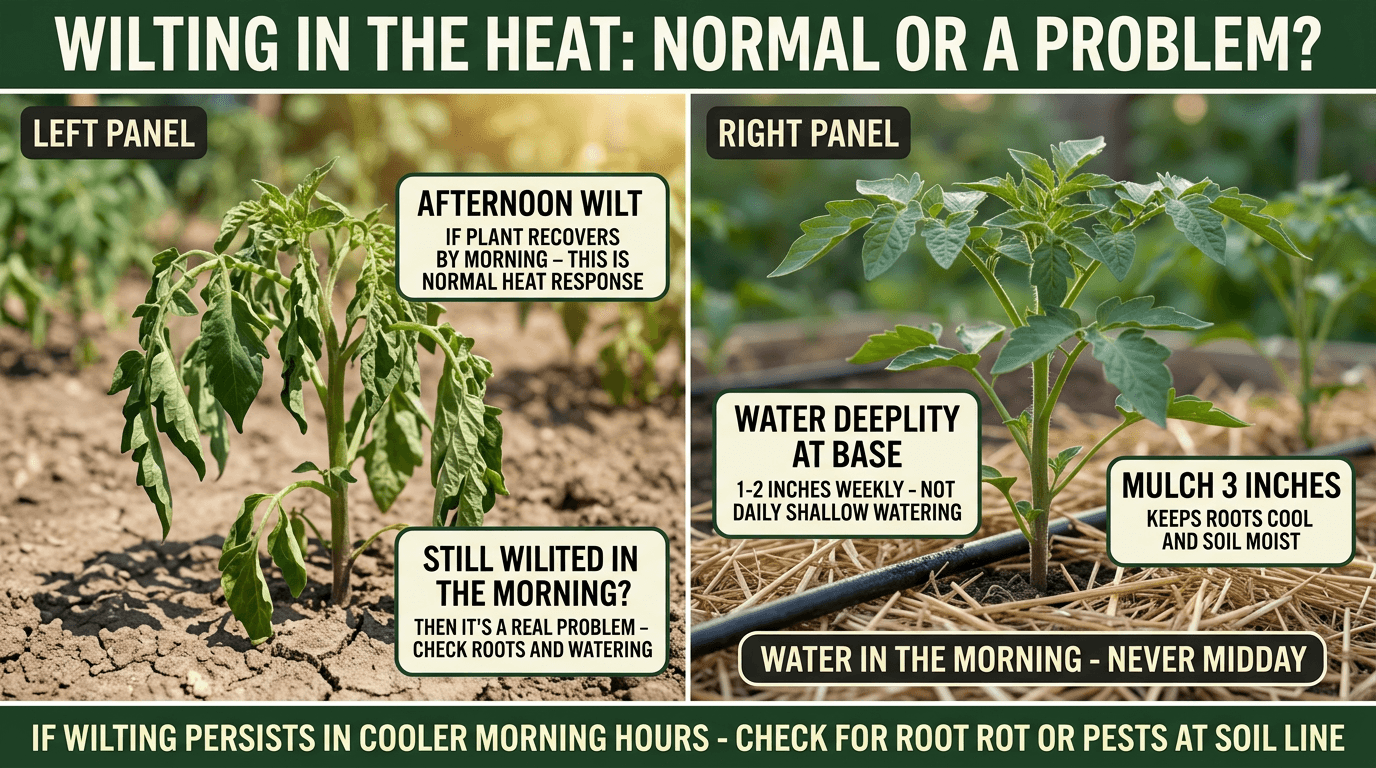
Some midday wilting in intense summer heat is normal. If your plants droop in the hottest part of the afternoon but perk back up by evening or early morning, they’re just conserving water — no action needed beyond consistent watering.
Worry if plants are still wilted in the cool morning or evening, or if wilting comes with yellowing, browning, or stunted growth. That points to a real problem.
What’s Causing It
- Underwatering — the most common cause. The soil is dry several inches down.
- Heat stress — temporary, recovers in the evening.
- Overwatering / root rot — soggy soil suffocates roots, and the plant wilts even though it’s “wet.”
- Container too small — pots dry out fast and roots overheat.
- Disease (fusarium, verticillium, or bacterial wilt) — the plant wilts and doesn’t recover, often one branch at a time.
How to Fix It
- Check the soil first. Stick your finger 2–3 inches in. Dry = water deeply. Soggy = let it dry out and improve drainage.
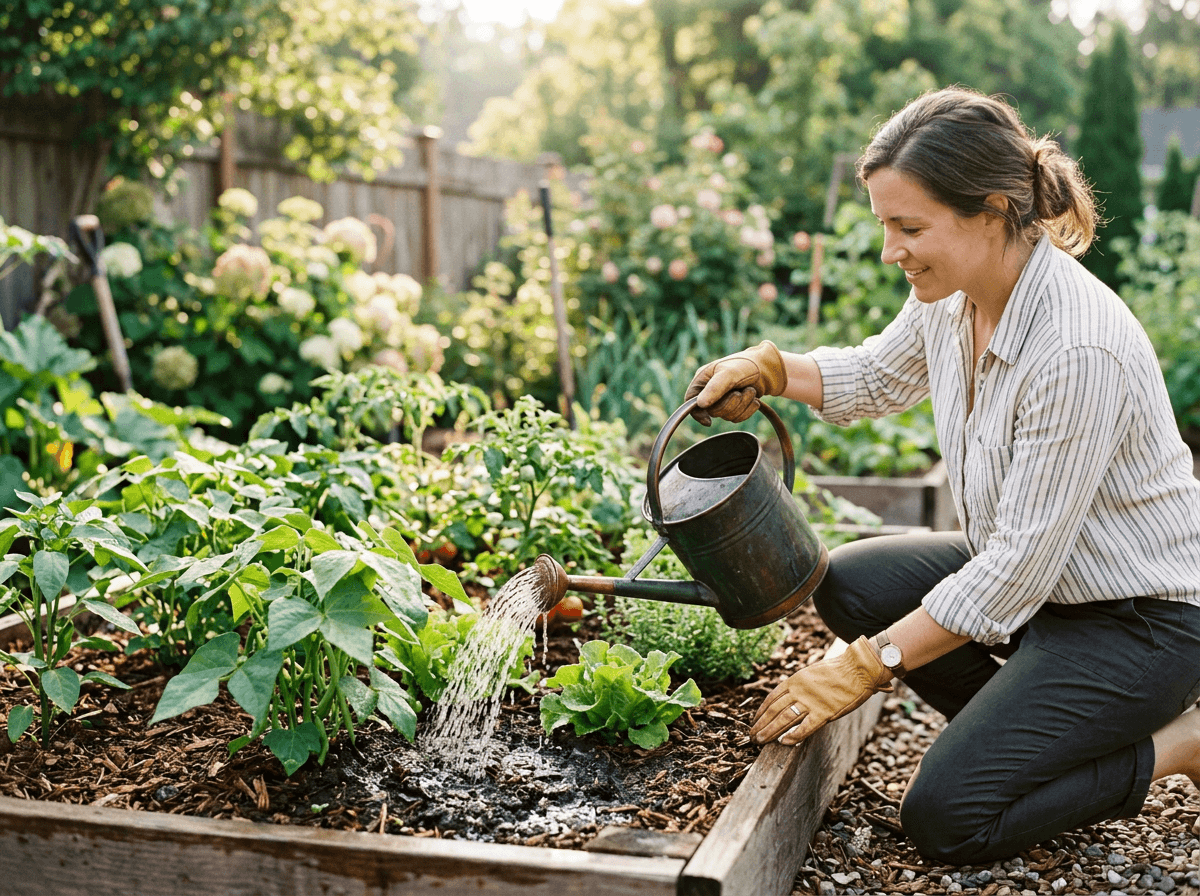
- Water deeply at the base in the early morning, not a quick sprinkle on the leaves.
- Add mulch to keep roots cool and soil moist longer.
- Use shade cloth over plants during extreme heat waves.
- If it won’t recover even when watered and cool, suspect disease — remove affected plants to protect the rest, and avoid planting the same crop there next year.
How to Prevent It
- Water deeply and consistently rather than little and often — deep roots resist heat better.
- Mulch every bed with 2–3 inches of straw or wood chips.
- Water in the morning so plants are ready for the day’s heat.
- Use larger containers that hold moisture, and consider self-watering pots for hot balconies.
Quick Recap
If wilted plants bounce back in the evening, it’s just heat — keep watering deeply and mulch. If they stay wilted morning and night, check for under- or overwatering first, and suspect disease only if they never recover.