Whether you’re dealing with a hot, dry climate, water restrictions, or you just want to spend less time dragging a hose around, a drought-tolerant vegetable garden lets you grow real food with far less water than a typical garden demands.
The secret isn’t one single trick — it’s choosing the right crops and combining a few smart watering and soil habits that add up to a garden that shrugs off dry spells.
Best Drought-Tolerant Vegetables
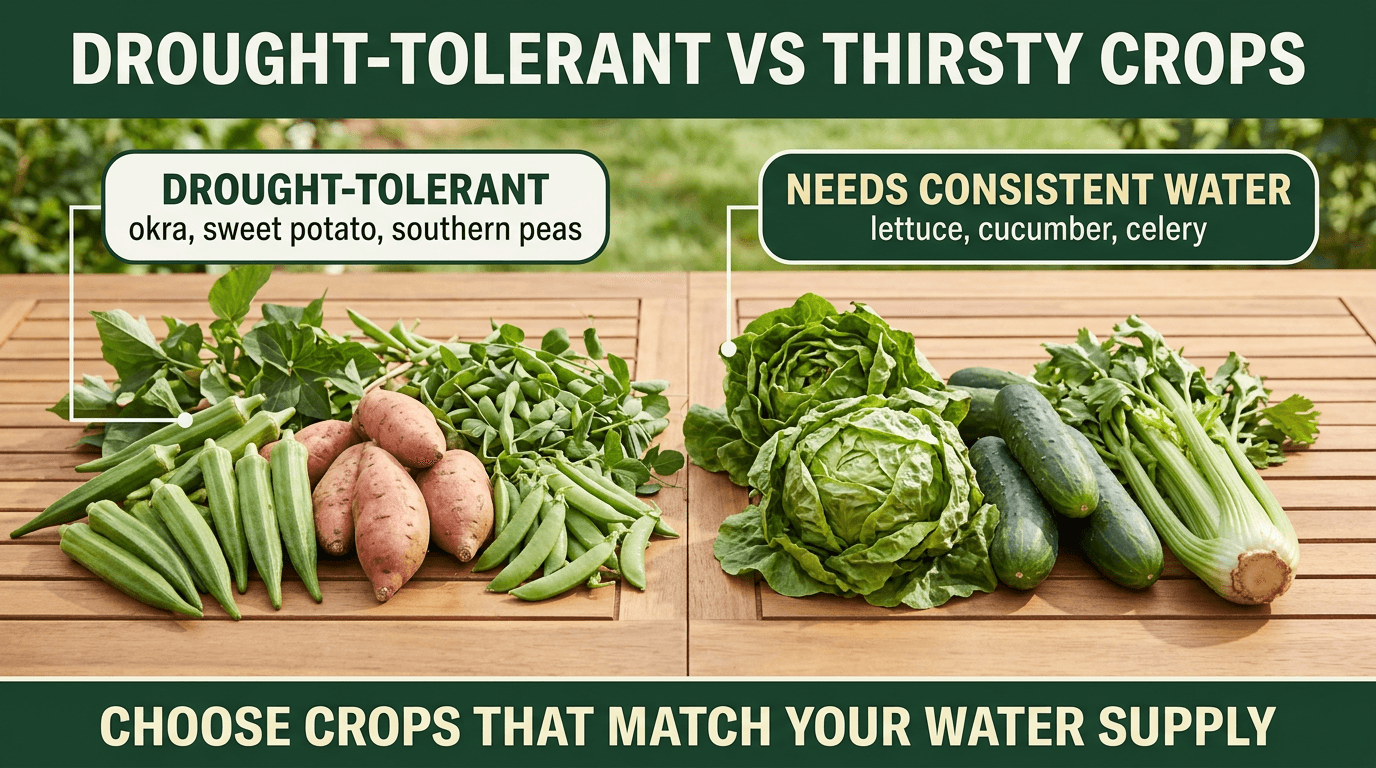
Okra — One of the most drought-tolerant vegetables you can grow. Its deep taproot seeks out moisture far below the surface, and it thrives in the same hot, dry conditions that stress most other crops.
Sweet potatoes — Extremely drought-tolerant once established, with deep, extensive root systems and sprawling vines that shade the soil and reduce moisture loss.
Southern peas (cowpeas / black-eyed peas) — Bred for hot, dry climates. Productive with minimal water once seedlings are established.
Tepary beans — A desert-adapted bean variety that tolerates drought better than almost any other bean, historically grown by Indigenous farmers in the arid Southwest.
Swiss chard — Noticeably more drought-tolerant than spinach or lettuce, with a deeper root system and thicker leaves that hold up better in heat.
Peppers — Moderately drought-tolerant once established, though consistent moisture during flowering and fruit set still improves yield and prevents blossom end rot.
Winter squash and pumpkins — Broad leaves shade the soil and reduce evaporation around the base of the plant, and deep roots access moisture other crops can’t reach — though fruit set still benefits from consistent watering.
Vegetables that struggle most without consistent water: Lettuce, celery, cucumbers, and carrots all have shallow roots or high water content and tend to bolt, turn bitter, or crack without steady moisture. If water is scarce, these are the crops to grow in the smallest quantity or skip in favor of more resilient options.
Mulch Heavily — The Single Best Water-Saving Habit
A thick layer of mulch is the single most effective, lowest-effort way to conserve soil moisture.
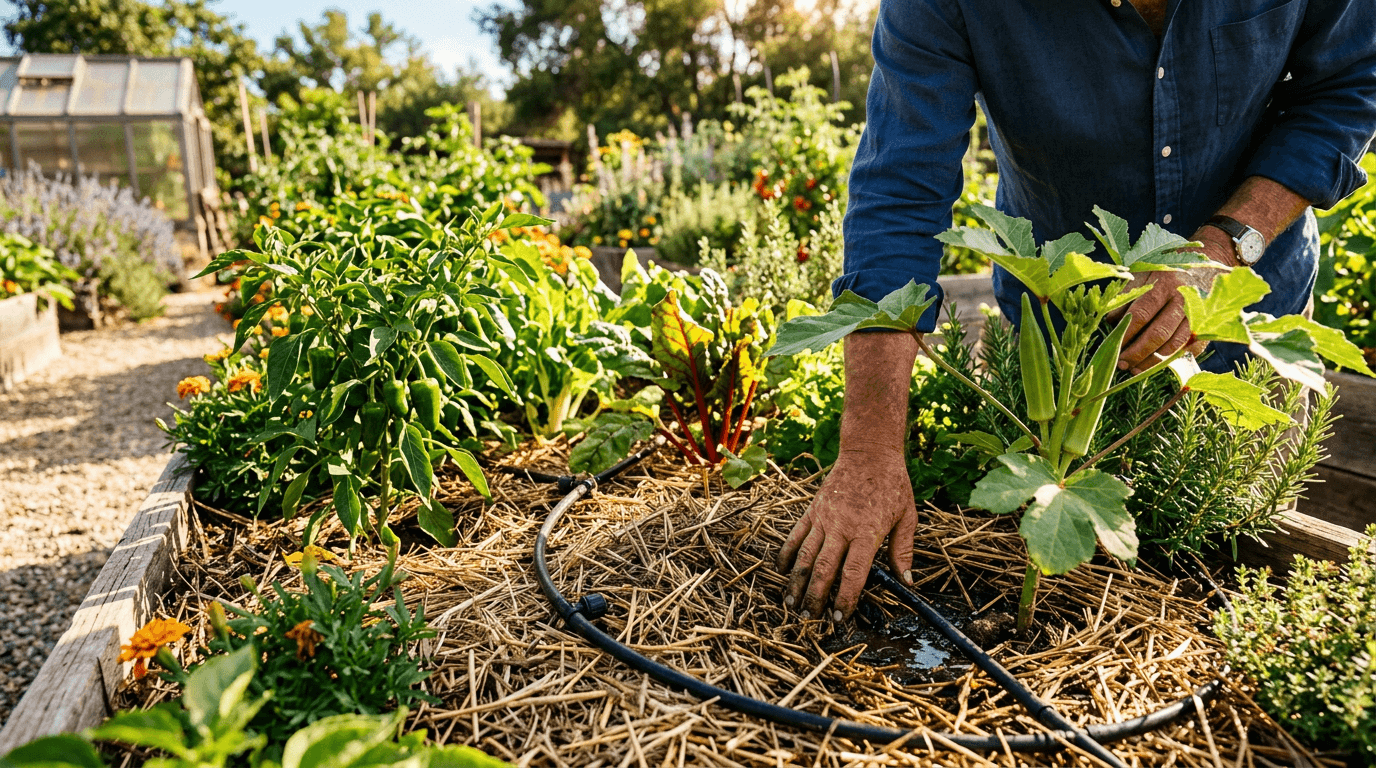
- Apply 3–4 inches of straw, shredded leaves, or wood chips around plants, keeping mulch a couple inches back from stems
- Mulch can reduce water lost to evaporation dramatically compared to bare soil exposed directly to sun and wind
- Mulch also moderates soil temperature and suppresses water-competing weeds, giving your vegetables first access to whatever moisture is available
- Organic mulches break down over time, adding organic matter that further improves the soil’s water-holding capacity
Water Deeply, Not Often
How you water matters as much as how much you water.
- Water deeply and less frequently rather than a little every day — frequent shallow watering trains roots to stay near the surface, where they dry out fast
- Deep, infrequent watering encourages roots to grow downward in search of moisture, building a plant that’s naturally more resilient to dry spells
- Water in the early morning when possible — less water is lost to evaporation compared to watering during the heat of the day
- Check soil moisture a few inches down before watering; the surface can look dry while moisture is still present just below
Drip Irrigation — The Most Water-Efficient Delivery Method
Overhead sprinklers lose a significant amount of water to evaporation and wind drift before it ever reaches plant roots. Drip irrigation delivers water directly to the base of each plant, dramatically cutting waste.
- A simple drip line or soaker hose run along each row, covered by mulch, keeps water at the root zone where it’s needed
- Attach a timer for consistent watering without daily manual effort
- Drip systems also keep foliage dry, which reduces the fungal disease problems that come with overhead watering
Ollas — An Ancient Low-Tech Solution
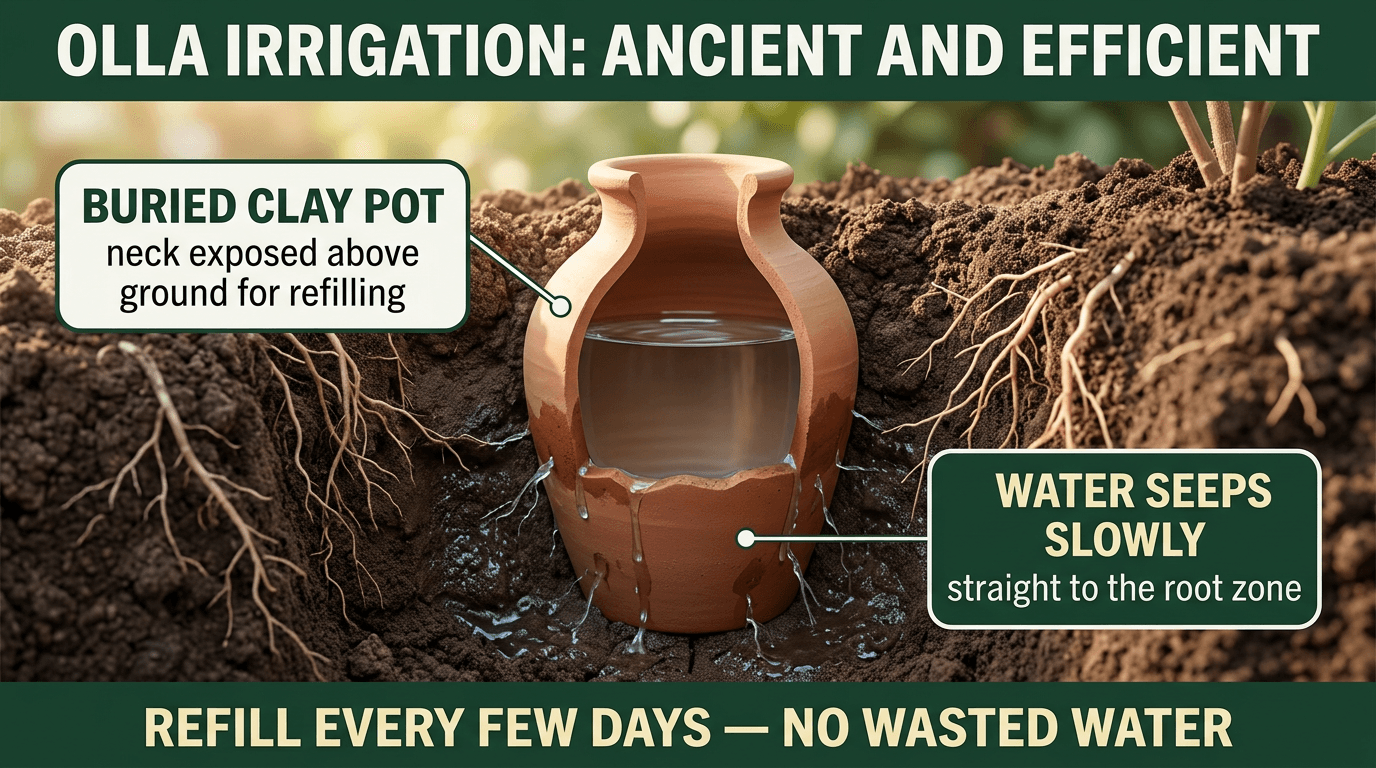
An olla (pronounced OY-ah) is an unglazed clay pot buried in the soil with just its neck exposed above ground. Filled with water, it slowly seeps moisture directly into the surrounding root zone through its porous walls — a centuries-old irrigation technique still highly effective today.
- Bury an olla between plants, fill it with water, and cap the opening to reduce evaporation from the top
- Water seeps out only as fast as the surrounding soil dries, delivering moisture efficiently right where roots need it
- A single olla typically needs refilling every few days to a week, depending on soil type and heat
Improve the Soil
- Work compost into soil before planting — organic matter acts like a sponge, holding significantly more water than sandy or depleted soil
- In sandy, fast-draining soil, extra compost makes the biggest difference in water retention
- Avoid tilling more than necessary; excessive tilling breaks down soil structure and increases moisture loss
Other Water-Saving Strategies
- Shade cloth: A 30–50% shade cloth over the garden during the hottest part of summer reduces heat stress and water loss, especially helpful for leafy greens and cool-season crops pushed into summer
- Windbreaks: Wind dries out soil and plants quickly; a fence, hedge, or trellis on the windward side of the garden reduces moisture loss
- Group plants by water needs: Cluster thirstier crops like cucumbers together and drought-tolerant crops like okra together, so you’re not overwatering the tough plants to satisfy the thirsty ones
- Sunken beds in very hot, dry climates: Unlike raised beds (which drain fast and suit wetter climates), sunken or “waffle” beds that sit slightly below grade collect and hold water longer in arid regions