If you drink coffee, you already have a free soil amendment sitting in your kitchen every morning. Coffee grounds are genuinely useful in the garden — but not in the way most people assume. A lot of the popular advice about coffee grounds is exaggerated or flat-out wrong, and using them incorrectly can actually do more harm than good.
Here’s what coffee grounds actually do for your garden, what they don’t, and how to use them without creating problems.
The Big Myth: Coffee Grounds Are Acidic
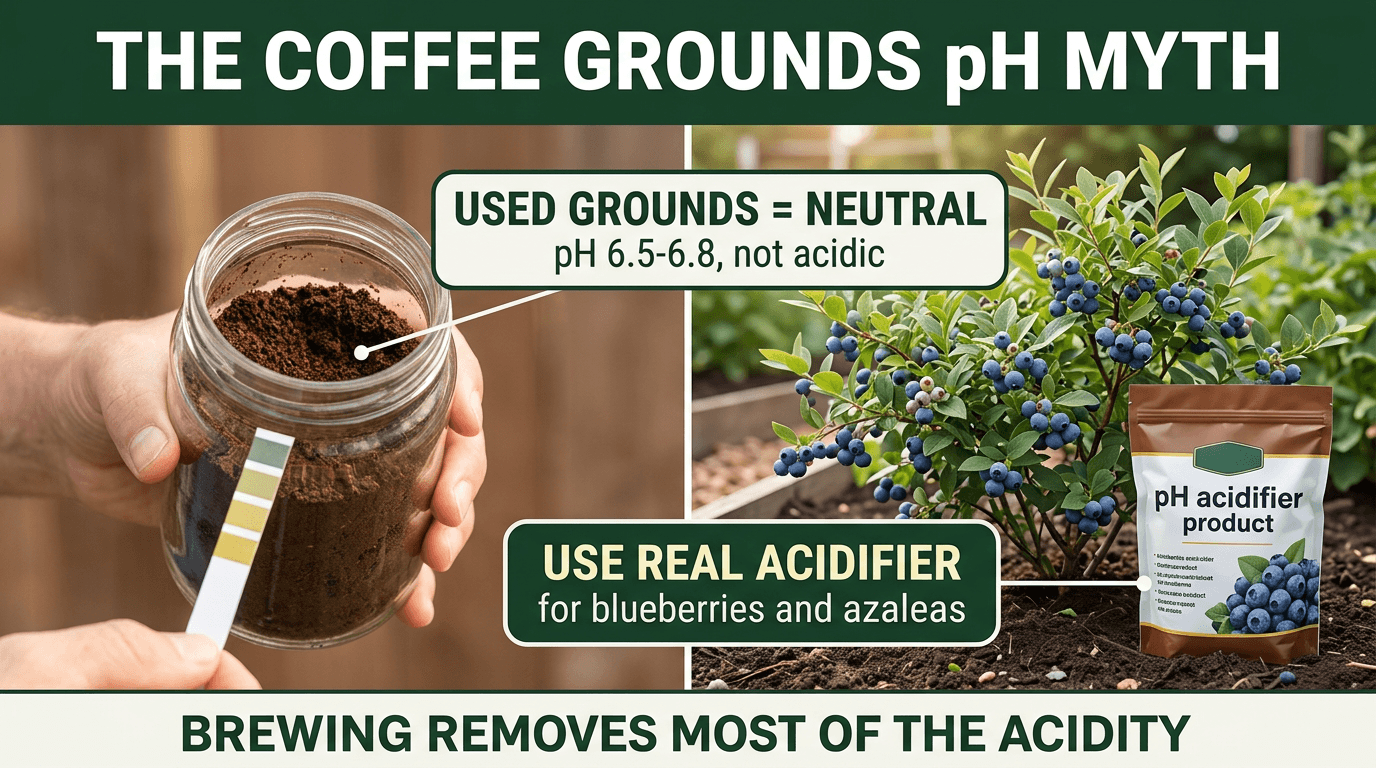
This is the single most repeated piece of coffee-ground gardening advice, and it’s mostly wrong. Unbrewed coffee beans are acidic, but most of that acidity dissolves into your actual cup of coffee during brewing. Used coffee grounds are close to pH-neutral, typically testing between 6.5 and 6.8.
That means spent coffee grounds are not a reliable way to acidify soil for acid-loving plants like blueberries, azaleas, or hydrangeas. If you want to lower soil pH for these plants, use a proven method like elemental sulfur or an acidifying fertilizer instead, and test your soil to confirm results.
What Coffee Grounds Actually Do Well
Add nitrogen to compost. Used coffee grounds are roughly 2% nitrogen by dry weight, making them a genuinely useful “green” (nitrogen-rich) material for your compost pile — nutritionally similar to grass clippings, despite their brown color.
Improve soil structure over time. Like any organic matter, coffee grounds break down and contribute to better soil texture, water retention, and microbial activity when composted and worked into garden beds gradually.
Attract earthworms. In moderate amounts, coffee grounds are attractive to earthworms, which is a plus for vermicomposting (worm bins) and garden soil health alike.
Possibly deter slugs and snails. Coffee contains caffeine and other compounds that are toxic to slugs and snails, and some gardeners report success using a barrier of grounds to discourage them. Evidence is mixed and inconsistent, so treat this as a nice possible bonus rather than a reliable pest control method.
How to Use Coffee Grounds Correctly
Best method: add them to your compost pile. Mix coffee grounds into your compost along with “brown” carbon-rich materials like dry leaves, shredded cardboard, or straw. Keep coffee grounds to no more than about 20–25% of your total compost pile volume — too much nitrogen-rich material relative to carbon creates a smelly, slow-to-break-down anaerobic mess.
Paper filters compost too. Unbleached paper coffee filters break down right along with the grounds — toss them into the compost pile together.
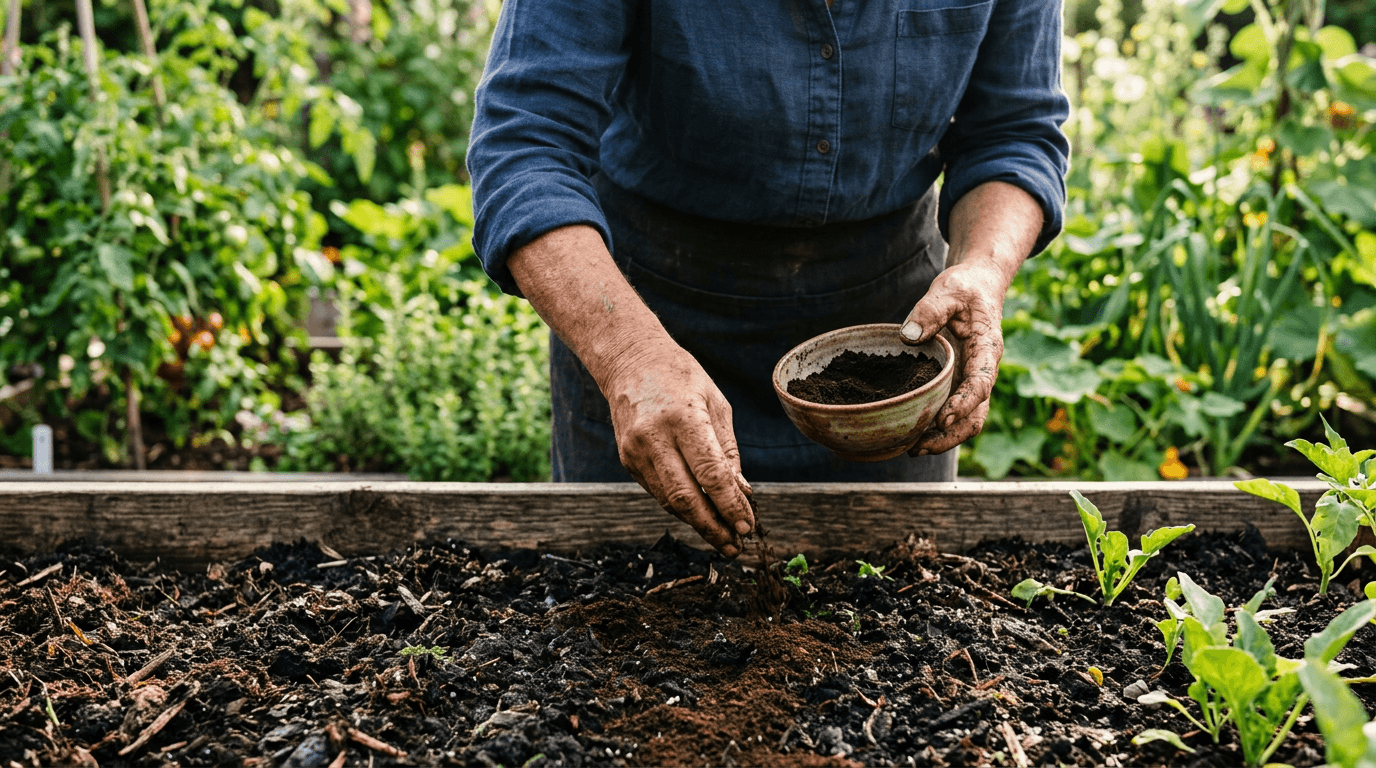
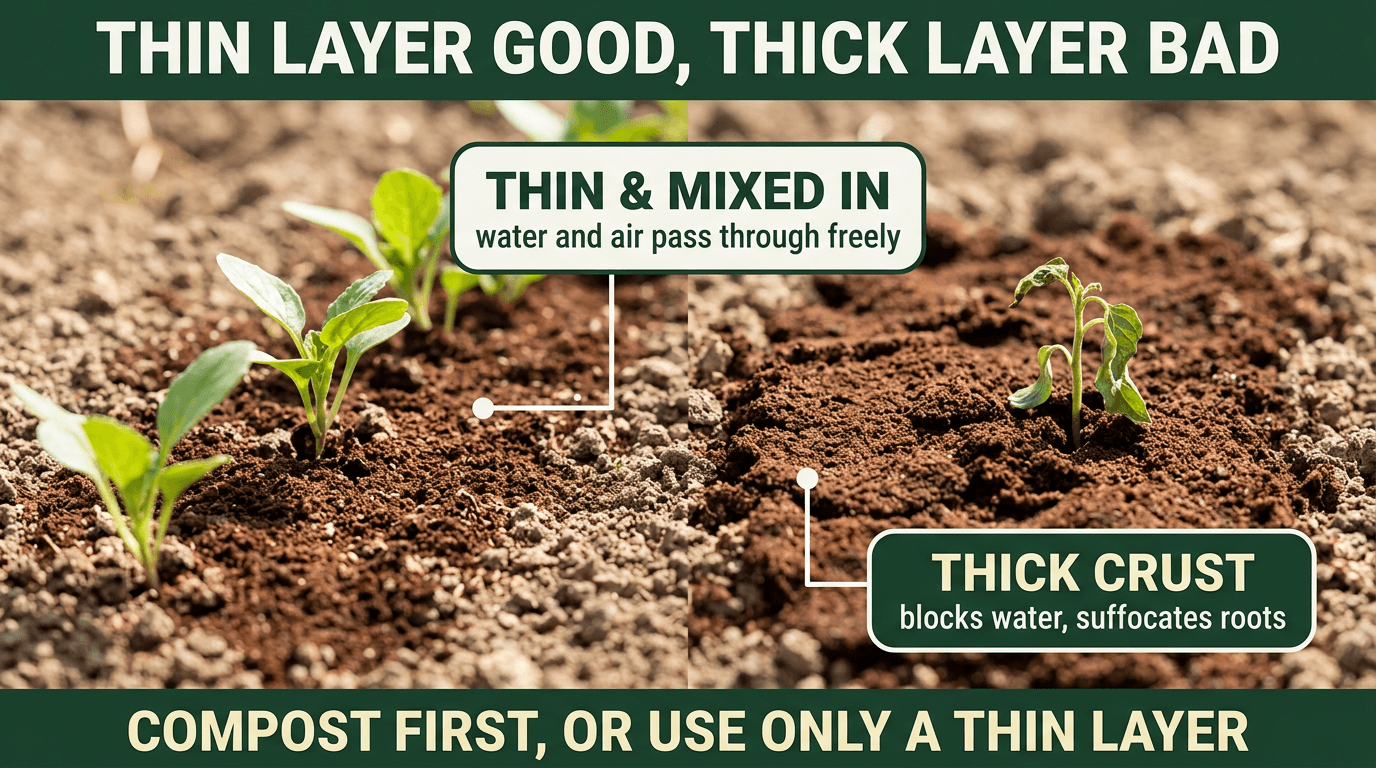
If applying directly to soil, use a very thin layer. A light sprinkling worked lightly into the top inch of soil is fine. Composting first is still the better option whenever possible.
What NOT to Do
Don’t pile thick layers of coffee grounds directly on soil. This is the most common mistake. Grounds are fine-textured and compact easily — a thick layer dries into a dense, moisture-blocking crust that actually repels water instead of helping it soak in, and can suffocate roots by blocking airflow.
Don’t use them as a stand-alone fertilizer. While they contain nitrogen, that nitrogen isn’t very available to plants until the grounds have broken down through composting. Fresh grounds applied directly don’t feed plants the way a balanced fertilizer does.
Don’t pile fresh grounds directly around seedlings. Fresh (uncomposted) coffee grounds contain caffeine and other compounds that can inhibit seed germination and stunt young, tender seedlings. This effect fades once grounds are composted, so keep fresh grounds away from direct contact with germinating seeds and seedlings.
Don’t overdo it in worm bins. A little goes a long way — worms are drawn to coffee grounds, but concentrated caffeine in large quantities can actually harm them. Add in small, moderate amounts and watch how your worm population responds.
Quick Reference: Works vs. Doesn’t Work
Works: Adding to compost as a nitrogen source, improving soil structure over time when composted, moderate additions to worm bins, a thin surface application worked into soil.
Doesn’t work: Acidifying soil for blueberries or azaleas, replacing balanced fertilizer, thick mulch layers directly on soil, heavy application near germinating seeds, guaranteed pest control.