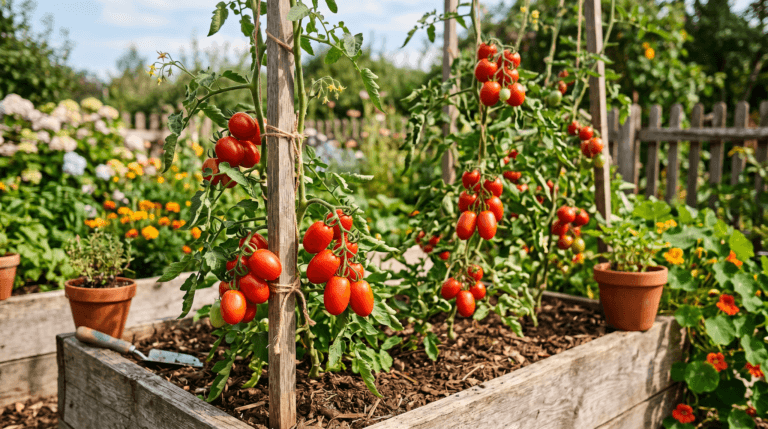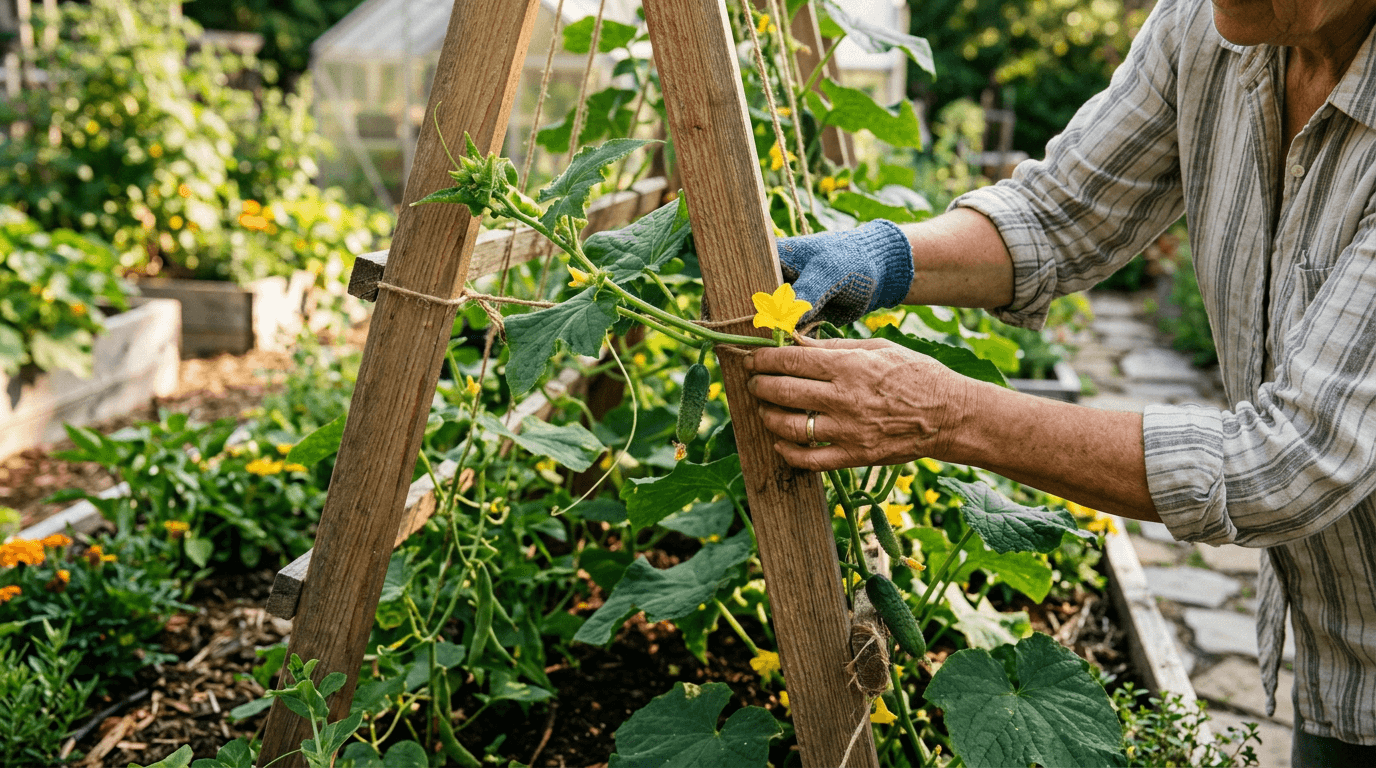
Growing up instead of out is one of the simplest ways to get more from a small garden — and it comes with a bonus most gardeners don’t expect: far less bending and kneeling to harvest. Vertical growing keeps fruit off the ground, improves airflow around your plants, and makes a small raised bed perform like a much bigger one.
Here are the most reliable vertical growing structures, what to grow on each, and how to set them up so they hold up through a full season of heavy fruit.
Why Grow Vertically?
- More harvest per square foot — a vining plant trained upward takes a fraction of the ground space it would sprawling on the soil
- Better airflow — raised, open foliage dries faster after rain or watering, which significantly reduces powdery mildew and other fungal diseases
- Cleaner fruit — cucumbers, squash, and melons grown off the ground stay clean and are far less prone to rot spots from soil contact
- Easier harvesting — picking at waist or chest height means far less bending and kneeling than harvesting from ground-level vines, a real advantage if bending over a garden bed isn’t comfortable
- Easier pest spotting — pests and early disease signs are much easier to see on upright foliage than in a tangled ground-level mass of vines
A-Frame Trellis
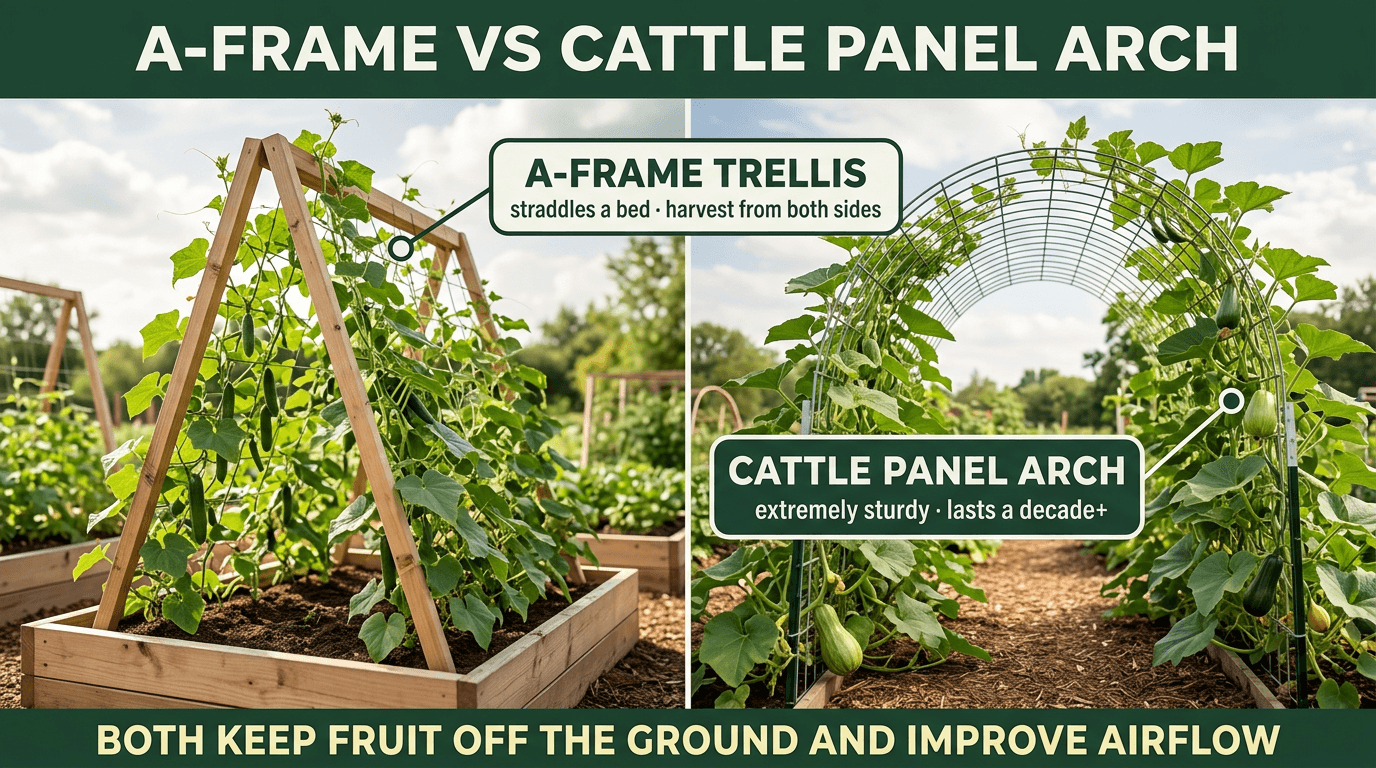
Two trellis panels hinged together at the top, forming a tent-like “A” shape that straddles a raised bed or garden row. This is one of the sturdiest and most versatile vertical structures for heavy vining crops.
- Best for: cucumbers, pole beans, peas, small melons, and squash varieties bred for vertical growing
- Provides support on both sides, so you can harvest easily from either direction
- The shaded space underneath the “A” is a great spot to interplant shade-tolerant crops like lettuce during hot summer months
- Build from cattle panel, welded wire fencing, or wood lattice, hinged at the peak with heavy-duty hinges or wire
Cattle Panel Arch
A livestock cattle panel (typically 16 feet long, available at farm supply stores) bent into an arch over a garden path or between two raised beds creates an extremely sturdy, long-lasting tunnel trellis.
- Best for: heavier vining crops like squash, melons, and pole beans that need serious structural support
- Anchor the ends securely into the ground with rebar stakes or set in concrete — a fully loaded arch carries significant weight once vines and fruit fill in
- Extremely durable; a well-anchored cattle panel arch can last well over a decade with minimal maintenance
- Doubles as a shaded, decorative walkway through the garden once vines fill in
Simple Stakes, Cages, and Netting
- Tomato cages: Best for determinate (bush) tomato varieties and peppers; provides all-around support without training needed
- Single stakes with twine: Best for indeterminate tomatoes, trained and tied as the main stem grows; requires regular tying but takes minimal space
- Vertical netting on a fence or wall: An inexpensive option for peas, pole beans, and cucumbers — string netting between two posts or attach directly to an existing fence
Pocket Planters
Fabric wall planters with multiple pockets mount directly onto a fence, wall, or railing — an excellent option when floor space is extremely limited, like on a small balcony or patio.
- Best for: herbs, lettuce, strawberries, and other shallow-rooted, compact plants
- Mount securely to a structure that can handle the weight of wet soil — a fully planted and watered pocket planter is heavier than it looks
- Water more frequently than in-ground plantings, since fabric pockets dry out faster than traditional containers
- Lower pockets tend to get less light if mounted against a wall — position sun-loving plants in the upper rows and shade-tolerant ones lower
Pallet Gardens
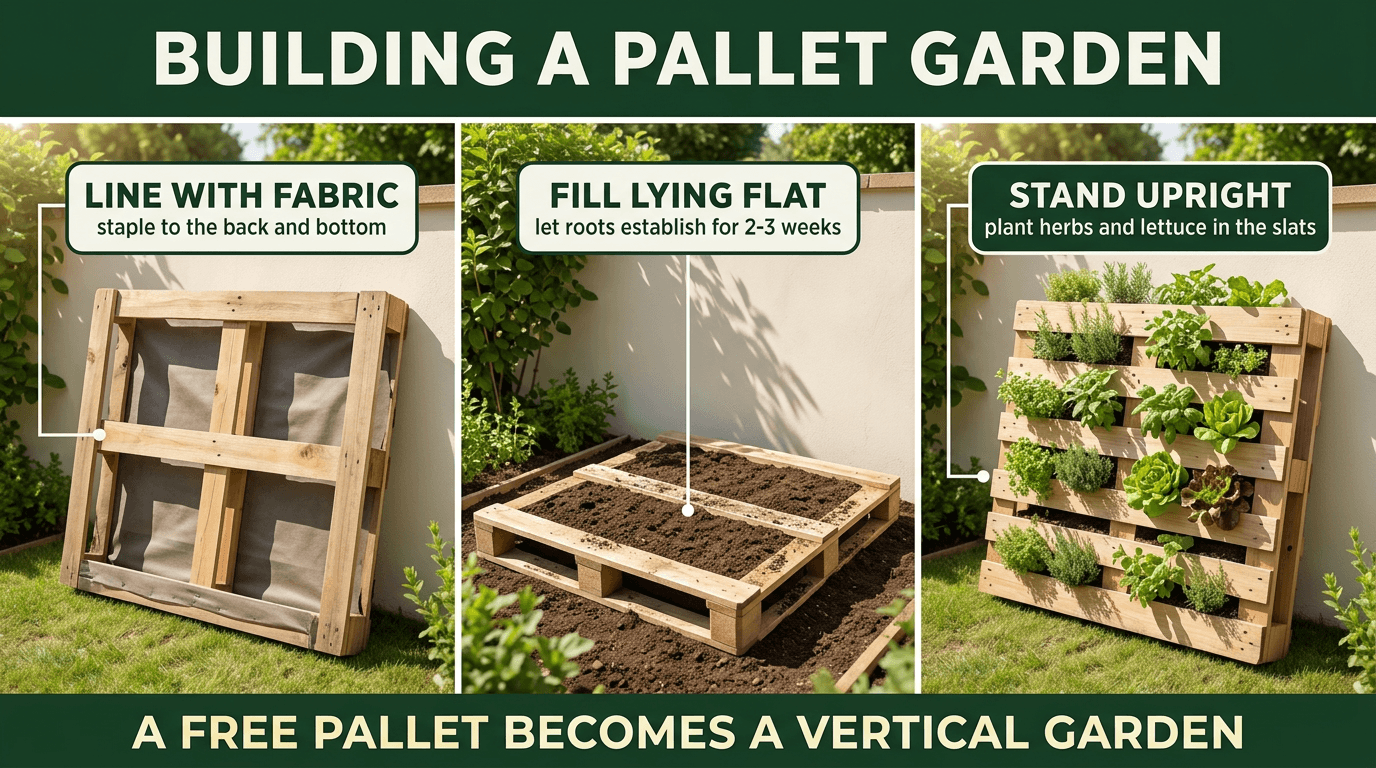
A repurposed wood pallet, stood on end, makes a surprisingly effective and budget-friendly vertical planter.
- Choose a pallet marked “HT” (heat-treated) rather than “MB” (methyl bromide-treated), since heat-treated pallets are safer for food-growing use
- Staple heavy-duty landscape fabric across the back and bottom of the pallet, forming a lined pocket behind the slats
- Fill with potting mix, packing it in firmly between the slats
- Lay the pallet flat for 2–3 weeks first to let plants establish roots, then carefully stand it upright against a wall or sturdy support
Best for: herbs, lettuce, strawberries, and other shallow-rooted plants — similar candidates to pocket planters.
Tower and Tiered Planters
Stacked or tiered planters concentrate a lot of growing space into a small footprint, making them especially popular for strawberries and trailing herbs.
- Strawberry towers: Stacked pots with planting pockets around the sides, allowing dozens of strawberry plants in the footprint of a single large pot
- Tiered plant stands: Simple shelving that holds multiple containers at different heights, maximizing growing space on a patio without any structural building required
- Water towers from the top and check that water reaches lower tiers evenly — the top of a tower can dry out significantly faster than the bottom
Building Sturdy — Don’t Skimp on Support
The most common vertical gardening mistake is underestimating how heavy a fully grown, fruit-loaded vine becomes by mid-summer.
- Use sturdy materials — cattle panel, welded wire, or solid cedar — rather than flimsy plastic trellises that can buckle under a full load of squash or melons
- Anchor all structures securely into the ground; wind can topple a top-heavy trellis just as easily as fruit weight can collapse a weak one
- For heavier fruit like melons or large squash grown vertically, support individual fruits with slings made from netting, mesh bags, or old pantyhose tied to the trellis
- Set up trellising at planting time, not after vines are already sprawling — retrofitting support onto established vines risks damaging them