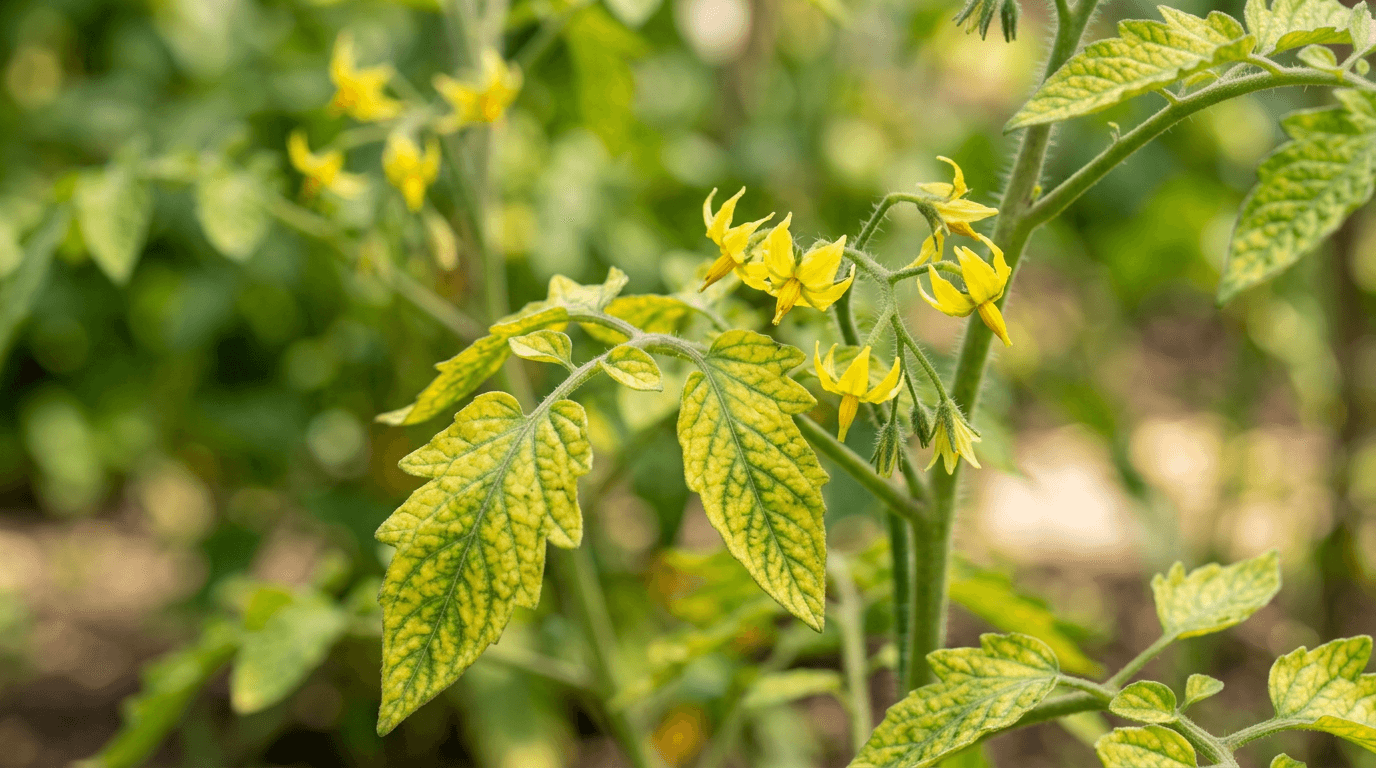
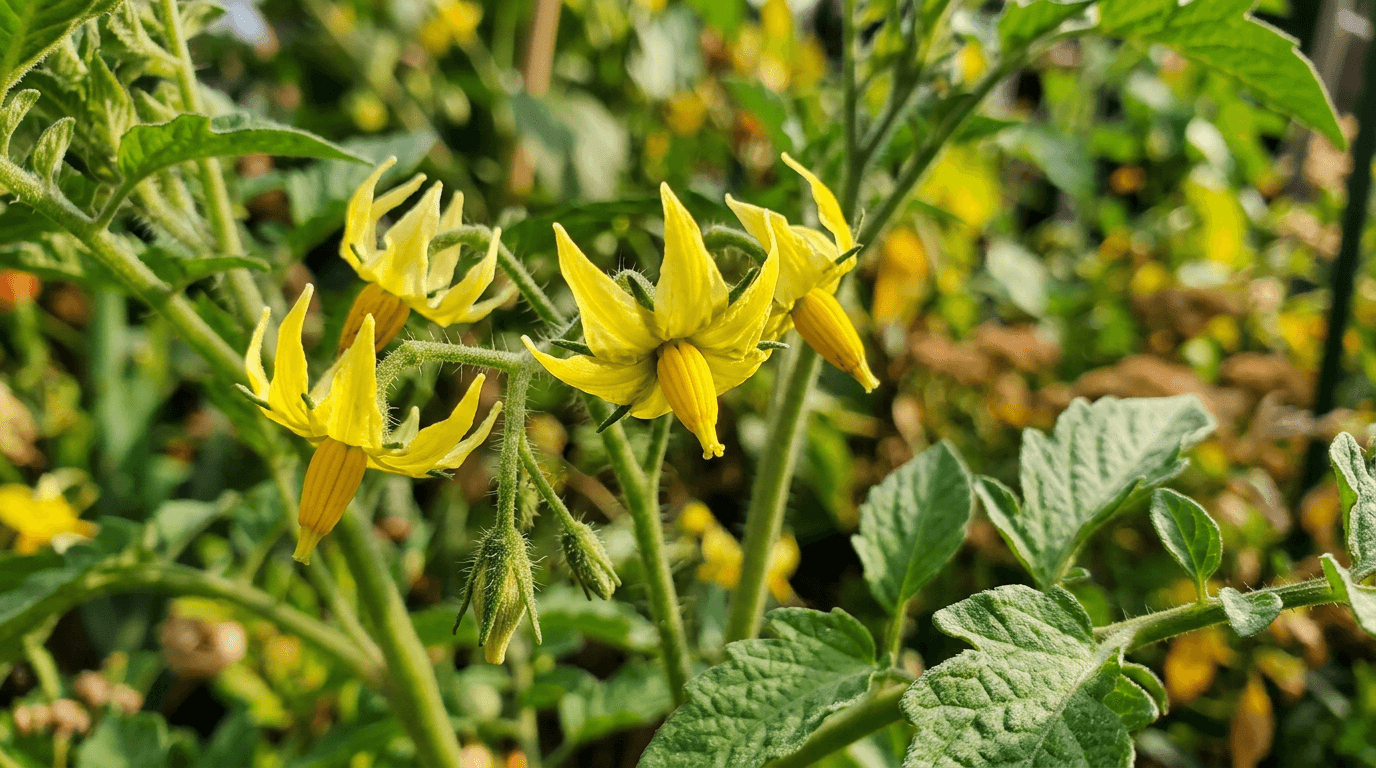
Your plants are covered in flowers — but no fruit is forming, or the flowers just drop off. It’s one of the most frustrating garden problems, especially when everything looks healthy. Here’s why it happens and how to get those flowers to turn into food.
Why Your Plant Flowers but Won’t Fruit
- Poor pollination — the most common reason. Without enough bees or movement, the flowers never get pollinated.
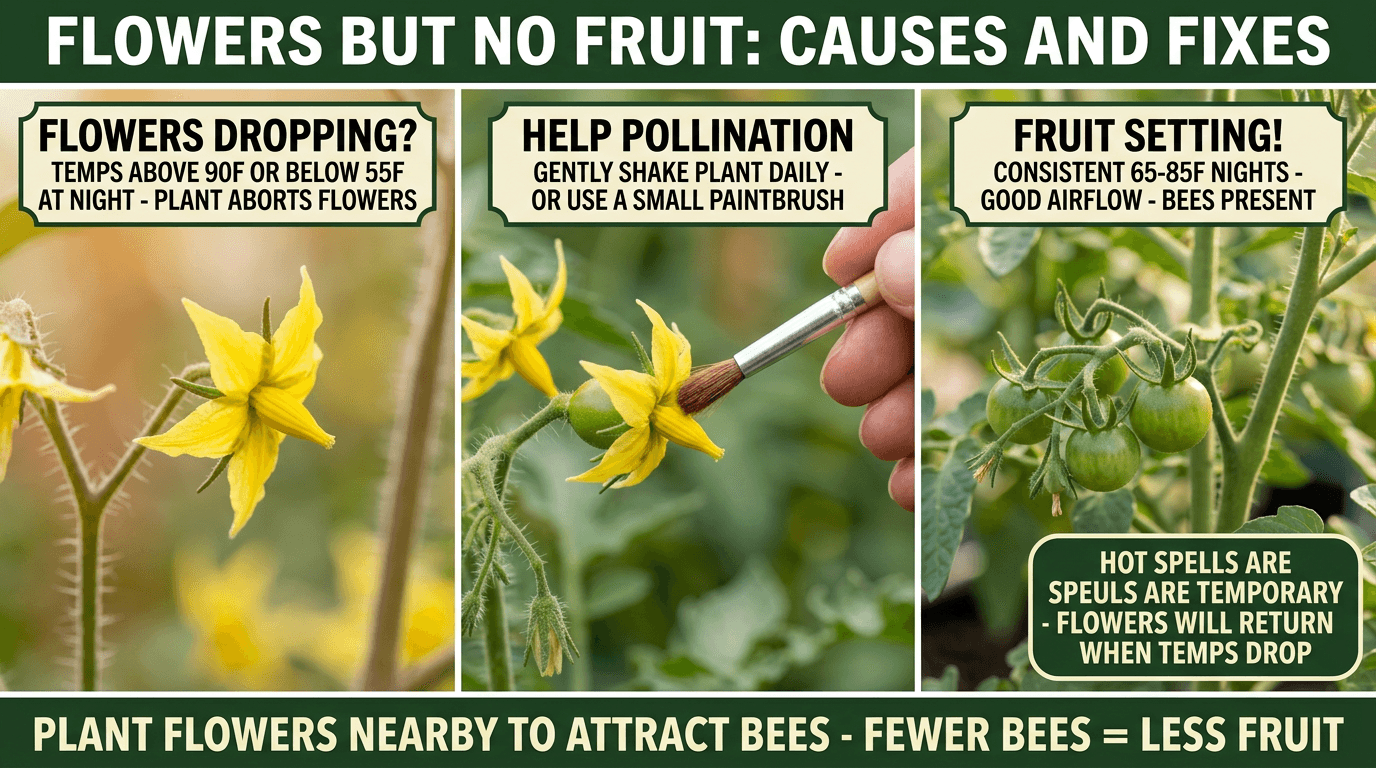
- Temperature extremes — most fruiting vegetables drop their flowers when it’s above about 90°F during the day or below 55°F at night. Pollen simply doesn’t work in those temperatures.
- Too much nitrogen — heavy nitrogen fertilizer gives you lush green leaves at the expense of flowers and fruit.
- Only male flowers (so far) — squash, cucumbers, and melons produce male flowers first. Female flowers (with a tiny fruit behind them) come a week or two later. This is normal — just wait.
How to Get Fruit to Set
- Hand-pollinate. For tomatoes and peppers, gently shake or tap the flowering stems midday to release pollen. For squash and cucumbers, use a small brush (or pick a male flower) to transfer pollen to the center of female flowers.
- Attract pollinators. Plant bee-friendly flowers nearby — marigolds, zinnias, borage, and herbs left to bloom all bring in pollinators.
- Cut back on nitrogen. Switch to a balanced or bloom-boosting fertilizer (lower first number).
- Give it shade in extreme heat. Light shade cloth during a heat wave helps flowers hold and pollen stay viable.
- Be patient. If it’s just early-season male squash flowers, fruit is coming soon.
How to Prevent It
- Plant flowers among your vegetables to keep pollinators visiting all season.
- Avoid high-nitrogen fertilizers once plants start flowering.
- Choose heat-tolerant varieties if you garden in a hot climate.
- Avoid spraying insecticides on open flowers, which can harm the bees you need.
Quick Recap
Flowers but no fruit usually means poor pollination or temperatures that are too hot or cold. Hand-pollinate, invite bees with companion flowers, ease off nitrogen, and — for squash — give it time for the female flowers to appear.