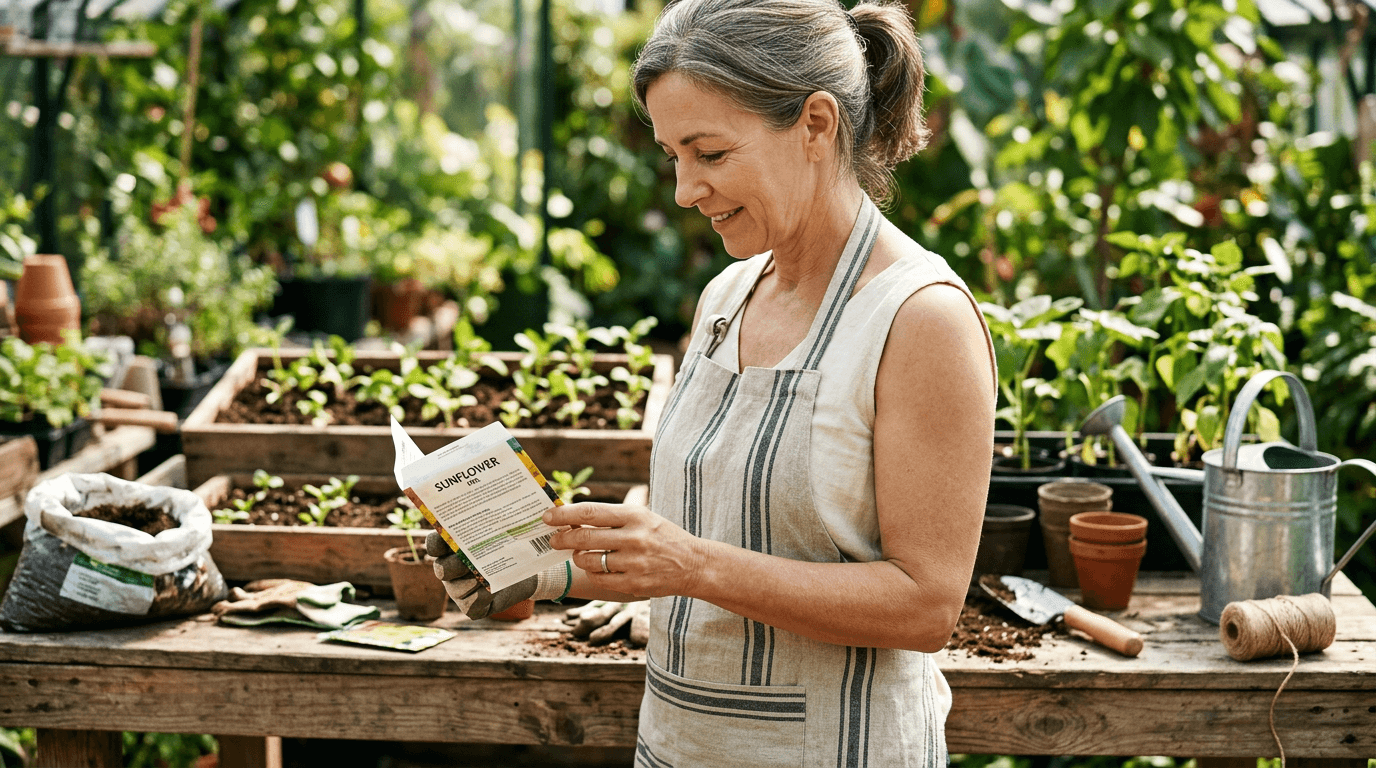
Seed packets are small, but they contain a remarkable amount of useful information — if you know how to read them. Most gardeners glance at the front photo and the basic planting instructions and miss the details that make a real difference in whether a crop succeeds or fails in their specific garden.
Here’s what every piece of information on a seed packet actually means and how to use it.
The Front of the Packet
Variety name: The specific cultivar you’re buying. “Tomato” tells you almost nothing; “Sun Gold Cherry Tomato” tells you exactly what you’re getting. Write this down in your garden journal — if the variety performs well, you’ll want to find it again next year.
Hybrid vs. open-pollinated/heirloom: Usually indicated somewhere on the front. Hybrid (often marked F1) varieties won’t reproduce true from saved seed — each generation is new. Open-pollinated and heirloom varieties produce seeds you can save and replant with the same results year after year.
Disease resistance codes: Tomato packets often show letters like V, F, N, T, A. These stand for resistance to Verticillium wilt (V), Fusarium wilt (F), nematodes (N), tobacco mosaic virus (T), and Alternaria (A). If you’ve had these problems before, look for varieties with the relevant codes.
Days to Maturity
This is one of the most important numbers on the packet, and one of the most misunderstood.
For transplanted crops (tomatoes, peppers, broccoli): Days to maturity is counted from the date of transplanting outdoors, not from seeding. A tomato that says “75 days” will produce its first ripe fruit approximately 75 days after you set the transplant in the garden.
For direct-sown crops (carrots, beans, corn): Days to maturity is counted from the date seeds are sown in the ground.
Why this matters: if your first fall frost is October 15 and a squash variety says “95 days to maturity,” you need to plant it by July 12 (counting back 95 days) to get a harvest before frost. Running this calculation for every crop you plan to grow is one of the most valuable things you can do during winter planning.
Planting Depth
Planting depth affects germination reliably. Seeds planted too shallowly dry out before they can sprout; seeds planted too deep run out of energy before they reach the surface.
The general rule of thumb — plant seeds at a depth of 2–3 times their diameter — works for most crops. But specific guidance on the packet is more reliable. Lettuce seeds need light to germinate and should barely be covered; parsnip seeds go 1/2 inch deep; squash and bean seeds go 1 inch deep.
Spacing Information
Seed packets usually give two spacing numbers: spacing within rows and spacing between rows (or sometimes just “plant spacing” for non-row plantings). This information exists because it’s been tested — plants crowded closer than recommended compete for light, nutrients, and airflow, leading to smaller yields and more disease.
In raised beds, you can often reduce spacing by 10–20% compared to traditional row spacing because you’re amending the entire bed rather than just the planting row. But don’t go too far — the recommended spacing reflects what the mature plant actually needs.
When to Plant
This section is where reading carefully pays off. Look for phrases like:
- “Direct sow after last frost” — Plant outdoors after your last spring frost date, when soil has warmed
- “Start indoors 6–8 weeks before last frost” — Count back from your last frost date to find your indoor start date
- “Sow as soon as soil can be worked” — This is a cool-season crop; plant as early as possible in spring
- “Direct sow in fall, 6–8 weeks before first frost” — Count back from your first fall frost date
- “Sow in succession every 2–3 weeks” — Multiple small sowings give continuous harvest; don’t plant all at once
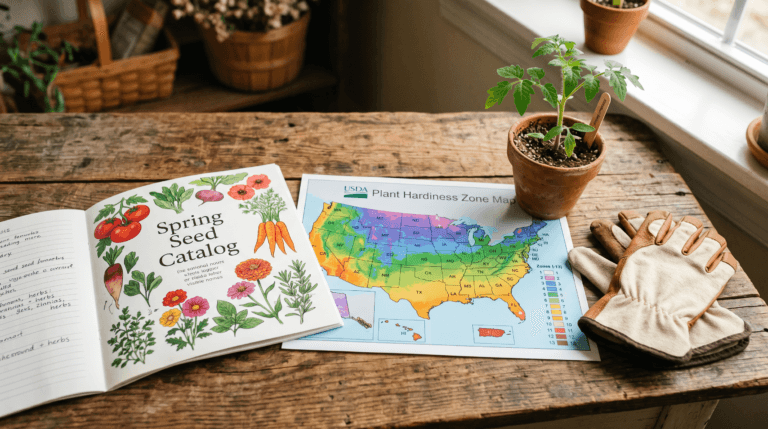
If you’re not sure of your frost dates, find your zone and frost dates here.
Days to Germination
This tells you how long to expect before seeds sprout under ideal conditions. “7–14 days” for tomatoes means: if you’ve planted correctly and kept the soil warm and moist, seedlings should appear within that window. If nothing has happened after 21 days, something went wrong — usually temperature or moisture.
Germination days assume optimal temperature conditions. Parsley says “14–28 days” partly because it’s a slow germinator, and partly because germination time stretches significantly in cool soil. Corn that normally germinates in 6–10 days at 65°F can take 3 weeks at 55°F.
Seed Count and Packet Weight
Knowing the seed count helps you plan how many packets to buy. A packet of 25 tomato seeds is more than enough for a home garden; a 1/4 oz packet of carrot seeds might contain 2,000 seeds. If a packet doesn’t list seed count, check the weight and compare it to the seeds-per-ounce data that seed company websites often provide.
Lot Number and Packed-For Year
Most packets show a “packed for” year and a lot number. Seeds should be used within the packed-for year for maximum germination rates — older seeds lose viability, especially for short-lived seeds like parsnips, onions, and leeks. Long-lived seeds like tomatoes and squash can remain viable for 4–6 years if stored in cool, dry conditions.