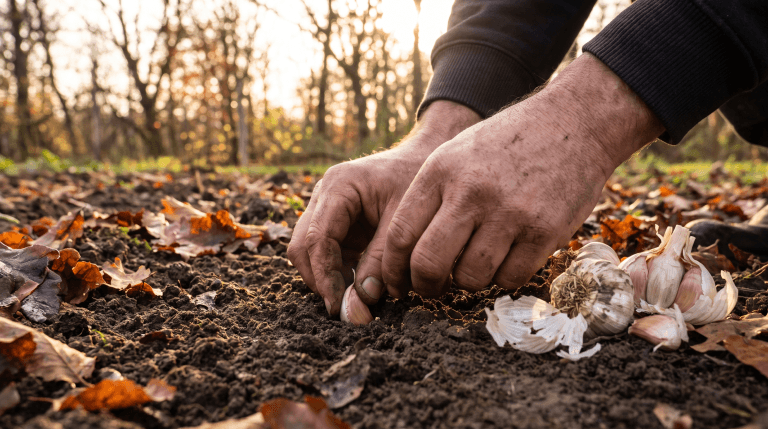
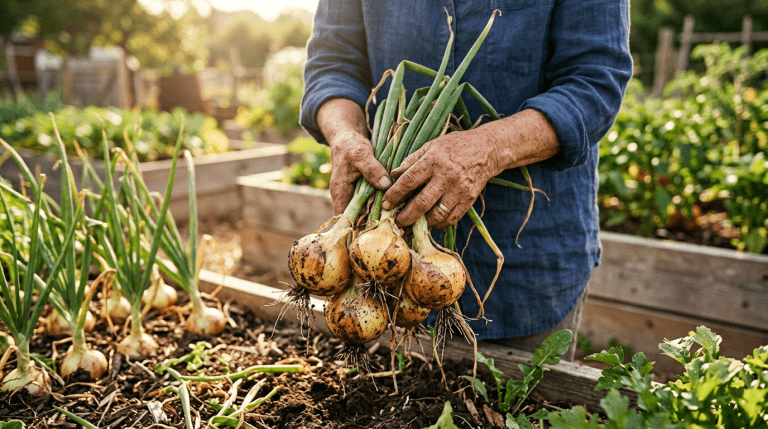
Garlic is one of gardening's best tricks. You plant it in the fall, mostly forget about it all winter, and by the following June or July — you have beautiful, flavorful garlic bulbs.
It's also one of the lowest-maintenance crops you can grow. No watering through the winter, very few pests, and it basically takes care of itself.
When to Plant Garlic
Plant garlic 4–6 weeks before the ground freezes hard in fall. This gives cloves time to develop roots before winter, but not enough time to send up too much growth before frost.
- Zones 3–5: Plant late September to mid-October
- Zones 6–7: Plant October to early November
- Zones 8–9: Plant November to December
- Zone 10: Garlic is tricky in the deep south — look for short-day varieties
Quick tip: The best time to buy garlic for planting is at a local farmers market or garden center in fall. Mail-order garlic from seed suppliers is also excellent.
Choosing Your Garlic Type
There are two main types:
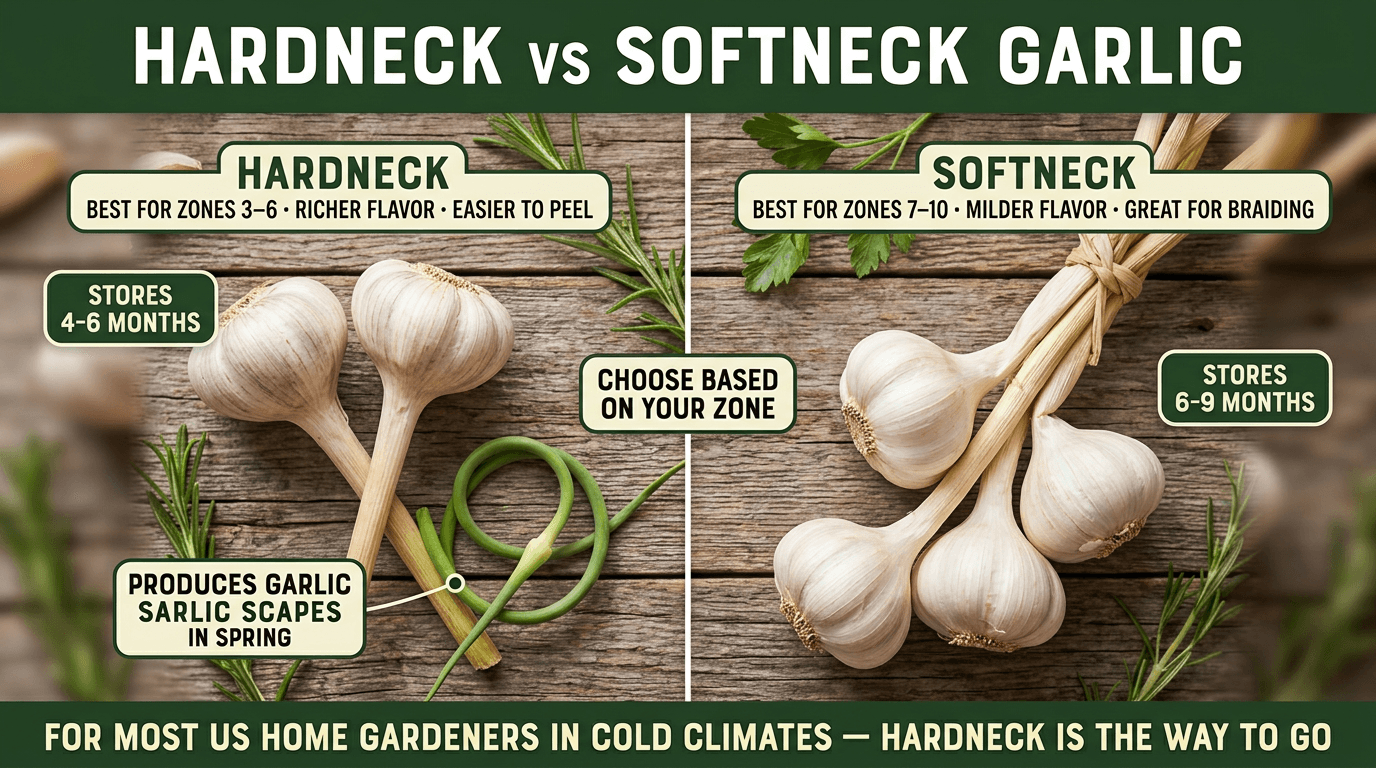
Hardneck garlic — Best for Zones 3–6. Better flavor, easier to peel, produces garlic scapes (a bonus!) in spring. Doesn't store as long.
Softneck garlic — Best for Zones 7–10. Longer storage life. What you usually see braided. Milder flavor.
For most US home gardeners in colder climates, hardneck is the way to go.
Where to Plant Garlic
- Full sun (6+ hours)
- Well-drained soil — garlic rots in wet spots
- Not where you've grown onions or garlic recently (rotate every 3–4 years)
Raised beds are excellent for garlic. The drainage is perfect.
How to Plant Garlic
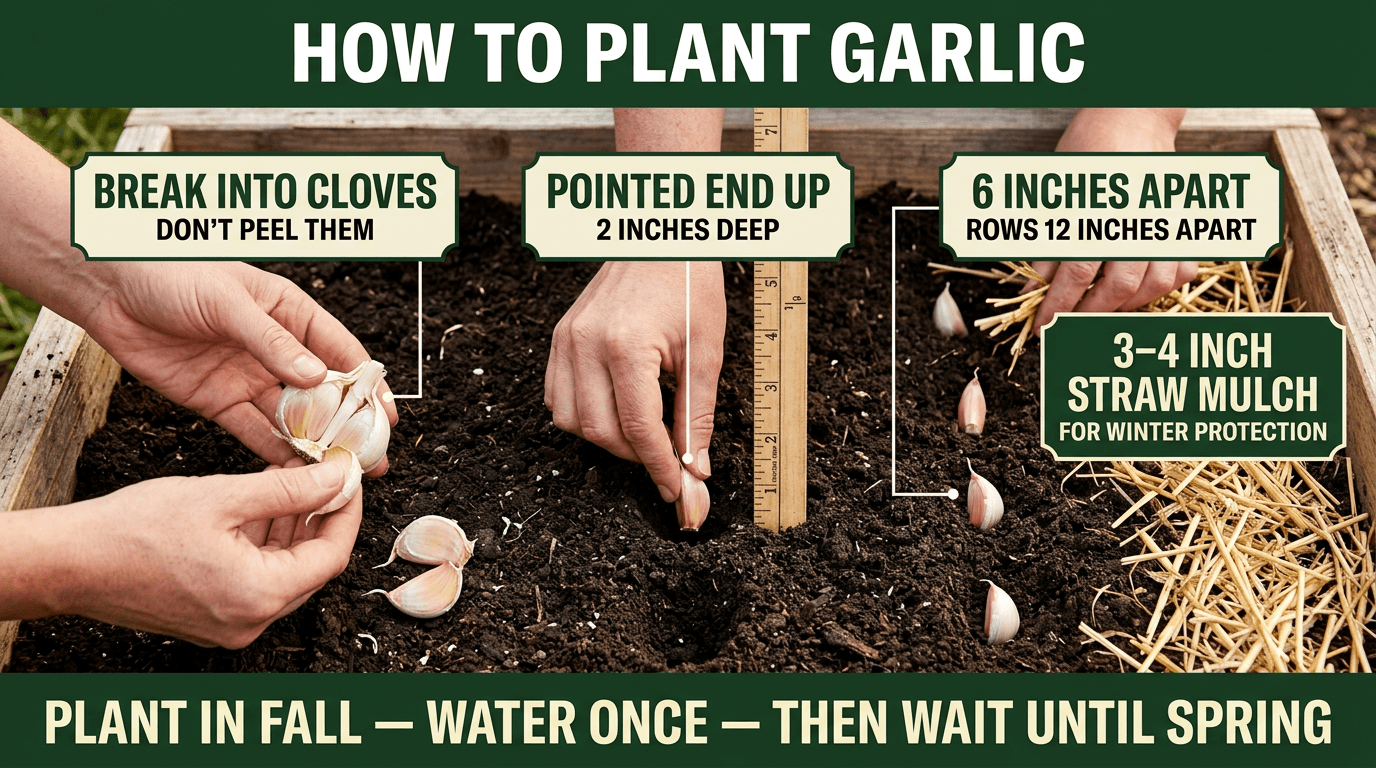
- Break the garlic head into individual cloves — don't peel them
- Plant each clove pointed end up, 2 inches deep
- Space cloves 6 inches apart in rows 12 inches apart
- Cover with soil, then add 3–4 inches of straw mulch for winter protection
- Water once after planting
That's it. Now wait until spring.
Spring and Summer Care
When green shoots emerge in early spring, here's what to do:
Fertilize: Give plants a nitrogen boost in early spring (a handful of balanced fertilizer or a shot of liquid fish emulsion). Garlic does most of its bulb-building in spring.
Water: 1 inch per week during spring and early summer. Stop watering 2–3 weeks before harvest.
Garlic scapes (hardneck only): In late spring, hardneck garlic sends up a curly green stalk called a scape. Cut it off. This redirects the plant's energy into the bulb. Bonus: garlic scapes are delicious sautéed or tossed into stir fry.
When to Harvest Garlic
This is the trickiest part. Watch the leaves.
Each garlic plant has 8–10 leaves. When about half the leaves have turned brown, the garlic is ready. This is usually mid-June to mid-July depending on your zone.
Don't wait too long. Overripe garlic has cloves that separate and don't store well.
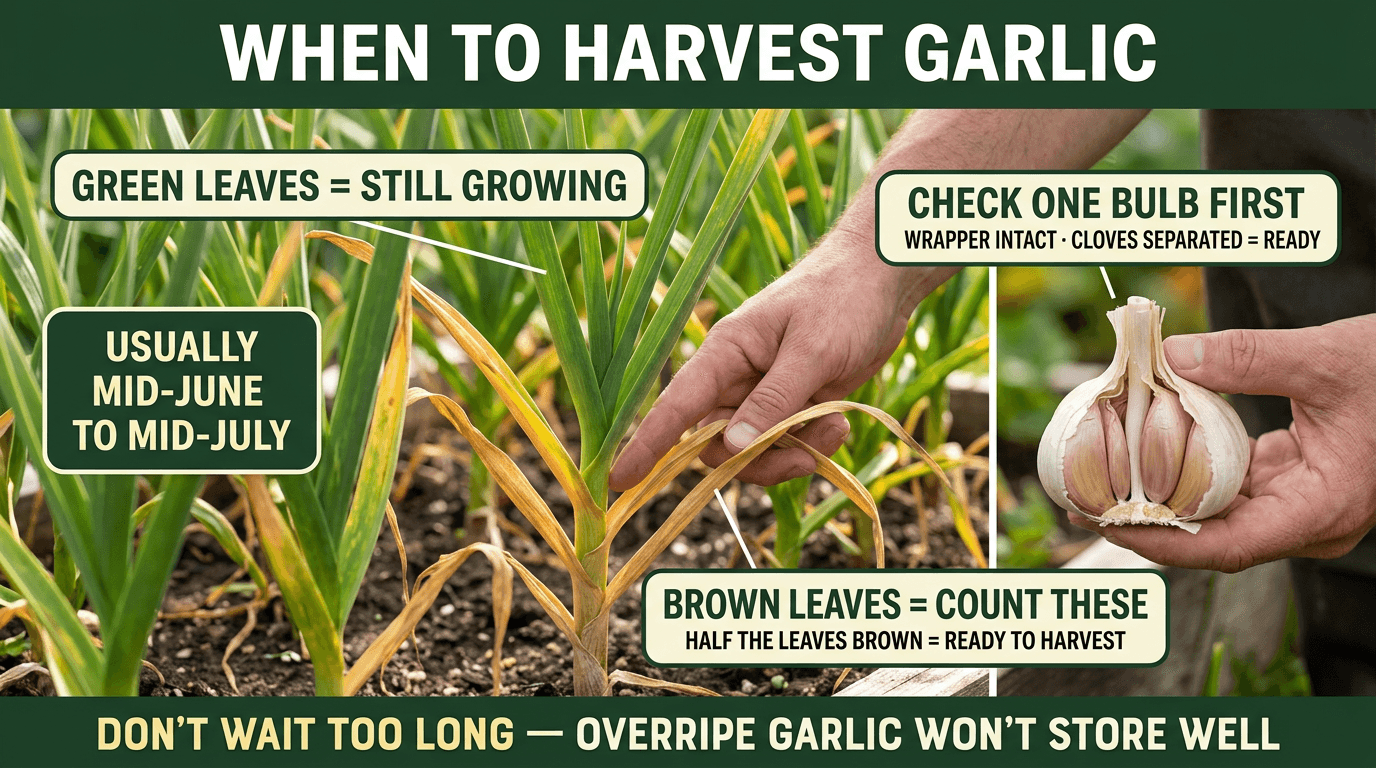
To check: dig up one plant and look at the bulb. The papery wrapper around the bulb should be intact, and the cloves clearly separated.
Harvesting and Curing
- Loosen the soil with a garden fork, then pull bulbs by hand
- Don't wash them — brush off loose dirt gently
- Lay them out or hang them in bundles in a dry, shady, well-ventilated spot
- Cure for 3–4 weeks
- Once cured, trim roots and tops (leave an inch of stem on hardneck)
Properly cured garlic stores for 6–9 months for softneck, 4–6 months for hardneck. Keep in a cool, dark, dry spot — not the refrigerator.
Save Some for Next Year
Set aside your biggest, best-looking bulbs to plant again in fall. Home-grown garlic gradually adapts to your local soil and climate. After a few years, you'll have garlic that performs better than anything from a store.
Garlic might be the single best "set it and forget it" vegetable for any US gardener. Plant in fall, harvest in summer, and enjoy all year.