The weeks between late summer and the first hard frost are some of the busiest — and most rewarding — in the gardening year. Done right, fall sets you up for a productive spring and fills your pantry before winter arrives. Done carelessly, you miss a narrow window that takes months to come around again.
This checklist walks you through every important fall task, roughly in the order they need to happen. Work through it by zone — timing shifts by 4–6 weeks from north to south.
Late Summer (8–10 Weeks Before First Frost)
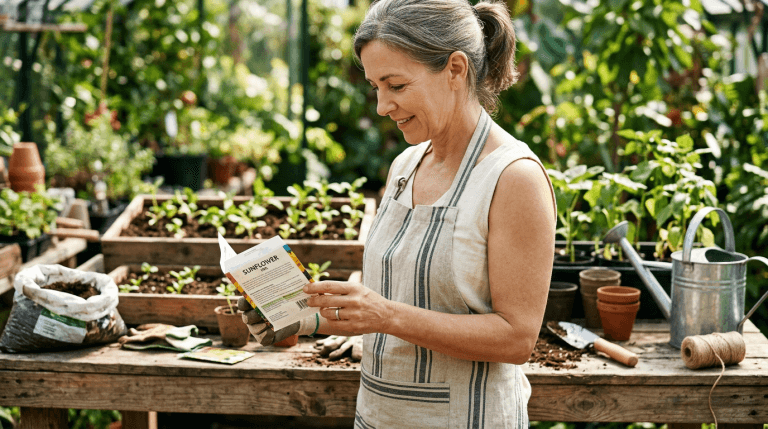
Start fall crops from seed. This is your window for direct-sowing cool-season vegetables that need time to mature before hard frost: kale, spinach, arugula, lettuce, Swiss chard, radishes, turnips, and beets. Count back from your first frost date using the days-to-maturity on the seed packet.
Start broccoli, cabbage, and Brussels sprouts transplants indoors. These need 4–6 weeks to reach transplant size. Set transplants out in early fall when temperatures begin to cool.
Plant fall garlic orders. Order your garlic now if you haven’t already — good-quality seed garlic from reputable suppliers sells out fast. Garlic goes in the ground 4–6 weeks before your first hard frost (typically October in most zones). See our How to Grow Garlic guide for full planting instructions.
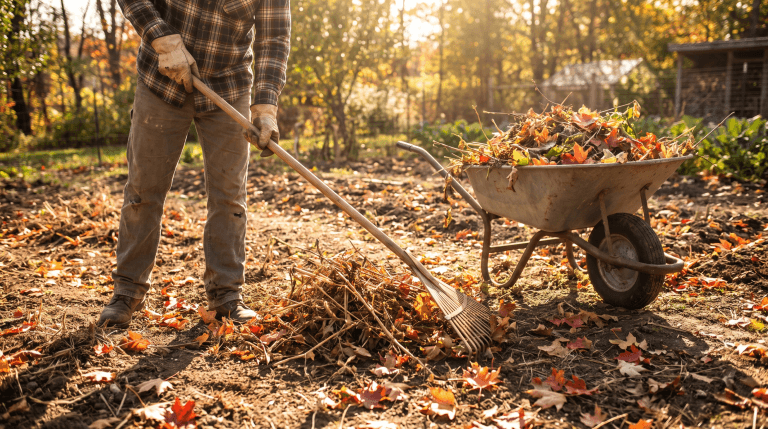
Clear out spent summer crops. Pull tomatoes, peppers, and other warm-season plants as soon as they stop producing. Leaving them standing invites overwintering pests and disease. Healthy plant material goes to the compost; any diseased material goes in the trash.
Harvest summer squash and cucumbers aggressively. Leaving mature fruits on the plant signals it to stop producing. Keep harvesting every 2–3 days to extend production until frost.
Early Fall (4–6 Weeks Before First Frost)
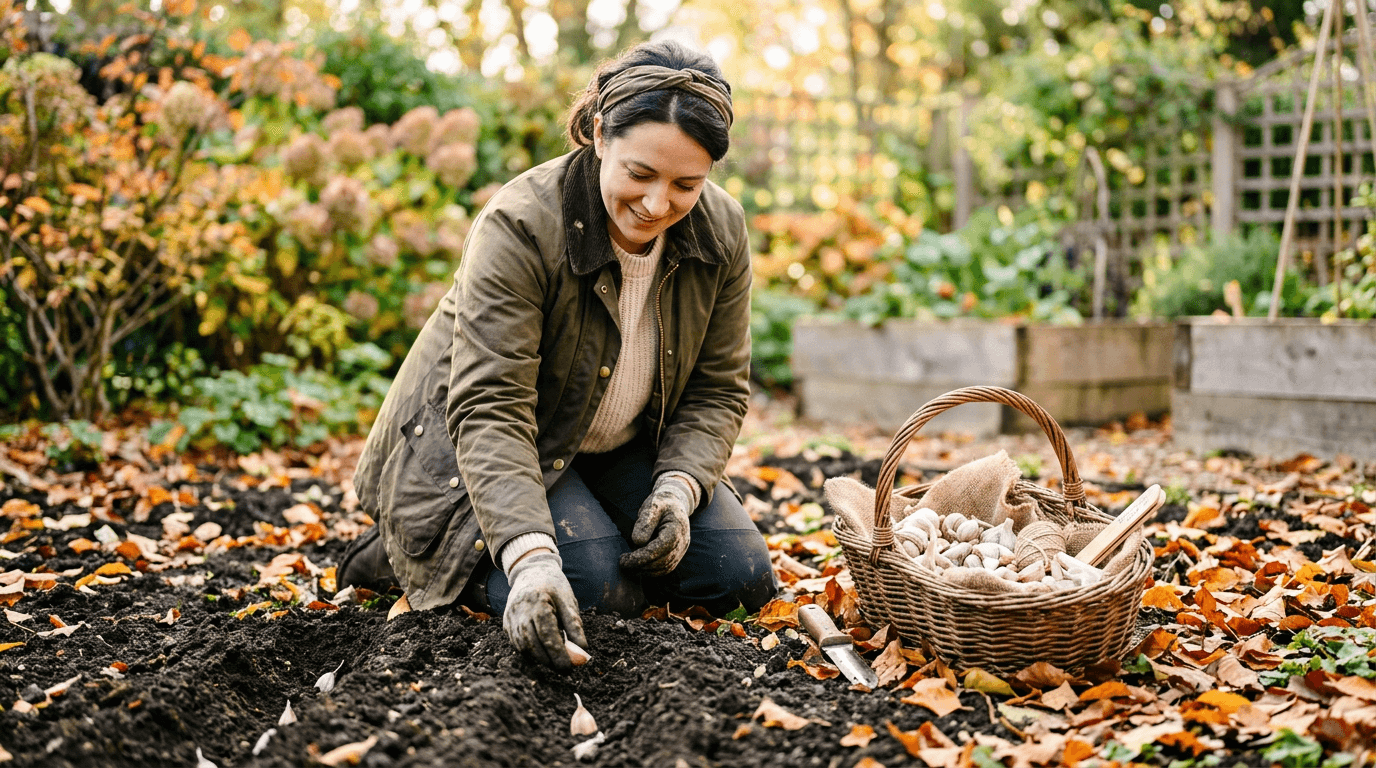
Plant garlic. This is the number one fall task for most gardeners. Break bulbs into cloves and plant them 2 inches deep, 6 inches apart, pointed end up. Cover with 2–3 inches of straw mulch after the ground cools. They’ll establish roots this fall and be the first thing to emerge in spring.
Transplant fall brassicas. Broccoli, cabbage, kale, and Brussels sprout transplants go in now. They need 4–6 weeks of good growing weather before frost to produce well. Water in with a diluted balanced fertilizer for a quick start.
Plant spring-flowering bulbs. Daffodils, tulips, crocus, and other spring bulbs go in the ground in fall for a spring display. Plant them before the ground freezes solid — typically October through November depending on your zone.
Harvest winter squash and pumpkins. Winter squash is ready when the rind is hard enough that a fingernail can’t easily scratch it. Harvest before the first hard frost, leaving 2–3 inches of stem attached. Cure in a warm spot (75–85°F) for 10–14 days before storing in a cool, dry place.
Dig sweet potatoes. Harvest before the first frost — sweet potato vines are killed by frost and the damaged vines can rot into the tubers. Cure freshly dug sweet potatoes at 85–90°F with high humidity for 10–14 days to develop their sweetness and harden their skins.
Mid-Fall (1–3 Weeks Before First Frost)
Harvest remaining warm-season crops. Green tomatoes, peppers, and herbs come in before frost. Green tomatoes ripen well indoors at room temperature over 1–3 weeks. Bundle herbs and hang to dry, or freeze them in ice cube trays with olive oil.
Pot up herbs for the windowsill. Basil won’t survive indoors long-term, but parsley, chives, and mint can carry on for months on a sunny sill. Pot up a division of each before frost hits.
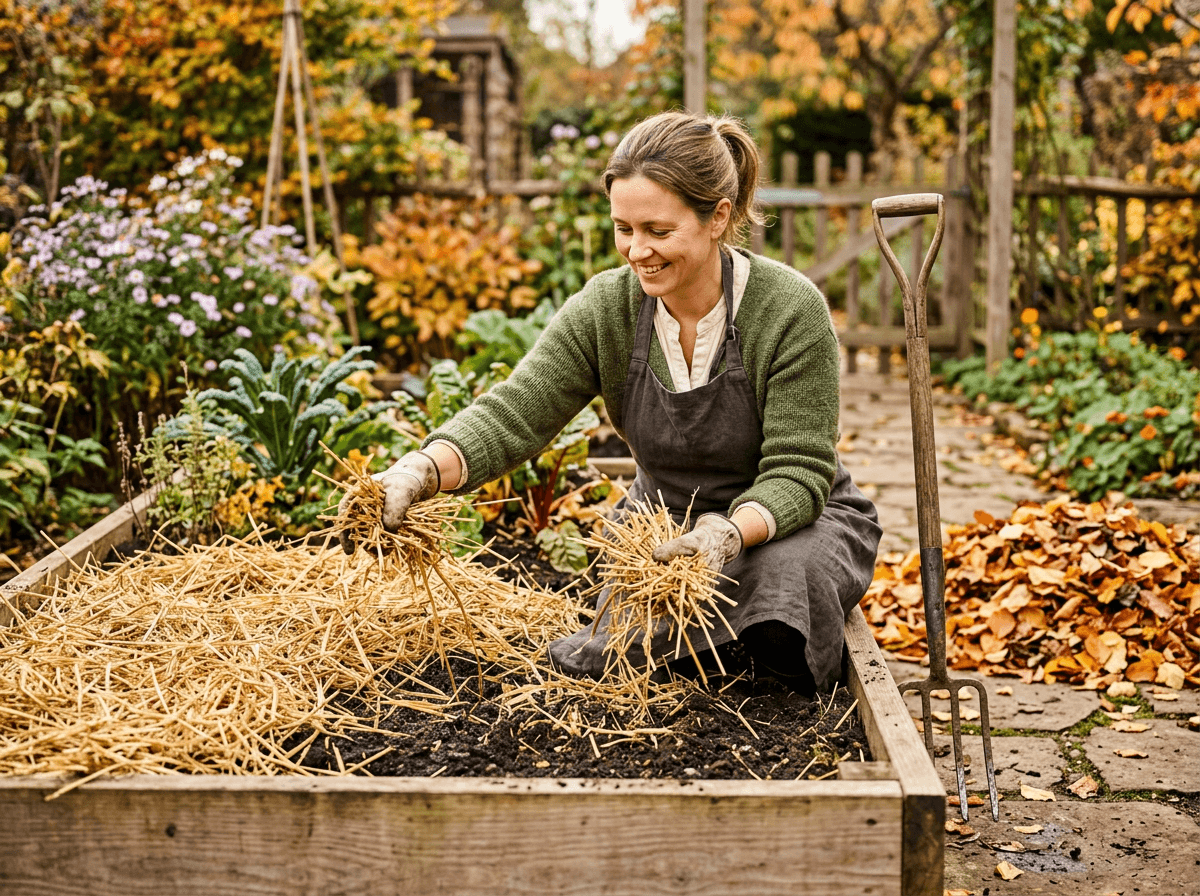
Compost and cover empty beds. Turn your compost pile and add any remaining garden debris. Spread 2–3 inches of finished compost over empty beds and cover with a layer of straw or shredded leaves as winter mulch. This protects soil structure, feeds earthworms through the cold months, and means beds are ready to plant earlier in spring.
Protect tender perennials. Rosemary, figs, and other marginally hardy plants in your zone need protection. Wrap in burlap, move containers to a sheltered spot, or mulch heavily around the base.
After First Frost
Keep harvesting frost-hardy crops. Kale, Brussels sprouts, spinach, arugula, and root vegetables like carrots, parsnips, and beets often improve after frost — cold converts starches to sugars. Keep harvesting as long as the ground isn’t frozen solid.
Clean and store tools. Scrub soil from tools, dry them, and wipe metal parts with a light coat of oil to prevent rust. Sharpen hoe and pruner blades. A well-maintained tool lasts decades.
Drain hoses and shut off outdoor faucets. Any water left in hoses and pipes will freeze and cause damage. Drain, coil, and store hoses in a shed or garage. Shut off and drain outdoor spigots.
Take notes while it’s fresh. Write down what worked, what didn’t, what you’d plant more of, and what you’d skip. A garden journal started in fall is far more useful in spring than relying on memory. Even a few sentences per bed makes a real difference at planting time.
Late Fall Planning
Order seeds for next season. The best varieties sell out by January. Browse catalogs now and place orders early. Start with the crops you know you’ll grow again, then try one or two new things each year.
Plan crop rotations. Review where you grew each crop family this season — tomatoes, brassicas, root vegetables, cucurbits. Note which beds need a rest from each family. A simple sketch of your beds goes a long way toward better disease management next year.