
September Is a Transition Month — and That Is a Good Thing
Most gardeners think of September as the end of something. The tomatoes are winding down, the cucumbers are done, and the first frost is circling the calendar. But if you shift how you think about this month, it becomes one of the most productive times to be outside. September is when you set yourself up for a fall harvest and start preparing the beds that will go into next year.
What you plant right now depends entirely on your USDA zone. A gardener in Minnesota has completely different options than one in Louisiana — and that difference is not just about temperature, it’s about how many growing days are left before the ground shuts down. Here’s a breakdown by zone, starting cold and working south.
Zones 3 and 4: Focus on What’s Still Growing
If you’re gardening in Minnesota, Wisconsin, northern Maine, or similar climates, September is mostly about harvesting and protecting what’s already in the ground. Your frost date is coming fast — often in late September or early October — and there’s little time to establish anything new from seed outdoors.
That said, you’re not out of options. Spinach and arugula can handle a light frost and grow fast — if you plant them in the first week of September, you may get one cut before the cold shuts things down. Direct sow as early as possible and use a row cover to squeeze out a few more weeks. Quick-maturing radishes (25 to 30 days) are worth trying too.
More importantly, pull garlic planting materials together now — you’ll want to get hardneck varieties like Rocambole or Northern White into the ground in late September or early October before the soil freezes. This is your most important September gardening task in the coldest zones.
Zones 5 and 6: Prime Time for Fall Gardening
Zones 5 and 6 cover a huge swath of the country — Ohio, Illinois, Kansas, Oregon’s Willamette Valley, Virginia — and September here is genuinely exciting. You have 6 to 10 weeks before a killing frost, which is plenty of time for cool-season crops to reach harvest size.
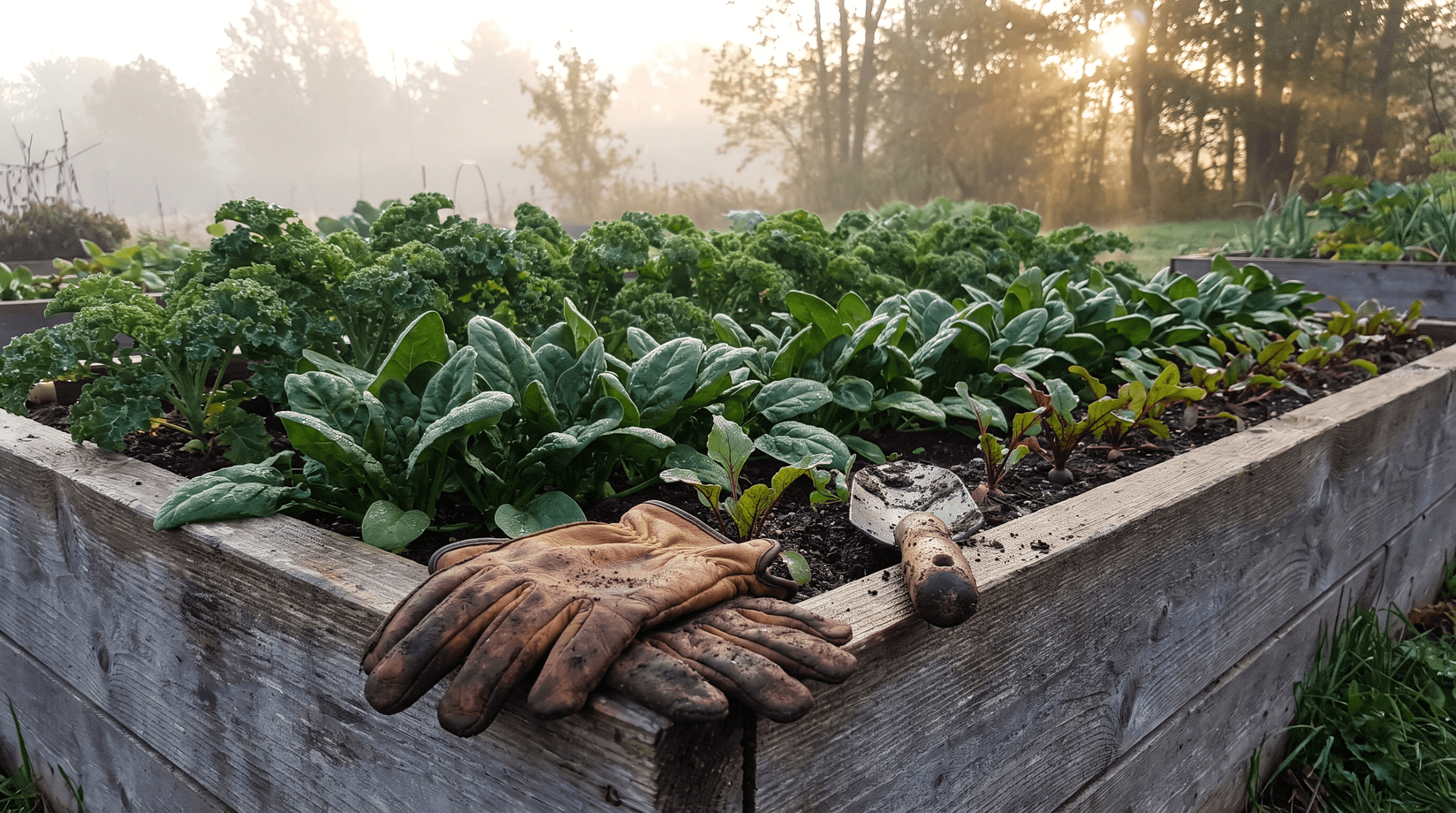
Plant garlic in mid to late October, but start the fall greens now. Kale, spinach, Swiss chard, arugula, and Asian greens like bok choy and tatsoi all go in the ground in September and will produce heavily through October and into November with some protection. Kale actually improves after frost — the cold converts starches to sugars and the flavor becomes sweeter and more complex.
Cover crops are worth mentioning here. If you have a bed that’s done for the season, sow winter rye, crimson clover, or a mix now. They’ll germinate quickly, hold the soil over winter, suppress weeds, and add organic matter when you turn them in next spring. This is one of the highest-return things you can do in September.
Brassicas planted from transplants — broccoli, cauliflower, cabbage — still have time in Zone 6 if you can find starts. Count backwards from your first frost date: broccoli needs about 55 to 65 days, so if your frost is November 1, you need to transplant by mid-September.
Zones 7 and 8: Fall Is a Second Spring
In the Mid-South, Pacific coast, and Mid-Atlantic — North Carolina, Tennessee, northern California, the PNW lowlands — fall gardening often outperforms summer. The heat that makes July and August miserable for lettuce and spinach is finally breaking, and you can grow almost everything cool-season for the next several months.
Plant all the greens: lettuce, spinach, arugula, kale, mustard, collards, chard. Direct sow or transplant brassicas for a fall harvest — broccoli, Brussels sprouts, cauliflower. In Zone 8, you can even start a new round of snap peas in September for a fall harvest; they prefer cool weather and will produce until hard frost hits.
This is also the time to plant spring bulbs — tulips, daffodils, crocuses, and hyacinths. They need to go into the ground before soil temperatures drop below 40°F, which in Zone 7 and 8 usually means October through November. September is the time to order or buy them so you have them on hand.
Garlic goes in during October and November in these zones. Softneck varieties handle the milder winters well — Artichoke types are reliable, store a long time, and are easy to find.
Zones 9 and 10: Your Summer Was the Down Season
If you’re gardening in Southern California, coastal Florida, or similar climates, you understand something most gardeners don’t: summer is your difficult season, not winter. The heat is brutal for most vegetables, and fall planting is essentially a fresh start after a slow, hot few months.
September in Zone 9 and 10 means planting tomatoes, peppers, and beans — yes, the warm-season crops — for a fall harvest before temperatures eventually dip. In Zone 10, you can plant tomatoes now and harvest into December or January. Squash, cucumbers, and eggplant also do well planted in September here.
Greens and cool-season crops come later in these zones — October through November is when spinach, lettuce, and carrots go in. September is still too warm for most of them to establish well.
Garlic goes in December in the warmest zones. Choose softneck varieties or Creole types specifically bred for mild winters, like Ajo Rojo or Burgundy.
Watch Out For: Waiting Too Long and Skipping Cover Crops
The most common September mistake is waiting. Gardeners watch the summer crops struggle and think there’s still time — and then mid-October arrives and the window is closed. The best fall harvests belong to people who plant in the first two weeks of September, not the last.
In Zones 5 and 6 especially, waiting until October to sow greens from seed usually means they won’t reach full size before cold stops them. That’s not a disaster — baby greens taste great — but it’s not the harvest you were hoping for.
And if you’re in a zone with beds going dormant for winter, please don’t leave them bare. Bare soil loses structure, nutrients, and beneficial organisms over winter. A bag of winter rye seed costs a few dollars. Sow it. You’ll thank yourself in April.


