You walk out to the garden and your once-perfect leaves are full of holes. Something’s been eating them — but what? Identifying the culprit is the key to stopping the damage. Here’s how to figure out who’s snacking and how to make them stop.
Who’s Eating Your Plants?
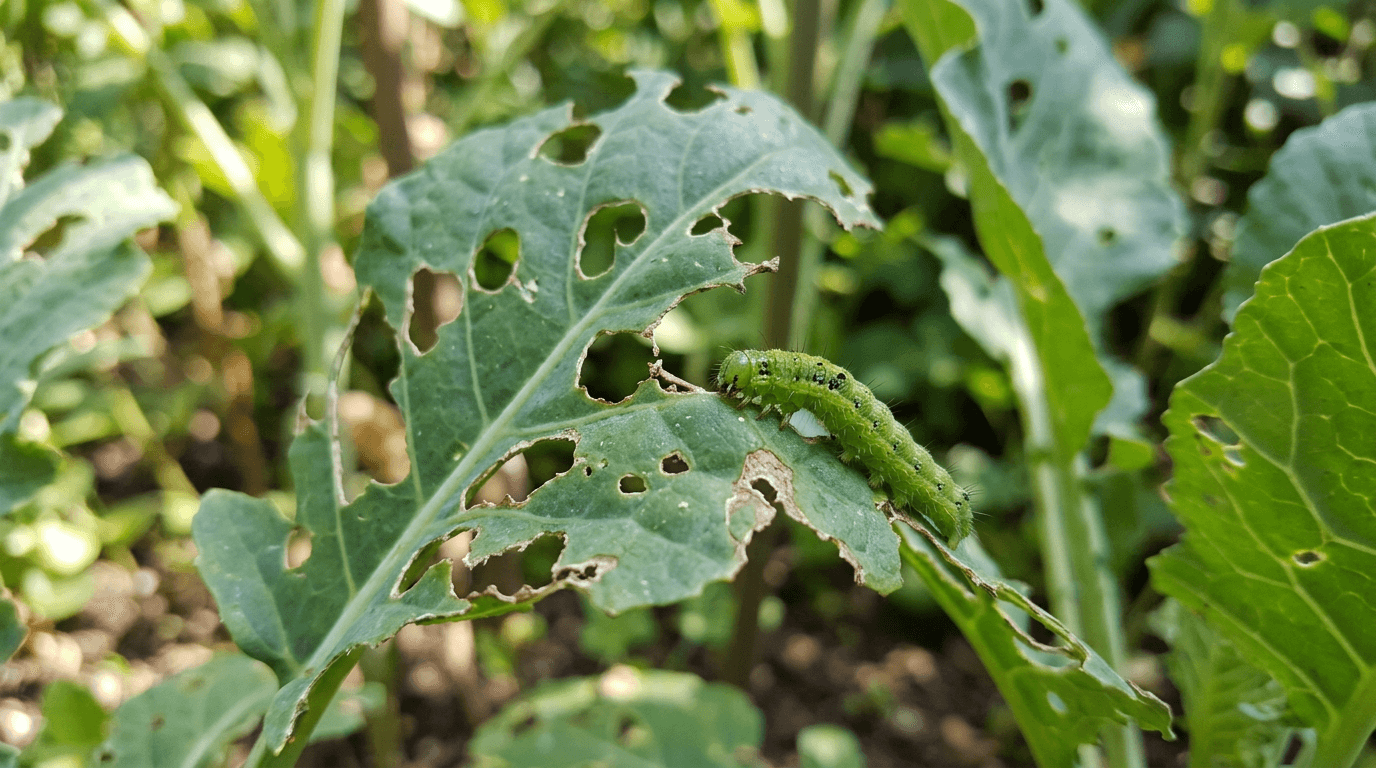
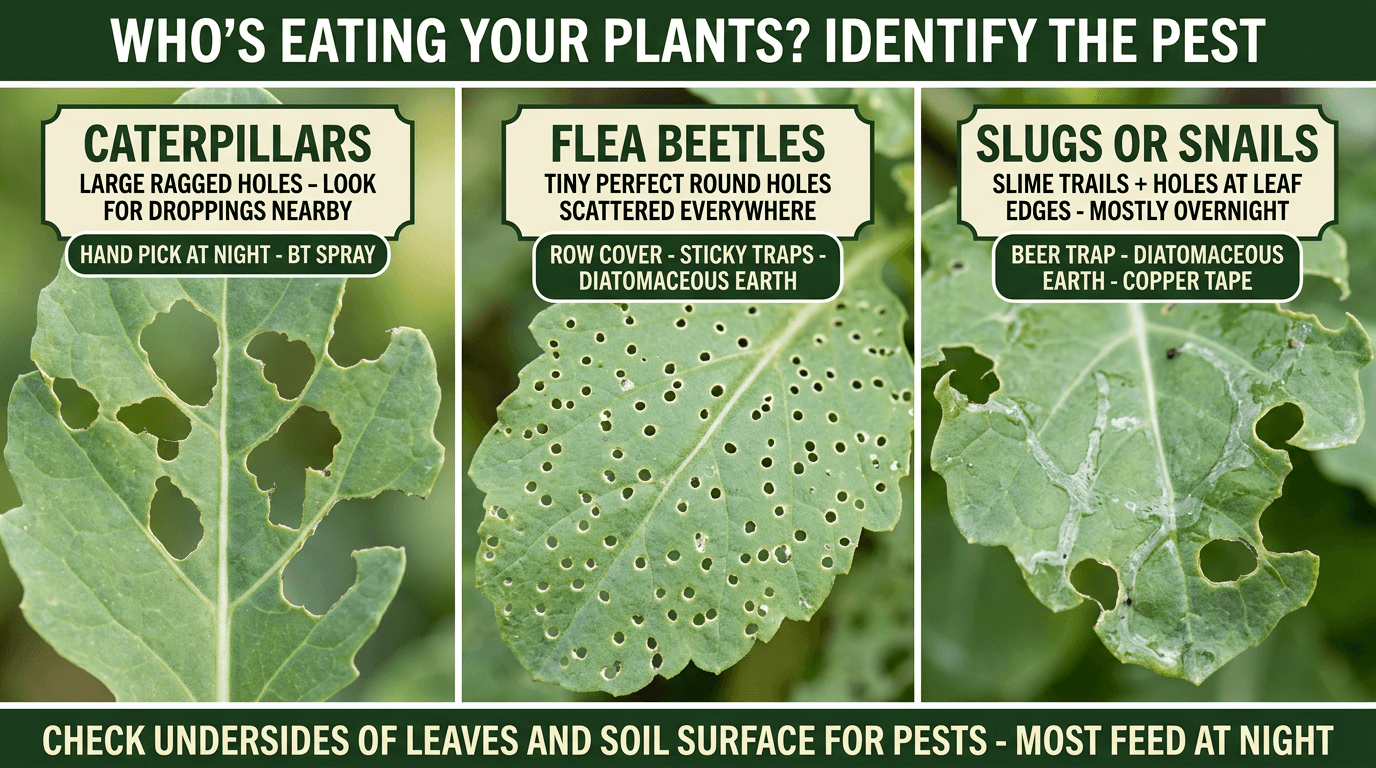
- Caterpillars & cabbage worms — irregular holes in the middle of leaves, with small dark droppings. Common on kale, cabbage, broccoli, and tomatoes. Look on leaf undersides.
- Beetles (flea beetles, cucumber beetles, Japanese beetles) — flea beetles leave tiny shot-hole pinpricks; Japanese beetles skeletonize leaves, leaving only the veins.
- Slugs & snails — ragged holes plus shiny slime trails. They feed at night and love seedlings and lettuce.
- Earwigs — small ragged holes, active at night.
Tip: if you can’t find the pest during the day, head out with a flashlight after dark — that’s when many of them feed.

How to Stop the Damage
- Handpick — the fastest fix. Pick off caterpillars, beetles, slugs, and drop them in soapy water. Do it daily for a week.
- Bt (Bacillus thuringiensis) — a safe organic spray that targets caterpillars only, leaving bees and beneficial insects unharmed.
- Row covers — lightweight fabric keeps flying pests off vulnerable crops (remove it when plants need pollination).
- Neem oil or insecticidal soap — good for beetles and soft-bodied pests.
- For slugs: iron phosphate pellets (pet-safe) or shallow beer traps work well.
How to Prevent It
- Encourage beneficial insects — ladybugs, lacewings, and birds eat pests. Plant flowers nearby to attract them.
- Use row covers early on pest-prone crops like brassicas.
- Keep plants healthy — strong, well-fed plants shrug off minor damage.
- Clean up debris where slugs and beetles hide.
- Inspect regularly — catching pests early stops a small problem from becoming an infestation.
Quick Recap
Identify the pest by the damage pattern (and a nighttime flashlight check), then handpick and use targeted organic controls like Bt for caterpillars or iron phosphate for slugs. A little daily attention keeps holes to a minimum.
Related Guides