
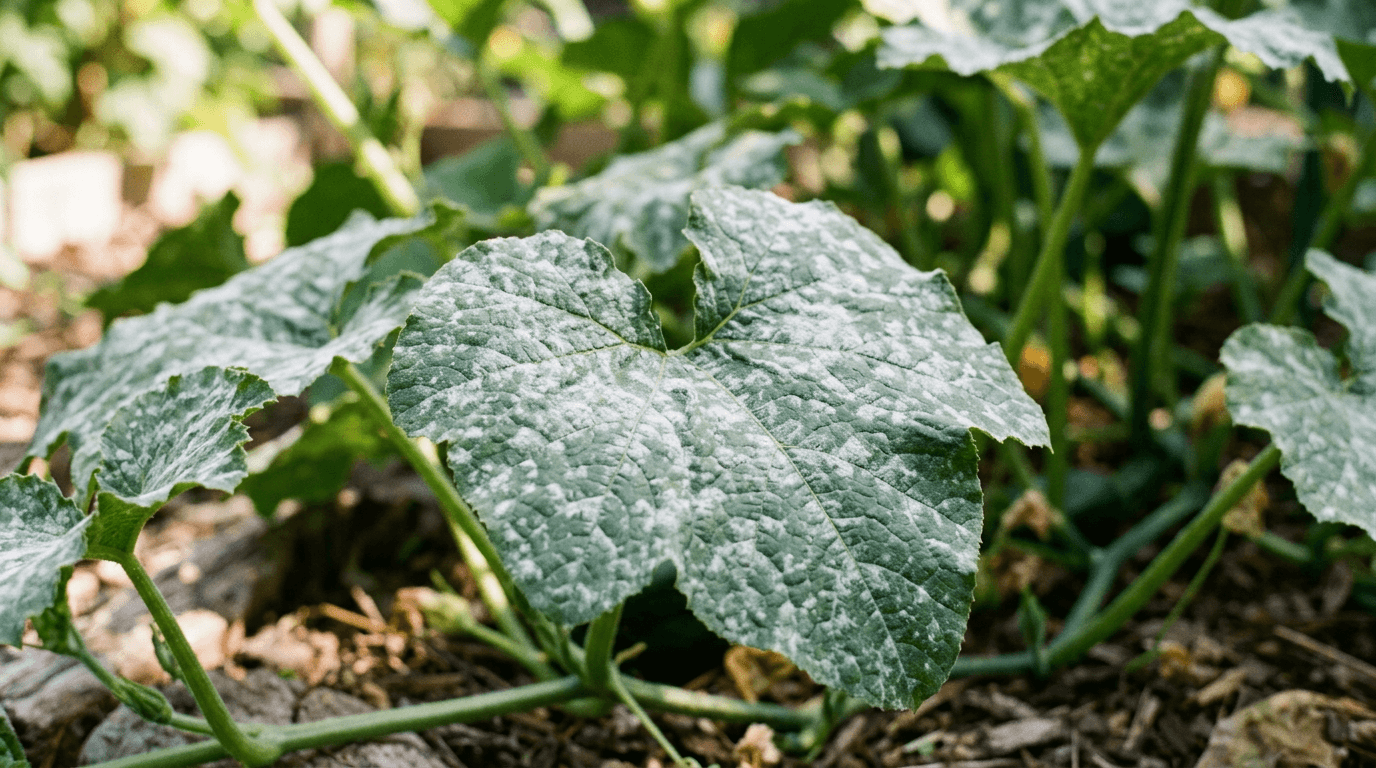
That white, dusty coating on your squash, zucchini, or cucumber leaves is powdery mildew — one of the most common garden diseases. It looks alarming, but if you catch it early, you can usually stop it from spreading and still get a good harvest.
What Powdery Mildew Looks Like
It starts as small white or gray powdery spots on the tops of leaves, then spreads until leaves look dusted with flour. Affected leaves eventually yellow, dry out, and die. It’s most common on squash, zucchini, cucumbers, pumpkins, and melons, especially in late summer.
Why It Happens
- Poor airflow — crowded plants trap humidity around the leaves.
- High humidity with warm days and cool nights — ideal mildew weather.
- Shade — plants that don’t get enough sun are more vulnerable.
- Overhead watering — wet leaves invite the disease.

How to Treat It
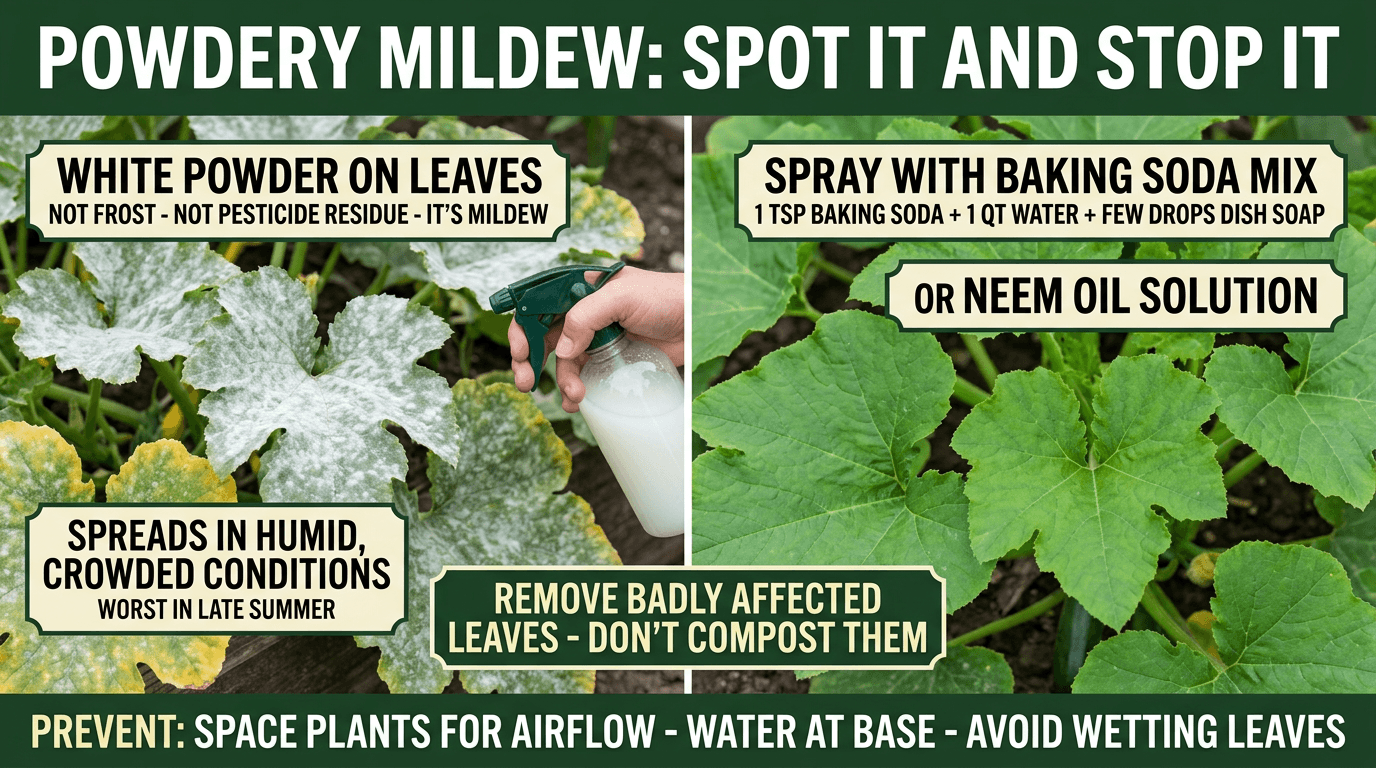
- Remove the worst leaves first. Snip off heavily coated leaves and throw them in the trash — never the compost.
- Spray the rest. Choose one of these proven treatments and coat both sides of the leaves:
- Potassium bicarbonate — the most effective organic option.
- Neem oil — treats mildew and pests at once.
- Milk spray — mix 1 part milk to 9 parts water; surprisingly effective for mild cases.
- Repeat weekly until it’s under control, and always spray in the morning so leaves dry quickly.
How to Prevent It
- Space plants generously so air moves freely between them.
- Water at the base, never on the leaves, and water in the morning.
- Plant in full sun.
- Choose mildew-resistant varieties — many squash and cucumber seeds are labeled “PM resistant.”
- Remove debris at the end of the season so spores don’t overwinter.
Quick Recap
Powdery mildew thrives in crowded, humid, shady conditions. Remove affected leaves, spray with potassium bicarbonate or neem, and improve airflow. Prevention — spacing, sun, and base watering — beats treatment every time.

