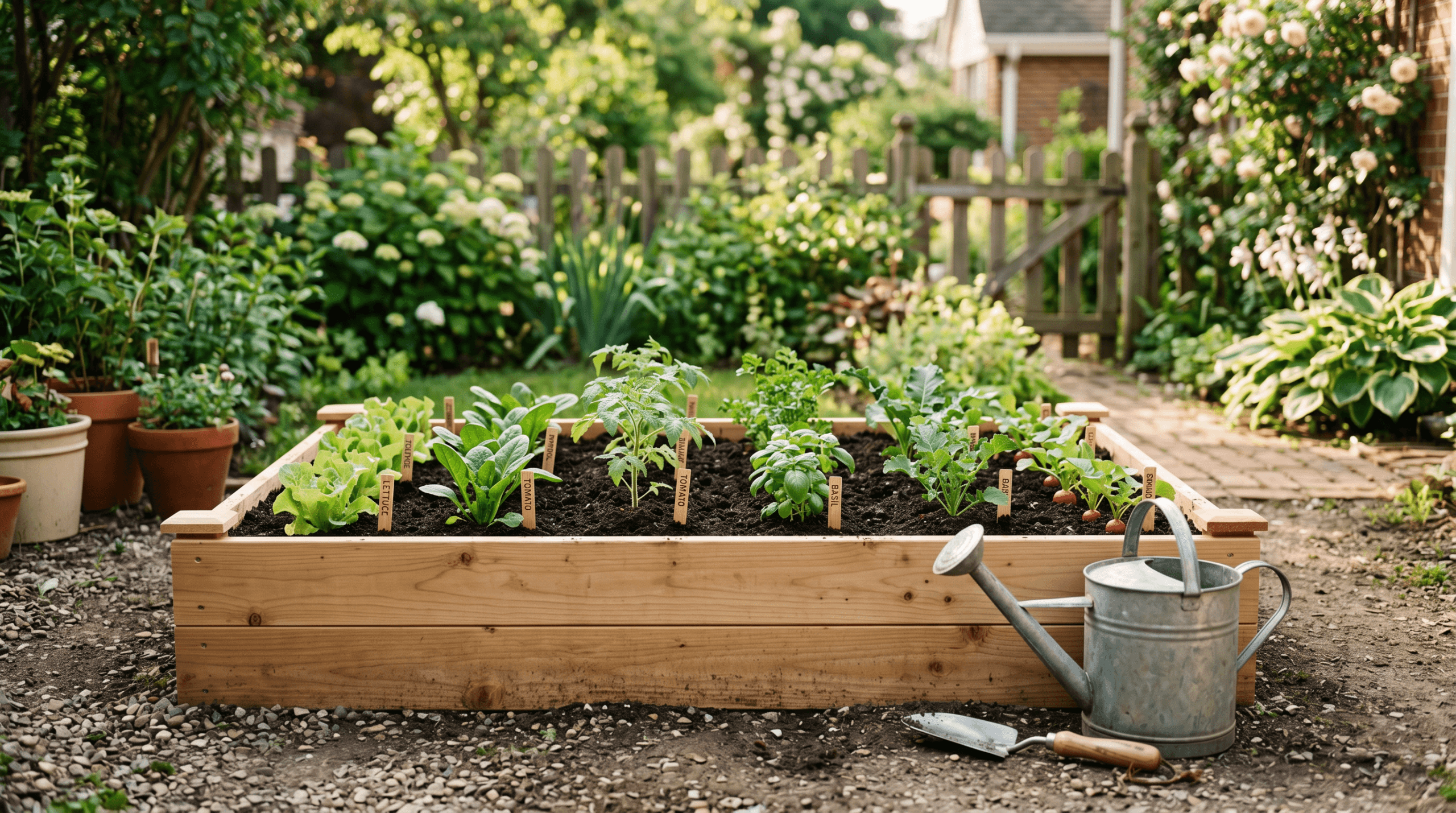
Starting a vegetable garden feels overwhelming at first. But the truth is, you only need to get a few fundamentals right — and the rest you’ll learn by doing. This guide walks you through every step, from picking a spot to harvesting your first crop.
Step 1: Choose the Right Location
Vegetables need at least 6 hours of direct sunlight per day — more is better. Before you do anything else, watch your yard throughout the day and identify the sunniest spot.
Other things to consider:
- Close to water — you’ll water more than you think. A hose or nearby spigot saves a lot of effort.
- Level ground — prevents water from running off before it soaks in.
- Away from large trees — tree roots compete for water and nutrients, and trees block light.
Step 2: Start Small
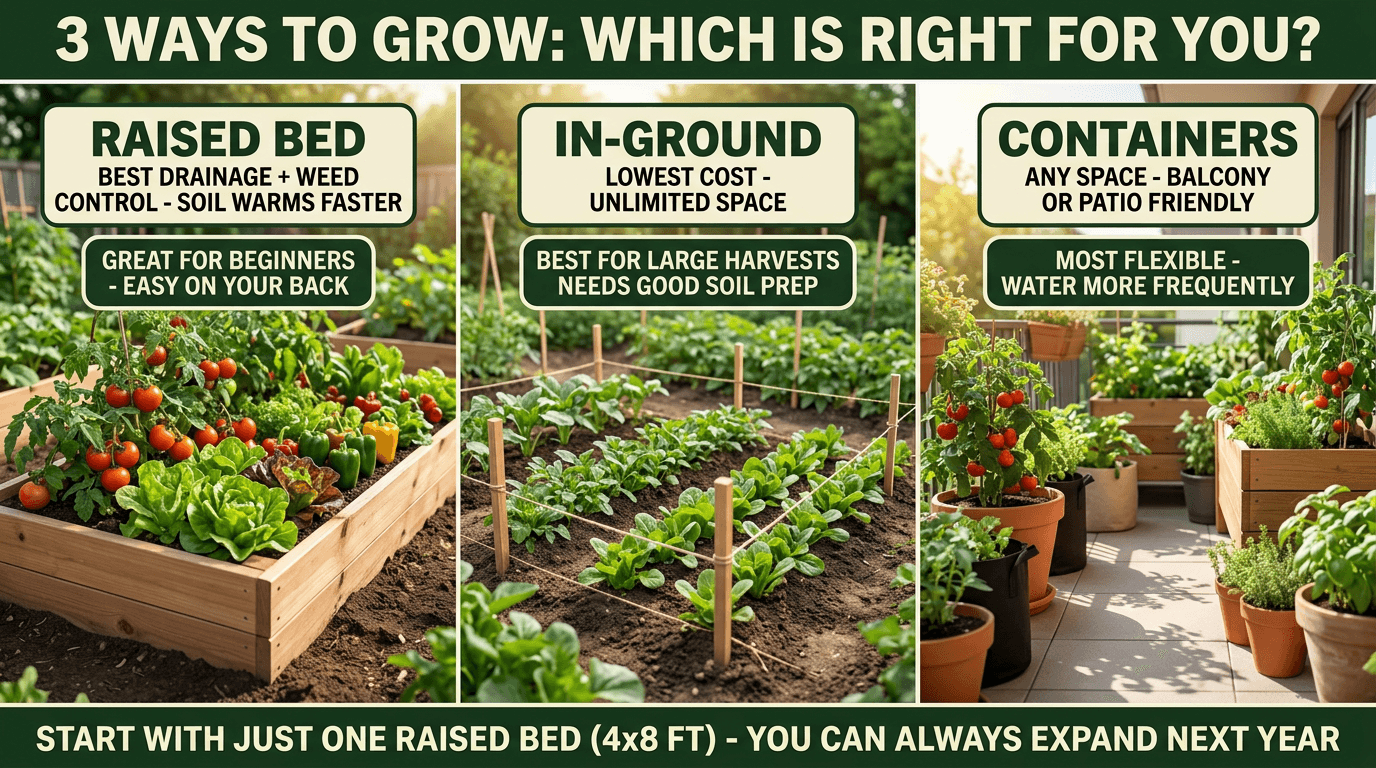
The biggest beginner mistake is going too big too fast. A 4×8 foot raised bed or a 10×10 foot in-ground plot is plenty for your first year. You can always expand. A small garden that’s well-tended will produce far more than a large one that gets neglected in July.
Step 3: Decide — Raised Bed, In-Ground, or Containers?
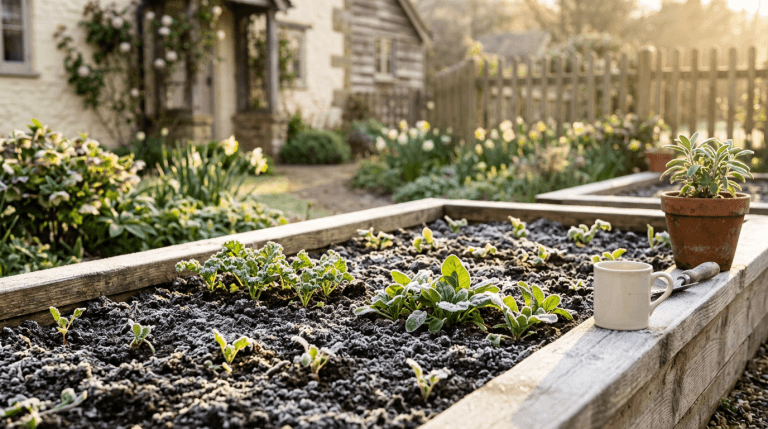
Raised beds are the best starting point for most beginners: better drainage, no digging up compacted soil, fewer weeds, easier on your back, and they warm up faster in spring.
In-ground works well if you have decent existing soil and want to cover more area at lower cost.
Containers are ideal for balconies, patios, or renters.
Step 4: Prepare Your Soil
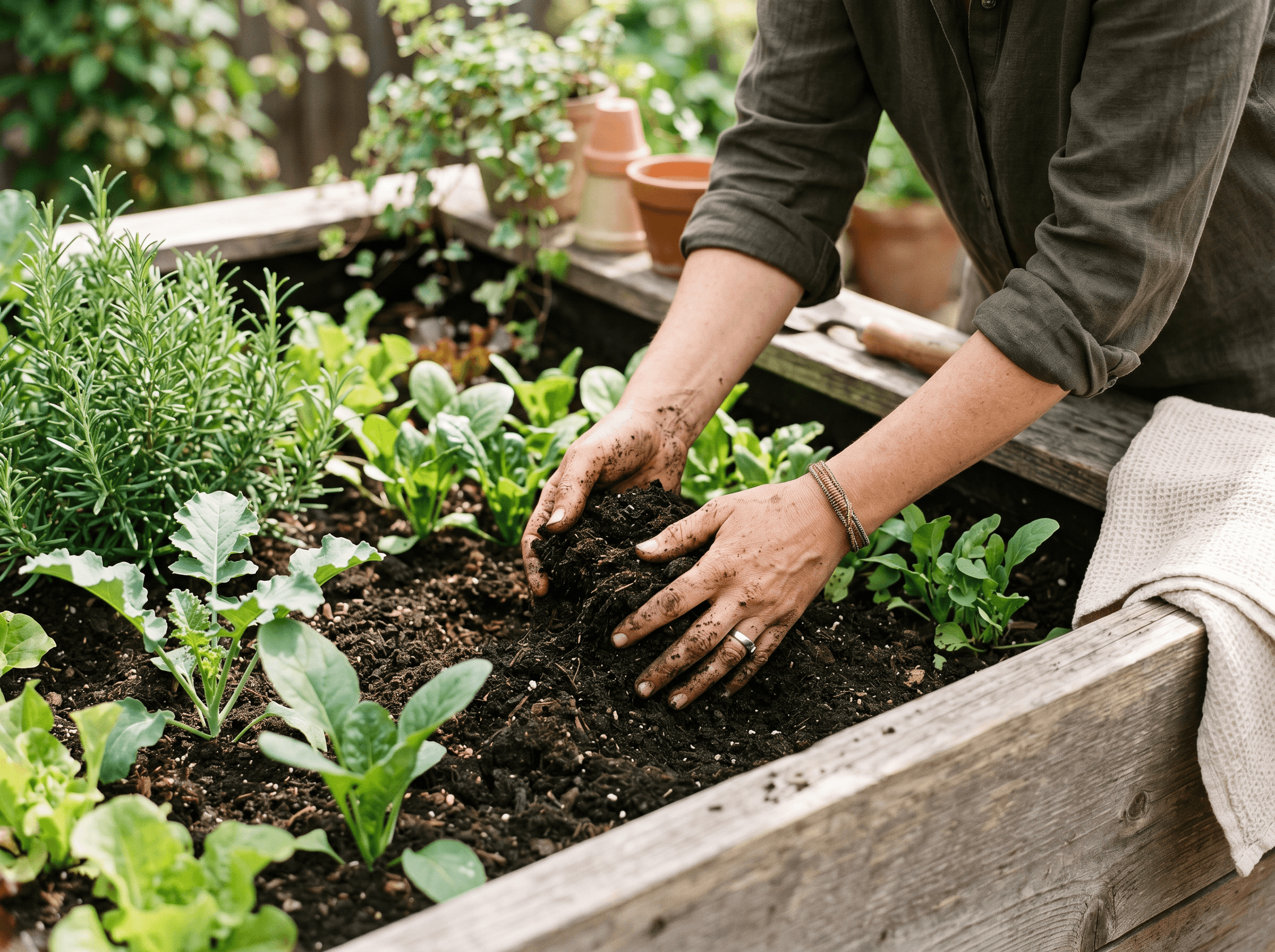
Soil is everything. Vegetables don’t grow in dirt — they grow in living soil full of organic matter, microbes, and nutrients.
For a raised bed, fill it with a mix of:
- 60% topsoil
- 30% compost
- 10% perlite or coarse sand (for drainage)
For in-ground beds, loosen the soil 12 inches deep and mix in 3–4 inches of compost. Avoid cheap bagged “garden soil” — it’s often mostly filler. Spend a little more on quality compost.
Step 5: Choose the Right Plants for Beginners
Start with vegetables that are forgiving, productive, and fast.
Easiest to grow:
- Zucchini — grows so fast you’ll be giving them away by August
- Bush beans — sow directly, harvest in 50 days
- Lettuce & salad greens — harvest in 30 days, regrows after cutting
- Radishes — ready in 3 weeks, great for impatient gardeners
- Cherry tomatoes — more disease-resistant than large varieties
- Cucumbers — prolific producers in warm weather
- Herbs (basil, parsley, chives) — use constantly, easy to maintain
Skip your first year: corn (needs a lot of space), melons (long season, large plants), Brussels sprouts (slow, pest-prone), celery (needs constant moisture and care).
Step 6: Plan Before You Plant
Sketch your bed on paper before buying anything. Consider:
- Tall plants go on the north side so they don’t shade shorter ones
- Space matters — tomatoes need 2–3 feet between plants; lettuce can be 6 inches
- Succession planting — sow lettuce and radishes every 2 weeks for continuous harvest
Step 7: When to Plant
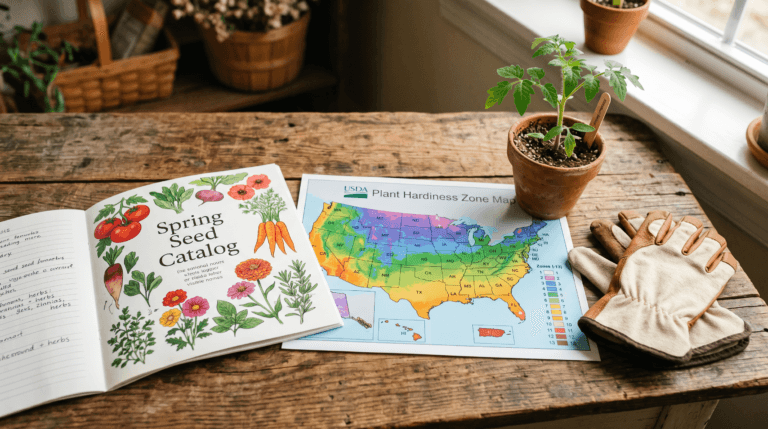
This depends entirely on your USDA Zone and your local frost dates. General rules:
- Warm-season crops (tomatoes, peppers, cucumbers, squash): plant after your last frost date
- Cool-season crops (lettuce, peas, spinach, radishes): plant 4–6 weeks before your last frost
Find your frost dates at almanac.com using your ZIP code.
Step 8: Water Consistently
Vegetables need 1–1.5 inches of water per week, either from rain or irrigation. The most common beginner mistake is inconsistent watering — too much one week, too little the next.
- Water at the base of plants, not the leaves (wet leaves = disease)
- Water in the morning
- Stick your finger 2 inches into the soil — if it’s dry, water
- Drip irrigation or soaker hoses are worth every penny
Step 9: Feed Your Plants
If you started with good compost-rich soil, you won’t need much fertilizer early on. Once plants are established and growing fast, a balanced fertilizer (10-10-10) every 3–4 weeks works for most vegetables. Tomatoes benefit from extra calcium and potassium once flowering starts.
Step 10: Keep a Simple Garden Journal
Write down what you planted, when, and how it performed. This single habit will make you a dramatically better gardener by year two. Even notes on your phone work fine.
You’re Ready
Gardening is learned in the soil. Every mistake teaches you something. Start small, pay attention, and enjoy the process.