If you’ve ever bought a plant at a nursery and seen a label that says “Hardy to Zone 6” — and had no idea what that meant — you’re not alone. USDA Hardiness Zones are one of the most important (and most misunderstood) concepts in American gardening. Here’s everything you need to know.
What Are USDA Hardiness Zones?
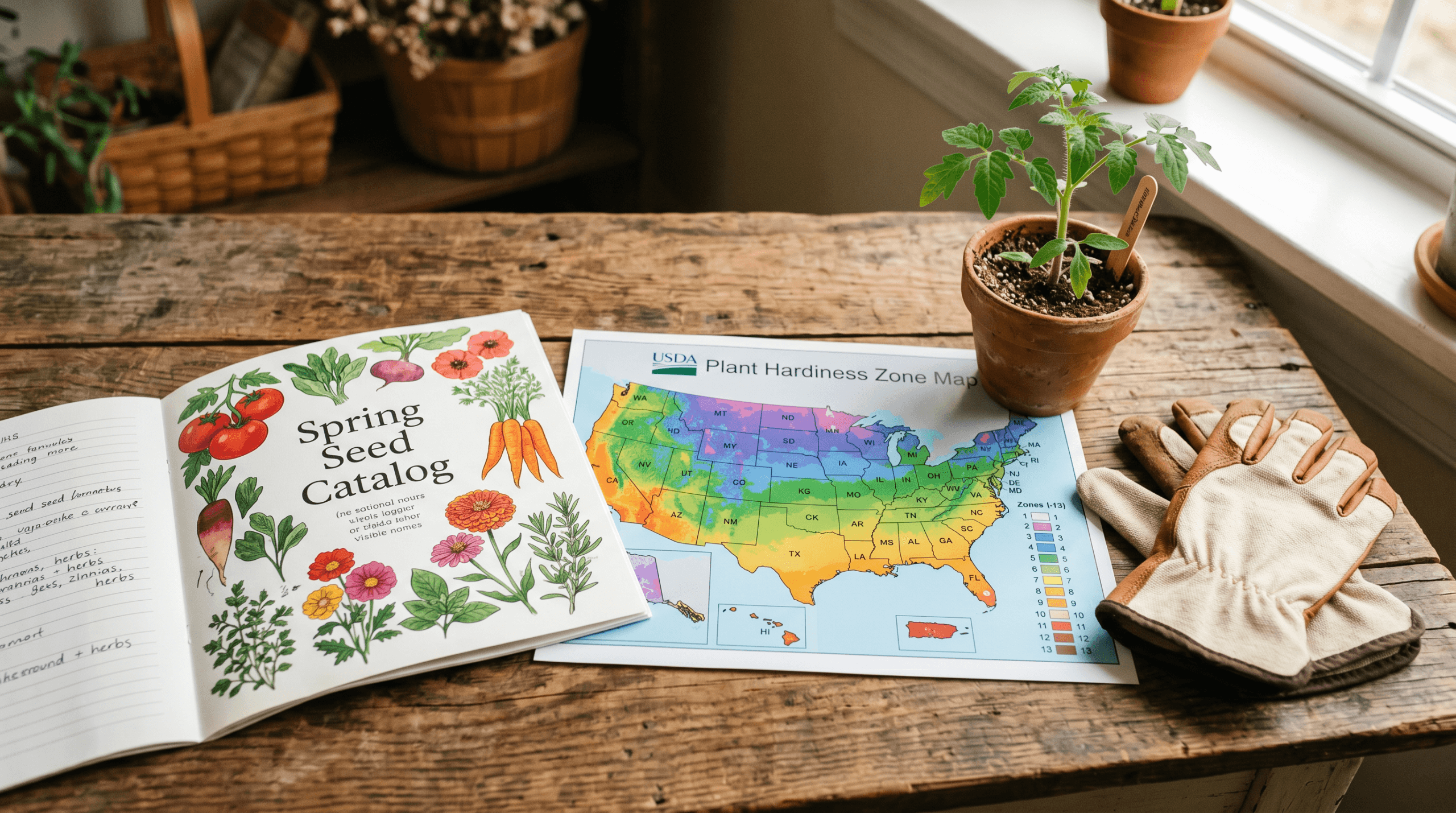
The USDA Plant Hardiness Zone Map divides the United States into 13 zones based on the average annual minimum winter temperature. Each zone represents a 10°F range. Zone 1 is the coldest (interior Alaska, down to -60°F), and Zone 13 is the warmest (parts of Hawaii and Puerto Rico, above 60°F).
Most of the continental US falls between Zones 3 and 10.
| Zone | Avg Min Temp | Example Location |
|---|---|---|
| 3 | -40°F to -30°F | Minneapolis, MN |
| 5 | -20°F to -10°F | Chicago, IL |
| 6 | -10°F to 0°F | Philadelphia, PA |
| 7 | 0°F to 10°F | Nashville, TN |
| 8 | 10°F to 20°F | Seattle, WA / Dallas, TX |
| 9 | 20°F to 30°F | Los Angeles, CA |
| 10 | 30°F to 40°F | Miami, FL |
How to Find Your Zone
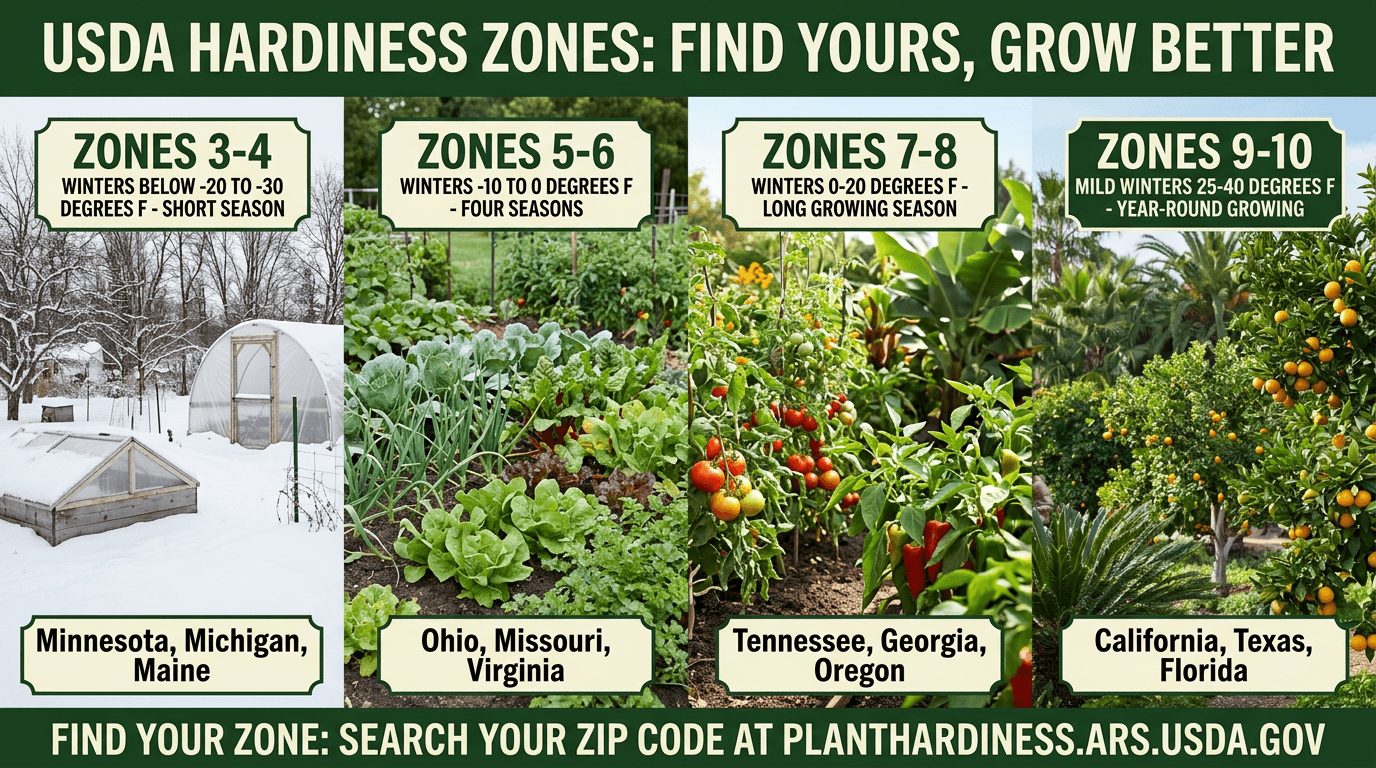
The easiest way: go to planthardiness.ars.usda.gov and enter your ZIP code. You’ll get your exact zone instantly.
Why Your Zone Matters
Your zone tells you:
- Which perennials will survive your winters — a lavender plant rated Zone 5 will die if you’re in Zone 4.
- Your frost dates — the last spring frost and first fall frost define your growing season.
- Which fruit trees you can grow — most apple varieties need a certain number of “chill hours” that only colder zones provide.
What Zones Don’t Tell You
Zones only measure cold hardiness. They don’t tell you about:
- Summer heat and humidity
- Rainfall amounts
- Soil type
- Microclimates in your own backyard (a south-facing wall can make your garden behave like the next zone warmer)
This is why gardeners in Zone 8 in Seattle and Zone 8 in Dallas have very different growing experiences — same zone, completely different climate.
Zones and Vegetable Gardening
For vegetables (which are annuals), zones matter less than frost dates. What you really need to know:
- Last spring frost date → when to start planting outside
- First fall frost date → when your season ends
You can find both dates for your ZIP code at almanac.com/gardening/frostdates.
Quick Zone Guide for Vegetable Gardeners
- Zones 3–4 (short season, ~90–120 frost-free days): Focus on fast-maturing varieties. Start seeds indoors 6–8 weeks early.
- Zones 5–6 (moderate, ~150–180 days): Most vegetables thrive. Two successions of many crops possible.
- Zones 7–8 (long season, ~200+ days): Fall gardening is as important as spring. Plant cool-season crops September–October.
- Zones 9–10 (mild winters): Grow year-round. Summer is the “off season” — too hot for most vegetables.
The Bottom Line
Knowing your zone is step one in becoming a better gardener. Once you know it, every seed packet, plant tag, and gardening article starts making a lot more sense.